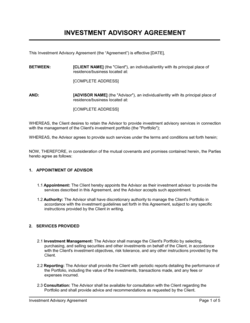
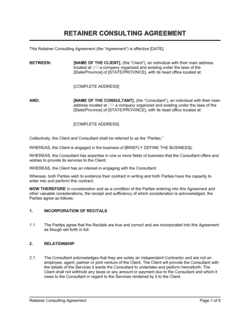
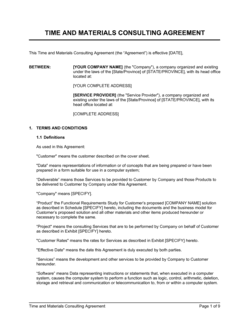
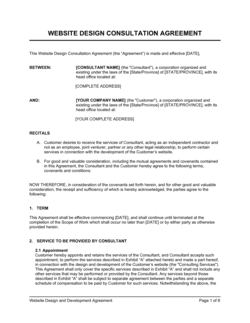
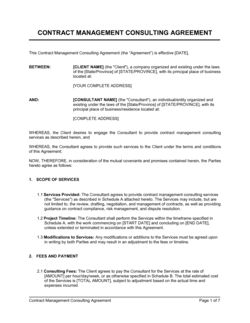
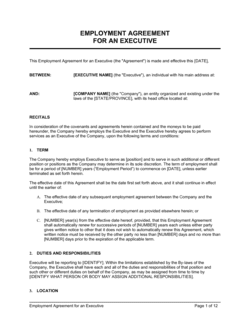
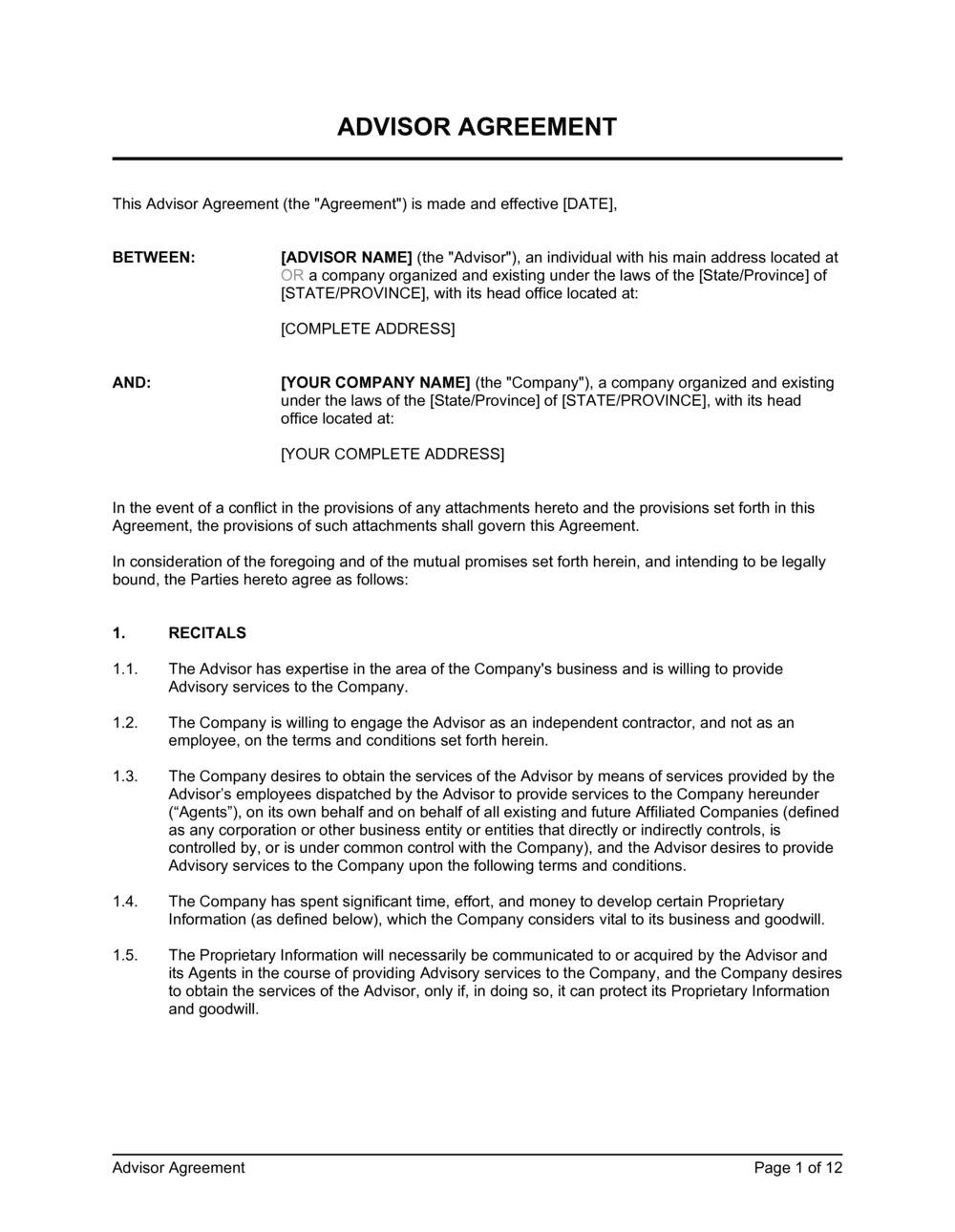
Advisor Agreement Template

Free Word download β€’ Edit online β€’ Save & share with Drive β€’ Export to PDF

12 pagesβ€’30–40 min to fillβ€’Difficulty: Complexβ€’Signature requiredβ€’Legal review recommended
Learn more ↓
FreeAdvisor Agreement Template

At a glance

What it is
An Advisor Agreement is a legally binding contract between a company and an individual advisor who provides strategic guidance, introductions, or domain expertise in exchange for compensation β€” most often equity, a cash retainer, or both. This free Word download gives you a structured, attorney-reviewed starting point you can edit online and export as PDF to execute with advisors before any work or equity vesting begins.
When you need it
Use it whenever you bring on an outside advisor β€” whether a domain expert, former executive, investor, or industry connector β€” who will receive equity or compensation and have access to confidential information. Execute it before the advisor's first engagement and before any vesting clock starts.
What's inside
Advisor role and time commitment, compensation and equity vesting schedule, confidentiality and IP assignment obligations, non-solicitation restrictions, term and termination conditions, and governing law. The agreement is designed to protect the company's IP and cap table while clearly defining what the advisor is expected to deliver.

What is an Advisor Agreement?

An Advisor Agreement is a legally binding contract between a company and an outside advisor who provides strategic guidance, domain expertise, or industry introductions in exchange for compensation β€” most commonly equity, a monthly cash retainer, or a combination of both. It formally defines the scope of the advisory relationship, the advisor's time commitment, the equity vesting schedule and cliff, confidentiality obligations, IP assignment, non-solicitation restrictions, and the conditions under which either party may end the relationship. Unlike a casual handshake arrangement, a signed advisor agreement creates enforceable obligations on both sides and gives the company concrete protection over its cap table, trade secrets, and intellectual property from the moment the relationship begins.

Why You Need This Document

Operating without a written advisor agreement exposes your company on four fronts simultaneously. First, any work product or materials created by the advisor β€” pitch decks, product briefs, technical specifications β€” may not legally belong to the company without an explicit IP assignment clause. Second, an advisor who receives equity without a vesting schedule and cliff can walk away after a single meeting with shares permanently on your cap table. Third, without a confidentiality clause, the advisor has no contractual obligation to protect your trade secrets, customer lists, or financial projections. Fourth, if the advisor later recruits your key employees or approaches your best customers, you have no enforceable remedy without a non-solicitation provision in place. Executing a clear, well-structured advisor agreement before the first call closes all four gaps β€” and signals to serious advisors that you run a professional operation worth their time.

Which variant fits your situation?

If your situation is…Use this template
Advisor receives only equity with no cash retainerEquity-Only Advisor Agreement
Advisor is a formal member of a structured advisory boardAdvisory Board Agreement
Advisor relationship is one-time or project-scopedConsulting Agreement
Advisor is also providing services as an independent contractorIndependent Contractor Agreement
Advisor is a C-suite executive brought in on an interim basisExecutive Employment Agreement
Advisor will receive a formal board seat with governance rightsBoard Member Agreement
Advisor relationship requires a standalone NDA before discussions beginNon-Disclosure Agreement

Common mistakes to avoid

❌ Starting the vesting clock before the agreement is signed

Why it matters: If equity is vesting before a written agreement is executed, the advisor may claim entitlement to shares under oral representations or implied terms, and the company loses the protective clauses in the written contract.

Fix: Execute the agreement before any advisory work begins and confirm that the vesting start date in the contract matches the execution date.

❌ Granting equity without a supporting board resolution

Why it matters: An advisor agreement alone does not create a valid equity grant in most jurisdictions β€” the board must formally approve any issuance under the company's equity plan, and the cap table must be updated before the grant is effective.

Fix: Pass a board resolution authorizing the specific equity grant at or before execution, and issue a corresponding option agreement or restricted stock grant referencing the resolution.

❌ No defined scope or deliverables for the advisor

Why it matters: Without a defined scope, the company cannot assess whether the advisor is performing, cannot terminate for non-performance, and may end up vesting equity to someone who has contributed nothing after the first meeting.

Fix: Include at least two to three specific, measurable activities β€” monthly calls, customer introductions per quarter, written product reviews β€” so performance can be objectively evaluated.

❌ Omitting the IP assignment clause

Why it matters: If an advisor drafts pitch materials, writes code, or creates any deliverable without an IP assignment clause, ownership of those materials may be contested β€” particularly if the advisor later starts a competing company.

Fix: Include an explicit IP assignment covering all work product and deliverables created in connection with the advisory role, regardless of where or on what equipment the work was performed.

❌ Using a non-compete instead of a non-solicitation

Why it matters: Post-engagement non-competes for advisors are difficult to enforce in most jurisdictions and are banned outright in California and several other states β€” a poorly drafted clause can be struck down entirely, leaving the company with no restrictive covenant at all.

Fix: Use a targeted non-solicitation covering the company's employees and customers rather than a broad competitive activity restriction. Non-solicitation clauses are consistently more enforceable than non-competes for advisor relationships.

❌ Treating the advisor as an employee in practice

Why it matters: If the company assigns set hours, gives the advisor a company email, or exercises day-to-day direction over the advisor's work, tax authorities may reclassify the relationship as employment, triggering back payroll taxes, penalties, and benefit obligations.

Fix: Keep the advisor relationship genuinely arm's-length β€” flexible scheduling, no required office presence, and outcome-based engagement β€” and ensure the independent contractor classification clause is accurate on its face.

The 10 key clauses, explained

Parties, Role, and Appointment

In plain language: Identifies the company and advisor as legal entities, describes the advisory role, and records the effective date of the relationship.

Sample language
This Advisor Agreement is entered into as of [DATE] between [COMPANY LEGAL NAME], a [STATE] [ENTITY TYPE] ('Company'), and [ADVISOR FULL NAME] ('Advisor'). Company hereby appoints Advisor to serve in an advisory capacity in connection with [AREA OF EXPERTISE].

Common mistake: Using the founder's personal name instead of the registered company entity. If the entity name doesn't match cap-table records, equity grants made under the agreement may be difficult to enforce.

Scope of Services and Time Commitment

In plain language: Defines what the advisor is expected to do β€” calls, introductions, reviews, attendance at board meetings β€” and the minimum time commitment per month.

Sample language
Advisor shall provide advisory services including [SPECIFIC SERVICES], available for up to [X] hours per month. Services may include participation in [MONTHLY / QUARTERLY] strategy calls, customer introductions, and written feedback on [DELIVERABLES].

Common mistake: Leaving scope entirely open-ended. An advisor with no defined deliverables or time commitment rarely provides consistent value, and the company has no basis to terminate for non-performance.

Compensation and Equity Grant

In plain language: States whether the advisor receives cash, equity, or both β€” including the number of shares or option grant, exercise price, and any retainer amount and payment schedule.

Sample language
As full compensation, Company shall grant Advisor an option to purchase [X] shares of Common Stock at an exercise price of $[AMOUNT] per share, subject to the vesting schedule in Section [X]. [Cash retainer of $[AMOUNT] per month, payable on the [DAY] of each month, if applicable.]

Common mistake: Granting equity without a formal board resolution or option agreement. An advisor agreement alone does not create a valid equity grant β€” it must be paired with a board-approved option agreement or stock grant under the company's equity plan.

Vesting Schedule and Cliff

In plain language: Defines when the advisor's equity vests, the cliff period before any equity is earned, and what happens to unvested shares on early termination.

Sample language
The equity shall vest monthly over [24] months, with a [3]-month cliff. No shares shall vest prior to the cliff date. Upon termination for any reason, unvested shares shall be forfeited and returned to the Company's equity pool.

Common mistake: Omitting a cliff entirely for short-duration advisor relationships. Without a cliff, an advisor who exits after 30 days walks away with a month's worth of equity having provided minimal value.

Confidentiality

In plain language: Prohibits the advisor from disclosing or using the company's confidential information during and after the advisory term, and defines what counts as confidential.

Sample language
'Confidential Information' means any non-public information disclosed by Company to Advisor relating to Company's business, technology, customers, or finances. Advisor shall not disclose or use Confidential Information without prior written consent of Company during the term and for [3] years thereafter.

Common mistake: Failing to carve out information that is already publicly available or that the advisor knew independently. Overly broad definitions are challenged in court and can void the clause entirely.

Intellectual Property Assignment

In plain language: Assigns to the company all work product, analyses, introductions-related materials, and any inventions created by the advisor in the course of the advisory relationship.

Sample language
Advisor agrees that all work product and deliverables created by Advisor in the course of the advisory relationship are the sole property of Company and are hereby irrevocably assigned to Company. Advisor waives any moral rights in such materials to the fullest extent permitted by law.

Common mistake: Omitting the IP assignment entirely on the assumption that advisors only give advice. If an advisor writes code, creates a pitch deck, or drafts customer collateral, ownership is ambiguous without an explicit assignment clause.

Non-Solicitation

In plain language: Restricts the advisor from recruiting the company's employees or soliciting its customers during the term and for a defined period afterward.

Sample language
During the term and for [12] months thereafter, Advisor shall not directly or indirectly solicit or recruit any employee or contractor of Company, or solicit any customer or prospective customer of Company with whom Advisor had contact during the advisory relationship.

Common mistake: Setting the non-solicitation period to match a full non-compete. Courts in many jurisdictions readily enforce reasonable non-solicitation terms but are more skeptical of advisor non-competes β€” conflating the two increases the risk the entire restrictive covenant is struck down.

Independent Contractor Status

In plain language: Confirms the advisor is not an employee β€” no tax withholding, no benefits, and no authority to bind the company β€” and allocates responsibility for the advisor's own taxes.

Sample language
Advisor is an independent contractor and not an employee, partner, or agent of Company. Advisor is solely responsible for all taxes, withholdings, and contributions arising from compensation received under this Agreement. Advisor has no authority to bind Company to any obligation.

Common mistake: Treating the advisor as an employee in practice β€” giving them a company email, requiring set hours, and directing their day-to-day work β€” while classifying them as a contractor. Tax authorities apply a substance-over-form test; behavioral control can trigger reclassification regardless of what the contract says.

Term and Termination

In plain language: Sets the agreement's duration, the notice period required for termination by either party, and the conditions under which either party may terminate immediately for cause.

Sample language
This Agreement commences on [DATE] and continues for [12] months unless earlier terminated. Either party may terminate with [30] days' written notice. Company may terminate immediately for Cause, defined as [MATERIAL BREACH / FRAUD / CONVICTION OF A FELONY].

Common mistake: No termination for convenience clause. If the advisor becomes inactive or the relationship sours, the company needs a clean exit path β€” relying only on a cause-based termination makes removal difficult and adversarial.

Governing Law and Dispute Resolution

In plain language: Specifies which jurisdiction's law governs the agreement and the mechanism for resolving disputes β€” typically arbitration or the courts of a named jurisdiction.

Sample language
This Agreement shall be governed by the laws of [STATE / PROVINCE / COUNTRY], without regard to conflict-of-law principles. Any dispute shall be resolved by binding arbitration in [CITY] under the rules of [AAA / JAMS], except that either party may seek injunctive relief in any court of competent jurisdiction.

Common mistake: Choosing a governing law different from where the company is incorporated and where most disputes would realistically arise. Advisors and founders rarely litigate across jurisdictions β€” a mismatched governing law creates procedural friction without strategic benefit.

How to fill it out

  1. 1

    Identify the parties and confirm entity names

    Enter the company's full registered legal name β€” not a trade name or DBA β€” and the advisor's legal name as it appears on government ID. Include the state or province of incorporation and the advisor's address.

    πŸ’‘ Cross-check the company name against your corporate registry filing before execution. A mismatch between the agreement and cap-table records complicates equity grants.

  2. 2

    Define the advisory scope and time commitment

    List two to four specific services the advisor will provide β€” strategy calls, customer introductions, investor referrals, product reviews β€” and the minimum hours per month. Specificity here gives you a basis to evaluate performance and, if necessary, terminate for non-performance.

    πŸ’‘ Monthly advisory calls of 1–2 hours plus email availability is the most common structure for equity-compensated advisors. Anything requiring more than 5 hours a month should be structured as a consulting agreement instead.

  3. 3

    Set the equity grant amount and type

    Enter the number of shares or options, the instrument type (stock options are most common for startups), the exercise price, and a reference to the governing equity plan. Confirm with your board or cap-table administrator before entering any figures.

    πŸ’‘ FAST Agreement benchmarks (Founder Institute) suggest 0.1–1.0% equity for advisors depending on company stage and advisor contribution level. Early-stage ideation advisors typically receive 0.25%; expert advisors at product/market fit stage typically receive 0.1%.

  4. 4

    Choose the vesting schedule and cliff

    Select a vesting period (12 or 24 months is standard) and a cliff (3 months is typical). Confirm that unvested shares are forfeited on termination and returned to the equity pool.

    πŸ’‘ A 24-month monthly vest with a 3-month cliff is the most widely adopted structure for startup advisor agreements and is least likely to generate disputes on exit.

  5. 5

    Complete the confidentiality and IP assignment sections

    Define confidential information with enough specificity to be enforceable β€” include financials, product roadmaps, customer data, and trade secrets. Add the IP assignment language covering all deliverables created during the relationship.

    πŸ’‘ Add a carve-out for information that is publicly available or that the advisor demonstrably knew before engagement β€” it makes the confidentiality clause more defensible, not weaker.

  6. 6

    Set term, notice period, and termination triggers

    Enter the agreement start date, total duration (typically 12 months), and the notice period for termination without cause (30 days is standard). Define at least three cause triggers: material breach, fraud, and conviction of a felony.

    πŸ’‘ Include an automatic renewal clause β€” 'unless either party provides 30 days' written notice of non-renewal' β€” so you don't lose continuity with high-performing advisors who forget to renew.

  7. 7

    Select governing law and execute before first engagement

    Choose the jurisdiction where the company is incorporated as governing law unless the advisor is in a jurisdiction with materially different IP or non-solicitation rules. Both parties must sign before any advisory work begins or any vesting clock starts.

    πŸ’‘ Use a timestamped e-signature platform so you have an auditable record of execution date β€” this is critical if an advisor's equity or IP ownership is ever disputed.

Frequently asked questions

What is an advisor agreement?

An advisor agreement is a legally binding contract between a company and an outside advisor who provides strategic guidance, introductions, or domain expertise in exchange for compensation β€” most commonly equity, a cash retainer, or both. It defines the advisor's scope, time commitment, equity vesting schedule, confidentiality obligations, and termination conditions. It also protects the company's IP and cap table by ensuring any work product created by the advisor is formally assigned to the company.

What is the difference between an advisor agreement and a consulting agreement?

A consulting agreement typically covers a defined project, deliverable, or hourly engagement with cash compensation. An advisor agreement covers an ongoing strategic relationship β€” usually 12 to 24 months β€” where the primary compensation is equity with optional cash. Advisors generally provide guidance, introductions, and access to their network rather than direct execution. If the relationship involves project-specific deliverables billed by the hour, a consulting agreement is more appropriate.

How much equity should an advisor receive?

Standard advisor equity ranges from 0.1% to 1.0%, depending on the company's stage and the advisor's contribution level. The Founder Institute's FAST Agreement benchmarks 0.25% for early-stage advisors at the idea stage and 0.1% for expert advisors at the product/market fit stage. Advisors who provide introductions to lead investors or anchor customers sometimes negotiate up to 0.5–1.0%. All equity should vest over 12–24 months with a cliff to ensure continued engagement.

Does an advisor agreement need to be signed before work begins?

Yes β€” and this is the single most common mistake companies make. If an advisor begins providing guidance before the agreement is executed, the company may have no enforceable confidentiality, IP assignment, or vesting-cliff protection. Execute the agreement before the first advisory call and confirm that the vesting start date aligns with the execution date.

Can an advisor agreement include a non-compete clause?

Non-competes for advisors are generally difficult to enforce and are banned outright in California, Minnesota, and several other US states. Even in permissive jurisdictions, courts apply a reasonableness standard that most advisor non-competes fail given the limited scope of the relationship. A targeted non-solicitation clause covering the company's employees and customers is a more defensible alternative and is typically sufficient to protect the company's interests.

What vesting schedule is standard for advisor agreements?

Monthly vesting over 24 months with a 3-month cliff is the most widely adopted structure for startup advisor agreements. Some companies use a 12-month vest for shorter engagements. The cliff ensures the advisor provides real value before any equity is earned, and monthly vesting aligns incentives over the full relationship. All unvested shares should be forfeited and returned to the equity pool on termination.

Is an advisor agreement legally required?

No law requires a written advisor agreement, but operating without one creates significant exposure. Without a written agreement, the company has no enforceable confidentiality or IP assignment, no defined vesting schedule or cliff, and no clean termination mechanism. Oral advisor arrangements frequently result in disputes over equity entitlement, ownership of deliverables, and non-solicitation obligations. A signed agreement eliminates all of these risks for the cost of 30 minutes.

Who needs to sign an advisor agreement?

Both the advisor and an authorized representative of the company β€” typically the CEO or a co-founder with signing authority β€” must sign. If the equity grant is material, the agreement should also be paired with a board resolution approving the grant. Some companies require the advisor to sign a separate option agreement under the company's equity plan in addition to the advisor agreement itself.

What happens to advisor equity when the company is acquired?

The outcome depends on whether the advisor agreement includes an acceleration clause. Without one, unvested shares are typically cancelled at closing unless the acquirer agrees to assume or substitute them. With single-trigger acceleration, all unvested shares vest immediately upon the acquisition. With double-trigger acceleration, vesting requires both the acquisition and a subsequent termination of the advisory relationship. Single-trigger is more common in advisor agreements than in employee equity arrangements.

How this compares to alternatives

vs Consulting Agreement

A consulting agreement covers a defined project or deliverable with cash compensation and a specific end date. An advisor agreement governs an ongoing strategic relationship where equity is the primary compensation. Use a consulting agreement when you need specific deliverables completed; use an advisor agreement when you want access to someone's network and ongoing judgment over a 12–24 month horizon.

vs Independent Contractor Agreement

An independent contractor agreement structures a work-for-hire relationship where the contractor executes tasks under the company's direction in exchange for cash. An advisor agreement structures a guidance relationship where the advisor provides strategic input in exchange for equity. Advisors are not directed day-to-day; contractors typically are. The distinction matters for both tax classification and the enforceability of IP assignment.

vs Non-Disclosure Agreement

An NDA covers only confidentiality and is appropriate for early-stage conversations before a formal relationship is established. An advisor agreement contains confidentiality as one of several clauses alongside equity, scope, IP assignment, and termination. Once an advisor relationship is formalized, the NDA is superseded by the advisor agreement's confidentiality provisions.

vs Employment Contract

An employment contract creates an employer-employee relationship with tax withholding, benefits, and ongoing direction over the employee's work. An advisor agreement creates an independent contractor relationship with no benefits, no withholding, and no day-to-day direction. Misclassifying an advisor as an independent contractor when the substance of the relationship is employment triggers back taxes, penalties, and potential benefit liability.

Industry-specific considerations

Technology / SaaS

Technical advisors commonly receive options rather than restricted stock; IP assignment is critical given advisors may work on product architecture, algorithms, or proprietary data systems.

Life Sciences and Healthcare

Clinical and regulatory advisors often have conflicts of interest with multiple portfolio companies β€” the agreement should include a conflicts-of-interest disclosure and waiver section specific to FDA or clinical relationships.

Financial Services and Fintech

Advisor relationships in regulated financial services may trigger broker-dealer or investment adviser registration requirements if the advisor receives transaction-based compensation β€” legal review is particularly important before execution.

Professional Services

Advisors to law firms, consulting practices, or accounting firms must navigate professional responsibility rules β€” the agreement should confirm the advisor is not providing regulated professional services under the company's name.

Jurisdictional notes

United States

Advisor agreements are governed primarily by state contract law. California voids most non-compete clauses for advisors and restricts IP assignment for inventions developed entirely on the advisor's own time with no company resources (Labor Code Β§2870). Delaware is the most common governing law choice for incorporated startups. The IRS applies a behavioral-control test to determine whether advisors should be classified as employees regardless of contract language.

Canada

Canadian advisor agreements must navigate provincial employment standards legislation β€” if the relationship has characteristics of employment, provincial ESA minimums apply regardless of the contract's independent contractor classification. Quebec advisors require agreements in French for provincially-regulated companies. IP assignment clauses are generally enforceable but must be explicit; Canadian courts do not imply assignment from the employment or advisory relationship alone.

United Kingdom

UK advisor agreements should confirm IR35 compliance β€” if HMRC determines the advisor is a disguised employee, the company becomes liable for income tax and National Insurance contributions. Post-engagement non-solicitation clauses are enforceable if limited to 12 months and directly tied to the advisor's actual relationships with the company. Equity grants to UK advisors may trigger EMI option scheme considerations for favorable tax treatment.

European Union

GDPR applies if the advisor accesses personal data about the company's customers or employees β€” the agreement should include a data processing addendum or confirm the advisor is acting as a processor rather than a controller. Post-engagement non-solicitation enforceability varies significantly by member state; Germany and France require careful drafting to avoid voiding restrictive covenants. Equity grants to advisors in some EU jurisdictions may have specific tax reporting requirements at the individual level.

Template vs lawyer β€” what fits your deal?

PathBest forCostTime
Use the templateStandard equity advisor relationships at pre-seed or seed stage with straightforward scope and no regulatory complexityFree20–30 minutes
Template + legal reviewAdvisor grants above 0.5%, advisors in regulated industries, or cross-border arrangements where IP or non-solicitation enforceability varies$300–$7002–5 days
Custom draftedSenior advisors with significant equity stakes, transaction-based compensation, advisory board governance structures, or advisors with pre-existing IP that may overlap with the company's$1,500–$4,000+1–2 weeks

Glossary

Advisor Shares
Equity granted to an advisor, typically common stock or options, as compensation for ongoing strategic guidance.
Vesting Schedule
The timeline over which an advisor earns their equity β€” often monthly over 1–2 years with or without a cliff.
Cliff
A minimum period the advisor must serve before any equity vests β€” commonly 3 or 6 months in advisor agreements.
Acceleration
A provision that causes unvested equity to vest immediately upon a defined trigger, such as an acquisition or change of control.
IP Assignment
A clause transferring ownership of any work product, advice-derived deliverables, or inventions created for the company to the company.
Non-Solicitation
A restriction preventing the advisor from recruiting the company's employees or customers during and after the advisory relationship.
Confidential Information
Non-public company data β€” financials, product roadmaps, customer lists, trade secrets β€” that the advisor is prohibited from disclosing or using outside the relationship.
Independent Contractor Status
A classification confirming the advisor is not an employee, which determines tax withholding obligations and benefit eligibility.
Term
The defined duration of the advisor agreement β€” typically 12 to 24 months β€” after which it expires or renews by mutual written agreement.
Cause (for Termination)
Specific documented grounds β€” such as breach of confidentiality, fraud, or material non-performance β€” that justify immediate termination without the notice period.
SAFE Agreement
Simple Agreement for Future Equity β€” a financing instrument sometimes referenced in advisor agreements when equity is deferred to a future funding round.

Part of your Business Operating System

This document is one of 3,000+ business & legal templates included in Business in a Box.

  • Fill-in-the-blanks β€” ready in minutes
  • 100% customizable Word document
  • Compatible with all office suites
  • Export to PDF and share electronically

Create your document in 3 simple steps.

From template to signed document β€” all inside one Business Operating System.
1
Download or open template

Access over 3,000+ business and legal templates for any business task, project or initiative.

2
Edit and fill in the blanks with AI

Customize your ready-made business document template and save it in the cloud.

3
Save, Share, Send, Sign

Share your files and folders with your team. Create a space of seamless collaboration.

Save time, save money, and create top-quality documents.

β˜…β˜…β˜…β˜…β˜…

"Fantastic value! I'm not sure how I'd do without it. It's worth its weight in gold and paid back for itself many times."

Managing Director Β· Mall Farm
Robert Whalley
Managing Director, Mall Farm Proprietary Limited
β˜…β˜…β˜…β˜…β˜…

"I have been using Business in a Box for years. It has been the most useful source of templates I have encountered. I recommend it to anyone."

Business Owner Β· 4+ years
Dr Michael John Freestone
Business Owner
β˜…β˜…β˜…β˜…β˜…

"It has been a life saver so many times I have lost count. Business in a Box has saved me so much time and as you know, time is money."

Owner Β· Upstate Web
David G. Moore Jr.
Owner, Upstate Web

Run your business with a system β€” not scattered tools

Stop downloading documents. Start operating with clarity. Business in a Box gives you the Business Operating System used by over 250,000 companies worldwide to structure, run, and grow their business.

Free Forever PlanΒ Β·Β No credit card required