1
Complete the complaint intake section immediately upon receipt
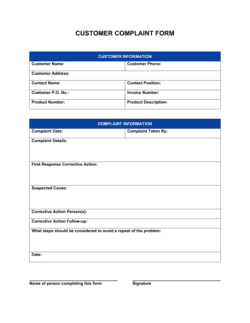
Enter the date and method of complaint, complainant's name and title, and respondent's name and title. Do not delay this step — documenting the receipt date is critical if the employer's response timeline is later challenged.
💡 Timestamp the intake with both the date the complaint was made and the date it was formally received by HR — they are not always the same.
2
Record the alleged conduct in the complainant's own words
Document the specific behavior alleged, including dates, locations, and witnesses as the complainant describes them. Use direct quotation where possible rather than summarizing.
💡 If the complainant provides a written account, attach it as an exhibit rather than transcribing it — the original is stronger evidence than a paraphrase.
3
Implement and document interim protective measures
Decide within 24 hours whether interim measures are needed to separate the parties during the investigation. Document the specific measure, its effective date, and the rationale. Always adjust the respondent's situation rather than the complainant's.
💡 State explicitly that interim measures are not a finding of guilt — this protects the employer if the respondent later challenges the measure as defamatory.
4
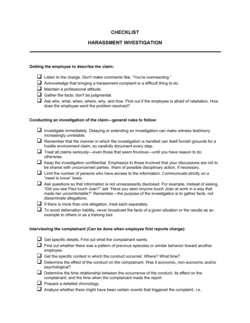
Assign a qualified, impartial investigator
Name the investigator and confirm they have no direct reporting relationship to either party. For complaints involving senior leadership, engage an external HR consultant or employment attorney to conduct the investigation.
💡 Document the investigator's qualifications and the reason they were selected — this supports the employer's claim of a fair process if the findings are challenged.
5
Notify the respondent and record their response
After the complainant's initial interview, notify the respondent of the allegation in sufficient detail for them to respond meaningfully. Record their account and any witnesses they identify.
💡 Notify after the first complainant interview, not before — this sequence protects the integrity of the witness accounts.
6
Document findings using the civil standard of proof
After all interviews and evidence review, record whether the finding is substantiated, unsubstantiated, or inconclusive. Base the determination on a balance of probabilities — which account is more likely true given the totality of evidence.
💡 Record the credibility factors you weighed — consistency of account, corroborating evidence, demeanor during interview — so the reasoning is auditable.
7
Record corrective action proportionate to the finding
Select a corrective measure calibrated to the severity of the conduct: verbal counseling for a first minor incident, written warning for repeated or moderate conduct, suspension or termination for severe or physical harassment.
💡 Cross-reference your employee handbook's progressive discipline policy before selecting the corrective measure — inconsistent application across employees is the most common basis for wrongful-termination claims.
8
Obtain signatures and file in a confidential investigation record
Have the complainant, respondent, and HR representative sign and date the completed document. Store the full investigation file — including notes and exhibits — in a separate, locked investigation file, not in the respondent's personnel file.
💡 Set a calendar reminder for the retention period expiry. Many jurisdictions require harassment investigation records to be kept for 3–7 years; destroying them early can be treated as spoliation in litigation.