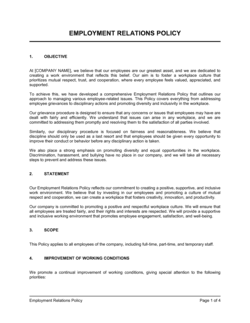
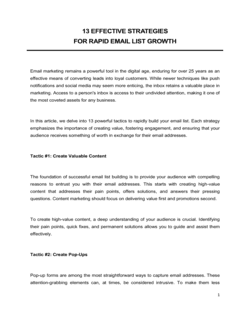
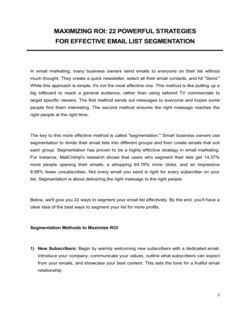
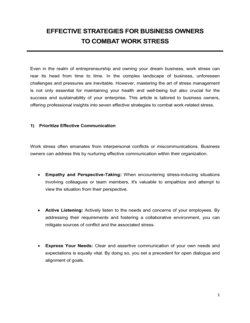
12 Effective Public Relations Strategies For Small Businesses

Free to read β€’ Save or share with one click

Free12 Effective Public Relations Strategies For Small Businesses Template

At a glance

What it is
The 12 Effective Public Relations Strategies For Small Businesses template is a structured Word document that walks small business owners through a proven PR framework β€” from defining brand messaging and identifying media targets to executing community outreach and managing a reputational crisis. This free Word download gives you an editable, export-ready starting point you can tailor to your industry, budget, and growth stage.
When you need it
Use it when launching a new product or location, responding to negative press, building media relationships for the first time, or formalizing ad hoc PR activity into a repeatable annual plan.
What's inside
Brand messaging foundation, target audience and media mapping, press release strategy, community engagement tactics, social proof and influencer outreach, crisis communication protocols, and measurement frameworks to track PR results over time.

What is a Public Relations Strategy for Small Businesses?

A Public Relations Strategy for Small Businesses is a structured operational document that defines how a business will build, protect, and manage its public reputation through earned media, community engagement, thought leadership, and crisis response. Unlike paid advertising, PR works by generating third-party credibility β€” press coverage, expert mentions, customer stories, and community visibility β€” that audiences trust more than promotional content. This template walks you through 12 proven tactics organized into a single, actionable Word document you can edit and implement without a PR agency or specialist background.

Why You Need This Document

Without a written PR strategy, most small businesses react to media opportunities and crises instead of anticipating them β€” leaving money and credibility on the table. A journalist covering your industry who has never heard of you will quote a competitor instead. A negative online review or local news story with no crisis protocol in place will be managed inconsistently by whoever picks up the phone first. A formal PR strategy solves both problems: it ensures your business is in front of the right media contacts before you need them, and it gives everyone on your team a clear protocol when something goes wrong. Businesses with a documented PR strategy are measurably more likely to receive repeat media coverage because journalists learn to trust them as reliable, prepared sources β€” a compounding advantage no paid campaign can replicate.

Which variant fits your situation?

If your situation is…Use this template
Planning PR activity for a full calendar yearAnnual Marketing Plan
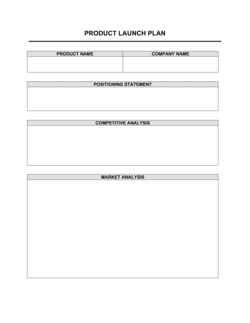
Launching a new product and needing a focused communications planProduct Launch Plan
Responding to a specific reputational or media crisisCrisis Communication Plan
Pitching a story to a journalist or editorPress Release Template
Building a broader brand and content strategyContent Marketing Plan
Tracking the outcomes of PR campaigns over timeMarketing Report
Establishing community partnerships and sponsorship plansSponsorship Proposal

Common mistakes to avoid

❌ Issuing press releases for non-newsworthy events

Why it matters: Journalists who receive three unremarkable releases from a business begin filtering out all future pitches. You lose access precisely when you have something genuinely worth covering.

Fix: Apply a simple test before every release: would a reader who has never heard of your business care about this? If not, convert it to a social post instead.

❌ No designated spokesperson before a crisis

Why it matters: When a negative story breaks, internal confusion about who speaks publicly causes contradictory statements that amplify the original damage and create secondary news cycles.

Fix: Name a primary and backup spokesperson in the crisis protocol section before any incident occurs. Brief both on approved messages and off-limit topics.

❌ Measuring PR by volume of coverage alone

Why it matters: Ten mentions in publications your customers never read produce no measurable business outcome. Coverage volume without audience relevance is a vanity metric.

Fix: Track referral traffic from each coverage placement, lead inquiries during active PR periods, and review volume changes β€” metrics that connect directly to revenue.

❌ Building a PR calendar with no named owners

Why it matters: In small teams, any task without a single named owner is implicitly everyone's responsibility and effectively no one's. PR activity stalls within 60 days.

Fix: Assign every calendar item β€” pitch, event, release, report β€” to a specific person by name, not by role or department.

❌ Copying competitor messaging instead of differentiating

Why it matters: Generic brand statements that mirror industry language give journalists no hook and give customers no reason to prefer your business over the incumbent.

Fix: Identify the one thing your business does or stands for that your three nearest competitors do not mention publicly, and build your messaging around that gap.

❌ Pitching the same story angle to every outlet simultaneously

Why it matters: Journalists search for exclusivity. When they see the same pitch hit multiple outlets, they assume the story has already been placed and move on.

Fix: Offer exclusivity to your top-tier target for five to seven business days, then widen distribution if they pass. This increases your first-placement rate significantly.

The 10 key sections, explained

Brand Messaging Foundation

Target Audience and Stakeholder Map

Media Mapping and Outreach Targets

Press Release and Announcement Strategy

Community Engagement and Local PR Tactics

Thought Leadership and Content PR

Social Proof and Influencer Outreach

Crisis Communication Protocol

PR Calendar and Execution Timeline

Measurement and Reporting Framework

How to fill it out

  1. 1

    Define your brand messaging and key pillars

    Write a one-sentence brand statement and three supporting message pillars. These anchor every press release, pitch, and spokesperson quote in the plan.

    πŸ’‘ Test your brand statement on someone outside the business β€” if they can't explain what you do after reading it once, rewrite it.

  2. 2

    Map your audiences and stakeholders

    List every group whose perception of your business affects your success β€” customers, local press, community groups, partners, and lenders. Note what each group needs to believe about you and what they currently believe.

    πŸ’‘ Rank audiences by their influence on your primary business goal right now β€” don't try to address all groups equally with a small PR budget.

  3. 3

    Build your prioritized media list

    Research local newspapers, trade publications, podcasts, and blogs that cover your industry or geography. For each, record the right contact name, beat, preferred pitch format, and lead time.

    πŸ’‘ Start with 10–15 highly targeted contacts rather than a list of 100 generic ones β€” your pitch-to-coverage ratio will be significantly higher.

  4. 4

    Plan your press releases and announcement calendar

    Identify three to five genuinely newsworthy milestones over the next 12 months β€” a product launch, a significant hire, a community award, or a business anniversary β€” and assign target release dates.

    πŸ’‘ Lead your press release with the news, not with your company history. Journalists read the first sentence and decide whether to continue within three seconds.

  5. 5

    Schedule community and thought leadership activities

    Choose two to three community touchpoints and one to two thought leadership opportunities per quarter. Assign an owner and a deadline to each in the PR calendar section.

    πŸ’‘ Speaking at a local chamber event or business association meeting is faster to secure and often reaches a more targeted audience than regional press coverage.

  6. 6

    Document your crisis communication protocol

    Name the designated spokesperson, write a generic holding statement template, and define the internal escalation path before you need it. Store the protocol where the whole team can access it.

    πŸ’‘ A holding statement β€” 'We are aware of the situation and are gathering information. We will provide a full update by [TIME]' β€” buys you time without admitting liability.

  7. 7

    Set your KPIs and reporting cadence

    Choose three to five metrics you will track monthly β€” media mentions, estimated audience reach, referral traffic from press coverage, and review volume. Assign someone to compile and share a brief monthly report.

    πŸ’‘ Set a Google Alert for your business name, your key competitors, and your top two industry keywords on day one β€” it costs nothing and gives you a real-time baseline.

  8. 8

    Review and update the plan quarterly

    Block a 60-minute quarterly review to assess what is working, cut tactics that generated no results after two cycles, and add new opportunities based on current business priorities.

    πŸ’‘ Compare your share of voice against one key competitor each quarter β€” even an informal scan of their media coverage will reveal gaps and angles you have not yet tried.

Frequently asked questions

What is a public relations strategy for a small business?

A public relations strategy for a small business is a structured plan that defines how the business will shape its public image, earn media coverage, engage its community, and respond to reputational events β€” without relying on paid advertising. It covers brand messaging, media outreach, thought leadership, community involvement, and a crisis communication protocol. A written strategy ensures PR activity is intentional and measurable rather than reactive and sporadic.

Why do small businesses need a PR strategy?

Small businesses compete against larger brands with bigger advertising budgets. A PR strategy levels the playing field by generating earned media β€” coverage you don't pay for β€” that carries more credibility with consumers than ads. A single local news feature or trade publication mention can drive more qualified traffic than a month of paid campaigns, and the credibility it builds compounds over time as your media presence grows.

What are the most effective PR tactics for small businesses?

The highest-return tactics for small businesses are local media outreach with a specific story angle, community sponsorships and event participation, expert commentary on platforms like HARO (Help a Reporter Out), customer testimonial campaigns, and bylined articles in trade or local publications. These approaches require time rather than large budgets and generate durable credibility that paid placement cannot replicate.

How is a PR strategy different from a marketing plan?

A marketing plan covers all promotional activity β€” paid, owned, and earned channels β€” including advertising, content marketing, email, and social media. A PR strategy focuses specifically on earned media and reputation management: press coverage, community relations, thought leadership, and crisis response. PR is one component of a broader marketing plan, not a substitute for it.

How often should a small business update its PR strategy?

A full review and update once per year β€” aligned to your business planning cycle β€” is standard. A lighter quarterly check-in to assess what tactics are working, update the media list, and adjust the calendar is sufficient between annual reviews. Any significant business event β€” a product launch, a crisis, a change in leadership β€” should also trigger an immediate strategy update.

Do I need to hire a PR agency to implement this strategy?

No. The strategies in this template are designed to be executed in-house by a small team or solo operator with no prior PR experience. A PR agency becomes worth considering when you are targeting national media, managing a complex crisis, or scaling earned media as a primary growth channel. For most small businesses, a structured DIY approach produces strong results at a fraction of the agency cost.

What metrics should I use to measure PR success?

Track media mentions and estimated audience reach monthly. More importantly, measure referral traffic from press coverage, changes in branded search volume during active PR periods, lead inquiry volume, and online review counts. Share of voice relative to one or two key competitors is a useful quarterly benchmark. Avoid treating raw mention counts as a success metric β€” relevance and audience quality matter more than volume.

How do I handle negative press as a small business?

Respond promptly, factually, and calmly through a single designated spokesperson. Issue a brief holding statement within a few hours acknowledging the situation while you gather information, then follow with a fuller response once you have the facts. Do not argue publicly with journalists or customers. Document your response timeline, and brief your team on approved messages before anyone speaks externally. The crisis protocol section of this template walks through each step.

Can a PR strategy work for a business with no existing media relationships?

Yes β€” and this template is specifically structured for that starting point. Begin by building a short, targeted media list of 10–15 journalists who cover your industry or locality. Follow them, engage with their published work genuinely, and pitch story angles relevant to their audience before you need anything from them. Relationships built gradually over three to six months convert to coverage far more reliably than cold outreach with a press release attached.

How this compares to alternatives

vs Marketing Plan

A marketing plan covers all promotional channels β€” paid, owned, and earned β€” including advertising spend, content strategy, and campaign budgets. A PR strategy focuses exclusively on earned media and reputation management. Most small businesses need both: the marketing plan sets overall spend and channel mix, while the PR strategy governs the earned and community components within it.

vs Content Marketing Plan

A content marketing plan defines what your business publishes on owned channels β€” blog posts, videos, email newsletters β€” to attract and retain an audience. A PR strategy targets external media placement and community reputation. Content feeds PR (a published article becomes a pitch asset), but the two documents have different audiences, tactics, and success metrics.

vs Crisis Communication Plan

A crisis communication plan is a standalone, detailed response playbook for a specific reputational emergency β€” with escalation trees, pre-approved statements, and stakeholder contact lists. This PR strategies template includes a crisis protocol section, but a standalone crisis plan provides deeper scenario planning and is worth developing separately for businesses with significant reputational exposure.

vs Product Launch Plan

A product launch plan coordinates marketing, sales, and operations activities around a single product release with a defined go-live date. A PR strategy is a longer-horizon document covering the full range of ongoing reputation-building activities beyond any single launch. The PR template guides how the launch is communicated to media as one of several annual PR moments.

Industry-specific considerations

Retail and Hospitality

Local event sponsorships, seasonal news hooks, and grand-opening press outreach drive foot traffic and community visibility more cost-effectively than paid local advertising.

Professional Services

Thought leadership through trade bylines, speaking engagements, and expert commentary builds the credibility that converts high-value clients who research providers before making contact.

Food and Beverage

Food media outreach, chef profiling, and community partnership stories generate earned coverage with audiences that paid digital ads frequently fail to reach at a local level.

Healthcare and Wellness

Patient-focused community content, expert health commentary for local press, and crisis communication protocols are especially critical given the reputational sensitivity of the sector.

SaaS and Technology

Product launch press strategies, founder thought leadership in tech media, and category-creation messaging help early-stage SaaS businesses establish credibility before they have significant customer proof points.

Nonprofit and Social Enterprise

Mission-driven storytelling, donor recognition PR, and community impact reporting resonate with both media outlets and funders who evaluate organizations on public visibility and narrative clarity.

Template vs pro β€” what fits your needs?

PathBest forCostTime
Use the templateSmall business owners and marketing managers executing PR in-house with no agency budgetFree3–6 hours to complete; ongoing 2–4 hours per month to execute
Template + professional reviewBusinesses planning a major launch, entering a new market, or managing an active reputational issue$500–$2,000 for a PR consultant review and media list build1–2 weeks
Custom draftedBusinesses targeting national media, managing a significant crisis, or scaling PR as a primary growth channel$2,500–$8,000+ per month for a retained PR agencyOngoing retainer engagement

Glossary

Earned Media
Press coverage, mentions, or shares your business receives without paying for placement β€” as opposed to paid advertising or owned content.
Media Pitch
A short, targeted message sent to a journalist or editor proposing a story angle relevant to their audience.
Brand Messaging
The consistent language, tone, and key messages a business uses across all public communications to shape how it is perceived.
Press Release
A formal written statement distributed to media outlets announcing a newsworthy development such as a product launch, event, or milestone.
Crisis Communication
A structured response plan that defines how a business communicates with the public, media, and stakeholders during a reputational or operational emergency.
Thought Leadership
Content or public activity β€” articles, speaking engagements, interviews β€” that positions a business owner or executive as a credible expert in their field.
Media List
A curated database of journalists, editors, bloggers, and influencers who cover topics relevant to your business, including their contact details and preferred formats.
Share of Voice
The percentage of media coverage or online conversation in a category that mentions your brand compared to competitors.
Story Angle
The specific hook or framing that makes a business's news relevant and interesting to a particular media outlet's audience.
Spokesperson
The designated individual authorized to speak on behalf of the business in media interviews, press statements, and public forums.

Part of your Business Operating System

This document is one of 3,000+ business & legal templates included in Business in a Box.

  • Fill-in-the-blanks β€” ready in minutes
  • Compatible with all office suites
  • Export to PDF and share electronically

Create your document in 3 simple steps.

From template to signed document β€” all inside one Business Operating System.
1
Download or open template

Access over 3,000+ business and legal templates for any business task, project or initiative.

2
Edit and fill in the blanks with AI

Customize your ready-made business document template and save it in the cloud.

3
Save, Share, Send, Sign

Share your files and folders with your team. Create a space of seamless collaboration.

Save time, save money, and create top-quality documents.

β˜…β˜…β˜…β˜…β˜…

"Fantastic value! I'm not sure how I'd do without it. It's worth its weight in gold and paid back for itself many times."

Managing Director Β· Mall Farm
Robert Whalley
Managing Director, Mall Farm Proprietary Limited
β˜…β˜…β˜…β˜…β˜…

"I have been using Business in a Box for years. It has been the most useful source of templates I have encountered. I recommend it to anyone."

Business Owner Β· 4+ years
Dr Michael John Freestone
Business Owner
β˜…β˜…β˜…β˜…β˜…

"It has been a life saver so many times I have lost count. Business in a Box has saved me so much time and as you know, time is money."

Owner Β· Upstate Web
David G. Moore Jr.
Owner, Upstate Web

Run your business with a system β€” not scattered tools

Stop downloading documents. Start operating with clarity. Business in a Box gives you the Business Operating System used by over 250,000 companies worldwide to structure, run, and grow their business.

Free Forever PlanΒ Β·Β No credit card required