Sponsorship Proposal Template

Free Word download β€’ Edit online β€’ Save & share with Drive β€’ Export to PDF

18 pagesβ€’35–50 min to fillβ€’Difficulty: Complex
Learn more ↓
FreeSponsorship Proposal Template

At a glance

What it is
A Sponsorship Proposal is a structured document that presents an event, organization, or campaign to a potential sponsor and makes the case for why investing in the opportunity delivers measurable value. This free Word download gives you a professionally structured, ready-to-customize proposal you can edit online and export as PDF to send directly to brand partners and corporate sponsors.
When you need it
Use it when approaching a company or brand for financial or in-kind support for an event, sports team, podcast, conference, nonprofit program, or content platform. It is the starting point for any formal sponsorship conversation where a verbal pitch alone is insufficient.
What's inside
An executive summary, audience and reach data, sponsorship tiers with pricing, a benefits and deliverables breakdown, brand alignment rationale, campaign or event details, and a call to action with contact and next-steps information.

What is a Sponsorship Proposal?

A Sponsorship Proposal is a structured pitch document an organizer sends to a potential sponsor to present a brand investment opportunity in exchange for defined, measurable benefits. It identifies the event, platform, or program being sponsored, describes the audience the sponsor will reach, itemizes what each sponsorship package includes, and makes the business case for why the investment delivers value relative to the sponsor's marketing objectives. Unlike a casual email or verbal pitch, a formal sponsorship proposal provides the specific data β€” audience demographics, reach metrics, deliverable lists, and pricing β€” that a marketing manager or brand director needs to take the opportunity through internal budget approval.

Why You Need This Document

Without a written sponsorship proposal, even genuinely interested sponsors stall. Decision-makers in corporate marketing departments cannot approve budget for a sponsorship they cannot document β€” they need a formal record of what they are buying, what it costs, and what performance data they will receive after the event. An organizer who relies solely on verbal conversations loses deals not because the opportunity was weak, but because the sponsor had no artifact to circulate internally. A well-structured proposal also protects both parties from misaligned expectations: when deliverables, timelines, and exclusivity terms are written down before any money changes hands, the conversation shifts from negotiation to execution. This template gives you the structure to present your opportunity professionally, demonstrate that you understand the sponsor's goals, and make it easy for the right person to say yes.

Which variant fits your situation?

If your situation is…Use this template
Pitching corporate sponsors for a live event or conferenceEvent Sponsorship Proposal
Securing brand partners for a sports team or leagueSports Sponsorship Proposal
Proposing a community or cause-marketing partnershipNonprofit Sponsorship Proposal
Selling podcast or YouTube channel ad sponsorshipsMedia Sponsorship Proposal
Creating a multi-tier package for a large annual festivalFestival Sponsorship Package
Requesting in-kind product donations instead of cashIn-Kind Sponsorship Proposal
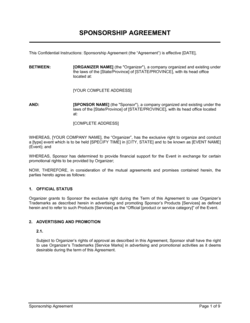
Formalizing the agreed terms after a sponsor says yesSponsorship Agreement

Common mistakes to avoid

❌ Sending an identical proposal to every sponsor

Why it matters: Generic proposals signal that the organizer hasn't thought about the sponsor's specific goals, making it easy for the prospect to dismiss the opportunity without a real evaluation.

Fix: Personalize at minimum the brand alignment section and the executive summary for each prospect, using their own marketing language and target customer description.

❌ Vague deliverables without quantities or timelines

Why it matters: A sponsor who cannot describe exactly what they are getting cannot get internal budget approval β€” 'social media exposure' is not a line item a CFO can sign off on.

Fix: Specify post counts, channel names, follower counts, logo placement locations, and the exact timeline for each deliverable.

❌ No audience data to support reach claims

Why it matters: Claiming '10,000 attendees' or '50,000 social impressions' without any supporting data or sourcing destroys trust the moment a sponsor does basic due diligence.

Fix: Cite registration numbers, historical attendance averages, platform analytics screenshots, or email list size with the data pull date to back every reach claim.

❌ Too many sponsorship tiers with overlapping benefits

Why it matters: When the difference between a $5,000 and $7,500 package is two extra logo placements, sponsors default to the cheaper option or abandon the decision entirely.

Fix: Limit packages to three or four tiers with a meaningful, exclusive benefit at each level β€” naming rights, activation space, or a speaking slot β€” that genuinely justifies the price jump.

❌ No call to action or deadline

Why it matters: Proposals that end without a specific next step and a deadline are deprioritized indefinitely β€” the sponsor moves on to more pressing decisions.

Fix: Close with a named contact, a specific reservation deadline tied to a real constraint, and one clear instruction: 'Reply to reserve your package by [DATE].'

❌ Omitting ROI data or post-event reporting commitments

Why it matters: Sponsors who cannot show internal ROI to their marketing director will not renew β€” and a first-time sponsor with no performance data has no reason to commit.

Fix: Commit to a post-event analytics report in the proposal itself, specifying what metrics will be reported and within what timeframe after the event.

The 9 key sections, explained

Executive Summary

About the Organizer

Event or Program Overview

Audience Profile and Reach

Sponsorship Packages and Pricing

Benefits and Deliverables

Brand Alignment and Partnership Rationale

Sponsorship ROI and Past Results

Next Steps and Call to Action

How to fill it out

  1. 1

    Research your target sponsors before opening the template

    Identify each prospect's current marketing objectives, target customer profile, and recent brand partnerships. The proposal should feel tailored, not templated.

    πŸ’‘ Check the sponsor's recent press releases and LinkedIn posts β€” brands that just announced a product launch or rebrand are actively looking for partnership activation opportunities.

  2. 2

    Complete the audience profile section with real data

    Pull attendance figures, email list size, social follower counts, and any demographic survey data you have. Organize these into a clean summary with sourced figures.

    πŸ’‘ If your audience is small but highly specific β€” e.g., 300 CFOs at a finance summit β€” lead with specificity, not size. Niche fit often matters more than reach.

  3. 3

    Build three or four clearly differentiated sponsorship tiers

    Set tier prices at 3–4Γ— increments (e.g., $1,000 / $3,000 / $10,000) and ensure each level offers meaningfully more than the one below it, not just more logo placements.

    πŸ’‘ Place the tier you most want to sell in the middle β€” it anchors expectations between the entry option and the premium tier.

  4. 4

    Itemize every deliverable with specific quantities and timelines

    Replace phrases like 'social media promotion' with '4 dedicated posts on Instagram (38,000 followers) and LinkedIn (12,000 followers) in the 3 weeks before the event.'

    πŸ’‘ Specific deliverables reduce negotiation friction and make the sponsor's internal approval process faster.

  5. 5

    Write the brand alignment section for each specific prospect

    Replace the generic alignment paragraph with one that references the sponsor's own brand language, target customer, and stated marketing goals. This is the highest-leverage customization in the proposal.

    πŸ’‘ Use the exact language from the sponsor's website or annual report β€” it signals that you did the homework.

  6. 6

    Add past results or comparable benchmarks

    Include at least one data point from a prior year or a comparable event β€” impressions delivered, leads captured, or media mentions generated. Label projections as projections.

    πŸ’‘ A post-event report from a past sponsor, even a brief one, is more persuasive than any claim you make about expected reach.

  7. 7

    Set a clear deadline and primary contact in the call to action

    State the date by which packages must be reserved and include a named contact with direct email and phone number β€” not a generic inbox.

    πŸ’‘ A 2–3 week response window creates urgency without feeling aggressive. Deadlines tied to a real constraint β€” print deadline, program lock date β€” are more credible than arbitrary cutoffs.

Frequently asked questions

What is a sponsorship proposal?

A sponsorship proposal is a formal document an organizer sends to a potential sponsor to outline an opportunity for brand investment in exchange for defined benefits. It presents the event or platform, describes the audience, explains what the sponsor receives, and specifies the cost of each package. It is the primary tool for converting informal sponsor interest into a funded commitment.

What should a sponsorship proposal include?

A complete sponsorship proposal covers an executive summary, organizer background, event or program overview, audience demographics and reach data, tiered sponsorship packages with pricing, an itemized benefits and deliverables list, brand alignment rationale, ROI data or comparable benchmarks, and a clear call to action with a response deadline. Missing audience data and vague deliverables are the two most common gaps that cause sponsors to decline.

How long should a sponsorship proposal be?

For most corporate sponsorships, 6–12 pages is the accepted range β€” long enough to be credible and specific, short enough to be read by a busy marketing or brand manager. A one-page overview sheet works as a leave-behind after a meeting but is insufficient as a standalone pitch. Proposals for large title sponsorships above $50,000 may run longer with a supporting appendix of audience research.

How do I price sponsorship packages?

Start from the total value of reach you can deliver β€” impressions, leads, or activations β€” and benchmark against industry rates. A common rule of thumb for events is $10–$25 per attendee for a primary sponsorship. Set tiers at 3–4Γ— price increments with a genuinely exclusive benefit at each level. For new events without historical data, price conservatively and focus on delivering over-the-top post-event reporting to earn renewals at higher rates.

How many sponsorship tiers should I offer?

Three or four tiers is the optimal range for most proposals. Fewer than three limits flexibility; more than four creates decision paralysis. A standard structure is Title or Presenting (one slot), Gold (two or three slots), Silver (four or five slots), and a Supporting or Community tier for smaller budgets. Each tier should include at least one exclusive or category-limited benefit to justify the price differential.

What is the difference between a sponsorship proposal and a sponsorship agreement?

A sponsorship proposal is a pitch document used to sell the opportunity to a prospective sponsor. A sponsorship agreement is the binding contract executed after the sponsor says yes β€” it formalizes deliverables, payment terms, exclusivity, cancellation conditions, and IP rights. The proposal creates interest; the agreement creates obligation. Both documents are needed for any formal sponsorship relationship.

How do I make my sponsorship proposal stand out?

The single highest-impact action is personalization. Replace generic audience descriptions with data specific to the sponsor's target customer. Mirror the sponsor's own brand language in the alignment section. Include a concrete ROI projection tied to the sponsor's stated marketing KPIs β€” for example, estimated cost-per-lead compared to the sponsor's current paid acquisition costs. Sponsors receive dozens of proposals; a document that feels written for them specifically gets read twice.

Should I include exclusivity in my sponsorship packages?

Category exclusivity β€” preventing direct competitors from sponsoring the same event β€” is one of the most valuable things you can offer a title or gold sponsor and is often decisive for brands in competitive categories like financial services, insurance, and technology. Offer it at premium tiers only, state it clearly in the benefits list, and confirm it in the sponsorship agreement. Be careful not to promise category exclusivity to multiple sponsors in overlapping categories.

Can I use this template for a nonprofit or charity sponsorship?

Yes. The structure is the same, with two adjustments: the brand alignment section should connect the sponsor's CSR or cause-marketing objectives to your mission, and the ROI section should include both audience metrics and the reputational or community benefit the sponsor gains. Many corporate sponsors have dedicated community investment or ESG budgets separate from marketing β€” framing the proposal for both audiences increases your chances of landing internal approval.

How this compares to alternatives

vs Sponsorship Agreement

A sponsorship proposal is a sales document used to pitch a potential sponsor on the opportunity. A sponsorship agreement is the binding contract executed after the sponsor commits β€” it formalizes payment terms, deliverables, exclusivity, and cancellation terms. The proposal creates interest; the agreement creates enforceable obligations. You need both for any formal sponsorship.

vs Partnership Proposal

A partnership proposal pitches a collaborative business relationship where both parties contribute and share outcomes β€” co-marketing, revenue sharing, or joint product development. A sponsorship proposal is one-directional: the sponsor pays for defined brand benefits. Use a partnership proposal when both sides bring roughly equal assets to the table; use a sponsorship proposal when the relationship is investor-and-beneficiary.

vs Grant Proposal

A grant proposal requests funds from a foundation or government body for a mission-driven project, with no expectation of brand or marketing return for the funder. A sponsorship proposal is a commercial exchange β€” the sponsor pays for audience access and brand exposure. Nonprofits often need both, but they go to different decision-makers and use different approval processes.

vs Business Proposal

A business proposal pitches a product or service to a prospective client in exchange for payment β€” it is a sales document for commercial transactions. A sponsorship proposal pitches brand investment in exchange for audience exposure and activation rights. The structure is similar, but a sponsorship proposal centers on audience data and media value rather than service scope and pricing.

Industry-specific considerations

Events and Conferences

Multi-tier packages covering naming rights, stage branding, exhibition booths, speaking slots, and post-event digital reports.

Sports and Recreation

Kit and apparel branding, facility signage, match-day activations, and social media content featuring sponsor logos during live play.

Nonprofit and Charitable Organizations

CSR and cause-marketing alignment, dual-budget pitches targeting both marketing and community investment decision-makers.

Media, Podcasting, and Content

Host-read ad slots, episode naming rights, social media integrations, and audience demographic data from platform analytics.

Template vs pro β€” what fits your needs?

PathBest forCostTime
Use the templateEvent organizers, nonprofits, and content creators pitching sponsors with packages under $25,000Free2–4 hours per tailored proposal
Template + professional reviewOrganizations pursuing title sponsors above $25,000 or building a reusable multi-sponsor package deck$300–$1,000 for a marketing consultant or sponsorship strategist review1–3 days
Custom draftedMajor festivals, national conferences, or professional sports properties pursuing six-figure sponsorship commitments$2,000–$8,000 for a sponsorship agency or specialist writer2–4 weeks

Glossary

Sponsorship Tier
A named package level β€” such as Gold, Silver, or Bronze β€” that bundles a defined set of benefits at a fixed price point.
Naming Rights
The privilege a sponsor pays for to have their brand name attached to an event, venue, stage, or award category.
Activation
Any on-site or campaign activity a sponsor uses to engage the audience directly, such as a branded booth, demo station, or giveaway.
Impressions
The total number of times a sponsor's brand is seen across all channels β€” signage, social media, email, and print β€” associated with the event or campaign.
Audience Demographics
Statistical data describing the age, gender, income, location, and interests of the event or platform's audience, used to demonstrate fit with a sponsor's target market.
In-Kind Sponsorship
A non-cash contribution where a sponsor provides goods or services β€” catering, equipment, or printing β€” instead of a monetary payment.
Title Sponsor
The primary, highest-value sponsor whose name is featured in the event or property's official title, e.g., '[BRAND NAME] Annual Summit.'
ROI (Return on Investment)
The measurable business value a sponsor expects to receive relative to the cost of their sponsorship, typically expressed in reach, leads, or brand-lift metrics.
Deliverables
The specific, contractually agreed outputs the organizer commits to providing the sponsor β€” logo placements, social posts, speaker slots, or email mentions.
Exclusivity
A clause preventing competing brands in the same product category from sponsoring the same event or property during the agreement period.

Part of your Business Operating System

This document is one of 3,000+ business & legal templates included in Business in a Box.

  • Fill-in-the-blanks β€” ready in minutes
  • 100% customizable Word document
  • Compatible with all office suites
  • Export to PDF and share electronically

Create your document in 3 simple steps.

From template to signed document β€” all inside one Business Operating System.
1
Download or open template

Access over 3,000+ business and legal templates for any business task, project or initiative.

2
Edit and fill in the blanks with AI

Customize your ready-made business document template and save it in the cloud.

3
Save, Share, Send, Sign

Share your files and folders with your team. Create a space of seamless collaboration.

Save time, save money, and create top-quality documents.

β˜…β˜…β˜…β˜…β˜…

"Fantastic value! I'm not sure how I'd do without it. It's worth its weight in gold and paid back for itself many times."

Managing Director Β· Mall Farm
Robert Whalley
Managing Director, Mall Farm Proprietary Limited
β˜…β˜…β˜…β˜…β˜…

"I have been using Business in a Box for years. It has been the most useful source of templates I have encountered. I recommend it to anyone."

Business Owner Β· 4+ years
Dr Michael John Freestone
Business Owner
β˜…β˜…β˜…β˜…β˜…

"It has been a life saver so many times I have lost count. Business in a Box has saved me so much time and as you know, time is money."

Owner Β· Upstate Web
David G. Moore Jr.
Owner, Upstate Web

Run your business with a system β€” not scattered tools

Stop downloading documents. Start operating with clarity. Business in a Box gives you the Business Operating System used by over 250,000 companies worldwide to structure, run, and grow their business.

Free Forever PlanΒ Β·Β No credit card required