10 Best Ways To Advertise Your Business

Free to read β€’ Save or share with one click

Free10 Best Ways To Advertise Your Business Template

At a glance

What it is
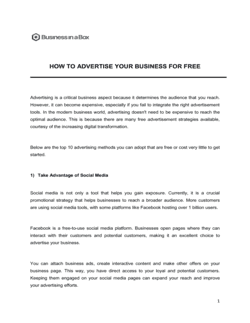
The 10 Best Ways To Advertise Your Business is a structured Word document that walks business owners through the ten most effective advertising channels β€” from Google Ads and social media to local sponsorships and referral programs β€” with a section for each channel covering goals, tactics, budget guidance, and success metrics. This free Word download gives you a ready-to-edit framework you can customize for your industry and export as PDF to share with a marketing team or agency.
When you need it
Use it when launching a new business, entering a new market, restructuring a marketing budget, or building an advertising plan from scratch. It is equally useful when an owner realizes their current promotion efforts are scattered and wants a single, prioritized document to align the team.
What's inside
Ten channel-specific sections covering paid search, social media advertising, content marketing, email marketing, local SEO, referral programs, print and out-of-home advertising, influencer and partnership marketing, video advertising, and event and community sponsorship β€” each with tactical guidance, budget benchmarks, and KPIs to track.

What is a "10 Best Ways To Advertise Your Business" Template?

The 10 Best Ways To Advertise Your Business template is a structured Word document that organizes the ten most proven advertising channels into a single, actionable framework β€” covering paid search, social media ads, content marketing, email, local SEO, referral programs, print and out-of-home, influencer partnerships, video advertising, and event sponsorship. Each section defines the channel's purpose, provides tactical guidance with placeholder fields you fill in for your specific business, sets budget benchmarks, and identifies the KPIs that tell you whether the channel is working. Rather than leaving owners to guess which channels to prioritize, the template walks through the decision criteria for each and gives you a ready-to-present document you can share with a marketing team, a freelance media buyer, or an agency.

Why You Need This Document

Most small businesses advertise reactively β€” boosting a post here, trying Google Ads for a month there β€” with no documented strategy, no defined budget per channel, and no way to compare results across efforts. The cost is real: budget gets wasted on channels that don't match the audience, campaigns run without conversion tracking, and there is no baseline to measure improvement against. A completed advertising plan forces you to commit to specific channels, set measurable targets, and allocate budget before you spend a dollar β€” turning a scattered collection of one-off promotions into a repeatable, optimizable system. This template gives you the structure to make those decisions once, clearly, and then execute with confidence rather than starting from scratch every quarter.

Which variant fits your situation?

If your situation is…Use this template
Planning the full marketing strategy beyond advertising channelsMarketing Plan
Focusing specifically on digital marketing tacticsDigital Marketing Plan
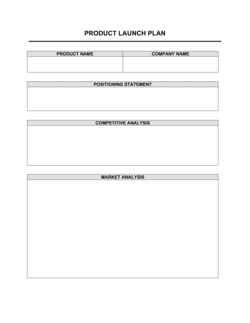
Launching a specific product or serviceProduct Launch Plan
Managing ongoing social media content and campaignsSocial Media Marketing Plan
Building a content calendar for inbound marketingContent Marketing Plan
Setting measurable advertising goals tied to revenue targetsMarketing Budget Template
Pitching an advertising strategy to investors or partnersBusiness Plan

Common mistakes to avoid

❌ Activating too many channels at once

Why it matters: Spreading a limited budget across six channels simultaneously means none gets enough spend to exit the platform learning phase or generate statistically meaningful data.

Fix: Start with two channels maximum. Reach statistical significance on each before adding a third. A $3,000 monthly budget split six ways produces $500 per channel β€” not enough to learn anything.

❌ Setting no tracking or attribution before spending

Why it matters: Without conversion tracking installed on your website and UTM parameters on every ad link, you cannot determine which channel or campaign generated a lead or sale.

Fix: Install Google Analytics 4 and set up conversion goals before running a single ad. Add UTM parameters to every URL and verify they fire correctly before launch.

❌ Using the same creative for 90-plus days without refresh

Why it matters: Ad fatigue sets in when the same audience sees identical creative repeatedly β€” click-through rates drop and CPCs rise, reducing ROAS without any change in spend.

Fix: Plan at least two creative variants per campaign at launch and schedule a creative refresh every 4–6 weeks. Rotate headlines and imagery independently to identify which elements drive performance.

❌ Ignoring local SEO in favor of paid-only strategies

Why it matters: For any business serving a defined geography, Google Business Profile and local SEO deliver consistent, zero-cost impressions to high-intent searchers β€” yet most SMBs leave the profile incomplete.

Fix: Spend two hours fully completing your Google Business Profile β€” categories, hours, photos, services, and a business description with target keywords β€” before allocating any budget to paid local ads.

❌ Setting advertising goals without linking them to revenue targets

Why it matters: Goals like 'increase brand awareness' or 'get more clicks' cannot be evaluated for success or used to justify budget. They produce activity, not accountability.

Fix: Translate every advertising goal into a revenue-linked metric: 'Generate 50 qualified leads per month at a cost per lead below $40, converting to 10 new customers at an average order value of $800.'

❌ Treating referral programs as set-and-forget

Why it matters: Referral programs launched without ongoing promotion fade within 60 days β€” customers forget they exist and staff stop mentioning them.

Fix: Build referral reminders into every customer touchpoint: post-purchase email, invoice footer, delivery confirmation, and quarterly re-engagement emails to your existing customer list.

The 10 key sections, explained

Paid Search Advertising (PPC)

Social Media Advertising

Content Marketing and SEO

Email Marketing

Local SEO and Google Business Profile

Referral and Word-of-Mouth Programs

Print, Direct Mail, and Out-of-Home Advertising

Influencer and Partnership Marketing

Video Advertising

Event Sponsorship and Community Marketing

How to fill it out

  1. 1

    Define your advertising objectives and budget

    Before filling in any channel section, state your primary goal β€” brand awareness, lead generation, or direct sales β€” and set a total monthly advertising budget. Allocate percentages to each channel category rather than treating the budget as a single pool.

    πŸ’‘ A common starting split for SMBs: 50% to the one channel with the clearest ROI history, 30% to a second proven channel, and 20% to testing one new channel.

  2. 2

    Identify your target audience profile

    Write a one-paragraph description of your ideal customer β€” age, location, income, job title or lifestyle, and the problem they need solved. This profile should govern every targeting decision in the channel sections.

    πŸ’‘ If you serve more than one distinct customer type, create a separate audience profile for each and note which channels reach each segment most efficiently.

  3. 3

    Fill in the paid search section with specific keywords and bids

    Use Google Keyword Planner or a similar tool to identify 10–20 target keywords with estimated CPC and monthly search volume. Enter your monthly budget and target cost per acquisition.

    πŸ’‘ Start with exact-match and phrase-match keywords only. Broad match burns budget on irrelevant searches before you have enough conversion data to optimize.

  4. 4

    Select the right social platforms for your audience

    Choose one or two platforms where your target customer spends time and complete those channel sections in detail. Leave other platform sections blank rather than spreading a small budget too thin.

    πŸ’‘ B2B businesses with deal sizes above $5,000 should prioritize LinkedIn. B2C lifestyle products typically see lower CPMs on Meta and TikTok than on LinkedIn.

  5. 5

    Set measurable KPIs for each active channel

    For every channel you activate, record at least two KPIs β€” one for efficiency (CPC, CPM, or cost per lead) and one for outcome (conversion rate, revenue, or new customers). Enter these in the metrics row of each section.

    πŸ’‘ Review KPIs weekly for the first 60 days of any new channel. Waiting until month-end to check performance allows poor-performing campaigns to burn budget without correction.

  6. 6

    Build a 90-day channel test schedule

    Note the start date, test duration, and evaluation criteria for any channel you are trying for the first time. Commit to a minimum 30-day test before making optimization decisions β€” most channels need this window to exit the learning phase.

    πŸ’‘ Document your baseline metrics (website traffic, lead volume, revenue) before activating a new channel so you have a clean before-and-after comparison.

  7. 7

    Review and reallocate budget monthly

    At the end of each month, compare actual ROAS or cost per acquisition across all active channels. Shift budget from underperforming channels to those generating the lowest cost per new customer.

    πŸ’‘ A channel that has not hit its KPI target after 60 days of consistent spend either needs a creative or targeting refresh β€” or should be paused and the budget redirected.

Frequently asked questions

What is the most effective way to advertise a small business?

The most effective channel depends on your audience, geography, and budget, but for most small businesses, the combination of Google Business Profile optimization (free), Google Ads for high-intent searches, and one social media platform matched to the target demographic produces the strongest early results. Start with channels that capture existing demand before investing in channels that create awareness from scratch.

How much should a small business spend on advertising?

The U.S. Small Business Administration suggests allocating 7–8% of gross revenue to marketing for businesses earning under $5M annually, rising to 10–12% for competitive consumer markets. In practice, early-stage businesses often need to spend a higher percentage while building brand recognition. The more useful benchmark is target cost per acquisition: determine what a new customer is worth over their lifetime and set a CAC ceiling accordingly.

What is the difference between advertising and marketing?

Advertising is paid promotion through specific channels β€” Google Ads, print, TV, social paid placements. Marketing is the broader discipline that includes positioning, branding, pricing, content, and distribution strategy. Advertising is one tool within the marketing mix. This template focuses specifically on the paid and channel-activation side of that equation.

Which advertising channels work best for local businesses?

Local businesses consistently see the highest ROI from Google Business Profile optimization, local SEO targeting 'near me' searches, Google Local Services Ads, community event sponsorship, and direct mail to a defined zip code radius. Social media advertising with geographic targeting layers well on top of these for awareness. Paid search captures intent; local presence channels build trust.

How do I measure whether my advertising is working?

Set up conversion tracking in Google Analytics 4 before running any campaign. Track at minimum: cost per click, cost per lead, lead-to-customer conversion rate, and cost per acquisition. For e-commerce, track ROAS directly. For service businesses, track inbound call volume and form submissions attributed to each channel via UTM parameters or call-tracking numbers.

Should I hire an agency or manage advertising myself?

Self-managing works well with a monthly budget under $3,000 and a single channel, provided you invest time in learning the platform. Above $5,000/month or across multiple channels, the opportunity cost of management time and the risk of misoptimization typically justify a specialist. A freelance media buyer costs $500–$1,500/month; a full-service agency typically requires a $2,500–$5,000/month minimum engagement.

How long does it take for advertising to produce results?

Paid search and social ads can generate leads within days of launch but require 30–60 days to exit the platform learning phase and optimize performance. Content marketing and SEO typically take 3–6 months to produce measurable organic traffic growth. Referral programs take 60–90 days to gain momentum. Plan your expectations and cash flow accordingly β€” advertising is rarely instant.

What advertising channels are most effective for B2B businesses?

LinkedIn Ads, Google Search targeting job-title-specific queries, industry event sponsorship, content marketing (whitepapers, case studies, webinars), and email nurture sequences consistently outperform B2C-oriented channels for B2B. Account-based marketing tools like LinkedIn Matched Audiences allow targeting by company name and job title, making spend more precise for high-value deal pipelines.

Can I advertise my business for free?

Yes β€” several channels cost nothing but time. Google Business Profile, organic social media posting, SEO content, online business directories (Yelp, Bing Places), local press and PR, and community forums (Reddit, Facebook Groups, Nextdoor) are all zero-cost. Free channels are slower to build than paid, but they compound over time and reduce your dependence on paid spend for customer acquisition.

How this compares to alternatives

vs Marketing Plan

A marketing plan covers the full strategic mix β€” positioning, branding, pricing, distribution, and promotion β€” across a 12-month horizon. The advertising guide focuses specifically on channel activation, budget allocation, and campaign tactics. Use the marketing plan to set strategy first, then use this template to execute the paid and promotional components.

vs Digital Marketing Plan

A digital marketing plan focuses exclusively on online channels β€” SEO, email, social, and paid digital. This advertising guide covers both digital and traditional offline channels (print, direct mail, events, sponsorships), making it more appropriate for businesses that mix online and in-person customer acquisition.

vs Social Media Marketing Plan

A social media marketing plan goes deep on content calendars, platform-specific tactics, community management, and organic engagement. This advertising guide treats social media as one of ten channels and focuses on the paid advertising layer rather than organic content strategy.

vs Product Launch Plan

A product launch plan orchestrates the cross-functional activities β€” development, PR, sales enablement, and distribution β€” needed to bring a single product to market. This advertising guide is not launch-specific; it structures ongoing, multi-channel advertising for an existing business across all products and services.

Industry-specific considerations

Retail and E-commerce

Google Shopping ads, Meta dynamic product ads, email abandon-cart sequences, and influencer unboxing campaigns drive the majority of paid acquisition for product-based retailers.

Professional Services

Referral programs, LinkedIn thought leadership, local SEO, and Google Search ads targeting service-specific queries generate the highest-quality leads for law firms, accountants, and consultants.

Food and Beverage

Google Business Profile, Yelp advertising, Instagram visual content, and community event sponsorship are the primary drivers of new customer acquisition for restaurants and food brands.

Construction and Trades

Google Local Services Ads with verified badges, Houzz and Angi listings, before-and-after video content, and neighborhood direct mail yield the strongest ROI for contractors and tradespeople.

SaaS and Technology

Content marketing and SEO for organic search, Google Ads targeting high-intent SaaS comparison queries, LinkedIn for enterprise outreach, and free-trial conversion funnels anchor most SaaS advertising strategies.

Healthcare and Wellness

Google Search ads for condition- and treatment-specific queries, local SEO, patient referral programs, and community health event sponsorship are the primary growth channels β€” subject to platform advertising policies on health content.

Template vs pro β€” what fits your needs?

PathBest forCostTime
Use the templateSmall business owners and early-stage founders managing advertising in-house with a budget under $3,000/monthFree3–5 hours to complete; ongoing monthly review of 1–2 hours
Template + professional reviewBusinesses spending $3,000–$10,000/month who want a freelance specialist to validate channel selection and KPI benchmarks$500–$1,500 for a freelance media strategist review session1–2 weeks
Custom draftedMulti-location businesses, franchise systems, or brands spending above $10,000/month who need a fully managed, channel-specific media plan$2,500–$10,000+ for a full-service agency engagement3–6 weeks

Glossary

CPM (Cost Per Mille)
The cost an advertiser pays per 1,000 ad impressions, used to measure the efficiency of awareness-focused campaigns.
CPC (Cost Per Click)
The amount paid each time a user clicks on a paid ad, common in Google Ads and social media advertising platforms.
Conversion Rate
The percentage of ad recipients or website visitors who complete a desired action β€” purchase, sign-up, or call β€” out of total exposures.
ROAS (Return on Ad Spend)
Revenue generated divided by the amount spent on advertising, expressed as a ratio β€” e.g., 4:1 means $4 earned for every $1 spent.
Organic Reach
The number of people who see your content without paid promotion, typically through search rankings, shares, or followers.
Local SEO
Search engine optimization tactics that improve a business's visibility in geographically relevant searches, including Google Business Profile optimization.
Referral Program
A structured incentive that rewards existing customers for recommending the business to new customers, typically through discounts or cash rewards.
Impression
Each instance of an ad being displayed to a user, regardless of whether they interact with it.
Retargeting
A paid advertising tactic that shows ads specifically to users who have previously visited your website or engaged with your content.
Influencer Marketing
Paying or partnering with individuals who have a relevant social media following to promote your product or service to their audience.
CAC (Customer Acquisition Cost)
Total advertising and sales spend divided by the number of new customers acquired in the same period.

Part of your Business Operating System

This document is one of 3,000+ business & legal templates included in Business in a Box.

  • Fill-in-the-blanks β€” ready in minutes
  • Compatible with all office suites
  • Export to PDF and share electronically

Create your document in 3 simple steps.

From template to signed document β€” all inside one Business Operating System.
1
Download or open template

Access over 3,000+ business and legal templates for any business task, project or initiative.

2
Edit and fill in the blanks with AI

Customize your ready-made business document template and save it in the cloud.

3
Save, Share, Send, Sign

Share your files and folders with your team. Create a space of seamless collaboration.

Save time, save money, and create top-quality documents.

β˜…β˜…β˜…β˜…β˜…

"Fantastic value! I'm not sure how I'd do without it. It's worth its weight in gold and paid back for itself many times."

Managing Director Β· Mall Farm
Robert Whalley
Managing Director, Mall Farm Proprietary Limited
β˜…β˜…β˜…β˜…β˜…

"I have been using Business in a Box for years. It has been the most useful source of templates I have encountered. I recommend it to anyone."

Business Owner Β· 4+ years
Dr Michael John Freestone
Business Owner
β˜…β˜…β˜…β˜…β˜…

"It has been a life saver so many times I have lost count. Business in a Box has saved me so much time and as you know, time is money."

Owner Β· Upstate Web
David G. Moore Jr.
Owner, Upstate Web

Run your business with a system β€” not scattered tools

Stop downloading documents. Start operating with clarity. Business in a Box gives you the Business Operating System used by over 250,000 companies worldwide to structure, run, and grow their business.

Free Forever PlanΒ Β·Β No credit card required