Manufacturing and Supply Agreement Templates

4.7from 280+ reviews Trusted by 20M+ businesses

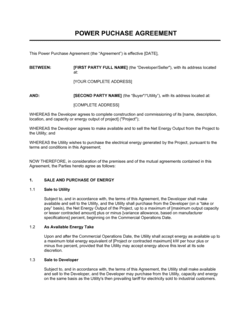
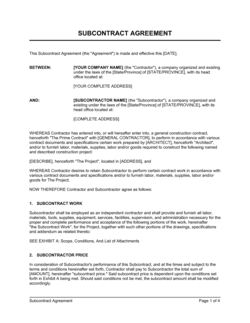
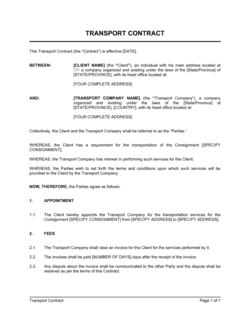
Set clear terms for production, delivery, and supply before goods change hands or factories start running.

WordEditable onlinePDF19+ manufacturing and supply templates

Other Legal Agreements categories

250K+Clients
20M+Free users
20+Years
190+Countries
10,000+Law firms
50M+Downloads

Trusted across review platforms

  • Capterra★★★★☆4.649 reviews
  • G2★★★★☆4.713 reviews
  • GetApp★★★★☆4.649 reviews
  • Google Play★★★★☆4.6179 ratings
  • Google Reviews★★★★☆4.567 reviews

Related categories

Frequently asked questions

What is a manufacturing and supply agreement?
A manufacturing and supply agreement is a contract that combines production obligations with a supply commitment — the manufacturer agrees to produce a specified product to defined standards and supply it to the buyer on agreed terms. It covers price, volume, quality, IP, delivery, and termination in a single integrated document, making it the primary governing contract for product-based outsourcing relationships.
Do I need a written supply agreement if I already use purchase orders?
Yes. Purchase orders cover individual transactions but typically do not address quality standards, IP ownership, liability caps, confidentiality, or termination rights. Without a master supply agreement, your legal position in a dispute over defective goods, missed delivery, or IP misappropriation is significantly weaker. A written agreement establishes the rules; purchase orders execute individual orders within those rules.
What is toll manufacturing and when should I use that agreement?
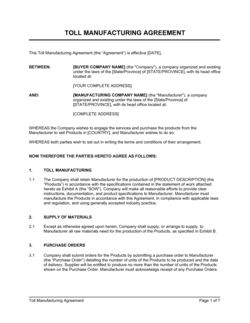
Toll manufacturing is an arrangement where the buyer supplies raw materials to the manufacturer, who processes them and returns finished goods — charging only a processing fee. You retain ownership of materials throughout. This model is common in chemicals, food processing, and pharmaceuticals. Use a toll manufacturing agreement, rather than a standard contract manufacturing agreement, to protect your ownership interest and clarify customs and inventory treatment.
How is an exclusive supply agreement different from a standard supply agreement?
An exclusive supply agreement prevents the supplier from selling the same product to your competitors (supplier exclusivity) or prevents you from sourcing the same product elsewhere (buyer exclusivity) — or both. The exclusivity is typically granted in exchange for minimum purchase volume commitments. A standard supply agreement has no such restriction. Exclusivity provisions require careful drafting because they can raise competition-law concerns if the market share or duration is significant.
Who owns the tooling, molds, and dies created for my product?
Ownership depends entirely on what the contract says. If you paid for the tooling, the agreement should state that you own it and have the right to retrieve it if the relationship ends. If the manufacturer paid for the tooling, they typically retain ownership unless bought out. Unclear tooling ownership is one of the most common causes of supply chain disputes — address it explicitly before production starts.
What Incoterms should I use in a manufacturing agreement?
FOB (Free On Board) is widely used in international manufacturing — the supplier bears risk until goods are loaded at the origin port; the buyer takes risk from that point. DDP (Delivered Duty Paid) places maximum obligation on the supplier to deliver to your facility, including customs. EXW (Ex Works) places maximum obligation on you as buyer. The right choice depends on your logistics capability, customs experience, and where you want risk to transfer.
Can I use a manufacturing agreement for domestic and international suppliers?
Yes, but international agreements need additional provisions: governing law and dispute resolution (often international arbitration), Incoterms for delivery and risk, currency and payment method, import/export compliance, and potentially country-specific regulatory requirements. Domestic agreements can be simpler but should still address all core commercial and IP terms. Consider local counsel review for any agreement involving a supplier in a different legal jurisdiction.
What is a manufacturing quality agreement and do I need one separately?
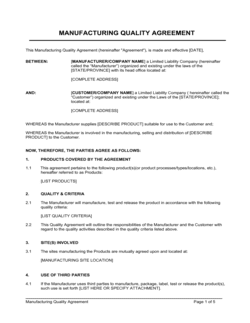
A manufacturing quality agreement (MQA) specifically defines quality responsibilities, testing protocols, batch release procedures, corrective action processes, and regulatory compliance obligations. In regulated industries — pharmaceuticals, medical devices, food — an MQA is often legally required and kept separate from commercial terms so quality personnel can maintain it independently. In other industries it can be incorporated as an exhibit to the main manufacturing agreement.

Manufacturing and Supply Agreement vs. related documents

Supply Agreement vs. Purchase Order

A supply agreement is a master contract that governs the ongoing relationship between buyer and supplier — including pricing, quality standards, and liability. A purchase order is a transaction-level document issued under that relationship, authorizing a specific shipment or delivery. Use the supply agreement to establish the rules; use purchase orders to execute individual transactions within those rules.

Contract Manufacturing Agreement vs. Toll Manufacturing Agreement

In a contract manufacturing arrangement, the manufacturer typically sources raw materials and owns them through production, then sells finished goods to the buyer. In a toll manufacturing arrangement, the buyer supplies the raw materials and retains ownership throughout; the manufacturer charges only for labor and processing. The distinction matters for customs, inventory accounting, and IP risk.

Manufacturing Agreement vs. Manufacturing License Agreement

A manufacturing agreement defines operational terms — price, volume, quality, delivery. A manufacturing license agreement grants a third party legal permission to use proprietary IP (a patent, trade secret, or design) in the production process. You often need both: the license authorizes production; the manufacturing agreement governs how it runs.

Exclusive Supply Agreement vs. Strategic Alliance and Supply Agreement

An exclusive supply agreement focuses on locking one supplier as the sole source for a defined product or territory, in exchange for volume guarantees. A strategic alliance and supply agreement adds a broader collaborative dimension — joint development, shared marketing, or co-investment — on top of the supply relationship. Choose the exclusive supply form for straightforward sourcing; choose the alliance form when the relationship involves shared business objectives.

Key clauses every Manufacturing and Supply Agreement contains

Manufacturing and supply agreements vary in scope, but every well-drafted version includes these core clauses.

  • Product specifications. Defines the exact technical and quality requirements the goods must meet, including drawings, formulas, or approved samples.
  • Pricing and payment terms. Sets the unit price, volume-based pricing tiers, currency, and payment schedule for each order.
  • Minimum order quantities and forecasts. Establishes the minimum volume the buyer commits to purchasing and how demand forecasts are shared.
  • Delivery and lead times. Specifies shipping terms (Incoterms), delivery windows, and consequences for late delivery.
  • Quality control and inspection rights. Grants the buyer the right to audit the facility or inspect goods before and after delivery.
  • Intellectual property ownership. Clarifies who owns tooling, molds, designs, and any improvements developed during the relationship.
  • Confidentiality. Prevents the manufacturer or supplier from disclosing formulas, designs, or customer information to third parties.
  • Term, termination, and transition. States how long the agreement runs, grounds for termination, and obligations to support an orderly wind-down.
  • Indemnification and liability cap. Allocates responsibility for product defects, recalls, and third-party claims, and limits each party's maximum exposure.

How to write a manufacturing and supply agreement

A well-structured manufacturing or supply agreement starts with the commercial terms and works outward to risk allocation and governance.

  1. 1

    Identify the parties and their roles

    Use full legal entity names and clearly label who is the buyer/brand owner and who is the manufacturer/supplier.

  2. 2

    Describe the product or materials in precise detail

    Attach specifications, drawings, approved samples, or formulas as exhibits — ambiguous descriptions cause disputes.

  3. 3

    Set pricing, volume commitments, and forecast obligations

    State the unit price, any volume tiers, minimum order quantities, and how the buyer will share demand forecasts.

  4. 4

    Define delivery terms using recognized Incoterms

    Specify who bears shipping cost and risk of loss at each stage — EXW, FOB, CIF, and DDP are the most common in manufacturing.

  5. 5

    Allocate intellectual property rights

    State who owns tooling, molds, background IP, and any improvements — and whether the manufacturer gets a license to use them.

  6. 6

    Include quality assurance and audit rights

    Specify inspection procedures, acceptance criteria, rejection and remedy processes, and rights to audit the production facility.

  7. 7

    Address confidentiality and non-solicitation

    Prevent the manufacturer or supplier from using your IP, sharing your data, or poaching your customers or staff.

  8. 8

    Set term, termination triggers, and transition obligations

    Define the contract duration, events that allow either party to terminate early, and obligations to support supply continuity during wind-down.

At a glance

What it is
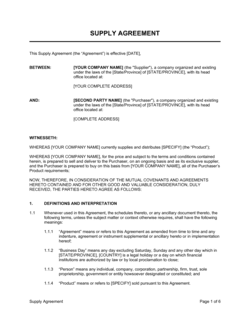
A manufacturing and supply agreement is a legal contract that defines the terms under which one party produces or supplies goods to another — covering price, volume, quality standards, delivery schedules, and liability allocation. These agreements form the operational backbone of any product-based business relationship.
When you need one
Any time you outsource production, lock in a supplier, or formalize a recurring goods relationship, you need a written agreement before manufacturing begins or purchase orders are placed.

Which Manufacturing and Supply Agreement do I need?

The right template depends on whether you are buying, making, licensing, or managing supply — and whether exclusivity or quality control is the primary concern.

Your situation
Recommended template

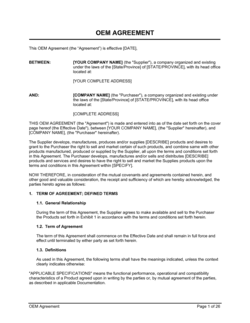
Outsourcing production of your branded product to a third-party factory

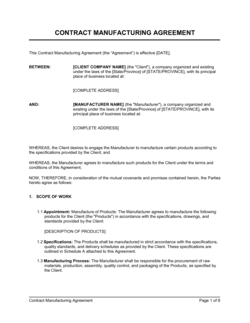
Covers IP ownership, quality standards, and production responsibilities when a factory makes your product.

Locking in a single supplier as your exclusive source for a component

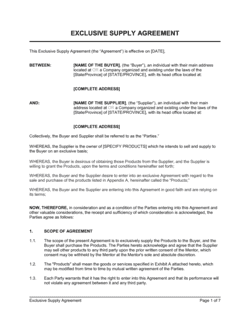
Grants exclusivity in exchange for volume commitments and defined pricing.

Supplying raw materials to a manufacturer who processes them on your behalf

You retain ownership of the materials; the manufacturer charges only a processing fee.

Setting up a general recurring supply relationship for goods or materials

A flexible, general-purpose framework for ongoing buyer-supplier relationships.

Combining production rights with a distribution arrangement

Addresses both manufacturing obligations and downstream distribution rights in one document.

Granting a third party the right to manufacture your patented or proprietary product

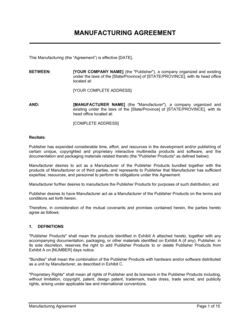
Licenses IP for manufacturing purposes while retaining ownership of the underlying rights.

Appointing a sales representative to sell your manufactured goods

Defines territory, commission, and sales responsibilities for a manufacturer's rep.

Establishing quality standards and responsibilities with a contract manufacturer

Focuses exclusively on quality control obligations, testing protocols, and corrective action.

Glossary

Contract manufacturer
A third-party company that produces goods on behalf of a brand owner, typically sourcing materials and delivering finished products.
Toll manufacturer
A manufacturer that processes buyer-supplied raw materials into finished goods and charges only for labor and processing, not materials.
Incoterms
A standardized set of international trade terms (published by the ICC) that define which party bears shipping costs and risk of loss at each stage of delivery.
Minimum order quantity (MOQ)
The smallest quantity of goods a buyer is contractually required to purchase per order or per period.
Product specifications
The technical description of a product — including dimensions, materials, performance criteria, and appearance — that the manufacturer must meet.
Exclusivity
A contractual restriction preventing a supplier from selling to competitors or preventing a buyer from sourcing from alternative suppliers.
Tooling
Molds, dies, jigs, and fixtures used to manufacture a product; ownership of tooling is a common source of supply chain disputes.
Supply chain plan
A strategic document outlining sourcing, production, inventory, and logistics processes to meet demand reliably and cost-effectively.
Supplier scorecard
A performance tracking tool that measures a supplier against defined metrics such as on-time delivery, defect rate, and responsiveness.
Supplier code of conduct
A policy document setting ethical, environmental, and labor standards that suppliers must meet as a condition of the business relationship.
Non-exclusive manufacturing license
A grant of permission to manufacture using proprietary IP while the IP owner retains the right to license the same IP to others.
Force majeure
A clause that excuses a party from performance obligations when production or delivery is prevented by events outside their reasonable control, such as natural disasters or government actions.

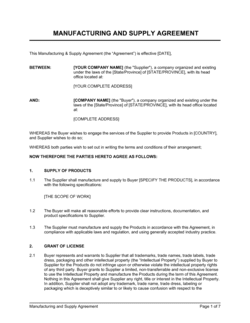
What is a manufacturing and supply agreement?

A manufacturing and supply agreement is a legally binding contract that governs the terms under which one party produces or delivers goods to another. It combines commercial terms — price, volume, delivery, and payment — with operational and legal protections such as quality standards, intellectual property ownership, confidentiality, and liability allocation. Unlike a one-off purchase order, a manufacturing or supply agreement is designed to govern an ongoing relationship, setting the rules that apply across many individual transactions.

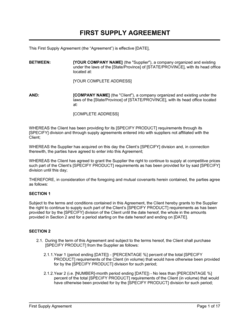
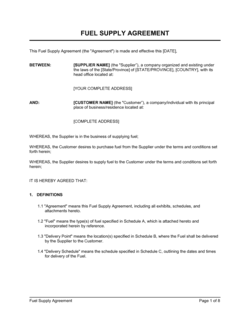
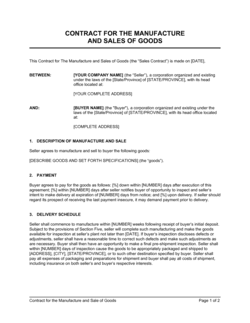
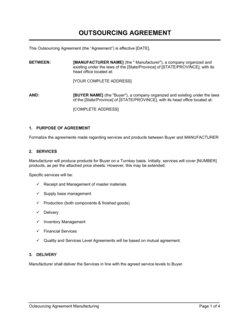
These agreements come in several forms depending on how production is organized. A contract manufacturing agreement applies when a third-party factory produces finished goods on your behalf. A toll manufacturing agreement applies when you supply the raw materials and the manufacturer charges only for processing. An exclusive supply agreement locks in a single source in exchange for volume guarantees. A manufacturing license agreement grants a third party legal permission to use your IP in production. Each variant solves a specific commercial and legal problem — the choice of template matters as much as the quality of the drafting.

When you need a manufacturing and supply agreement

The moment production of goods is outsourced, or a recurring supply relationship is formalized, a written agreement should be in place before manufacturing begins or the first purchase order is issued. Verbal understandings and email chains rarely hold up when defective goods arrive, delivery is missed, or a supplier starts selling your product to a competitor.

Common triggers:

  • A brand owner engages a contract manufacturer to produce a physical product for the first time
  • A business locks in a preferred supplier with a multi-year exclusive arrangement
  • A company grants a third party the right to manufacture under its patent or trade secret
  • A manufacturer processes buyer-supplied ingredients or raw materials under a toll arrangement
  • A growing business needs a documented supplier management policy and performance scorecard
  • An entrepreneur commissions a facility build to support a specific production process
  • A startup maps its supply chain plan before approaching investors or launching production
  • A manufacturer appoints regional sales representatives to sell into new territories

Without a written agreement, disputes over defective goods, missed deliveries, tooling ownership, or IP misuse are difficult and expensive to resolve. With one, the obligations, remedies, and exit paths are clear from day one — protecting both sides and keeping the supply chain running.

Award-winning platform

  • Great Place to Work 2025
  • BIG Award — Product of the Year 2025
  • Smartest Companies 2025
  • Global 100 Excellence 2026
  • Best of the Best 2025

Create your document in 3 simple steps.

From template to signed document — all inside one Business Operating System.
1
Download or open template

Access over 3,000+ business and legal templates for any business task, project or initiative.

2
Edit and fill in the blanks with AI

Customize your ready-made business document template and save it in the cloud.

3
Save, Share, Send, Sign

Share your files and folders with your team. Create a space of seamless collaboration.

Save time, save money, and create top-quality documents.

★★★★★

"Fantastic value! I'm not sure how I'd do without it. It's worth its weight in gold and paid back for itself many times."

Managing Director · Mall Farm
Robert Whalley
Managing Director, Mall Farm Proprietary Limited
★★★★★

"I have been using Business in a Box for years. It has been the most useful source of templates I have encountered. I recommend it to anyone."

Business Owner · 4+ years
Dr Michael John Freestone
Business Owner
★★★★★

"It has been a life saver so many times I have lost count. Business in a Box has saved me so much time and as you know, time is money."

Owner · Upstate Web
David G. Moore Jr.
Owner, Upstate Web

Run your business with a system — not scattered tools

Stop downloading documents. Start operating with clarity. Business in a Box gives you the Business Operating System used by over 250,000 companies worldwide to structure, run, and grow their business.

Free Forever Plan · No credit card required