Product Roadmap Template

Free Word download β€’ Edit online β€’ Save & share with Drive β€’ Export to PDF

3 pagesβ€’25–30 min to fillβ€’Difficulty: Standardβ€’Signature requiredβ€’Legal review recommended
Learn more ↓
FreeProduct Roadmap Template

At a glance

What it is
A Product Roadmap is a strategic planning document that maps your product's planned features, milestones, and releases against a defined timeline, aligning product, engineering, sales, and executive stakeholders around a single source of truth. This free Word download gives you a structured, editable starting point you can customize online and export as PDF for internal planning, investor updates, or client-facing commitments.
When you need it
Use it when launching a new product, planning a major release cycle, onboarding enterprise clients who require delivery commitments, or presenting a development strategy to investors or a board of directors.
What's inside
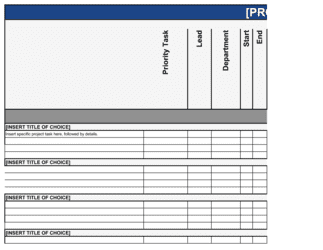
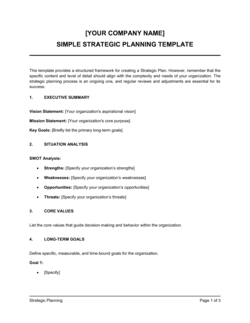
Vision and strategic objectives, prioritized feature backlog, milestone and release schedule, owner assignments, dependency mapping, success metrics, and a revision history log to track how the roadmap evolves over time.

What is a Product Roadmap?

A Product Roadmap is a strategic planning document that maps a product's planned features, milestones, and releases against a defined timeline, aligning product managers, engineers, executives, sales teams, and external stakeholders around a shared set of priorities and delivery expectations. It functions simultaneously as an internal coordination tool and an external communication artifact β€” translating a product vision into a sequence of concrete commitments that teams can execute against and stakeholders can rely on. A well-structured product roadmap connects every initiative to a measurable business outcome, making it possible to evaluate not just whether features shipped, but whether they moved the metrics that matter.

Why You Need This Document

Without a documented product roadmap, priorities shift with every executive meeting, engineers lose confidence in the plan, and sales teams over-promise features that product has never committed to building. The consequences are concrete: enterprise clients who made purchasing decisions based on verbal roadmap commitments have grounds for contract disputes when features are delayed; investors who received an undocumented roadmap pitch have no shared record of what was promised; and internal teams working from conflicting assumptions deliver duplicated work or miss critical dependencies. A versioned, formally structured roadmap with explicit change control closes all of these gaps β€” and this template gives you the structure to produce one in hours rather than days.

Which variant fits your situation?

If your situation is…Use this template
Planning features and releases for a SaaS product over 12 monthsAgile Product Roadmap
Communicating a high-level product vision to the board or investorsExecutive Product Roadmap
Tracking a single major release with detailed task dependenciesProduct Release Plan
Managing a portfolio of multiple products or product linesPortfolio Roadmap
Outlining technology upgrades and infrastructure milestonesTechnology Roadmap
Documenting agreed delivery scope and timeline for a client engagementProject Plan
Presenting a new product concept to stakeholders before development beginsProduct Requirements Document

Common mistakes to avoid

❌ Publishing exact delivery dates beyond 90 days

Why it matters: Dates more than 90 days out are almost always wrong. When they change, stakeholders who treated them as commitments feel misled β€” damaging trust even when the change was reasonable.

Fix: Use quarterly buckets or 'Now / Next / Later' horizons for anything beyond the current quarter, and communicate all dates as targets rather than commitments.

❌ Omitting success metrics for each feature

Why it matters: Without a defined metric, a shipped feature that fails to move the needle looks like a success. The roadmap then perpetuates investment in low-impact work.

Fix: Require at least one measurable KPI per initiative before it enters the roadmap. If a success metric cannot be defined, the feature's value proposition needs clarification before it is prioritized.

❌ No documented change control process

Why it matters: Without a formal amendment process, the roadmap is edited informally in response to the loudest voice in the room. Stakeholders lose confidence when they cannot tell what changed or why.

Fix: Define two tiers of change β€” minor (product owner approval) and major (executive sponsor approval) β€” and require a written revision history entry for every material change.

❌ Naming a team rather than an individual as feature owner

Why it matters: Team-level ownership diffuses accountability. When a milestone slips, no single person is responsible, blockers are left unresolved, and the post-mortem is unproductive.

Fix: Assign every initiative to a named individual. If the right person has not yet been identified, mark the feature as unassigned and treat it as a blocking issue in the next planning meeting.

❌ Hiding out-of-scope items instead of documenting them explicitly

Why it matters: Stakeholders assume anything not explicitly excluded is implicitly included. Omitting the exclusion list guarantees scope-creep requests throughout the planning cycle.

Fix: Add a dedicated 'Not in scope' section listing every candidate feature that was considered but deferred, with the reason and the earliest future period for reconsideration.

❌ Sharing the same roadmap version with all audiences

Why it matters: An internal engineering roadmap with story points and sprint assignments will confuse investors and clients, while an executive summary roadmap leaves engineers without actionable detail.

Fix: Maintain a single source-of-truth roadmap internally, then produce audience-specific views β€” investor, client-facing, and engineering β€” extracted from the master document.

The 10 key clauses, explained

Vision and strategic objectives

In plain language: States the overarching product vision and the 2–4 strategic goals the roadmap is designed to advance over the planning horizon.

Sample language
The vision for [PRODUCT NAME] is to [VISION STATEMENT]. This roadmap covers [TIME PERIOD] and is designed to advance the following strategic objectives: (1) [OBJECTIVE 1], (2) [OBJECTIVE 2], (3) [OBJECTIVE 3].

Common mistake: Writing a vision statement that describes features rather than outcomes β€” 'build a dashboard' instead of 'give operations teams real-time visibility into pipeline health.' Feature-level visions make prioritization harder and fail to align stakeholders around business value.

Planning horizon and cadence

In plain language: Defines the total time period the roadmap covers, the review cadence (monthly, quarterly), and how often the roadmap will be updated and re-communicated.

Sample language
This roadmap covers [START DATE] through [END DATE]. The roadmap will be reviewed and updated on a [monthly / quarterly] basis. Material changes to priorities or timelines will be communicated to stakeholders within [X] business days.

Common mistake: Setting a multi-year horizon with monthly granularity. Quarterly or theme-based groupings beyond 6 months are more credible β€” detailed monthly commitments 18 months out are invariably wrong and erode trust when they change.

Feature backlog and prioritization criteria

In plain language: Lists the initiatives planned for the roadmap period, ranked by priority, with the scoring method used to rank them made explicit.

Sample language
Features are prioritized using [RICE / MoSCoW / weighted scoring] based on the following criteria: reach ([WEIGHT]%), impact ([WEIGHT]%), confidence ([WEIGHT]%), and effort ([WEIGHT]%). The current prioritized backlog is set out in Appendix A.

Common mistake: Prioritizing by loudest stakeholder rather than a documented scoring method. Without an explicit framework, the backlog shifts with every executive meeting and engineers lose confidence in the plan.

Milestone and release schedule

In plain language: Maps each major milestone or release to a target date, lists the features included, and identifies the team or squad responsible for delivery.

Sample language
Release [VERSION / NAME] | Target Date: [DATE] | Features: [LIST] | Owner: [SQUAD / TEAM LEAD] | Dependencies: [ITEMS]. Release is subject to successful completion of [DEPENDENCY] by [DATE].

Common mistake: Publishing target release dates without flagging dependencies. When a dependent team misses their date, the downstream release slips β€” and stakeholders who weren't aware of the dependency feel misled.

Owner and accountability assignments

In plain language: Names the product owner and individual feature leads responsible for delivery, approval, and stakeholder communication for each initiative.

Sample language
Product Owner: [NAME], [TITLE]. Feature Lead for [FEATURE]: [NAME]. Executive Sponsor: [NAME]. Any change to ownership requires written acknowledgment from the incoming and outgoing owners.

Common mistake: Listing a team name rather than an individual as owner. 'Engineering team' owns nothing β€” a named individual does. Diffused ownership leads to missed handoffs and unresolved blockers.

Success metrics and acceptance criteria

In plain language: Defines the measurable outcomes that will indicate a feature or milestone has been successfully delivered, linking each initiative to a KPI or OKR.

Sample language
Feature: [FEATURE NAME] | Success Metric: [METRIC] reaching [TARGET VALUE] by [DATE] | Acceptance Criteria: [CRITERIA]. Progress will be tracked in [TOOL] and reviewed at the [CADENCE] roadmap check-in.

Common mistake: Omitting success metrics entirely and treating delivery as the goal. A feature shipped that does not move the target metric is a cost, not a success. Without defined metrics, there is no objective basis to evaluate whether the roadmap is working.

Dependency and risk log

In plain language: Documents internal and external dependencies, identifies the risks that could delay delivery, and assigns a mitigation action and owner for each.

Sample language
Dependency: [DESCRIPTION] | Owner: [NAME / TEAM] | Required by: [DATE] | Risk if delayed: [IMPACT]. Mitigation: [ACTION]. Status will be reviewed at each [WEEKLY / SPRINT] stand-up.

Common mistake: Recording dependencies only in a separate project management tool and not surfacing them in the roadmap shared with stakeholders. Decision-makers need to see risks in the same document where they review priorities.

Scope and exclusion statement

In plain language: Explicitly states what is not included in the current roadmap period, preventing scope creep and managing stakeholder expectations.

Sample language
The following items are explicitly excluded from this roadmap period and will be considered for [NEXT PERIOD / FUTURE RELEASE]: [ITEM 1], [ITEM 2], [ITEM 3]. Inclusion requests must be submitted through the formal change-request process described in Section [X].

Common mistake: Leaving the exclusion statement blank or omitting it entirely. Without explicit out-of-scope items, every stakeholder assumes their pet feature is implied and pressure builds to add it mid-cycle.

Change control and amendment process

In plain language: Describes how changes to the roadmap are proposed, evaluated, approved, and communicated β€” including who has authority to approve changes at each tier of impact.

Sample language
Minor changes (effort < [X] story points, no milestone date impact) may be approved by the Product Owner. Major changes (milestone date shift > [X] weeks, or removal of a committed feature) require approval from [EXECUTIVE SPONSOR / STEERING COMMITTEE] and written notification to affected stakeholders within [X] business days.

Common mistake: Treating the roadmap as a living Confluence page with no formal change log. Without version control and a change record, stakeholders cannot tell what changed, when it changed, or who approved it β€” making accountability impossible.

Revision history and version control

In plain language: A dated log of all material changes to the roadmap, recording what changed, who approved the change, and the reason.

Sample language
Version [X.X] | Date: [DATE] | Changed by: [NAME] | Approved by: [NAME] | Summary of changes: [DESCRIPTION] | Reason: [REASON].

Common mistake: Keeping only the current version and deleting prior versions. Stakeholders who reference a previous commitment β€” in contract negotiations or post-mortems β€” need to be able to see exactly what was promised and when.

How to fill it out

  1. 1

    Define the product vision and strategic objectives

    Write a one-sentence product vision focused on customer outcomes, not features. Then list the 2–4 strategic business goals this roadmap period is designed to advance β€” growth, retention, compliance, or market expansion.

    πŸ’‘ Test the vision statement by asking whether it would still be true if the specific features on the roadmap changed. If not, it is describing a feature, not a vision.

  2. 2

    Set the planning horizon and review cadence

    Choose a time horizon appropriate to your product maturity β€” 6 months for fast-moving startups, 12 months for established SaaS products. Define how often the roadmap will be reviewed and updated and who will receive change notifications.

    πŸ’‘ Use quarterly buckets for anything beyond 3 months rather than exact dates. Quarterly commitments are more credible and easier to update without damaging trust.

  3. 3

    Build and prioritize the feature backlog

    List all candidate features for the roadmap period. Score each using an explicit prioritization method β€” RICE, MoSCoW, or weighted criteria β€” and document the method in the roadmap so stakeholders understand how decisions were made.

    πŸ’‘ Run the prioritization exercise with input from product, engineering, and a customer success representative before finalizing. Features ranked by product alone without engineering input routinely underestimate effort.

  4. 4

    Map milestones and releases to the timeline

    Assign each prioritized feature or epic to a milestone or release. Set a target date, list the features included, name the squad owner, and flag any dependencies that must be resolved before the release can ship.

    πŸ’‘ Add a 10–15% buffer to each milestone estimate before publishing externally. Stakeholders who see a date treat it as a commitment, not a forecast.

  5. 5

    Assign owners and accountability

    Name a specific individual as product owner for the overall roadmap and a named feature lead for each initiative. Record the executive sponsor who has approval authority for major changes.

    πŸ’‘ If a feature does not yet have an identified owner, mark it as 'unassigned' rather than naming a team. Unassigned items are visible and prompt action; team-level assignments are invisible blockers.

  6. 6

    Define success metrics for each initiative

    For every feature or milestone, write at least one measurable success metric tied to a business KPI or OKR. Include the target value and the date by which it should be reached.

    πŸ’‘ Use metrics that can be measured within 30–60 days of release. Metrics that take 12 months to materialize cannot inform the next roadmap cycle.

  7. 7

    Document the change control process and publish

    Record who can approve minor versus major roadmap changes, what triggers each tier, and how changes will be communicated. Version the document before distributing it to any external audience.

    πŸ’‘ Send the roadmap as a versioned PDF to external stakeholders rather than a live link. A PDF freezes the version they received and protects you if a dispute arises over what was committed.

  8. 8

    Log the first revision history entry

    Even on the initial release of the roadmap, create the first revision history row β€” version 1.0, today's date, your name, and 'Initial release.' This establishes the audit trail from day one.

    πŸ’‘ Store all prior versions in a dedicated folder in your project management system or document repository. Deleting old versions eliminates your evidence in stakeholder disputes.

Frequently asked questions

What is a product roadmap?

A product roadmap is a strategic planning document that maps a product's planned features, milestones, and releases to a timeline, aligning product, engineering, sales, and executive stakeholders around shared priorities and delivery expectations. It communicates both what will be built and why β€” connecting individual features to business objectives and customer outcomes. Roadmaps range from high-level visionary documents for investor audiences to sprint-level engineering plans for development teams.

What should a product roadmap include?

A complete product roadmap covers the product vision and strategic objectives, the planning horizon and review cadence, a prioritized feature backlog with the scoring method used, a milestone and release schedule with owner assignments, success metrics for each initiative, a dependency and risk log, an explicit out-of-scope statement, and a change control and revision history section. Missing any of these components creates gaps that lead to stakeholder misalignment or disputed commitments.

How is a product roadmap different from a project plan?

A product roadmap communicates strategic priorities and direction at a feature and milestone level β€” it answers what will be built and when, at a level appropriate for executive and stakeholder communication. A project plan operates at the task level, detailing individual work items, resource assignments, and dependencies required to execute a specific initiative. Roadmaps drive the project plan; project plans execute the roadmap.

Should a product roadmap include specific dates?

For the current quarter, specific target dates are reasonable and expected. Beyond 90 days, exact dates are almost always wrong and erode trust when they change. For anything further out, use quarterly buckets, named releases, or horizon labels like 'Now / Next / Later' rather than calendar dates. Always communicate dates as targets rather than guarantees, and include a change-control process so amendments can be made transparently.

How often should a product roadmap be updated?

Most product teams review and update the roadmap on a quarterly basis, aligned to their planning cadence. Fast-moving startups or teams in active development may review monthly. The key is to establish a defined cadence and communicate it to stakeholders so that changes feel planned rather than reactive. Every material change should be logged in the revision history with the date, what changed, and who approved it.

Who should have input into a product roadmap?

The product manager or product owner typically owns and maintains the roadmap, but input should come from engineering (effort estimates and dependency identification), customer success (churn and support signals), sales (feature requests tied to active deals), and executive leadership (strategic priorities). Roadmaps built without engineering input consistently underestimate complexity; roadmaps built without sales input miss near-term revenue-critical features.

What is the difference between a roadmap and a backlog?

A backlog is a comprehensive, unordered or loosely ordered list of all candidate features, bugs, and enhancements. A roadmap is a curated, time-bound plan showing which backlog items have been prioritized for delivery and when. The backlog feeds the roadmap; the roadmap commits to a subset of the backlog within a defined horizon. Not everything in the backlog belongs on the roadmap.

Can a product roadmap be used in client contracts?

Yes, and this is where precision matters most. When a roadmap or roadmap excerpt is referenced in a client contract or statement of work, the features and dates it contains can become contractual commitments. Review any roadmap shared externally with legal counsel before incorporating it into a binding agreement, and use explicit disclaimer language β€” such as 'subject to change' or 'planned, not guaranteed' β€” on any client-facing version. Failing to do so can expose the company to breach-of-contract claims if features are delayed or descoped.

What prioritization frameworks work best for product roadmaps?

RICE (Reach, Impact, Confidence, Effort) is the most widely used quantitative framework for SaaS and digital products. MoSCoW (Must Have, Should Have, Could Have, Won't Have) works well for fixed-scope projects or enterprise delivery commitments. Weighted scoring models allow teams to weight strategic fit, revenue impact, and technical debt alongside customer value. The framework matters less than documenting it explicitly so stakeholders understand how decisions are made.

How this compares to alternatives

vs Project Plan

A project plan operates at the task level β€” individual work items, assignees, dependencies, and effort estimates for a specific initiative. A product roadmap operates at the feature and milestone level, communicating strategic priorities across a full planning horizon. Roadmaps drive project plans; project plans execute specific roadmap milestones. Both are needed; neither replaces the other.

vs Product Requirements Document (PRD)

A PRD defines the detailed functional and non-functional requirements for a single feature or product β€” the what and how at engineering depth. A product roadmap communicates when that feature will be built relative to other priorities and what business outcome it is meant to advance. A PRD is written for engineers; a roadmap is written for stakeholders. Roadmap items typically spawn individual PRDs.

vs Strategic Plan

A strategic plan defines company-level goals, competitive positioning, and resource allocation across all business functions over a 3–5 year horizon. A product roadmap translates the portion of that strategy relevant to the product into a time-bound delivery plan. Strategic plans set the direction; product roadmaps operationalize it for the product team.

vs Gantt Chart

A Gantt chart visualizes task-level timelines, dependencies, and resource allocation for project execution β€” useful for managing delivery within a sprint or release cycle. A product roadmap communicates strategic priorities and milestone sequencing at a level appropriate for executive and stakeholder audiences. Gantt charts are execution tools; roadmaps are alignment and communication tools.

Industry-specific considerations

SaaS / Technology

Sprint-aligned release cadence, MRR-tied feature prioritization, API versioning dependencies, and investor-facing roadmap summaries tied to ARR growth milestones.

Financial Services

Regulatory compliance features must be scheduled before audit deadlines, creating non-negotiable milestone constraints that override standard prioritization.

Healthcare / MedTech

FDA 510(k) or CE mark submission timelines drive roadmap sequencing, and clinical validation milestones must appear explicitly with external dependency owners.

Enterprise Software

Client-committed feature dates negotiated in enterprise contracts require a formal change control process, and roadmap amendments may trigger contract amendment procedures.

E-commerce / Retail

Seasonal release blackout periods around peak sales events constrain milestone scheduling, and payment and checkout features require PCI DSS compliance review before release.

Professional Services / Agencies

Client-facing roadmaps are incorporated by reference into statements of work, making version control and explicit out-of-scope statements essential to avoiding scope disputes.

Jurisdictional notes

United States

When a product roadmap is incorporated by reference into a software development agreement or SaaS contract, it can create enforceable delivery obligations under contract law. California courts have found liability for missed feature commitments when roadmap language was unambiguous and the buyer relied on it in purchasing decisions. Include explicit 'subject to change' disclaimer language on any client-facing version and confirm governing state law in the parent contract.

Canada

Canadian contract law follows common-law principles in all provinces except Quebec, which applies the Civil Code. A roadmap referenced in a services agreement can constitute a representation giving rise to breach of contract or misrepresentation claims if commitments are not met. Quebec-regulated employers must ensure client-facing documents are available in French. Include explicit disclaimer language and version control on all externally shared roadmaps.

United Kingdom

Under UK contract law, representations made in pre-contractual documents β€” including roadmaps shared during sales β€” can give rise to misrepresentation claims under the Misrepresentation Act 1967 if the buyer relied on them. Software roadmaps referenced in enterprise contracts should include a clear 'indicative only' disclaimer and a change notification clause. GDPR compliance features must be scheduled with adequate lead time before any regulatory deadline.

European Union

EU member state contract law varies, but roadmaps incorporated into B2B software agreements can create binding delivery obligations enforceable under local civil codes. GDPR, Digital Markets Act, and sector-specific regulations (PSD2 for fintech, MDR for medtech) impose non-negotiable compliance deadlines that must appear in the roadmap with explicit regulatory references. France, Germany, and the Netherlands each impose distinct rules on pre-contractual disclosure β€” review with local counsel before sharing externally.

Template vs lawyer β€” what fits your deal?

PathBest forCostTime
Use the templateInternal product planning, investor updates, and team alignment where no contractual commitments are involvedFree2–4 hours
Template + legal reviewRoadmaps shared with enterprise clients, incorporated by reference into contracts, or tied to SLA or delivery commitments$300–$800 for a contract or technology lawyer review1–3 days
Custom draftedRegulated industries (healthcare, fintech), roadmaps embedded in enterprise MSAs, or situations where feature delays carry financial penalty clauses$1,500–$5,000+1–2 weeks

Glossary

Roadmap
A visual or tabular plan that maps product initiatives and milestones to a timeline, communicating what will be built and when.
Milestone
A specific, date-bound checkpoint that marks the completion of a significant phase, feature set, or product release.
Feature Backlog
A prioritized list of planned features, enhancements, and bug fixes that have not yet been scheduled into a release.
Epic
A large unit of work β€” such as a major feature area or product capability β€” that is broken down into smaller user stories or tasks for development.
Sprint
A fixed time-boxed development cycle β€” typically 1 to 4 weeks β€” during which a defined set of backlog items is completed.
Dependencies
Items, tasks, or external deliverables that must be completed before a given feature or milestone can proceed.
OKRs (Objectives and Key Results)
A goal-setting framework linking each roadmap initiative to a measurable outcome, ensuring features are tied to business results rather than activity.
Now / Next / Later
A horizon-based roadmap format that groups initiatives into three timeframes without fixed dates, useful when release schedules are uncertain.
MoSCoW Prioritization
A method of ranking features as Must Have, Should Have, Could Have, or Won't Have to guide scope decisions under time and resource constraints.
Release
A versioned deployment of product functionality made available to end users, typically tagged with a version number and release notes.
Stakeholder Alignment
The process of ensuring all internal and external parties β€” product, engineering, sales, executives, and clients β€” share a common understanding of priorities and timelines.

Part of your Business Operating System

This document is one of 3,000+ business & legal templates included in Business in a Box.

  • Fill-in-the-blanks β€” ready in minutes
  • 100% customizable Word document
  • Compatible with all office suites
  • Export to PDF and share electronically

Create your document in 3 simple steps.

From template to signed document β€” all inside one Business Operating System.
1
Download or open template

Access over 3,000+ business and legal templates for any business task, project or initiative.

2
Edit and fill in the blanks with AI

Customize your ready-made business document template and save it in the cloud.

3
Save, Share, Send, Sign

Share your files and folders with your team. Create a space of seamless collaboration.

Save time, save money, and create top-quality documents.

β˜…β˜…β˜…β˜…β˜…

"Fantastic value! I'm not sure how I'd do without it. It's worth its weight in gold and paid back for itself many times."

Managing Director Β· Mall Farm
Robert Whalley
Managing Director, Mall Farm Proprietary Limited
β˜…β˜…β˜…β˜…β˜…

"I have been using Business in a Box for years. It has been the most useful source of templates I have encountered. I recommend it to anyone."

Business Owner Β· 4+ years
Dr Michael John Freestone
Business Owner
β˜…β˜…β˜…β˜…β˜…

"It has been a life saver so many times I have lost count. Business in a Box has saved me so much time and as you know, time is money."

Owner Β· Upstate Web
David G. Moore Jr.
Owner, Upstate Web

Run your business with a system β€” not scattered tools

Stop downloading documents. Start operating with clarity. Business in a Box gives you the Business Operating System used by over 250,000 companies worldwide to structure, run, and grow their business.

Start freeΒ Β·Β No credit card required