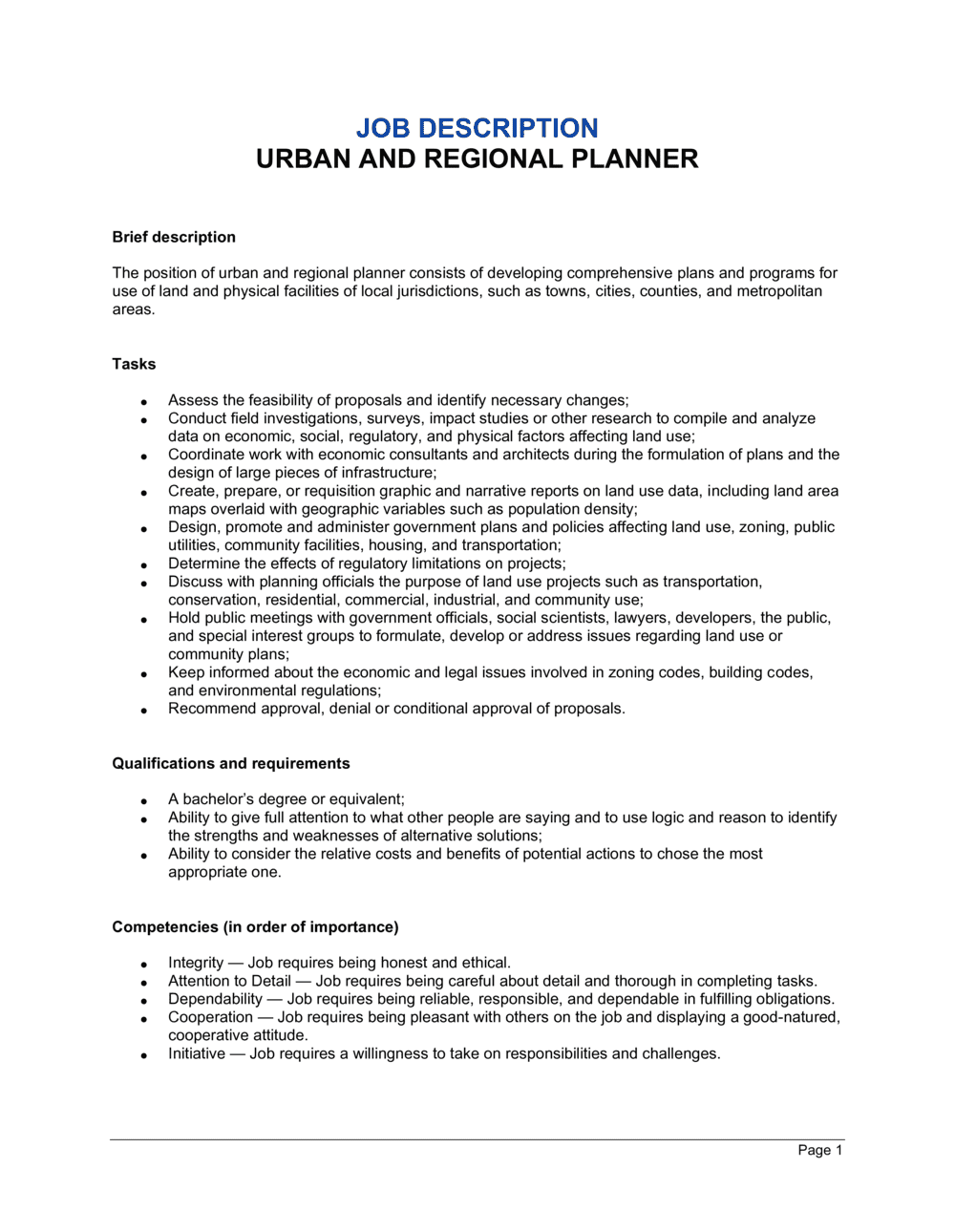
- AICP Certification
- The American Institute of Certified Planners credential — the professional standard for planners in the US, requiring education, experience, and an examination.
- Land Use Review
- The process by which a planner evaluates proposed development projects for compliance with zoning codes, general plans, and applicable regulations.
- General Plan (Comprehensive Plan)
- A long-range policy document adopted by a local government that guides decisions about land use, transportation, housing, and infrastructure over a 20–30 year horizon.
- Zoning Ordinance
- A local law dividing a municipality into districts and regulating the use, height, bulk, and density of buildings and land within each district.
- CEQA / NEPA
- California Environmental Quality Act and National Environmental Policy Act — environmental review frameworks requiring agencies to assess the environmental impacts of proposed projects and decisions.
- Entitlement
- The legal approval or permit granted by a government authority allowing a specific type of development to proceed on a parcel of land.
- GIS (Geographic Information System)
- Software and methodology for capturing, storing, analyzing, and visualizing spatial and geographic data used in planning analysis and mapping.
- EIR / EIS
- Environmental Impact Report (California) or Environmental Impact Statement (federal) — detailed documents analyzing the significant environmental effects of a proposed project.
- FLSA Classification
- The Fair Labor Standards Act designation of a position as exempt or non-exempt, determining overtime eligibility based on duties and salary level.
- Position Control Number
- An internal identifier assigned by HR or finance to track a budgeted position regardless of who occupies it, used in civil service and government payroll systems.
- Scope of Practice
- The defined range of activities, tasks, and decisions a planner in a given role is authorized to perform independently versus with supervisory review.