- Subordinated Debt
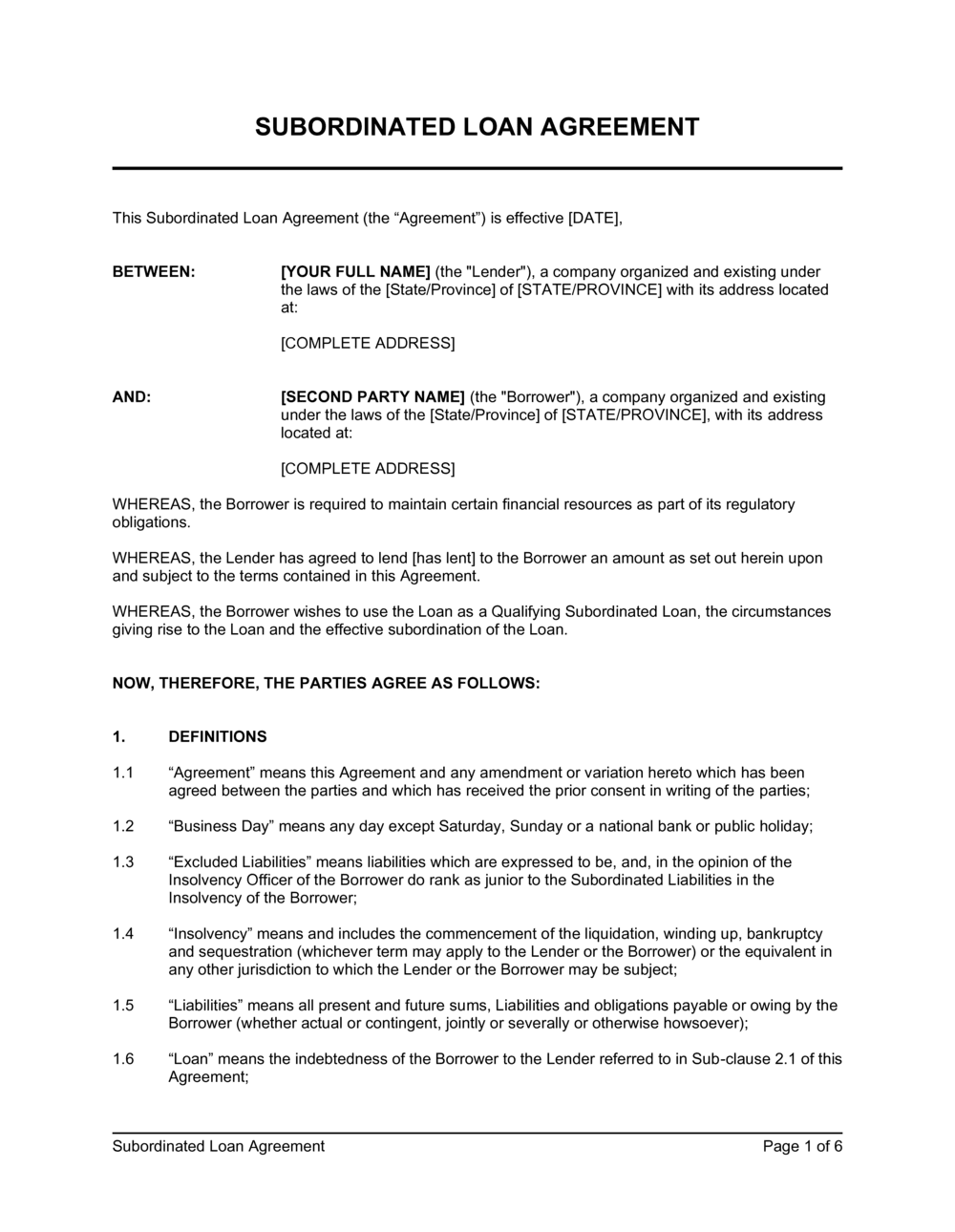
- Debt whose repayment claim ranks below one or more senior creditors in an insolvency or liquidation, meaning senior lenders are paid in full before the subordinated lender receives anything.
- Senior Creditor
- A lender or creditor whose debt ranks ahead of all junior obligations and must be satisfied first in any distribution of the borrower's assets on insolvency.
- Standstill Period
- A contractual period during which the subordinated lender is prohibited from taking any enforcement action against the borrower, even if a default has occurred under the subordinated loan.
- Intercreditor Agreement
- A separate deed or agreement between senior and junior lenders that governs their relative priorities, the mechanics of enforcement, and the circumstances in which junior creditors may act.
- Payment Blockage
- A provision triggered by a senior default that suspends all payments of interest and principal under the subordinated loan until the senior default is cured or waived.
- Mezzanine Financing
- A hybrid layer of capital sitting between senior secured debt and equity, typically bearing a higher interest rate to compensate for its junior ranking and limited security.
- Pari Passu
- Latin for 'on equal footing' — describes debt that ranks equally with another obligation rather than senior or junior to it.
- Acceleration
- The right of a lender to demand immediate repayment of the entire outstanding loan balance upon the occurrence of an event of default.
- Waterfall
- The contractually defined order in which proceeds from asset sales, cash flows, or insolvency distributions are applied to pay different classes of creditor.
- Turnover Obligation
- A clause requiring the subordinated lender to pay over to the senior creditor any amounts received from the borrower in breach of the subordination mechanics — effectively clawing back impermissible payments.
- Event of Default
- A specified trigger — such as non-payment, insolvency, or breach of covenant — that entitles a lender to accelerate the loan or take other enforcement steps.