- Principal
- The original sum of money lent by the stockholder to the corporation, excluding interest.
- Applicable Federal Rate (AFR)
- The minimum interest rate the IRS requires on related-party loans in the US; charging below the AFR can cause the IRS to impute interest income to the lender.
- Subordination
- A clause ranking the stockholder's loan behind senior creditors — meaning senior lenders get paid first in a default or insolvency scenario.
- Event of Default
- A defined trigger — such as a missed payment, insolvency filing, or breach of covenant — that allows the lender to demand immediate repayment of the full outstanding balance.
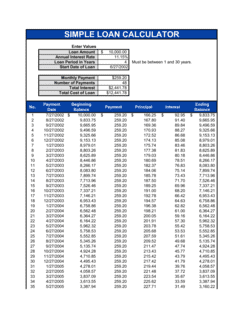
- Amortization Schedule
- A table showing each periodic payment broken down into principal reduction and interest, with the outstanding balance after each payment.
- Acceleration Clause
- A provision that makes the entire unpaid loan balance immediately due and payable upon an event of default, without waiting for the original maturity date.
- Deemed Dividend
- A tax characterization applied when a loan from a corporation to a stockholder — or an undocumented advance from a stockholder — lacks proper form, causing tax authorities to treat it as a taxable distribution.
- Thin Capitalization
- A situation where a corporation is funded primarily with debt rather than equity, triggering tax rules in many jurisdictions that limit the deductibility of interest on related-party loans.
- Maturity Date
- The date on which the full outstanding principal and any accrued unpaid interest become due and payable.
- Prepayment Penalty
- A fee charged if the borrower repays the loan before the scheduled maturity date, compensating the lender for lost interest income.
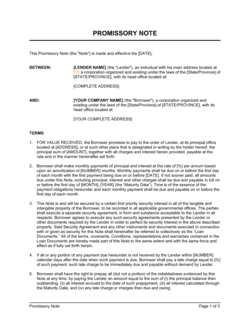
- Promissory Note
- A standalone written promise to repay a debt; often incorporated by reference in a loan agreement or used in its place for simpler transactions.