Strategies For Improving Team Collaboration

Free Word download β€’ Edit online β€’ Save & share with Drive β€’ Export to PDF

5 pagesβ€’25–30 min to fillβ€’Difficulty: Standardβ€’Signature requiredβ€’Legal review recommended
Learn more ↓
FreeStrategies For Improving Team Collaboration Template

At a glance

What it is
A Strategies for Improving Team Collaboration document is a formal workplace policy and framework that defines how team members communicate, coordinate, share accountability, and resolve conflict. This free Word download gives managers and HR professionals a structured, editable starting point they can tailor to their team's size and working model, then export as PDF for distribution or sign-off.
When you need it
Use it when launching a new team or cross-functional project, when recurring communication breakdowns are hurting delivery, or when remote and hybrid working arrangements require explicit coordination standards. It is also useful when onboarding a newly restructured department that needs a shared operating agreement.
What's inside
Communication protocols and preferred channels, role and responsibility definitions, meeting cadence and facilitation standards, decision-making frameworks, conflict resolution procedures, performance metrics for collaboration, and accountability mechanisms. The document functions as both a strategic guide and a binding team agreement.

What is a Strategies for Improving Team Collaboration Document?

A Strategies for Improving Team Collaboration document is a formal workplace policy and operating framework that defines how a team communicates, makes decisions, runs meetings, resolves conflict, and measures its own effectiveness. It goes beyond a casual team agreement by assigning specific roles, setting measurable standards, and establishing a signed commitment from every team member β€” creating a shared baseline that managers can reference in performance conversations and HR processes. The document typically covers communication channel protocols, decision-rights thresholds, meeting cadence, conflict escalation steps, approved tools, and the metrics used to track whether collaboration is actually improving over time.

Why You Need This Document

Without a written collaboration framework, teams default to informal norms that vary by individual β€” and those inconsistencies compound into missed deadlines, redundant meetings, and unresolved interpersonal tension that stalls delivery. The absence of agreed communication standards is one of the most consistent contributors to project failure in distributed and cross-functional teams: when no one agrees on which tool carries urgent messages or how quickly a response is expected, critical information falls through the gaps. A signed collaboration strategy eliminates that ambiguity by making every norm explicit, measurable, and mutually agreed upon. It also gives managers a documented foundation for performance conversations when a team member consistently fails to meet the agreed standards β€” transforming a subjective interpersonal issue into an objective policy question. This template gives you a structured starting point you can co-create with your team, adapt to your tools and working model, and put into effect within a single working session.

Which variant fits your situation?

If your situation is…Use this template
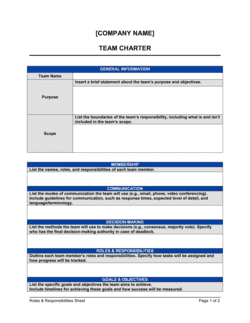
Formalizing collaboration standards for a single project teamTeam Charter
Setting communication norms across a remote or hybrid workforceRemote Work Policy
Documenting roles and responsibilities within a departmentRACI Matrix
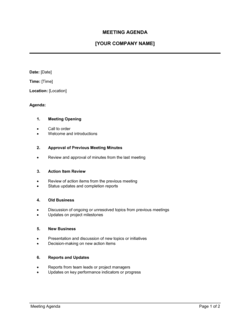
Establishing meeting structure and facilitation standardsMeeting Agenda Template
Addressing recurring conflict or breakdown between specific teamsConflict Resolution Policy
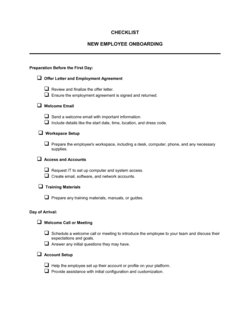
Onboarding new hires into an existing team's operating modelEmployee Onboarding Checklist
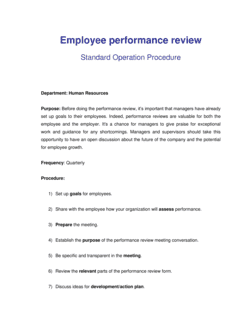
Measuring and improving collaboration as a tracked KPIEmployee Performance Review Template

Common mistakes to avoid

❌ Drafting the document without team input

Why it matters: A strategy written entirely by a manager and handed to a team treats collaboration norms as directives. Teams that had no voice in the standards routinely ignore them within the first month.

Fix: Run a 60-minute working session with the full team to co-create the communication, meeting, and decision-rights sections. Reserve final editorial control for the manager, but incorporate the team's language wherever possible.

❌ Setting response-time standards that ignore time zones

Why it matters: A '2-hour response' norm applied uniformly across a team spanning EST and GMT creates chronic non-compliance and signals that the document was not written with the actual team in mind.

Fix: Define response windows by region or role, not by a single global standard. For asynchronous-first teams, replace response-time mandates with end-of-business-day commitments in each team member's local time zone.

❌ Publishing the document with no review cycle

Why it matters: Teams grow, tools change, and working models shift. A collaboration strategy with no expiry or review date becomes outdated within 6 to 12 months and is quietly abandoned rather than updated.

Fix: Set a quarterly review date in the document itself and assign a named owner. At each review, confirm that the tools, roles, and metrics still reflect how the team actually works.

❌ Omitting measurable success metrics

Why it matters: Without quantified targets, the document cannot demonstrate improvement, justify investment in collaboration tools, or trigger intervention when team performance declines.

Fix: Choose two to four specific metrics β€” action-item completion rate, on-time delivery rate, meeting attendance, or pulse survey score β€” and record the baseline value at the time of publication.

❌ Circulating for awareness only, without requiring acknowledgment

Why it matters: A document that team members have 'seen' but not formally agreed to has no enforceable weight in an HR dispute or performance management conversation.

Fix: Require a dated signature or digital acknowledgment from every person listed in Schedule A. Store the executed copies in a location accessible to HR.

❌ Encoding too many approved communication tools

Why it matters: Listing six or seven platforms in the communication section reflects existing tool sprawl rather than solving it. Teams with too many channels default to whichever one is most familiar β€” usually not the one designated for critical updates.

Fix: Reduce the approved toolset to a maximum of three platforms before drafting the communication section. One tool for urgent messages, one for project tracking, and one for document storage covers most teams' needs.

The 9 key clauses, explained

Purpose and scope

In plain language: States the document's intent, identifies which teams or roles it applies to, and clarifies that it supplements rather than replaces any existing employment policies.

Sample language
This document establishes collaboration standards for [TEAM NAME / DEPARTMENT] at [COMPANY NAME], effective [DATE]. It applies to all members listed in Schedule A and supplements the Company's existing [EMPLOYEE HANDBOOK / HR POLICY] without creating additional employment obligations.

Common mistake: Scoping the document so broadly that it applies to the whole company without tailoring. Generic language reduces buy-in and makes the standards feel unenforceable to individual teams.

Roles, responsibilities, and decision rights

In plain language: Defines each team member's function, their ownership of specific deliverables, and the category of decisions they can make independently versus those requiring group input.

Sample language
[ROLE TITLE] is responsible for [DELIVERABLE / FUNCTION] and holds sole decision authority over [DECISION TYPE]. Decisions affecting [THRESHOLD β€” e.g., budget over $X or changes to project scope] require approval from [ROLE / COMMITTEE].

Common mistake: Listing job titles without specifying decision thresholds. When authority boundaries are vague, teams default to escalating everything β€” which is the problem the document is meant to solve.

Communication channels and response standards

In plain language: Specifies which tool to use for each communication type β€” urgent issues, routine updates, document sharing, and social β€” and sets expected response times by channel.

Sample language
Urgent blockers: [TOOL, e.g., Slack #urgent channel] β€” response within [2 hours] during business hours. Project updates: [TOOL, e.g., Asana] β€” updated by [FRIDAY 5 PM] each week. Video calls: scheduled via [TOOL] with [24-hour] minimum notice except for declared emergencies.

Common mistake: Setting response-time standards without accounting for time zones in distributed teams. A '2-hour response' norm that ignores a 9-hour time difference creates chronic non-compliance and resentment.

Meeting cadence and facilitation standards

In plain language: Defines recurring meeting types, their frequency, mandatory participants, agenda structure, and who is responsible for notes and action items.

Sample language
Weekly team standup: [DAY, TIME, DURATION β€” e.g., Monday 9 AM, 30 minutes]. Agenda: blockers (10 min), progress updates (15 min), next steps (5 min). Facilitator rotates weekly. Action items documented in [TOOL] within [24 hours] of each meeting.

Common mistake: Scheduling recurring meetings without a standing agenda or clear output. Meetings without documented action items produce no accountability and are perceived as wasted time within two to three cycles.

Collaboration tools and information management

In plain language: Lists the approved platforms for project management, document storage, version control, and communication, and sets standards for file naming, folder structure, and access permissions.

Sample language
Approved platforms: [PROJECT TOOL], [DOCUMENT STORAGE], [COMMUNICATION TOOL]. All project documents stored in [FOLDER PATH] using naming convention [PREFIX_ProjectName_YYYYMMDD_v#]. Access permissions reviewed by [ROLE] at each project milestone.

Common mistake: Approving tools without mandating where source-of-truth documents live. Teams end up with five versions of the same file across email, Slack, Google Drive, and SharePoint β€” which is the coordination failure the document exists to prevent.

Conflict resolution procedure

In plain language: Sets out a step-by-step process for raising and resolving disagreements β€” starting with direct conversation between the parties and escalating to a manager or HR only if the initial steps fail.

Sample language
Step 1: Parties attempt direct resolution within [3 business days] of the issue arising. Step 2: If unresolved, either party may request facilitation by [TEAM LEAD / MANAGER]. Step 3: Unresolved matters escalate to [HR / SENIOR LEADERSHIP] within [10 business days]. All resolutions documented in writing.

Common mistake: Omitting a time limit at each escalation step. Without deadlines, conflict resolution stalls indefinitely and teams work around unresolved tension rather than addressing it.

Performance metrics for collaboration

In plain language: Defines the specific, measurable indicators the team will track to evaluate whether collaboration is improving β€” such as meeting action-item completion rate, on-time delivery rate, or engagement survey scores.

Sample language
The team will track the following metrics on a [monthly / quarterly] basis: (a) action-item completion rate β€” target [X]%; (b) on-time delivery rate β€” target [X]%; (c) team engagement score β€” target [X]/10 on quarterly pulse survey.

Common mistake: Defining collaboration success qualitatively only ('better communication,' 'more trust'). Without measurable baselines, there is no way to demonstrate improvement or trigger intervention when performance declines.

Accountability and review cycle

In plain language: States who is responsible for monitoring adherence to the collaboration standards, how often the document itself will be reviewed and updated, and what happens when standards are consistently not met.

Sample language
[MANAGER / TEAM LEAD] is responsible for monitoring adherence. This document will be reviewed at [QUARTERLY / ANNUAL] intervals or upon significant team change. Persistent non-compliance will be addressed through the Company's standard [PERFORMANCE MANAGEMENT PROCESS / HR POLICY].

Common mistake: Publishing the document with no review cycle. Teams evolve, tools change, and headcount shifts β€” a collaboration strategy that is never updated becomes irrelevant within 6 to 12 months.

Amendment and acknowledgment

In plain language: Explains how changes to the document are proposed and approved, and records that all team members have read and agreed to the standards by signing or digitally acknowledging the document.

Sample language
Amendments to this document require written approval from [MANAGER / HR]. All team members listed in Schedule A must sign or digitally acknowledge this document within [5 business days] of issuance. Updated versions supersede all prior versions upon issuance.

Common mistake: Circulating the document for awareness without requiring acknowledgment. Without a signature or recorded confirmation, compliance is voluntary and the document has no enforceable weight in a performance or HR dispute.

How to fill it out

  1. 1

    Define the scope and participating team members

    Identify exactly which team, department, or project this document governs. List all participating roles and individuals in Schedule A. Confirm the effective date and note the policy it supplements.

    πŸ’‘ Narrow scope increases compliance. A document built for a 10-person product team will be followed more consistently than one drafted for all 200 employees.

  2. 2

    Map roles, responsibilities, and decision authority

    For each role, document the deliverables they own and the decisions they can make without escalation. Set explicit dollar or scope thresholds that trigger group decision-making.

    πŸ’‘ Co-create this section with the team rather than drafting it unilaterally. Teams that help define their own decision rights comply with them at significantly higher rates.

  3. 3

    Specify communication channels and response times

    List every tool currently in use and assign it a communication type. Set response-time standards by channel and urgency level. Confirm the standards are realistic across all time zones represented on the team.

    πŸ’‘ Reduce the number of approved tools before drafting this section. Documenting seven different platforms signals a tool-sprawl problem, not a collaboration strategy.

  4. 4

    Set the meeting cadence and facilitation rules

    List every recurring meeting, its frequency, duration, required participants, and agenda structure. Assign ownership of notes and action-item tracking to a named role.

    πŸ’‘ Audit your current meeting schedule before filling this section. Remove or consolidate any recurring meeting that lacks a clear output before encoding it into the strategy.

  5. 5

    Draft the conflict resolution procedure

    Write out each step in the escalation path with specific time limits. Identify the person or role responsible at each stage and specify that resolutions must be documented in writing.

    πŸ’‘ Walk through a hypothetical conflict scenario with your team when reviewing this section. Teams that have rehearsed the process are more likely to use it when a real conflict arises.

  6. 6

    Define measurable collaboration metrics

    Choose two to four specific, trackable metrics β€” action-item completion rate, on-time delivery percentage, meeting attendance rate, or pulse survey score. Set baseline targets for each.

    πŸ’‘ Pull two to three months of historical data before setting targets. Targets set without a baseline are usually either unachievably high or meaninglessly easy.

  7. 7

    Set the review cycle and accountability owner

    Name the person responsible for monitoring adherence, specify the review interval (quarterly is recommended), and link non-compliance to the company's existing performance management process.

    πŸ’‘ Calendar the first review date the moment you publish the document. A review date that does not exist in anyone's calendar will not happen.

  8. 8

    Circulate for signature and store the executed copy

    Send the final document to all team members listed in Schedule A for signature or digital acknowledgment within five business days. Store the executed copy in your designated document repository and share the location with all signatories.

    πŸ’‘ Use a timestamped eSign tool rather than email acknowledgment. A dated digital signature is admissible evidence in an HR or employment dispute; a reply email often is not.

Frequently asked questions

What is a strategies for improving team collaboration document?

A strategies for improving team collaboration document is a formal policy and operating framework that defines how a team communicates, makes decisions, runs meetings, resolves conflicts, and measures its own effectiveness. Unlike an informal team agreement, it assigns specific roles, timelines, and accountability mechanisms, and is signed by all team members to create a shared commitment to the defined standards.

Why should a team collaboration strategy be a signed document?

Requiring signatures transforms a set of suggestions into a mutual commitment. Signed documents are admissible in HR and performance management processes, making it possible to address non-compliance through formal channels rather than informal pressure. They also signal to team members that the standards are taken seriously at an organizational level.

Who should create a team collaboration strategy?

Responsibility typically falls to the team's direct manager or team lead, in partnership with HR or a business partner for larger organizations. However, the most effective documents are co-created with the full team β€” managers who draft the strategy unilaterally and distribute it for signature without input consistently see lower adoption rates within the first 30 days.

How is a team collaboration strategy different from a team charter?

A team charter is a shorter founding document that captures purpose, membership, and high-level operating principles β€” typically one to two pages. A collaboration strategy goes deeper, specifying communication protocols by tool, meeting cadence with agenda structures, measurable performance metrics, and a conflict resolution procedure with explicit escalation steps and time limits. A charter often precedes the strategy.

What metrics should be included in a team collaboration strategy?

Effective collaboration metrics are specific and trackable: action-item completion rate from meetings, on-time delivery percentage against milestones, meeting attendance rate, time-to-resolution for flagged blockers, and quarterly team pulse survey scores. Avoid qualitative-only measures like 'improved communication' β€” they cannot be baselined, tracked, or used to trigger improvement conversations.

How often should a team collaboration strategy be reviewed?

Quarterly reviews are recommended for teams that are actively growing or changing tools. Annual reviews suffice for stable teams with established working models. The document should also be reviewed immediately after any significant change β€” a new manager, a shift to remote work, or the addition of more than two new team members β€” since those events typically invalidate existing communication and decision-rights assumptions.

Can a collaboration strategy be used to support a performance improvement plan?

Yes. A signed collaboration strategy that defines measurable standards β€” response times, meeting attendance, action-item completion rates β€” gives managers a documented baseline against which to measure individual performance. When a team member consistently falls below the agreed standards, the signed document provides the factual foundation for a performance conversation or formal improvement plan.

How do you get team buy-in for a collaboration strategy?

The most reliable method is participatory drafting: hold a structured session where the team co-creates the communication, meeting, and decision-rights sections before the manager finalizes the document. Circulate a draft for comment before requiring signatures. Teams that helped write their operating norms comply at higher rates and raise fewer objections when standards are enforced.

How this compares to alternatives

vs Team Charter

A team charter is a one-to-two page founding document that captures a team's purpose, membership, and high-level principles. A collaboration strategy goes further, defining communication channels with response times, meeting structures with agendas, measurable performance metrics, and a stepwise conflict resolution procedure. Use a charter when forming a new team; add the full strategy once the team is operational and patterns of coordination have emerged.

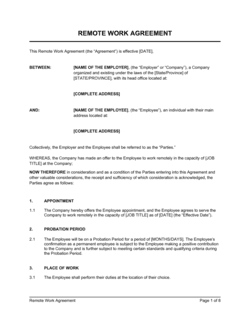
vs Remote Work Agreement

A remote work agreement governs the employment conditions of working outside the office β€” equipment, expense reimbursement, availability hours, and data security. A collaboration strategy governs how a team works together regardless of location β€” tools, meetings, decisions, and accountability. For distributed teams, both documents are typically needed and complement each other directly.

vs Employee Performance Review Template

A performance review evaluates an individual employee's contributions against their role expectations, typically on an annual or semi-annual cycle. A collaboration strategy defines the team-level norms and measurable standards that feed into those individual reviews. The strategy sets the bar; the performance review measures whether each person is meeting it.

vs Meeting Agenda Template

A meeting agenda template structures a single meeting β€” attendees, topics, time allocations, and action items. A collaboration strategy governs the entire meeting ecosystem: which meetings recur, at what frequency, who must attend, and how action items are tracked across all meetings. The agenda template is a tool used within the framework the strategy creates.

Industry-specific considerations

Technology / SaaS

Asynchronous-first communication standards, sprint cadence integration, and cross-functional alignment between engineering, product, and design are the defining collaboration challenges in SaaS teams.

Professional Services

Client-facing delivery teams need explicit escalation paths and billable-hour accountability mechanisms built into their collaboration framework to avoid scope creep and missed deadlines.

Healthcare

Clinical and administrative teams require collaboration protocols that account for shift-based availability, patient confidentiality in communication channels, and regulatory documentation standards.

Manufacturing

Floor-to-management communication gaps and shift handover procedures are the primary collaboration failure points, requiring channel standards that work for both office and plant-floor personnel.

Financial Services

Compliance constraints limit which tools can be used for client and deal-related communication, making the approved-channel section of a collaboration strategy particularly critical for regulated teams.

Retail / E-commerce

Seasonal demand and high staff turnover require collaboration strategies that onboard new team members quickly and define clear escalation paths during peak periods.

Jurisdictional notes

United States

Collaboration standards embedded in employment agreements or used as the basis for disciplinary action must be consistent with the at-will employment doctrine and applicable state labor laws. In California, any document that restricts an employee's ability to communicate with co-workers may intersect with the NLRA's protected concerted activity provisions. Signed acknowledgment is strongly recommended to establish enforceability.

Canada

Collaboration policies that form part of an employee's terms of employment must be introduced before or at the start of employment to avoid consideration issues under common law. In Quebec, the document and any employee-facing materials must be available in French for provincially regulated employers. HR counsel review is advisable before linking non-compliance to formal performance management.

United Kingdom

Workplace collaboration policies are typically incorporated by reference into the employee's statement of particulars. Changes to established working practices β€” including communication channel mandates β€” may require individual employee consent if they materially affect terms and conditions of employment. Employers should ensure the document is consistent with the Equality Act 2010 where communication standards could disadvantage employees with disabilities.

European Union

Collaboration strategies that specify monitoring mechanisms β€” such as tracking action-item completion or communication response times β€” must be assessed for compliance with GDPR, as they may constitute processing of personal data. Works council or employee representative consultation may be required before implementing new workplace monitoring standards in Germany, France, the Netherlands, and several other member states.

Template vs lawyer β€” what fits your deal?

PathBest forCostTime
Use the templateInternal team use by managers, team leads, and HR business partners at companies of any sizeFree2–4 hours including team co-creation session
Template + legal reviewCompanies integrating the document into employment contracts, using it to support disciplinary processes, or applying it to contractors$200–$500 (HR counsel review)1–3 business days
Custom draftedHighly regulated industries (healthcare, financial services), multi-jurisdiction distributed teams, or enterprise deployments requiring integration with existing HR policy frameworks$1,000–$3,0001–2 weeks

Glossary

Team Charter
A short founding document that defines a team's purpose, membership, decision rights, and operating norms β€” often the precursor to a collaboration strategy.
Communication Protocol
A set of agreed rules specifying which channel to use for which type of message, expected response times, and escalation paths.
RACI Matrix
A responsibility assignment chart that maps each task or decision to who is Responsible, Accountable, Consulted, and Informed.
Psychological Safety
A team climate in which members believe they can speak up, raise concerns, or admit errors without fear of punishment or ridicule.
Asynchronous Collaboration
Work coordination that does not require participants to be online or available at the same time β€” relying on recorded video, shared documents, or threaded messaging instead.
Escalation Path
A predefined sequence of people or roles to contact when a decision, conflict, or blocker cannot be resolved at the team level.
Decision-Making Framework
A structured method β€” such as consensus, majority vote, or single-owner authority β€” that a team agrees to use for specific categories of decisions.
OKR (Objectives and Key Results)
A goal-setting system that pairs a qualitative objective with two to five measurable key results, used to align team effort to organizational priorities.
Working Agreement
A set of explicit norms that team members co-create and commit to follow, covering how they will communicate, make decisions, and handle disagreements.
Accountability Mechanism
Any process β€” check-ins, status dashboards, peer review β€” that makes it visible whether team members are meeting their commitments.
Cross-Functional Team
A group drawn from two or more departments β€” such as engineering, marketing, and finance β€” assembled to achieve a shared outcome.

Part of your Business Operating System

This document is one of 3,000+ business & legal templates included in Business in a Box.

  • Fill-in-the-blanks β€” ready in minutes
  • 100% customizable Word document
  • Compatible with all office suites
  • Export to PDF and share electronically

Create your document in 3 simple steps.

From template to signed document β€” all inside one Business Operating System.
1
Download or open template

Access over 3,000+ business and legal templates for any business task, project or initiative.

2
Edit and fill in the blanks with AI

Customize your ready-made business document template and save it in the cloud.

3
Save, Share, Send, Sign

Share your files and folders with your team. Create a space of seamless collaboration.

Save time, save money, and create top-quality documents.

β˜…β˜…β˜…β˜…β˜…

"Fantastic value! I'm not sure how I'd do without it. It's worth its weight in gold and paid back for itself many times."

Managing Director Β· Mall Farm
Robert Whalley
Managing Director, Mall Farm Proprietary Limited
β˜…β˜…β˜…β˜…β˜…

"I have been using Business in a Box for years. It has been the most useful source of templates I have encountered. I recommend it to anyone."

Business Owner Β· 4+ years
Dr Michael John Freestone
Business Owner
β˜…β˜…β˜…β˜…β˜…

"It has been a life saver so many times I have lost count. Business in a Box has saved me so much time and as you know, time is money."

Owner Β· Upstate Web
David G. Moore Jr.
Owner, Upstate Web

Run your business with a system β€” not scattered tools

Stop downloading documents. Start operating with clarity. Business in a Box gives you the Business Operating System used by over 250,000 companies worldwide to structure, run, and grow their business.

Free Forever PlanΒ Β·Β No credit card required