1
Enter legal entity names for shipper and consignee
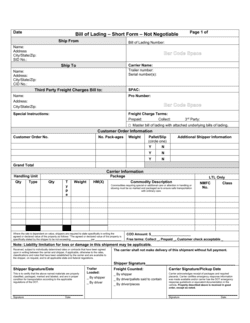
Use the full registered legal name — not a brand or DBA — for both the shipper and consignee. Include street address, city, country, and the accounts-payable or logistics contact at each party.
💡 Verify the consignee's name against the commercial invoice and letter of credit before completing the manifest — any name discrepancy between documents will delay customs release.
2
Record carrier and transport mode details
Enter the carrier's legal name, their SCAC code (for road or ocean) or IATA code (for air), the vessel or vehicle identifier, and the voyage or trip reference number from the booking confirmation.
💡 Get the voyage reference number from the carrier's booking confirmation — it links your manifest to the carrier's system and is required for electronic advance cargo reporting.
3
Specify the full shipment route and dates
Enter the port of loading, port of discharge, and any intermediate transshipment ports. Include the confirmed departure date and the carrier's estimated arrival date.
💡 If the route is not yet confirmed, use 'TBC' and update the manifest before submission — never submit a manifest with blank route fields, as it will be rejected by customs systems.
4
Itemize cargo with HS codes and package details
List each distinct commodity on its own line with a specific plain-language description, the correct six-digit HS code, package type (carton, pallet, drum), quantity, and any shipping marks or reference numbers.
💡 Use the importing country's tariff schedule to confirm HS codes — a code that is correct in the exporting country may map to a different rate or restricted category at the destination.
5
Record weights, dimensions, and declared values
Enter gross weight, net weight, and dimensions for each line item and for the total shipment. State the declared customs value in the correct currency, referencing the applicable Incoterm.
💡 Weigh shipments on calibrated scales immediately before loading — carrier-measured weights at the terminal that differ from the manifest by more than 5% trigger an amendment fee and possible customs query.
6
Complete the hazardous materials section
For any goods classified under IATA, IMDG, DOT 49 CFR, or ADR regulations, enter the UN number, proper shipping name, hazard class, packing group, and a 24-hour emergency contact number.
💡 If you are unsure whether a product qualifies as hazardous, check the Safety Data Sheet (SDS) section 14 — transport hazard information is required to be listed there.
7
Enter container and seal numbers at the point of loading
Record the container number, ISO type, and seal number at the moment the container is sealed — not retrospectively from documentation. Note whether the shipper, carrier, or customs applied the seal.
💡 Photograph the seal in place alongside the container number placard immediately after sealing — this creates a timestamped record that is invaluable in cargo damage or shortage claims.
8
Obtain authorized signatures before cargo is tendered
Have an authorized representative of the shipper sign the manifest before handing cargo to the carrier. The carrier agent should countersign upon physical acceptance of the goods.
💡 Keep a fully executed original manifest on file for at least five years — customs authorities in the US, EU, and Canada can audit manifest records up to three to five years after shipment.