- Bill of Lading (BOL)
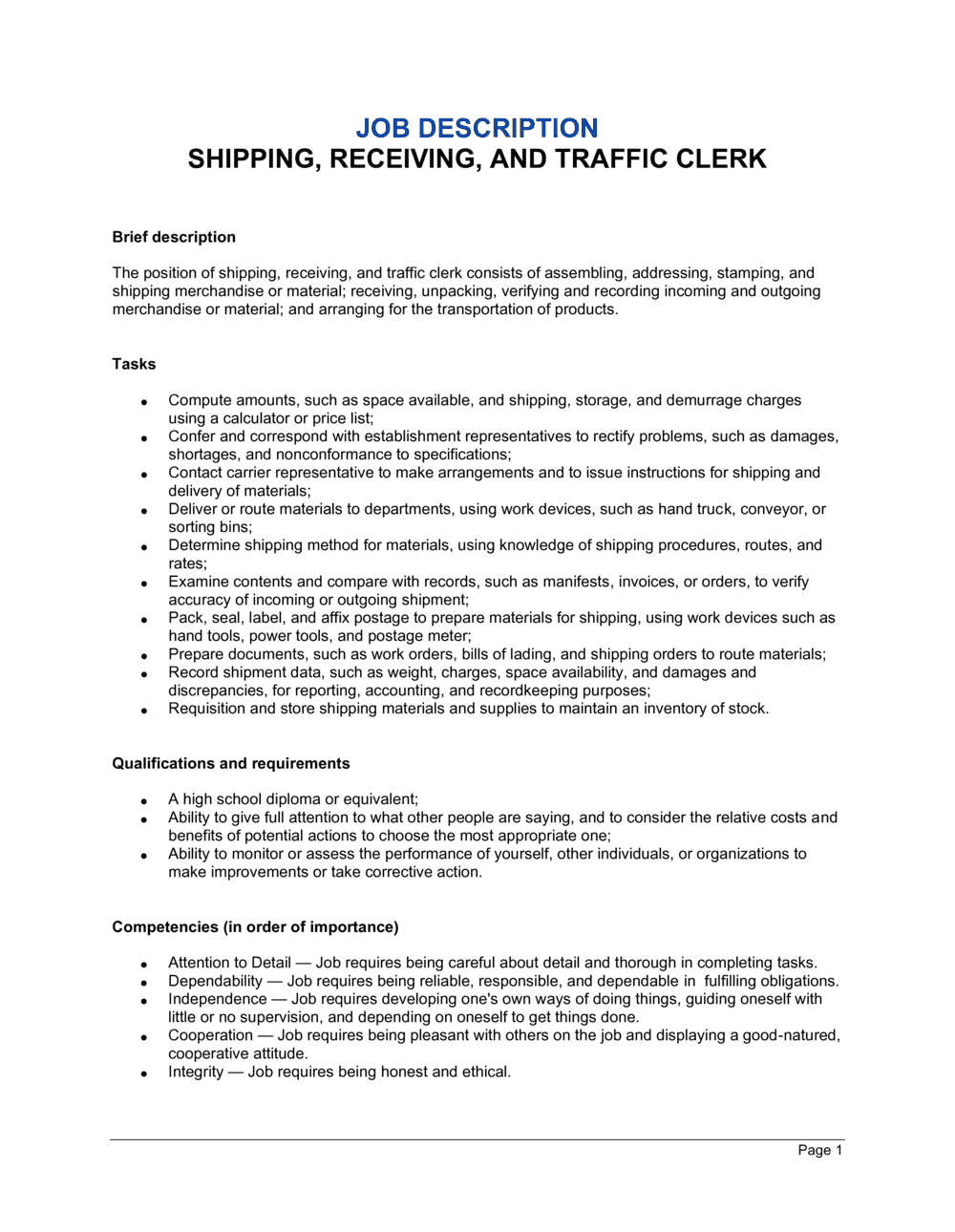
- A legal document issued by a carrier that records the type, quantity, and destination of freight being shipped — required for both inbound and outbound shipments.
- Purchase Order (PO)
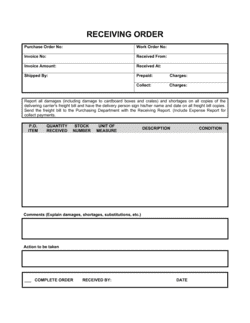
- A buyer-issued document authorizing a purchase; the shipping and receiving clerk matches incoming goods against the PO to verify accuracy.
- Packing Slip
- A document included with a shipment listing the contents, quantities, and SKUs — used by the receiving clerk to confirm what was actually delivered.
- FLSA Classification
- The Fair Labor Standards Act designation of a position as exempt or non-exempt, determining whether the employee is entitled to overtime pay for hours worked beyond 40 per week.
- ADA Essential Functions
- The core tasks of a job that a qualified individual must be able to perform, with or without reasonable accommodation, as required by the Americans with Disabilities Act.
- ERP System
- Enterprise Resource Planning software (e.g., SAP, Oracle, NetSuite) used to log receipts, manage inventory levels, and process shipping transactions in real time.
- Freight Broker
- A licensed intermediary who arranges the transportation of goods between shippers and carriers, often coordinated by the traffic clerk.
- Carrier Compliance
- Adherence to the documentation, labeling, weight, and scheduling requirements imposed by freight carriers such as UPS, FedEx, or LTL trucking companies.
- Chain of Custody
- A documented record of every person or entity that has handled a shipment from origin to destination, used to resolve loss or damage claims.
- Non-Exempt Employee
- An employee entitled to overtime pay at 1.5× their regular rate for hours worked beyond 40 in a workweek under the FLSA — most shipping and receiving clerk roles fall into this category.