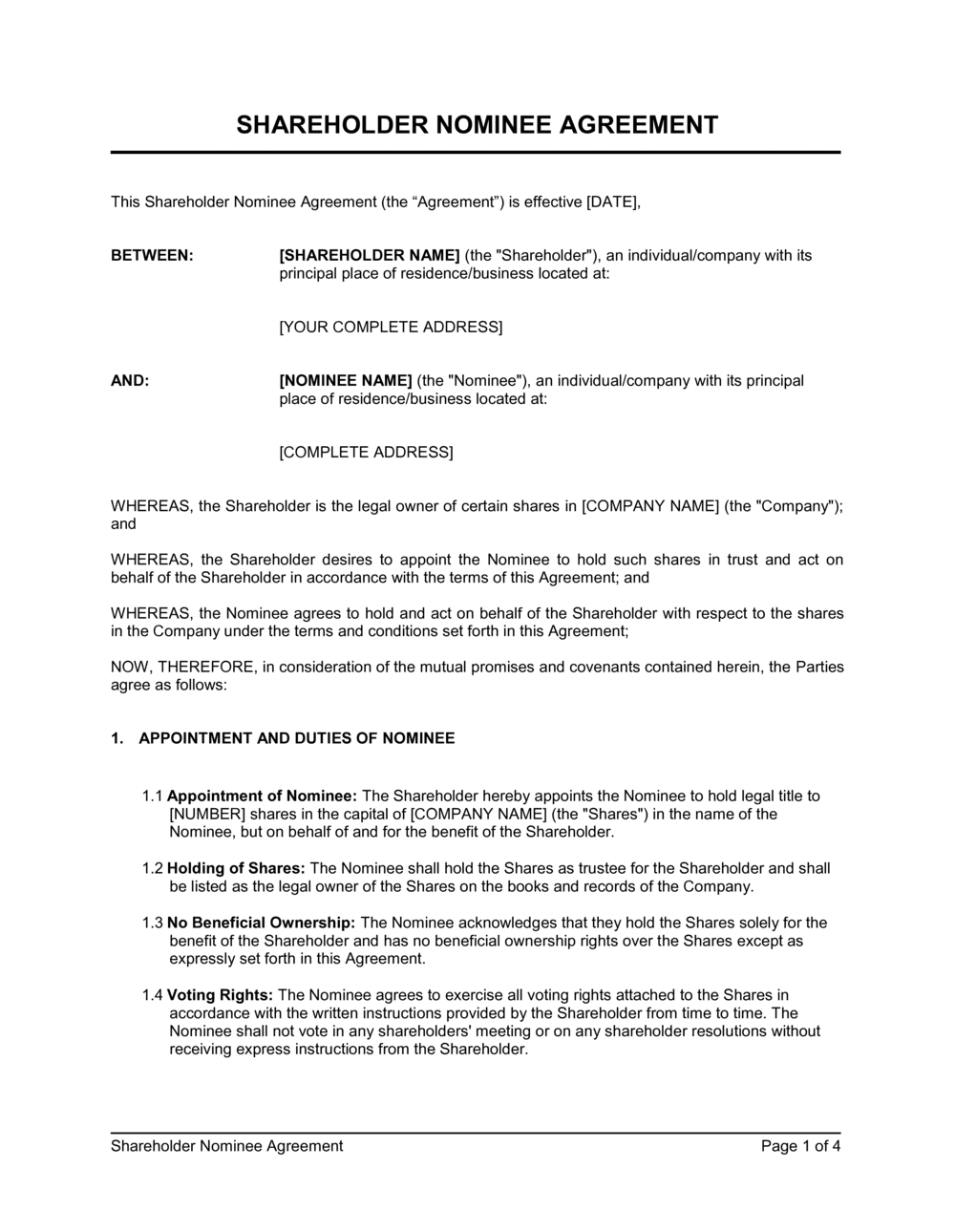
- Nominee Shareholder
- A person or entity whose name appears on the share register but who holds the shares on behalf of, and at the direction of, a beneficial owner.
- Beneficial Owner
- The party who enjoys the economic benefits of share ownership — dividends, sale proceeds, and voting control — regardless of whose name is on the register.
- Declaration of Trust
- A written statement by the nominee acknowledging that the shares are held in trust for the beneficial owner and not as the nominee's own property.
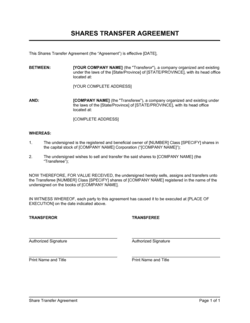
- Blank Stock Transfer Form
- A pre-signed share transfer document, left undated and with the transferee name blank, held by the beneficial owner so shares can be transferred without the nominee's future cooperation.
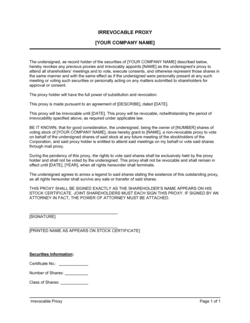
- Voting Direction
- Written instructions from the beneficial owner specifying how the nominee must vote the shares at shareholder meetings or on written resolutions.
- Undisclosed Principal
- A beneficial owner whose identity is not revealed to the company or third parties — the nominee acts as the visible party in all dealings with the company.
- Beneficial Interest
- The economic stake in shares — rights to dividends, capital appreciation, and proceeds on sale — held by the beneficial owner even though legal title is in the nominee's name.
- Power of Attorney
- An authorisation given by the nominee to the beneficial owner to act on the nominee's behalf in relation to the shares, including executing transfers and attending meetings.
- Indemnification
- A contractual obligation by the beneficial owner to reimburse the nominee for any losses, costs, or liabilities incurred while acting on the beneficial owner's instructions.
- Beneficial Ownership Register
- A statutory register, required in many jurisdictions, disclosing the identities of persons with significant or controlling beneficial interests in a company's shares.
- Stamp Duty
- A government tax levied on share transfer documents in certain jurisdictions — typically 0.5% of the consideration in the UK and similar rates elsewhere.