1
Identify the parties with full legal names
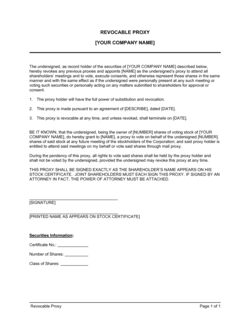
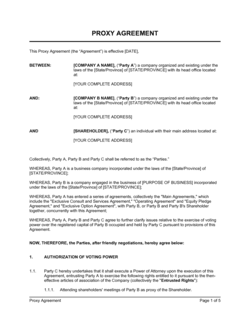
Enter the grantor's full legal name (individual or registered entity name) and the proxy holder's full legal name. For corporate entities, include the jurisdiction of incorporation and registered address.
💡 Cross-reference the grantor's name against the company's share register — the proxy must match the registered shareholder's name exactly to be recognized at a meeting.
2
Describe the shares with precision
List the share class (e.g., Class A Common), the exact number of shares covered, and certificate numbers or account reference numbers. If shares are held in book-entry form, reference the transfer agent account number.
💡 Avoid referring to 'all shares now or hereafter owned' unless the proxy is intended to cover future acquisitions — this language can create unintended obligations.
3
State the underlying interest that supports irrevocability
Reference the specific agreement or transaction — share pledge, loan agreement, or purchase contract — that creates the coupled interest. Include the date and parties to that agreement.
💡 Attach the underlying agreement or a summary of the key terms as an exhibit. It strengthens the case for irrevocability if the proxy is ever challenged.
4
Define the scope of voting authority
List every type of action the proxy holder is authorized to take: voting at annual and special meetings, consenting to written resolutions, and any specific matters (e.g., election of directors, approval of mergers) that are within scope.
💡 If the proxy is intended to cover only specific matters — such as decisions related to the secured loan — limit the scope accordingly to reduce the risk of a court striking down an overbroad grant.
5
Set the duration and termination triggers
Enter the specific events that will automatically end the proxy — loan repayment, transaction closing, or a fixed calendar date. Do not leave the duration open-ended.
💡 Include a fallback long-stop date (e.g., 10 years from execution) even if earlier termination events are expected, so there is always a definite end point.
6
Address voting instructions and discretion
Decide whether the proxy holder votes in sole discretion or must follow written instructions from the grantor. If instructions are permitted, set a clear deadline for providing them before each meeting.
💡 For financing transactions, lenders typically require sole discretion. For strategic partnerships, a negotiated instruction mechanism may be more appropriate and more likely to be enforced.
7
Execute before or simultaneously with the underlying transaction
Both parties must sign the proxy at closing or before — post-closing execution weakens the 'coupled with interest' argument and may create a fresh consideration issue.
💡 File a copy of the executed proxy with the company's corporate secretary immediately after signing so it is on record before any meeting notice is issued.
8
Notify the company and update the share register
Deliver a copy of the executed proxy to the company's registered office or corporate secretary, and confirm the company has noted the proxy against the relevant shares in its records.
💡 In many jurisdictions, a proxy that is not filed with the company may be disregarded at a meeting. Confirm the company's filing requirements before execution.