Security Agreement and Promissory Note Template

Free Word download • Edit online • Save & share with Drive • Export to PDF

4 pages25–35 min to fillDifficulty: ComplexSignature requiredLegal review recommended
Learn more ↓
FreeSecurity Agreement and Promissory Note Template

At a glance

What it is
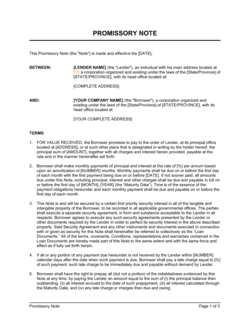
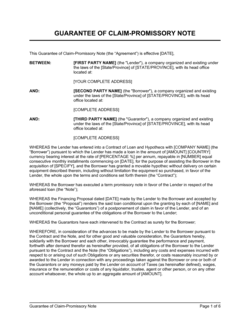
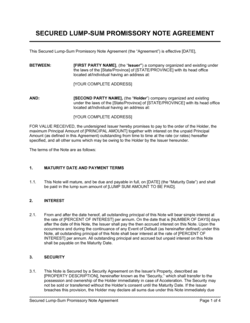
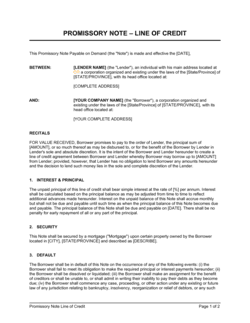
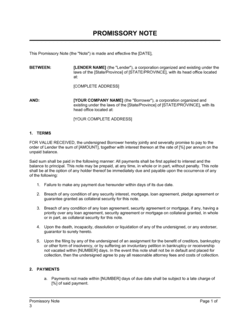
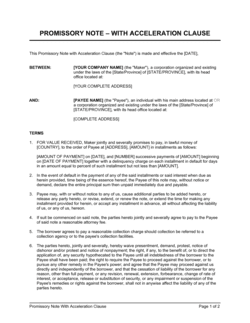
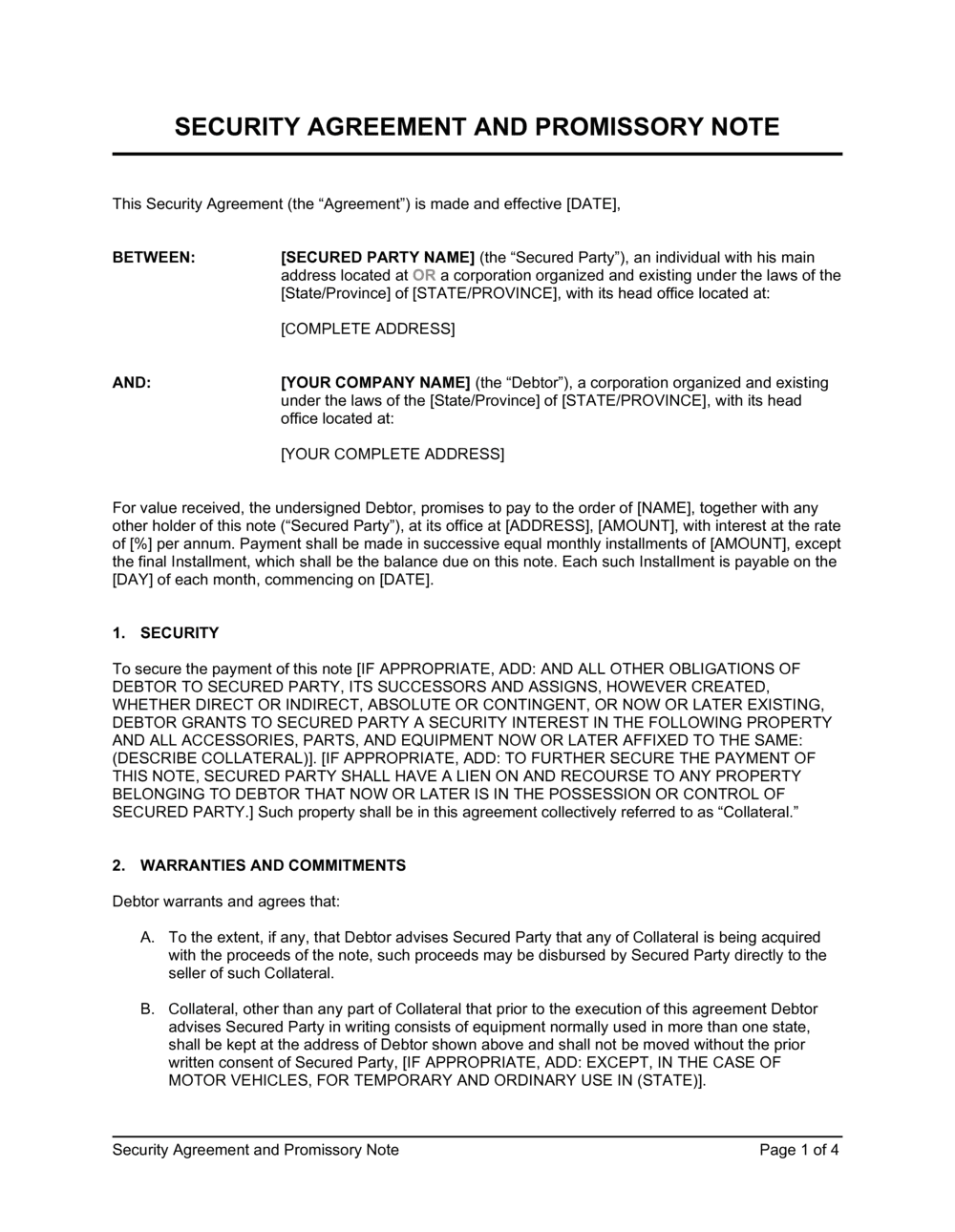
A Security Agreement and Promissory Note is a two-part legally binding document that combines a borrower's unconditional promise to repay a loan with a lender's right to claim specific collateral if the borrower defaults. This free Word download lets you define the loan amount, repayment schedule, interest rate, and pledged assets in a single document you can edit online and export as PDF for execution.
When you need it
Use it any time a lender extends credit to a borrower and wants a perfected security interest in business or personal assets — equipment, inventory, accounts receivable, or intellectual property — as protection against non-payment. It is equally appropriate for private business loans, seller financing, and intra-company lending arrangements.
What's inside
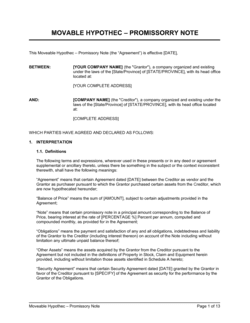
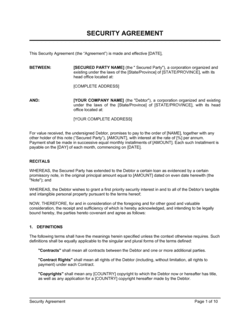
The promissory note portion sets out the principal amount, interest rate, repayment schedule, and default remedies. The security agreement portion describes the collateral in detail, grants a security interest, and specifies the lender's rights upon default — including repossession and UCC filing provisions.

What is a Security Agreement and Promissory Note?

A Security Agreement and Promissory Note is a combined legal instrument that serves two functions within a single document: the promissory note portion records the borrower's unconditional written promise to repay a specific principal amount with interest on a defined schedule, while the security agreement portion grants the lender a legally enforceable interest in specific assets — the collateral — that the lender may seize and liquidate if the borrower fails to pay. Together, the two documents convert an ordinary debt obligation into a secured claim, giving the lender priority over other creditors against the pledged assets in the event of default or bankruptcy. The document is governed by UCC Article 9 in the United States and by equivalent personal property security legislation in Canada, the UK, and other common-law jurisdictions.

Why You Need This Document

Lending money without a security agreement leaves the lender as a general unsecured creditor — last in line when a borrower becomes insolvent, typically recovering pennies on the dollar. A properly executed and filed security agreement changes that outcome entirely: it gives the lender a perfected, priority claim on specific assets that can be repossessed and sold to satisfy the outstanding balance. Without the promissory note, the repayment terms remain informal and difficult to enforce in court. Without the security agreement and a UCC-1 filing, a subsequent creditor who files first can claim priority over the same collateral, stripping the earlier lender of the protection it believed it had. For sellers offering financing, equipment lessors, private investors, and intercompany lenders, this combined document is the minimum standard for a secured transaction — and this template gives you a professionally structured starting point that covers collateral description, default triggers, cure periods, and commercially reasonable remedies in a single Word file you can execute and file the same day.

Which variant fits your situation?

If your situation is…Use this template
Simple unsecured loan between individuals or businessesPromissory Note
Real estate purchase with seller-financed mortgageMortgage Agreement
Business acquisition with deferred purchase price paymentsBusiness Purchase Agreement
Short-term working capital loan with no collateralLoan Agreement
Equipment purchase financed by the equipment sellerEquipment Financing Agreement
Line of credit secured by accounts receivableCredit Agreement
Personal loan between family members or friends with repayment schedulePersonal Loan Agreement

Common mistakes to avoid

❌ Failing to file a UCC-1 financing statement

Why it matters: A security agreement alone does not perfect the lender's security interest. Without a UCC-1 filing, a subsequent creditor who files first can claim priority over the collateral, leaving the lender unsecured in a bankruptcy.

Fix: File the UCC-1 with the Secretary of State in the borrower's state of organization within 5 days of execution and retain the filing confirmation number as proof of priority date.

❌ Using vague or incomplete collateral descriptions

Why it matters: Courts have invalidated security interests where collateral is described only as 'all business assets' or 'equipment' without sufficient specificity — third parties challenging the lien have a colorable argument that the description provides inadequate notice.

Fix: Describe collateral by specific category, serial number, or defined class. Use Schedule A for tangible assets and list account numbers for financial assets.

❌ No cure period before acceleration

Why it matters: Triggering acceleration on the first missed payment with no cure window can result in a court refusing to enforce the provision, characterizing it as an unenforceable penalty rather than a legitimate remedy.

Fix: Include a 5-to-10-day written-notice cure period for first-time monetary defaults. Reserve immediate acceleration for insolvency, fraud, and material covenant breaches.

❌ Omitting the insurance covenant on tangible collateral

Why it matters: If pledged equipment is destroyed or stolen and the borrower carries no insurance, the lender's collateral is gone and the remaining balance becomes an unsecured claim — collecting nothing in a bankruptcy.

Fix: Require the borrower to maintain property insurance on the collateral at replacement value, name the lender as loss payee, and deliver a certificate of insurance before funds are disbursed.

❌ Choosing a governing law state with no connection to the transaction

Why it matters: Several states — and most consumer-protection regimes — apply local usury limits, disclosure requirements, and remedies rules regardless of what the contract specifies, potentially invalidating interest rates or repossession rights.

Fix: Select the state where the borrower is organized or where the collateral is located as the governing law, and confirm the agreed interest rate does not exceed that state's usury ceiling.

❌ Disbursing funds before both parties sign

Why it matters: A security interest attaches only after the agreement is authenticated, value is given, and the borrower has rights in the collateral. Disbursing before execution breaks the attachment chain and may leave the lender unsecured.

Fix: Execute the agreement in full, file the UCC-1, and confirm receipt of the borrower's insurance certificate before wiring or releasing any loan proceeds.

The 10 key clauses, explained

Parties, Principal Amount, and Effective Date

In plain language: Identifies the lender and borrower as legal entities, states the exact loan amount, and records the date the agreement takes effect.

Sample language
This Security Agreement and Promissory Note ('Agreement') is entered into as of [DATE] between [LENDER LEGAL NAME] ('Lender') and [BORROWER LEGAL NAME], a [STATE] [ENTITY TYPE] ('Borrower'). Borrower promises to pay to the order of Lender the principal sum of $[AMOUNT] (the 'Loan').

Common mistake: Using trade names instead of registered legal entity names — if the borrower defaults, enforcing the agreement or filing a UCC-1 against the wrong entity name can invalidate priority.

Interest Rate and Calculation Method

In plain language: States the annual interest rate, whether it is fixed or variable, and how interest accrues — typically on a 365-day or 360-day basis.

Sample language
The outstanding principal balance shall bear interest at the rate of [X]% per annum, calculated on the basis of a 365-day year, accruing daily from the date of disbursement until paid in full.

Common mistake: Omitting whether the rate is fixed or variable and failing to reference the applicable index for floating rates — borrowers and lenders end up in dispute over what rate applies after each adjustment period.

Repayment Schedule and Maturity Date

In plain language: Sets out when and how the borrower repays — installment amounts, frequency, balloon payment if any, and the final maturity date.

Sample language
Borrower shall repay the Loan in [NUMBER] consecutive monthly installments of $[AMOUNT], commencing on [DATE], with a final balloon payment of all outstanding principal and accrued interest due on [MATURITY DATE].

Common mistake: Leaving payment dates vague as 'monthly' without a fixed calendar date — disagreements about when payment is late trigger unnecessary disputes and complicate default calculations.

Description of Collateral

In plain language: Specifically describes every asset pledged as security — using serial numbers, account numbers, or defined categories like 'all inventory now owned or hereafter acquired.'

Sample language
To secure full repayment of the Loan, Borrower grants Lender a first-priority security interest in the following collateral: [DESCRIBE ASSETS — e.g., all equipment listed in Schedule A, including serial numbers; all accounts receivable; all inventory now owned or hereafter acquired].

Common mistake: Using a generic description like 'all business assets' without specifics — overly broad descriptions can be challenged as insufficient notice to third parties, and some jurisdictions require itemized descriptions for certain asset classes.

Grant of Security Interest and UCC Filing Authorization

In plain language: The borrower formally grants the security interest to the lender and authorizes the lender to file a UCC-1 financing statement to perfect that interest.

Sample language
Borrower hereby grants to Lender a continuing security interest in the Collateral described herein. Borrower authorizes Lender to file one or more UCC financing statements in all jurisdictions Lender deems appropriate to perfect its security interest, without further signature from Borrower.

Common mistake: Not including explicit authorization to file UCC-1 statements — without this language, the lender may need the borrower to sign the UCC-1 separately, creating delays and gaps in perfection.

Representations and Covenants of Borrower

In plain language: The borrower confirms that it owns the collateral free of other liens, will maintain it in good condition, will keep it insured, and will not sell or encumber it without lender consent.

Sample language
Borrower represents that it has good and marketable title to the Collateral, free and clear of all liens except as disclosed to Lender. Borrower covenants to (a) maintain the Collateral in good repair; (b) insure the Collateral against loss or damage; and (c) not sell, transfer, or encumber the Collateral without Lender's prior written consent.

Common mistake: Omitting insurance obligations on tangible collateral — if equipment is destroyed and the borrower has no insurance, the lender's security interest is worthless and the remaining loan balance is unsecured.

Events of Default

In plain language: Lists every condition that constitutes a default — missed payments, insolvency, breach of covenant, material adverse change — triggering the lender's remedies.

Sample language
Each of the following shall constitute an Event of Default: (a) Borrower fails to make any payment within [X] days of its due date; (b) Borrower becomes insolvent or files for bankruptcy; (c) Borrower breaches any covenant herein and fails to cure within [X] days of written notice; (d) any representation proves materially false.

Common mistake: Defining default as any missed payment with no cure period — courts in some jurisdictions will not enforce acceleration where the lender gave no opportunity to cure a first-time payment failure.

Remedies Upon Default

In plain language: States what the lender may do after an event of default — accelerate the loan, repossess and sell collateral, and apply proceeds to the outstanding balance — and whether the lender has recourse beyond the collateral.

Sample language
Upon an Event of Default, Lender may (a) declare the entire unpaid principal and accrued interest immediately due and payable; (b) take possession of the Collateral with or without judicial process as permitted by law; and (c) sell, lease, or otherwise dispose of the Collateral in a commercially reasonable manner, applying net proceeds to the outstanding balance.

Common mistake: Failing to include 'commercially reasonable manner' language — UCC Article 9 requires commercially reasonable disposition of collateral; omitting this can expose the lender to liability and reduce the deficiency balance it can collect.

Governing Law and Jurisdiction

In plain language: Specifies which state or country's law governs the agreement and where disputes will be resolved.

Sample language
This Agreement shall be governed by and construed in accordance with the laws of the State of [STATE], without regard to conflict-of-laws principles. Any dispute shall be resolved in the courts of [COUNTY], [STATE], and the parties consent to personal jurisdiction therein.

Common mistake: Choosing a governing state with no meaningful connection to the transaction — several states impose consumer protection restrictions that apply regardless of the chosen governing law, particularly for loans to individuals.

Waiver of Presentment and Notice

In plain language: The borrower waives certain common-law rights to formal demand, presentment, and protest before the lender can enforce the note — standard in commercial promissory notes.

Sample language
Borrower waives presentment, demand, protest, and notice of dishonor. No delay or failure by Lender to exercise any right or remedy shall constitute a waiver of that right or remedy.

Common mistake: Omitting this clause in a commercial note — without it, the lender may be required to make formal demand at each payment cycle before enforcement, significantly slowing collection.

How to fill it out

  1. 1

    Enter the legal names and roles of both parties

    Use the full registered legal name of the lender and borrower — not trade names or DBAs. Specify the borrower's entity type and state of formation.

    💡 Search your state's business registry to confirm the exact legal name before filling in this field — a name mismatch on a UCC-1 filing invalidates the filing in most states.

  2. 2

    Set the principal amount, interest rate, and effective date

    Enter the exact loan amount in figures and words. Specify whether the interest rate is fixed or variable, the applicable rate, and the accrual basis (365-day or 360-day year).

    💡 For variable-rate loans, reference a specific published index (e.g., 'Prime Rate as published by the Wall Street Journal plus [X]%') rather than 'a market rate' to avoid disputes.

  3. 3

    Define the repayment schedule with specific calendar dates

    Enter each installment amount, the day of the month payments are due, the first payment date, the number of payments, and the final maturity date. If there is a balloon payment, state it explicitly.

    💡 Include a simple amortization table as an attachment — it eliminates ambiguity and gives both parties a shared reference for every payment.

  4. 4

    Describe the collateral with maximum specificity

    List every pledged asset by category, serial number, account number, or defined class. For personal property, use Schedule A as an attachment. For accounts receivable, describe the originating contracts or customer accounts.

    💡 For equipment collateral, photograph each item and attach the list with serial numbers — this prevents disputes about which assets are covered if the borrower later acquires additional equipment.

  5. 5

    Complete the representations and covenants section

    Confirm that the borrower owns the collateral free and clear of other liens, and fill in insurance requirements — minimum coverage amount and the lender as additional insured.

    💡 Request a certificate of insurance naming you as additional insured before disbursing funds — not after the agreement is signed.

  6. 6

    Set cure periods and default triggers

    Define how many days constitute a late payment (typically 5–10 days), what events trigger default automatically (insolvency, fraud), and which defaults allow a cure period before acceleration.

    💡 A 10-day cure period for first-time payment defaults is industry standard and significantly reduces the risk a court will refuse to enforce acceleration.

  7. 7

    Execute the agreement and file the UCC-1

    Both parties sign before any funds are disbursed. File a UCC-1 financing statement with the Secretary of State in the borrower's state of organization within 5 days of execution to perfect the security interest.

    💡 UCC-1 filings lapse after 5 years — calendar a renewal reminder at year 4 to maintain perfected status throughout the loan term.

  8. 8

    Retain executed copies and confirm insurance

    Store the fully executed original (or certified PDF) in a secure location. Obtain a copy of the borrower's insurance certificate showing the collateral is covered and you are named as additional insured.

    💡 Use Business in a Box Drive to store the executed agreement, UCC-1 confirmation, and insurance certificate together so all documents are accessible if default proceedings are needed.

Frequently asked questions

What is a security agreement and promissory note?

A security agreement and promissory note is a combined legal document in which the borrower makes an unconditional written promise to repay a loan (the promissory note portion) and pledges specific assets as collateral to secure that promise (the security agreement portion). Together, they give the lender both a contractual right to repayment and a property right in the collateral if the borrower defaults — enforceable separately from any personal liability.

What is the difference between a promissory note and a security agreement?

A promissory note is a debt instrument — it records the borrower's unconditional promise to pay a specific amount on a specific schedule. A security agreement is a collateral instrument — it grants the lender a property interest in specific assets to back up that promise. A promissory note without a security agreement is unsecured debt; the security agreement converts it into a secured obligation with priority over the pledged assets in a bankruptcy or default.

What types of collateral can be used in a security agreement?

Under UCC Article 9, the security agreement can cover most categories of personal property: equipment, inventory, accounts receivable, deposit accounts, instruments, investment property, intellectual property, and general intangibles. Real estate requires a separate mortgage or deed of trust rather than a UCC security agreement. For mixed transactions involving both personal and real property, the parties typically use both documents.

Do I need to file a UCC-1 to make a security agreement enforceable?

The security agreement itself is enforceable between the parties without a UCC-1 filing. However, the UCC-1 is required to perfect the security interest — meaning to establish priority over other creditors, judgment lien holders, and a bankruptcy trustee. Without perfection, a later creditor who files a UCC-1 can leapfrog the earlier unrecorded security interest. File the UCC-1 in the borrower's state of organization within five days of execution to maximize priority protection.

What happens if the borrower defaults on a secured promissory note?

Upon a defined event of default, the lender may accelerate the entire outstanding balance, making it immediately due. The lender then has the right under UCC Article 9 to take possession of the collateral — with or without judicial process in most states — and sell or lease it in a commercially reasonable manner. Net proceeds are applied to the outstanding balance; if a deficiency remains, the lender can pursue the borrower for the shortfall in a recourse transaction.

Is a security agreement and promissory note legally required to be notarized?

Notarization is generally not required for a personal property security agreement or promissory note to be enforceable between the parties in most US states. However, some states require notarization for certain types of collateral (notably fixtures attached to real estate) or when the document will be recorded in a county real property registry. In Canada and the UK, witnessing requirements vary by province or jurisdiction — confirm local requirements before execution.

What interest rate can I charge on a secured promissory note?

The maximum allowable interest rate — the usury ceiling — varies significantly by state. Most states allow parties to contract freely on commercial loans above $50,000 or $100,000, while lower-amount loans may be subject to usury limits ranging from 10% to 24% per annum depending on the state and loan type. Consumer loans are regulated more strictly than commercial ones. Confirm the applicable ceiling in the governing state before setting the rate.

Can I use this document for an intercompany loan between related businesses?

Yes. A security agreement and promissory note is commonly used for intercompany and related-party loans to document terms formally, establish priority in a consolidated bankruptcy, and satisfy tax authority requirements that related-party transactions be conducted at arm's length. The document should reflect a commercially reasonable interest rate comparable to what an unrelated third-party lender would charge, and actual funds should flow between accounts to support the bona fide loan characterization.

How long does a UCC-1 filing remain effective?

A UCC-1 financing statement is effective for five years from the date of filing. To maintain perfected status for loans with longer terms, the secured party must file a continuation statement within the six-month window before the five-year lapse date. Failure to continue the filing results in automatic lapse, and the security interest loses priority against subsequently perfected creditors and a bankruptcy trustee.

How this compares to alternatives

vs Unsecured Promissory Note

An unsecured promissory note records the borrower's repayment promise but grants no right to specific assets if the borrower defaults — the lender becomes a general unsecured creditor, typically recovering little in a bankruptcy. A secured promissory note paired with a security agreement gives the lender a priority claim on pledged collateral. Use the unsecured version only for small, low-risk loans between parties with strong existing relationships.

vs Loan Agreement

A standalone loan agreement typically governs complex, multi-draw credit facilities with financial covenants, representations, and conditions precedent. A security agreement and promissory note is a simpler, self-contained instrument suited to single-advance term loans where the borrower pledges specific collateral. For revolving lines of credit or syndicated lending, a full loan agreement with a separate security agreement is more appropriate.

vs Mortgage Agreement

A mortgage or deed of trust secures a loan against real property and is recorded in the county land registry rather than filed as a UCC-1. A security agreement governs personal property collateral under UCC Article 9. When a transaction involves both real and personal property — such as a commercial real estate purchase that includes equipment — both a mortgage and a security agreement are typically executed simultaneously.

vs Personal Guarantee

A personal guarantee makes an individual (often a business owner) personally liable for a business debt, extending the lender's recourse to personal assets. A security agreement creates a right to specific pledged assets but does not automatically extend liability to the owner's personal estate. The two documents are complementary — lenders often require both a security agreement on business assets and a personal guarantee from the principal to maximize recovery options.

Industry-specific considerations

Manufacturing and Equipment

Equipment serial numbers are itemized in Schedule A; the lender files a UCC-1 fixture filing when equipment is attached to real property, in addition to the standard personal-property filing.

Retail and Wholesale Distribution

Inventory-based collateral typically uses an 'all inventory now owned or hereafter acquired' description, and the lender monitors inventory levels through periodic reporting covenants to guard against collateral depletion.

Technology and SaaS

Collateral often includes intellectual property, software licenses, and accounts receivable; IP assignments require care to avoid conflicting with existing license agreements or employee IP assignment clauses.

Professional Services and Consulting

Accounts receivable from client contracts serve as the primary collateral; the security agreement often includes a notification clause requiring the lender's consent before the borrower factors or assigns those receivables.

Real Estate and Construction

Construction equipment and tools are secured under UCC Article 9, while the land and improvements require a separate deed of trust or mortgage; both documents are often executed simultaneously at closing.

Financial Services and Lending

Non-bank lenders and private credit funds use this combined document as the core instrument for small-business term loans, paired with a personal guarantee and subordination agreements where senior bank debt exists.

Jurisdictional notes

United States

Personal property security interests are governed by UCC Article 9, adopted in all 50 states with minor variations. The lender perfects by filing a UCC-1 with the Secretary of State in the borrower's state of organization. Usury limits vary by state — most states exempt commercial loans above $50,000 from rate ceilings, but consumer loans face stricter limits. California, New York, and Texas each have nuances in remedies and notice requirements that warrant local counsel review for larger transactions.

Canada

Canadian personal property security is governed by provincial Personal Property Security Acts (PPSAs) rather than a federal UCC equivalent. Each province maintains its own PPSA registry; lenders must file in the province where the debtor is located or, for goods, where the collateral is situated. Quebec uses a different civil-law regime under the Civil Code of Québec, requiring a hypothec published at the Register of Personal and Movable Real Rights (RPMRR) rather than a PPSA registration. Interest-rate disclosure requirements under the Interest Act also apply to all loan documents.

United Kingdom

In England and Wales, a charge over personal property is generally created by a debenture or fixed/floating charge agreement rather than a US-style security agreement. Companies must register charges at Companies House within 21 days of creation or the charge is void against a liquidator and creditors. Scotland has a separate legal framework under Scots law. Consumer credit agreements are regulated by the Consumer Credit Act 1974 and require FCA authorization and specific prescribed forms for regulated consumer loans.

European Union

There is no EU-wide equivalent to UCC Article 9 — personal property security law is governed by each member state. Germany uses the Sicherungsübereignung (ownership transfer as security); France uses the gage commercial; the Netherlands uses a undisclosed pledge (stille verpanding). Cross-border EU transactions involving collateral in multiple member states require separate perfection steps in each relevant jurisdiction. GDPR compliance is relevant where the security agreement involves processing personal data of individual guarantors or sole traders.

Template vs lawyer — what fits your deal?

PathBest forCostTime
Use the templatePrivate lenders and small businesses making straightforward secured term loans under $250,000 with clearly defined collateralFree30–45 minutes
Template + legal reviewLoans above $250,000, multi-asset collateral packages, intercompany transactions, or borrowers in regulated industries$400–$8002–4 days
Custom draftedComplex credit facilities, mezzanine lending, subordination arrangements, or transactions involving real and personal property collateral simultaneously$2,000–$8,000+1–3 weeks

Glossary

Promissory Note
A written, unconditional promise by the borrower to pay a specific sum to the lender on demand or on a defined schedule.
Security Interest
A lender's legal right to take possession of or sell pledged collateral if the borrower fails to repay the loan.
Collateral
The specific assets — equipment, inventory, accounts receivable, IP, or other property — pledged by the borrower to secure repayment of the loan.
UCC Financing Statement (UCC-1)
A public filing under the Uniform Commercial Code that gives notice to other creditors that a lender has a security interest in the borrower's assets.
Perfection
The legal process by which a secured party establishes priority over other creditors in collateral — typically by filing a UCC-1 or taking physical possession.
Default
Any failure by the borrower to comply with the terms of the note or security agreement — most commonly a missed payment, breach of covenant, or insolvency event.
Acceleration Clause
A provision that makes the entire outstanding loan balance immediately due and payable upon the borrower's default.
Recourse vs. Non-Recourse
Recourse loans allow the lender to pursue the borrower's personal assets beyond the collateral; non-recourse loans limit recovery solely to the pledged collateral.
Senior vs. Junior Lien
The priority of a creditor's claim on collateral relative to other creditors — the first-filed or first-perfected security interest generally holds senior (first-priority) status.
Debtor-in-Possession
A borrower who continues to use and control pledged collateral after granting a security interest, as permitted by most security agreements prior to default.
Disposition of Collateral
The lender's right after default to sell, lease, or otherwise liquidate pledged assets and apply the proceeds to the outstanding loan balance.

Part of your Business Operating System

This document is one of 3,000+ business & legal templates included in Business in a Box.

  • Fill-in-the-blanks — ready in minutes
  • 100% customizable Word document
  • Compatible with all office suites
  • Export to PDF and share electronically

Create your document in 3 simple steps.

From template to signed document — all inside one Business Operating System.
1
Download or open template

Access over 3,000+ business and legal templates for any business task, project or initiative.

2
Edit and fill in the blanks with AI

Customize your ready-made business document template and save it in the cloud.

3
Save, Share, Send, Sign

Share your files and folders with your team. Create a space of seamless collaboration.

Save time, save money, and create top-quality documents.

★★★★★

"Fantastic value! I'm not sure how I'd do without it. It's worth its weight in gold and paid back for itself many times."

Managing Director · Mall Farm
Robert Whalley
Managing Director, Mall Farm Proprietary Limited
★★★★★

"I have been using Business in a Box for years. It has been the most useful source of templates I have encountered. I recommend it to anyone."

Business Owner · 4+ years
Dr Michael John Freestone
Business Owner
★★★★★

"It has been a life saver so many times I have lost count. Business in a Box has saved me so much time and as you know, time is money."

Owner · Upstate Web
David G. Moore Jr.
Owner, Upstate Web

Run your business with a system — not scattered tools

Stop downloading documents. Start operating with clarity. Business in a Box gives you the Business Operating System used by over 250,000 companies worldwide to structure, run, and grow their business.

Free Forever Plan · No credit card required