Request for Leave of Absence Template

Free Word download β€’ Edit online β€’ Save & share with Drive β€’ Export to PDF

1 pageβ€’15–20 min to fillβ€’Difficulty: Standard
Learn more ↓
FreeRequest for Leave of Absence Template

At a glance

What it is
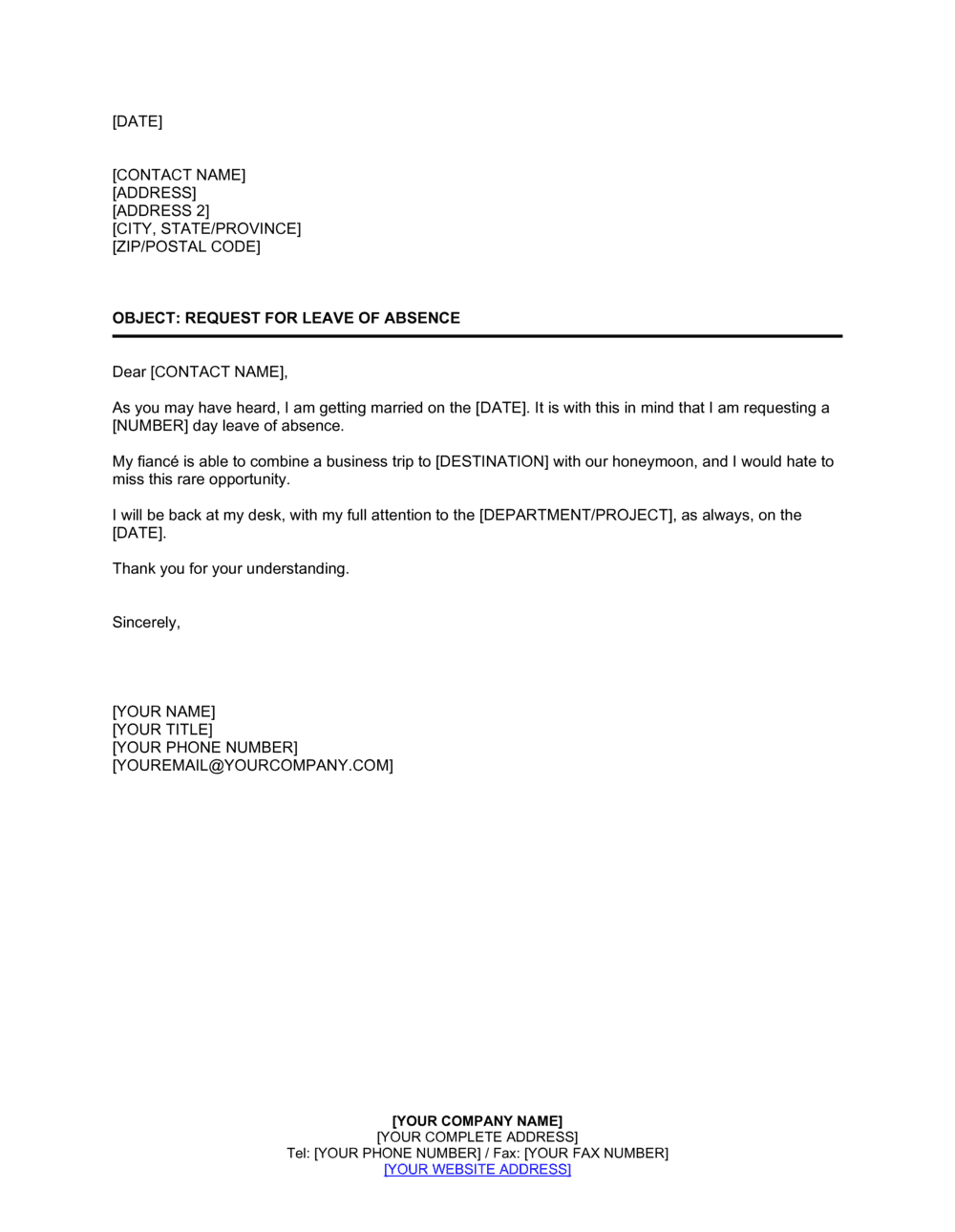
A Request for Leave of Absence is a formal written letter an employee submits to their employer asking for a defined period away from work. This free Word download gives you a professionally structured template you can edit online in minutes and export as PDF for submission to HR or a direct manager.
When you need it
Use it whenever you need to request planned or emergency time away from work β€” for medical recovery, family caregiving, personal matters, or educational pursuits β€” and your employer requires a written record of the request.
What's inside
Sender and recipient details, a clear statement of the leave requested, the proposed start and end dates, the reason for absence, any coverage or handover arrangements, and a commitment to a smooth return.

What is a Request for Leave of Absence?

A Request for Leave of Absence is a formal written letter an employee submits to their employer to ask for a defined period of time away from work while preserving their employment. It documents the type of leave, the exact dates, the reason for the absence, and any arrangements made to ensure continuity of responsibilities during the employee's time away. Unlike an informal verbal request or a quick email, a written leave request creates a clear record for HR files, triggers the employer's formal approval process, and protects both parties if questions arise later about what was agreed.

Why You Need This Document

Requesting leave verbally β€” or through a casual email β€” leaves you without a documented record if the approval is later disputed, misremembered, or denied. A formal written request establishes the exact dates, the reason, and your commitment to a smooth handover, all of which significantly improve the likelihood of a prompt approval. For statutory leave types such as FMLA in the US or parental leave in Canada and the UK, a written request is often a prerequisite for legal job protection. Missing this step can mean returning to find your position filled or your absence classified as unauthorized. This template gives you a professionally structured letter you can complete in under 15 minutes, covering every element HR needs to process your request without unnecessary back-and-forth.

Which variant fits your situation?

If your situation is…Use this template
Taking time off for a medical condition or surgeryMedical Leave of Absence Request
Requesting parental leave after a birth or adoptionMaternity / Paternity Leave Request Letter
Asking for unpaid personal leave for travel or personal mattersPersonal Leave Request Letter
Requesting paid vacation days under a formal policyVacation Request Letter
Taking a sabbatical for academic or research purposesSabbatical Leave Request
Employer formally approving an employee's leave requestLeave of Absence Approval Letter
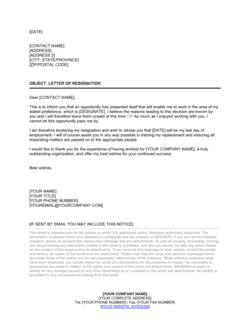
Employee giving advance notice of planned resignation after leaveResignation Letter

Common mistakes to avoid

❌ Vague or missing dates

Why it matters: A request without specific start and end dates cannot be formally approved or scheduled. HR cannot arrange coverage or process payroll adjustments from an open-ended request.

Fix: Always include the exact calendar start date, end date, and return-to-work date β€” even if circumstances may require an extension later.

❌ Oversharing personal or medical information

Why it matters: Providing clinical details or family circumstances beyond what policy requires can compromise personal privacy and create awkward dynamics with managers who are not entitled to that information.

Fix: State the category of leave (medical, family, personal) and note that supporting documentation is available upon request. Share details only with HR, not in the letter itself.

❌ No mention of handover or coverage

Why it matters: A leave request that ignores the impact on the team puts the entire planning burden on the manager, which reduces goodwill and slows approval.

Fix: Name a specific colleague who will cover key responsibilities and commit to completing a handover document before your departure date.

❌ Submitting the request with insufficient lead time

Why it matters: Most employers require at least two to four weeks' notice for planned leave. Late requests create staffing problems and may be denied even when the underlying reason is valid.

Fix: Submit as early as possible β€” ideally four to eight weeks before the intended start date for planned leave. For urgent or emergency leave, notify your manager verbally first, then follow up with the written letter within 24 hours.

The 8 key clauses, explained

Header and date

In plain language: States the sender's name and contact details, the date of writing, and the recipient's name, title, and organization.

Sample language
[EMPLOYEE FULL NAME] | [POSITION] | [EMAIL] | [DATE] [MANAGER NAME], [TITLE] [COMPANY NAME]

Common mistake: Using an informal header or omitting the date β€” undated letters are difficult to process chronologically and may not satisfy HR record-keeping requirements.

Subject line

In plain language: A single line summarizing the purpose of the letter so the recipient immediately understands the request before reading further.

Sample language
Subject: Request for Leave of Absence β€” [EMPLOYEE FULL NAME] β€” [START DATE] to [END DATE]

Common mistake: Writing a vague subject like 'Time Off Request' without the dates β€” HR and managers receiving multiple requests need specific details at a glance.

Opening statement

In plain language: The first paragraph states the request directly β€” the type of leave, proposed start date, and proposed end date.

Sample language
I am writing to formally request a leave of absence from [START DATE] to [END DATE], a total of [NUMBER] weeks. I am requesting this leave for [BRIEF REASON, e.g., 'a planned medical procedure and subsequent recovery'].

Common mistake: Burying the request inside background context. The recipient should know what is being asked before reading the second sentence.

Reason for leave

In plain language: A brief, professional explanation of why the leave is needed β€” without oversharing personal medical or family details.

Sample language
This leave is necessary to address a medical matter requiring [SURGERY / TREATMENT / RECOVERY] as advised by my physician. A medical certificate is available upon request in accordance with company policy.

Common mistake: Providing excessive personal or medical detail. Share only what is required by policy β€” oversharing can create awkward workplace dynamics or expose private health information unnecessarily.

Proposed duration and specific dates

In plain language: Confirms the exact calendar dates of the absence and the expected return-to-work date.

Sample language
I propose to begin my leave on [START DATE] and return to full duties on [RETURN DATE]. If circumstances require an extension, I will notify you in writing no later than [DATE, e.g., two weeks before the scheduled end].

Common mistake: Stating a vague duration like 'approximately four weeks' without specific dates, which makes scheduling coverage and approvals significantly harder.

Coverage and handover arrangements

In plain language: Outlines who will handle the employee's responsibilities during the absence and what preparation will be done before leave begins.

Sample language
Prior to my departure, I will prepare a full handover document covering all active projects and deadlines. [COLLEAGUE NAME] has agreed to handle [KEY RESPONSIBILITY] in my absence, and I will ensure all outstanding tasks are completed or delegated by [DATE].

Common mistake: Omitting any mention of coverage β€” leaving the manager to figure out continuity on their own reduces the likelihood of approval and signals poor professional judgment.

Availability during leave

In plain language: States whether the employee will be partially reachable for urgent matters or fully unavailable, and the preferred contact method if applicable.

Sample language
During my leave, I will be available for urgent queries by email at [EMAIL ADDRESS] and will aim to respond within [24 / 48] hours. For day-to-day matters, please direct all requests to [COLLEAGUE NAME].

Common mistake: Promising full availability during a medical or personal leave β€” this undermines the purpose of the leave and sets an unsustainable expectation.

Closing and call to action

In plain language: Thanks the recipient for their consideration, invites a meeting or call to discuss, and confirms the employee's commitment to a smooth transition.

Sample language
I am committed to ensuring a smooth transition before my leave and a prompt return on [RETURN DATE]. I would welcome the opportunity to discuss this request at your convenience. Please let me know if any additional information or documentation is required.

Common mistake: Ending abruptly without a clear next step β€” the manager or HR contact needs to know whether a meeting, a form, or a medical certificate is the appropriate follow-up action.

How to fill it out

  1. 1

    Add your contact details and the date

    Enter your full name, job title, email address, and the date you are submitting the letter. Include your manager's name, title, and department in the recipient block.

    πŸ’‘ Use today's date as the submission date, not the start date of your leave β€” the submission date is what HR logs for policy compliance.

  2. 2

    Write a specific subject line with your leave dates

    State your full name and the exact start and end dates in the subject line so the letter is identifiable at a glance in any email inbox or file system.

    πŸ’‘ If your company uses a specific leave-request reference code or form number, add it to the subject line for faster processing.

  3. 3

    State your request clearly in the opening paragraph

    Name the type of leave, the start date, the end date, and the total duration in the first paragraph. Do not lead with background β€” lead with the request.

    πŸ’‘ Opening with 'I am writing to formally request' signals professionalism and tells the reader exactly what action is needed.

  4. 4

    Provide a brief, appropriate reason

    Explain the reason for your leave in one to two sentences. Share only what your employer's policy requires β€” typically a category (medical, family, personal) rather than full clinical detail.

    πŸ’‘ If your company policy requires a medical certificate, note in this paragraph that one is available on request rather than attaching it unsolicited.

  5. 5

    Confirm the exact dates and return-to-work date

    Repeat the specific start and end dates in the body, and explicitly state the date you plan to return to full duties.

    πŸ’‘ Adding a line confirming you will notify the employer in writing if an extension is needed shows foresight and reduces administrative friction later.

  6. 6

    Describe your handover and coverage plan

    Name the colleague covering your responsibilities, list the key tasks being delegated, and state when the handover will be complete.

    πŸ’‘ Offer to prepare a written handover document β€” doing so proactively is one of the most effective ways to secure approval.

  7. 7

    Close with a clear next step

    Thank your manager, invite a discussion, and specify what you are asking them to do β€” approve the request, schedule a meeting, or confirm what documentation is required.

    πŸ’‘ Keep the closing to three sentences maximum β€” a long closing dilutes the professional tone built up through the rest of the letter.

Frequently asked questions

What is a request for leave of absence?

A request for leave of absence is a formal written letter an employee submits to their employer asking for a defined period away from work while keeping their position. It documents the type of leave, the proposed dates, the reason, and any arrangements for covering responsibilities during the absence. The written letter creates a record for HR and protects both the employee and the employer.

When should I submit a leave of absence request?

For planned leave β€” medical procedures, parental leave, study, or travel β€” submit your request at least four to eight weeks in advance to allow time for approval and coverage arrangements. For emergency or unforeseeable leave, notify your manager verbally as soon as possible and follow up with the written letter within 24 to 48 hours. Check your employer's specific policy, as notice requirements vary.

Do I need to explain my medical condition in the letter?

No. You are generally not required to disclose specific medical details in your leave request letter. Stating that the leave is for a medical reason and noting that a physician's certificate is available upon request is sufficient in most workplaces. Detailed medical information should be shared only with HR and only to the extent required by your employer's leave policy or applicable law.

Is a leave of absence request legally binding?

A leave of absence request letter is not a legally binding contract on its own. It is a formal written notice that triggers your employer's leave approval process. The employer's written approval β€” or a relevant statutory entitlement such as FMLA in the US β€” is what creates the legal right to the leave. Always follow up to obtain written confirmation of approval before your departure date.

What is the difference between a leave of absence and a resignation?

A leave of absence is a temporary, approved break from work after which the employee intends to return to their position. A resignation is a permanent termination of the employment relationship. Submitting a leave of absence request preserves your employment and, in many jurisdictions, your entitlement to benefits and job protection during the approved period.

Can my employer deny a leave of absence request?

For discretionary or unpaid personal leave, employers generally have the right to deny requests based on business need β€” particularly if the request is for a busy period or insufficient notice was given. However, certain types of leave are legally protected and cannot be denied if eligibility requirements are met: FMLA medical and family leave in the US, maternity and paternity leave in the UK and Canada, and statutory sick leave entitlements in many jurisdictions.

Should I send a leave of absence request by email or printed letter?

Either format is acceptable in most workplaces, but a PDF attachment sent via email provides a digital record with a clear timestamp, which is practical for HR filing. If your company uses an HR information system for leave requests, submit through that portal and retain the letter as supporting documentation. For very sensitive situations β€” such as medical leave involving legal protections β€” a printed copy delivered to HR in person provides an additional paper trail.

What should I do if my leave needs to be extended?

Notify your manager and HR in writing as soon as you know an extension is needed β€” ideally at least two weeks before your originally stated return date. Submit a new or amended leave request letter stating the revised return date and, if applicable, updated medical documentation. Failing to communicate an extension and simply not returning on the agreed date can be treated as job abandonment under many employer policies.

Does a leave of absence affect salary and benefits?

This depends on whether the leave is paid or unpaid and on your employer's policy. Paid leave β€” such as accrued vacation or sick time β€” continues your regular salary for the approved period. Unpaid leave suspends salary payments but may maintain health and benefits coverage depending on the policy and jurisdiction. Confirm the pay and benefits impact in writing with HR before your leave begins to avoid surprises.

How this compares to alternatives

vs Leave of Absence Approval Letter

A leave of absence request is written by the employee to ask for time off. An approval letter is the employer's formal written response confirming or denying the request. Both documents should be filed together in the employee's HR record. The request triggers the process; the approval closes it.

vs Resignation Letter

A resignation letter permanently ends the employment relationship. A leave of absence request preserves it, with the employee intending to return. Use a leave request when the absence is temporary; use a resignation only when you do not intend to return to the role.

vs Sick Day / Absence Notification

A sick-day notification is an informal, same-day message alerting your manager that you will not be in. A leave of absence request is a formal document covering a planned, multi-week absence that requires HR review and approval. The notification handles a day or two; the request handles weeks or months.

vs Employee Leave Policy

An employee leave policy is an internal HR document that defines what types of leave are available, eligibility criteria, notice requirements, and approval procedures. A leave of absence request letter is the employee-facing document used to initiate a request under that policy. The policy sets the rules; the letter applies them to a specific situation.

Industry-specific considerations

Healthcare

Shift-based scheduling means leave requests require specific shift coverage details and adequate lead time to avoid patient care disruptions.

Education

Teachers and academic staff typically submit leave requests tied to semester or term calendars, with substitute coverage arranged through the school's staffing office.

Manufacturing

Production line roles require detailed shift-handover plans and may need union representative involvement when leave overlaps with collective agreement provisions.

Professional Services

Client-facing roles require the letter to address client communication handover and project continuity, which is often as important as internal coverage arrangements.

Template vs pro β€” what fits your needs?

PathBest forCostTime
Use the templateEmployees requesting standard personal, medical, or family leave at most workplacesFree10–15 minutes
Template + professional reviewLeave involving statutory entitlements (FMLA, parental leave) where legal protections need to be referenced correctly$0–$150 (HR advisor or employment helpline)1–2 hours
Custom draftedComplex situations involving workplace disputes, disability accommodations, or leave that may lead to a legal claim$200–$600 (employment lawyer consultation)1–3 days

Glossary

Leave of Absence
An approved period during which an employee is away from work without resigning, either paid or unpaid depending on employer policy and applicable law.
Paid Leave
Time away from work during which the employee continues to receive their regular salary or a portion of it.
Unpaid Leave
Time away from work for which the employee receives no salary, though their position is typically held for their return.
FMLA (Family and Medical Leave Act)
A US federal law entitling eligible employees at covered employers to up to 12 weeks of unpaid, job-protected leave per year for qualifying medical or family reasons.
HR (Human Resources)
The department or person responsible for managing employment records, leave policies, benefits, and compliance within an organization.
Handover Plan
A documented summary of the employee's responsibilities, ongoing projects, and coverage arrangements prepared before leave begins.
Return-to-Work Date
The specific calendar date on which the employee intends to resume normal duties after their leave period ends.
Intermittent Leave
Leave taken in separate blocks of time or by reducing the normal work schedule, rather than in one continuous period.
Job Protection
A legal or contractual guarantee that the employee's position β€” or an equivalent one β€” will be available when they return from leave.
Medical Certification
A document from a licensed healthcare provider confirming the medical basis for a leave request, often required by employers or insurers.

Part of your Business Operating System

This document is one of 3,000+ business & legal templates included in Business in a Box.

  • Fill-in-the-blanks β€” ready in minutes
  • 100% customizable Word document
  • Compatible with all office suites
  • Export to PDF and share electronically

Create your document in 3 simple steps.

From template to signed document β€” all inside one Business Operating System.
1
Download or open template

Access over 3,000+ business and legal templates for any business task, project or initiative.

2
Edit and fill in the blanks with AI

Customize your ready-made business document template and save it in the cloud.

3
Save, Share, Send, Sign

Share your files and folders with your team. Create a space of seamless collaboration.

Save time, save money, and create top-quality documents.

β˜…β˜…β˜…β˜…β˜…

"Fantastic value! I'm not sure how I'd do without it. It's worth its weight in gold and paid back for itself many times."

Managing Director Β· Mall Farm
Robert Whalley
Managing Director, Mall Farm Proprietary Limited
β˜…β˜…β˜…β˜…β˜…

"I have been using Business in a Box for years. It has been the most useful source of templates I have encountered. I recommend it to anyone."

Business Owner Β· 4+ years
Dr Michael John Freestone
Business Owner
β˜…β˜…β˜…β˜…β˜…

"It has been a life saver so many times I have lost count. Business in a Box has saved me so much time and as you know, time is money."

Owner Β· Upstate Web
David G. Moore Jr.
Owner, Upstate Web

Run your business with a system β€” not scattered tools

Stop downloading documents. Start operating with clarity. Business in a Box gives you the Business Operating System used by over 250,000 companies worldwide to structure, run, and grow their business.

Free Forever PlanΒ Β·Β No credit card required