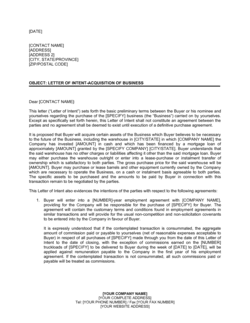
Request Proposal for Credit Facility Template

Free Word download β€’ Edit online β€’ Save & share with Drive β€’ Export to PDF

1 pageβ€’20–25 min to fillβ€’Difficulty: Standard
Learn more ↓
FreeRequest Proposal for Credit Facility Template

At a glance

What it is
A Request for Proposal for Credit Facility is a formal letter a company sends to one or more lenders inviting them to submit competing proposals for a credit line or loan facility. This free Word download gives you a structured, professional starting point β€” covering company background, facility size and purpose, proposed security, and evaluation criteria β€” that you can edit online and send to banks or alternative lenders in under an hour.
When you need it
Use it when your business needs to raise debt financing and wants to run a competitive lender process rather than negotiating with a single bank. It is particularly useful when refinancing an existing facility, expanding a revolving credit line, or securing project-specific financing.
What's inside
Company overview and financials summary, facility type and size, intended use of proceeds, proposed collateral or security package, lender qualification criteria, proposal format requirements, and submission deadline with evaluation timeline.

What is a Request for Proposal for Credit Facility?

A Request for Proposal for Credit Facility is a formal letter a company sends to one or more lenders inviting them to submit competing proposals for a credit line, term loan, or combined facility. It describes the borrowing company's business, financial profile, and the type and size of facility required, then specifies the security on offer, the covenants the company expects, the format lenders must follow in their proposals, and a firm submission deadline. Unlike a direct loan application, an RFP is addressed to multiple lenders simultaneously β€” creating a competitive process that gives the borrower meaningful leverage in pricing and terms negotiations.

Why You Need This Document

Companies that negotiate with a single bank typically accept whatever terms that bank offers, simply because they have nothing to compare them against. A well-structured credit facility RFP changes that dynamic: when three to five lenders are competing for the same mandate, interest rates tighten, fees compress, and covenant packages become more borrower-friendly. Without a formal RFP, lenders also lack the structured information they need to issue a substantive proposal quickly β€” vague conversations lead to indicative terms that fall apart in due diligence and delay close by weeks. This template gives your finance team a professional, complete document that signals to lenders you are running a serious, organized process β€” and serious borrowers attract better lenders at better prices.

Which variant fits your situation?

If your situation is…Use this template
Seeking a revolving credit line for working capitalRequest for Proposal for Credit Facility (Revolving)
Refinancing an existing term loan at better ratesRequest for Proposal for Credit Facility
Requesting a loan from a single known lenderLoan Request Letter
Formally proposing loan terms to a bankLoan Proposal
Documenting agreed credit terms after lender selectionLoan Agreement
Requesting a mortgage facility for commercial real estateCommercial Mortgage Application Letter
Notifying a lender of intent to repay earlyLoan Payoff Request Letter

Common mistakes to avoid

❌ Sending the RFP to only one lender

Why it matters: A single-lender process removes all competitive pressure, resulting in pricing and terms that reflect the lender's preferences rather than market rates.

Fix: Approach a minimum of three lenders β€” ideally a mix of your relationship bank, a regional competitor, and a non-bank lender β€” to generate genuine competing proposals.
❌ Omitting the non-binding disclaimer

Why it matters: Without a clear statement that the RFP creates no obligation to proceed, lenders who incur significant preparation costs may assert reliance-based claims if you abandon the process.

Fix: Include the confidentiality and disclaimer clause verbatim and confirm that the company reserves the right to reject all proposals and terminate the process at any time.

❌ Providing unaudited financials without disclosing their basis of preparation

Why it matters: Lenders who discover mid-process that statements are internally prepared rather than audited lose confidence in the borrower's credibility and may reprice or withdraw.

Fix: Label all financial statements with their basis of preparation β€” 'audited by [FIRM NAME]' or 'management-prepared, unaudited' β€” and provide the most recent audited statements available even if they are a year old.

❌ Setting an unrealistically short submission deadline

Why it matters: A deadline of fewer than 5 business days signals to lenders that the process is not serious, or that the borrower is in financial difficulty and needs emergency funding.

Fix: Allow at least 10 business days from dispatch to proposal deadline. If your timeline is genuinely compressed, explain the reason in the opening paragraph so lenders understand the urgency.

The 10 key clauses, explained

Opening and purpose statement

In plain language: Identifies the company, states that the letter is a formal RFP, and summarizes the type and size of facility being sought.

Sample language
[COMPANY LEGAL NAME] ('the Company') invites you to submit a proposal for a [FACILITY TYPE] credit facility of up to [CURRENCY AND AMOUNT]. The Company is seeking competitive proposals from qualified lenders by [SUBMISSION DEADLINE].

Common mistake: Opening with company history rather than the facility ask. Lenders want to know the size and type of facility in the first paragraph β€” burying it further down causes proposals to miss key parameters.

Company overview and financial summary

In plain language: Provides a brief description of the business, its industry, years in operation, and headline financial metrics that establish creditworthiness.

Sample language
Founded in [YEAR], the Company is a [INDUSTRY] business headquartered in [CITY, STATE/PROVINCE] with annual revenue of approximately [AMOUNT] and EBITDA of [AMOUNT] for the fiscal year ended [DATE]. Audited financial statements for the past [X] years are enclosed as Exhibit A.

Common mistake: Providing unaudited or internally prepared financials without labeling them as such. Lenders who discover the basis of preparation later in diligence lose confidence in the borrower's transparency.

Facility type and size

In plain language: Specifies whether the facility is a revolving line, term loan, or combination, the maximum commitment amount, and the desired draw structure.

Sample language
The Company is seeking a [revolving credit facility / term loan / combined facility] with a total commitment of [CURRENCY AND AMOUNT]. Drawdowns will be required in minimum tranches of [AMOUNT] on [X] business days' notice.

Common mistake: Stating only a total commitment amount without specifying whether the facility is revolving or amortizing. This forces lenders to make incompatible pricing assumptions, producing proposals that are impossible to compare.

Purpose and use of proceeds

In plain language: Explains exactly how the borrowed funds will be used β€” working capital, capital expenditure, acquisition financing, or refinancing β€” so lenders can assess the risk profile.

Sample language
Proceeds will be used for the following purposes: (a) [PURPOSE 1], estimated [AMOUNT]; (b) [PURPOSE 2], estimated [AMOUNT]; and (c) general corporate working capital, up to [AMOUNT]. No proceeds will be used to fund dividends or shareholder distributions without lender consent.

Common mistake: Describing the use of proceeds as 'general business purposes' without further detail. Lenders price risk based on how funds are deployed β€” vague descriptions result in conservative (i.e., more expensive) pricing assumptions.

Proposed security package

In plain language: Describes the collateral the company is prepared to offer, including the assets involved, their approximate value, and any existing encumbrances.

Sample language
The Company proposes to offer security comprising: (a) a first-ranking charge over all present and after-acquired personal property; (b) an assignment of accounts receivable currently valued at approximately [AMOUNT]; and (c) a [first / second] mortgage over the property located at [ADDRESS], with an appraised value of [AMOUNT] as of [DATE].

Common mistake: Offering security without disclosing existing charges or liens against the same assets. Lenders will discover encumbrances in title and PPSA/UCC searches β€” undisclosed prior charges delay or derail the process.

Financial covenants and conditions

In plain language: Indicates the covenants the company is willing to accept β€” or proposes to negotiate β€” such as minimum DSCR, maximum leverage ratio, and reporting obligations.

Sample language
The Company expects standard financial covenants including, but not limited to: (a) minimum DSCR of [X]Γ—, tested [quarterly / semi-annually]; (b) maximum total debt to EBITDA of [X]Γ—; and (c) delivery of quarterly management accounts within [X] days of period end and audited annual financial statements within [X] days of fiscal year end.

Common mistake: Proposing no covenants at all in an attempt to appear low-risk. Lenders view the absence of any proposed covenants as a negotiating tactic and respond with tighter terms β€” proposing reasonable starting points demonstrates financial maturity.

Proposal requirements and format

In plain language: Instructs lenders on exactly what their proposal must contain β€” pricing, fees, term sheet, and any credit approval conditionality β€” so responses are comparable.

Sample language
Proposals must include: (a) indicative interest rate or spread, and the reference rate to which it applies; (b) commitment and arrangement fees; (c) proposed term and amortization schedule; (d) key covenants; (e) security requirements; (f) conditions precedent to drawdown; and (g) any credit approval conditions or credit committee requirements.

Common mistake: Not requiring lenders to disclose credit approval conditionality. A proposal that looks attractive may be subject to credit committee approval that significantly changes the terms β€” requiring disclosure upfront avoids late-stage surprises.

Evaluation criteria

In plain language: States the factors on which proposals will be scored β€” not just price β€” so lenders understand that relationship, speed, and flexibility also matter.

Sample language
Proposals will be evaluated on the following criteria: (a) all-in cost of the facility (pricing, fees, and charges); (b) lender's experience in [INDUSTRY] or comparable transactions; (c) flexibility of drawdown and repayment mechanics; (d) speed to credit approval and close; and (e) covenant structure and ongoing reporting requirements.

Common mistake: Stating that the lowest price wins without listing other criteria. This triggers a race to the bottom on pricing, sometimes attracting lenders who compensate with restrictive covenants or onerous fees disclosed only in the term sheet.

Submission deadline and process

In plain language: Sets a firm deadline for proposal submission, names the contact to whom proposals should be sent, and outlines the next steps after the deadline.

Sample language
Proposals must be submitted in writing to [CONTACT NAME], [TITLE], at [EMAIL ADDRESS] no later than [TIME] on [DATE]. Shortlisted lenders will be invited to a meeting during the week of [DATE]. The Company expects to issue a mandate letter to the selected lender by [DATE], with a target facility close of [DATE].

Common mistake: Omitting a mandate and close target date. Without a stated timeline, lenders treat the process as non-urgent and deprioritize their response β€” publishing a close target creates competitive pressure to respond promptly.

Confidentiality and disclaimer

In plain language: Notifies lenders that the information in the RFP is confidential, that the company is not obligated to accept any proposal, and that the RFP does not constitute a binding commitment.

Sample language
The information contained in this RFP is confidential and provided solely for the purpose of preparing a proposal. Receipt of this RFP does not obligate the Company to accept any proposal or to proceed with any financing. The Company reserves the right to reject any or all proposals, to negotiate with multiple lenders simultaneously, and to terminate this process at any time without liability.

Common mistake: Omitting the non-binding disclaimer entirely. Without it, a lender that incurs costs preparing a detailed proposal may assert reliance-based claims if the process is terminated β€” even where no contract was formed.

How to fill it out

  1. 1

    Enter your company's legal name and contact details

    Replace the placeholder with your registered legal entity name, head office address, and the name and title of the finance contact managing the process. These appear in the opening paragraph and the submission-deadline clause.

    πŸ’‘ Use the same legal name that appears on your financial statements β€” lenders will cross-reference it in corporate registry and credit bureau searches.

  2. 2

    Define the facility type and total commitment amount

    Choose between a revolving credit line, term loan, or combined structure, and enter the maximum facility size in the appropriate currency. Be specific: '$5,000,000 revolving credit facility' is clearer than 'up to $5M.'

    πŸ’‘ If you are open to either structure, say so explicitly and invite lenders to propose the structure they believe best suits your profile β€” this generates more creative responses.

  3. 3

    Describe the use of proceeds with dollar estimates

    List each intended use with an approximate dollar allocation. Common categories include working capital, equipment purchase, real estate acquisition, refinancing an existing facility, or acquisition financing.

    πŸ’‘ If any portion of the proceeds will refinance existing debt, name the current lender and the outstanding balance β€” this reassures lenders you are not in financial distress.

  4. 4

    Document the proposed security package

    List each asset class you are prepared to offer as collateral with current appraised or book values. If any assets already carry a charge, disclose the lender's name and the outstanding balance secured.

    πŸ’‘ Prepare a current accounts-receivable aging report before sending the RFP β€” lenders will ask for it as part of due diligence and having it ready signals operational readiness.

  5. 5

    Set the submission deadline and process timeline

    Enter a specific submission deadline β€” at least 10 business days from the date you send the RFP β€” along with the shortlist meeting week, mandate letter date, and target close date.

    πŸ’‘ Send the RFP to at least three lenders to generate genuine competitive tension; fewer than three and lenders assume the process is a formality for a pre-selected bank.

  6. 6

    Attach supporting financial exhibits

    Reference your audited financial statements (last 2–3 years), current year-to-date management accounts, and any existing facility term sheets as labeled exhibits in the letter.

    πŸ’‘ Number each exhibit and reference it by number in the relevant clause β€” 'audited financial statements are enclosed as Exhibit A' β€” so lenders can quickly locate supporting data.

  7. 7

    Review the confidentiality and disclaimer clause before sending

    Confirm the non-binding language in the final clause accurately reflects your intentions: you are not obligated to accept any proposal and may terminate the process at any time.

    πŸ’‘ If you are running this process with the assistance of a financial advisor or arranger, add their name and role in the opening paragraph so lenders direct technical questions to the right contact.

Frequently asked questions

What is a request for proposal for a credit facility?

A request for proposal (RFP) for a credit facility is a formal letter a company sends to one or more lenders inviting them to submit competing proposals for a credit line or loan. It describes the borrower's business and financials, the type and size of facility required, the proposed security package, and the criteria and deadline for proposal submission. Running an RFP process creates competitive tension among lenders and typically results in better pricing and terms than negotiating with a single bank.

When should I use an RFP for a credit facility instead of a direct loan application?

Use an RFP when you want to compare proposals from multiple lenders rather than accepting the first offer from your relationship bank. It is particularly effective when refinancing an existing facility at maturity, when your credit profile has improved and you believe you can command better terms, or when the facility is large enough ($1M or more) that the time investment in a competitive process is justified by potential interest savings.

How many lenders should I send the RFP to?

Three to five lenders is the typical range for a mid-market credit RFP. Fewer than three removes the competitive dynamic; more than five creates significant administrative burden and signals to lenders that the process lacks seriousness. Include your primary relationship bank, at least one competing bank, and consider a non-bank lender (credit fund or specialty finance company) to benchmark the full market.

What information should I attach to the credit facility RFP?

At minimum: audited financial statements for the past two to three years, current year-to-date management accounts, an organizational chart showing the legal structure of the borrower and any guarantors, a schedule of existing debt and security, and any relevant asset appraisals. For asset-based facilities, include a current accounts-receivable aging report and inventory schedule. The more complete the package, the faster lenders can issue a substantive proposal.

Does an RFP for a credit facility obligate me to accept any proposal?

No β€” a properly drafted RFP explicitly states that the company is not obligated to accept any proposal and reserves the right to terminate the process at any time without liability. This non-binding disclaimer is standard and expected by lenders. You are free to negotiate with multiple lenders simultaneously, reject all proposals, or abandon the process if market terms do not meet your requirements.

How long does a credit facility RFP process typically take?

A typical timeline runs 6 to 10 weeks from RFP dispatch to facility close. Allow 10 to 15 business days for lenders to submit proposals, 1 to 2 weeks for shortlisting and lender meetings, 1 week to issue a mandate letter to the selected lender, and 3 to 4 weeks for legal documentation, due diligence, and funding. Complex or large facilities may take 12 to 16 weeks.

What is the difference between an RFP for a credit facility and a loan proposal?

An RFP is sent by the borrower to invite lenders to compete β€” the borrower sets the terms of the process and evaluates competing offers. A loan proposal is typically prepared by the borrower (or a lender) to present a specific financing request to a single institution. An RFP creates a competitive market process; a loan proposal is a direct application or pitch to one lender.

Should I hire a financial advisor to run a credit facility RFP?

For facilities above $5 million or in specialized sectors (real estate, project finance, leveraged buyouts), engaging a financial advisor or arranger adds value by identifying the right lender universe, managing the process, and negotiating term sheet details. For smaller facilities, a well-prepared RFP template combined with direct lender relationships is typically sufficient and avoids the 0.5–1% arrangement fee a third-party advisor charges.

What should I do after receiving proposals from lenders?

Create a comparison table with one row per lender and one column per key term: interest rate, reference rate, commitment fee, arrangement fee, key covenants, security requirements, and approval conditionality. Shortlist the top two or three lenders for follow-up meetings, negotiate on the points where proposals differ most, and then issue a mandate letter to your selected lender before beginning legal documentation.

How this compares to alternatives

vs Loan Request Letter

A loan request letter is a direct application to a single lender asking for specific financing terms. An RFP for a credit facility is sent to multiple lenders simultaneously to generate competing proposals. Use a loan request letter when you have a strong existing relationship and are confident in the terms; use the RFP when you want market competition to drive the best outcome.

vs Loan Proposal

A loan proposal is prepared by the borrower (or lender) to present a specific financing structure to a single institution, typically further along in a negotiation. The RFP is an earlier-stage document designed to solicit proposals from multiple lenders before any terms are agreed. The RFP precedes and informs the loan proposal that follows with the selected lender.

vs Loan Agreement

A loan agreement is the binding legal contract executed at close that documents the agreed facility terms, covenants, events of default, and security. The RFP is a non-binding solicitation letter that initiates the process. The RFP comes first; the loan agreement is the final output once a lender is selected and terms are negotiated.

vs Letter of Intent (Financing)

A letter of intent in a financing context is issued by the borrower to the selected lender to confirm mutual intent to proceed on agreed headline terms β€” it follows the RFP and lender selection. The RFP is addressed to multiple lenders at once; the letter of intent is addressed to one lender after the competitive process concludes.

Industry-specific considerations

Real estate and construction

Construction draw facilities with milestone-based drawdowns, loan-to-value covenants tied to independent appraisals, and interest-reserve requirements built into the facility size.

Manufacturing

Asset-based revolving lines secured against accounts receivable and inventory, with borrowing base certificates required at each drawdown and monthly collateral audits.

Retail and e-commerce

Seasonal revolving credit lines that expand in Q3 and Q4 to fund inventory build, with automatic step-downs after peak season to reduce commitment fees.

Professional services

Unsecured or lightly secured working capital lines based on accounts receivable quality, with DSCR and days-sales-outstanding covenants as the primary credit metrics.

Template vs pro β€” what fits your needs?

PathBest forCostTime
Use the templateBusiness owners and finance teams sourcing a standard credit facility up to $5M from relationship banksFree1–2 hours to complete and send
Template + professional reviewCompanies seeking facilities above $2M, non-standard security packages, or lenders outside their existing relationships$300–$800 for a CFO advisor or accountant review1–2 days
Custom draftedLarge or complex facilities above $10M, syndicated credit, project finance, or leveraged acquisitions$3,000–$15,000+ for a financial advisor or arranger1–3 weeks

Glossary

Credit Facility
A pre-approved borrowing arrangement between a lender and a borrower that allows the borrower to draw funds up to a set limit under agreed terms.
Revolving Credit Line
A facility where the borrower can draw, repay, and re-draw funds repeatedly up to the credit limit during the facility's term.
Term Loan
A lump-sum loan disbursed at closing and repaid in scheduled installments over a fixed period, typically 1–10 years.
Security / Collateral
Assets pledged by the borrower to the lender as protection against default β€” commonly accounts receivable, inventory, equipment, or real property.
Commitment Fee
A fee charged by the lender on the undrawn portion of a credit facility, typically expressed as an annual percentage.
DSCR (Debt Service Coverage Ratio)
Net operating income divided by total annual debt service β€” lenders typically require a DSCR of at least 1.25Γ— to approve a facility.
Covenant
A contractual obligation in a loan agreement requiring the borrower to maintain certain financial ratios or operating conditions throughout the facility's term.
Drawdown
A single disbursement of funds from an approved credit facility, made at the borrower's request subject to drawdown conditions.
Intercreditor Agreement
An agreement among multiple lenders that establishes the priority of their respective security interests and repayment claims.
Mandate Letter
A document issued by the borrower to the selected lender authorizing it to arrange and underwrite the credit facility on agreed terms.

Part of your Business Operating System

This document is one of 3,000+ business & legal templates included in Business in a Box.

  • Fill-in-the-blanks β€” ready in minutes
  • 100% customizable Word document
  • Compatible with all office suites
  • Export to PDF and share electronically

Create your document in 3 simple steps.

From template to signed document β€” all inside one Business Operating System.
1
Download or open template

Access over 3,000+ business and legal templates for any business task, project or initiative.

2
Edit and fill in the blanks with AI

Customize your ready-made business document template and save it in the cloud.

3
Save, Share, Send, Sign

Share your files and folders with your team. Create a space of seamless collaboration.

Save time, save money, and create top-quality documents.

β˜…β˜…β˜…β˜…β˜…

"Fantastic value! I'm not sure how I'd do without it. It's worth its weight in gold and paid back for itself many times."

Managing Director Β· Mall Farm
Robert Whalley
Managing Director, Mall Farm Proprietary Limited
β˜…β˜…β˜…β˜…β˜…

"I have been using Business in a Box for years. It has been the most useful source of templates I have encountered. I recommend it to anyone."

Business Owner Β· 4+ years
Dr Michael John Freestone
Business Owner
β˜…β˜…β˜…β˜…β˜…

"It has been a life saver so many times I have lost count. Business in a Box has saved me so much time and as you know, time is money."

Owner Β· Upstate Web
David G. Moore Jr.
Owner, Upstate Web

Run your business with a system β€” not scattered tools

Stop downloading documents. Start operating with clarity. Business in a Box gives you the Business Operating System used by over 250,000 companies worldwide to structure, run, and grow their business.

Free Forever PlanΒ Β·Β No credit card required