Accept Option Extension of Agreement Template

Free Word download β€’ Edit online β€’ Save & share with Drive β€’ Export to PDF

1 pageβ€’20–30 min to fillβ€’Difficulty: Standardβ€’Signature requiredβ€’Legal review recommended
Learn more ↓
FreeAccept Option Extension of Agreement Template

At a glance

What it is
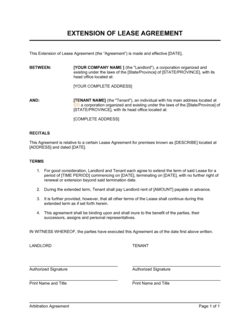
An Accept Option Extension of Agreement is a legally binding document by which one party formally accepts the other party's offer to extend the exercise period of an existing option agreement. It records both parties' consent to a new option expiry date, confirms any revised consideration or fee for the extension, and preserves all original option terms unless expressly amended. This free Word download gives you a structured, attorney-reviewed starting point you can edit online and export as PDF in minutes.
When you need it
Use it when the holder of an option β€” on real estate, a business asset, intellectual property, or a commercial contract β€” needs more time to exercise or decline, and the grantor has agreed to extend the deadline. It should be executed before the original option period expires; an acceptance signed after expiry is generally unenforceable.
What's inside
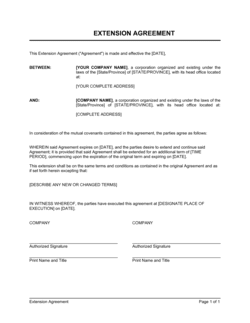
Identification of both parties and the underlying option agreement, the new extended expiry date, any extension fee or revised consideration, a confirmation that all original terms remain in full force, representations and warranties, governing law, and signature blocks for both parties.

What is an Accept Option Extension of Agreement?

An Accept Option Extension of Agreement is a legally binding document through which an option holder formally acknowledges and accepts the grantor's consent to extend the exercise period of an existing option. Rather than exercising or abandoning the underlying right β€” whether that right relates to purchasing real estate, acquiring a business, licensing intellectual property, or completing a commercial transaction β€” the holder secures additional time to make that decision. The extension records the new expiry date, documents any consideration paid for the extra period, and expressly confirms that all terms of the original option agreement continue in force. Without it, the parties have at best an informal understanding that courts will struggle to enforce once the original deadline has passed.

Why You Need This Document

Relying on an email exchange or a verbal assurance from the grantor that "a few more weeks is fine" creates serious legal risk. An undocumented extension leaves the option holder exposed to the grantor changing position, selling or encumbering the subject matter, or simply denying that any extension was ever agreed. If the original expiry date passes without a signed, consideration-backed extension agreement, the option lapses automatically in most jurisdictions β€” and the holder loses all rights regardless of how much was already invested in due diligence, financing, or negotiations. A properly executed accept option extension of agreement eliminates that risk: it creates a fixed new deadline that both parties are contractually bound to honor, preserves the original exercise price and conditions, and gives the holder the documented legal basis to enforce the option if the grantor attempts to withdraw during the extended period. This template gives you a ready-to-use structure that covers every material clause β€” parties, new expiry, consideration, confirmation of original terms, forfeiture on non-exercise, and governing law β€” so you can execute promptly and protect your position before the clock runs out.

Which variant fits your situation?

If your situation is…Use this template
Extending an option to purchase real estateAccept Option Extension of Agreement (Real Property)
Extending an option to acquire shares or a businessStock Option Extension Agreement
Extending an IP licensing optionIP License Option Extension Agreement
Granting a brand-new option for the first timeOption Agreement
Formally exercising the option rather than extending itNotice of Exercise of Option
Terminating an option rather than extending or exercising itNotice of Termination of Agreement
Amending multiple terms of the underlying agreement beyond the option dateContract Amendment Agreement

Common mistakes to avoid

❌ Signing the extension after the original option has expired

Why it matters: An option that has already lapsed cannot be revived by a later extension document β€” the grantor's offer has expired and there is nothing left to extend. Courts generally treat post-expiry extensions as a new offer, not a continuation of the old one, meaning the original option terms do not automatically carry through.

Fix: Calendar the original expiry date with at least a 10-business-day reminder. If the deadline has passed, work with a lawyer to draft a fresh option agreement rather than an extension.

❌ Omitting fresh consideration for the extension

Why it matters: In common-law jurisdictions, each new agreement β€” including an extension of an existing contract β€” requires its own consideration to be enforceable. Relying on the original option premium as consideration for the extension gives courts a basis to void the extension.

Fix: Always include a separate extension fee, even a nominal amount. Document receipt of the fee in the agreement or confirm it by reference to a wire transfer or check number.

❌ Using duration language instead of a specific new expiry date

Why it matters: Phrasing like '30 days from the extension date' creates ambiguity when the original expiry date is itself disputed β€” the new deadline becomes a moving target that neither party can pin down without litigation.

Fix: Always express the new deadline as a fixed calendar date: 'The option period is extended to and including [DATE].' This removes any arithmetic uncertainty.

❌ Failing to confirm that the underlying option terms still apply

Why it matters: Without a confirmation clause, a party may argue that the extension superseded the original agreement entirely β€” eliminating exercise price protections, due diligence rights, or other conditions that were in the original document.

Fix: Include an explicit clause stating that all terms of the underlying agreement remain in full force except as expressly modified by the extension, and that the extension prevails only in the event of direct conflict.

The 10 key clauses, explained

Parties and recitals

In plain language: Identifies the grantor and option holder by legal name and recites the background β€” the existence of the underlying option agreement and the parties' desire to extend the option period.

Sample language
This Accept Option Extension of Agreement ('Extension Agreement') is entered into as of [DATE] between [GRANTOR LEGAL NAME] ('Grantor') and [OPTION HOLDER LEGAL NAME] ('Holder'). WHEREAS, the parties entered into an Option Agreement dated [ORIGINAL DATE] ('Underlying Agreement') and Grantor has agreed to extend the Option Period on the terms set out herein.

Common mistake: Referencing the underlying agreement by description only rather than by its exact execution date and title β€” creating ambiguity about which agreement is being extended if multiple agreements exist between the same parties.

Extension of option period

In plain language: States the new expiry date of the option, replacing the original deadline and confirming that the extension is the entire additional time being granted.

Sample language
The Option Period under the Underlying Agreement is hereby extended to [NEW EXPIRY DATE] ('Extended Expiry Date'). For the avoidance of doubt, the Option Period shall not be extended beyond the Extended Expiry Date without a further written agreement signed by both parties.

Common mistake: Expressing the extension as a duration ('30 additional days') rather than a fixed calendar date β€” if the original expiry is disputed, the new deadline becomes uncertain.

Extension consideration

In plain language: Records the fee or other consideration the option holder pays the grantor in exchange for the additional time, and confirms receipt if applicable.

Sample language
In consideration of the extension granted herein, Holder shall pay Grantor an extension fee of $[AMOUNT] ('Extension Fee') on or before [PAYMENT DATE]. Receipt of the Extension Fee is acknowledged by Grantor's execution of this Agreement.

Common mistake: Omitting extension consideration entirely β€” relying on the original option premium as consideration for the new extension. Courts may find no fresh consideration for the extension, rendering it unenforceable.

Confirmation of original terms

In plain language: Expressly states that all terms of the underlying option agreement remain in full force and effect except as modified by this extension agreement.

Sample language
Except as expressly modified herein, all terms and conditions of the Underlying Agreement shall remain in full force and effect and are hereby ratified and confirmed. In the event of any conflict between this Extension Agreement and the Underlying Agreement, this Extension Agreement shall prevail.

Common mistake: Failing to include this clause, leaving open whether original conditions β€” price, representations, due diligence rights β€” continue to apply during the extended period.

Representations and warranties

In plain language: Each party confirms that they have authority to enter the extension, that the underlying option has not been previously exercised or terminated, and that no third-party consents are required.

Sample language
Each party represents and warrants that (a) it has full legal capacity and authority to enter into this Extension Agreement; (b) the Underlying Agreement remains in full force and has not been exercised, assigned, or terminated; and (c) no third-party consent is required for this extension.

Common mistake: Not confirming that the underlying option is still valid at the time of execution β€” if the original option lapsed before the extension was signed, there is nothing to extend.

Non-extension and forfeiture

In plain language: Clarifies what happens if the holder does not exercise the option by the new extended expiry date β€” typically automatic forfeiture with no refund of premiums or extension fees.

Sample language
If Holder fails to exercise the option on or before the Extended Expiry Date, the option shall automatically expire and all rights of Holder thereunder shall be permanently forfeited. The Extension Fee shall be retained by Grantor as compensation for the additional option period.

Common mistake: Omitting this clause and leaving ambiguity about whether partial exercise or a late exercise triggers any cure period β€” creating disputes when the holder misses the new deadline.

Conditions precedent to extension effectiveness

In plain language: Lists any conditions that must be satisfied before the extension takes effect β€” most commonly, payment of the extension fee by a set date.

Sample language
This Extension Agreement shall not become effective unless and until (a) Holder delivers the Extension Fee to Grantor by [PAYMENT DEADLINE]; and (b) both parties have executed this Agreement. If any condition is not satisfied by the Payment Deadline, this Extension Agreement shall be void and of no effect.

Common mistake: Treating the extension as immediately effective upon signing without tying effectiveness to payment of the extension fee β€” the grantor then has no mechanism to rescind if payment does not follow.

Governing law and dispute resolution

In plain language: Specifies the jurisdiction whose laws govern the extension agreement and how disputes are resolved β€” typically the same governing law as the underlying agreement.

Sample language
This Extension Agreement is governed by the laws of [STATE / PROVINCE / COUNTRY], without regard to conflict-of-law principles. Any dispute arising hereunder shall be resolved by [binding arbitration / the courts of [JURISDICTION]], which the parties hereby submit to as the exclusive forum.

Common mistake: Selecting a governing law different from the underlying agreement's governing law β€” creating a conflict where different legal standards apply to different parts of the same transaction.

Entire agreement and amendment

In plain language: States that this extension agreement together with the underlying agreement constitutes the complete agreement between the parties on the extension, and can only be amended in writing.

Sample language
This Extension Agreement, together with the Underlying Agreement, constitutes the entire agreement between the parties with respect to the extension of the Option Period and supersedes all prior negotiations, representations, or understandings. No amendment to this Extension Agreement shall be effective unless made in writing and signed by both parties.

Common mistake: Omitting this clause, allowing prior email exchanges or verbal assurances about extension terms to be introduced as part of the agreement in a later dispute.

Signature blocks and execution

In plain language: Provides signature lines for authorized representatives of both parties, including name, title, date of signature, and β€” for corporate parties β€” evidence of authority.

Sample language
IN WITNESS WHEREOF, the parties have executed this Extension Agreement as of the date first written above. [GRANTOR LEGAL NAME] by: _________________________ Name: [NAME] Title: [TITLE] Date: [DATE]. [HOLDER LEGAL NAME] by: _________________________ Name: [NAME] Title: [TITLE] Date: [DATE].

Common mistake: Having only one party sign the extension or having a signatory without authority execute β€” a corporate officer who lacks board authorization cannot bind the entity to the extension.

How to fill it out

  1. 1

    Insert the parties' full legal names and the execution date

    Enter the grantor and holder's registered legal names exactly as they appear in the underlying option agreement. Set the execution date to the date both parties will sign β€” not a retroactive date.

    πŸ’‘ If either party is a corporation, confirm the exact registered entity name from the corporate registry before inserting it β€” a mismatch between the extension and the underlying agreement creates an enforceability risk.

  2. 2

    Reference the underlying option agreement precisely

    In the recitals, enter the exact title and execution date of the original option agreement. If it has a unique reference number, include that too.

    πŸ’‘ Attach a copy of the first page of the underlying agreement as Exhibit A β€” it eliminates any dispute about which document is being extended.

  3. 3

    Set the new extended expiry date as a specific calendar date

    Replace the original option deadline with a fixed calendar date β€” e.g., 'August 31, 2026.' Avoid duration language like '30 days from the date hereof' unless the original date is indisputably documented.

    πŸ’‘ Build in a buffer of at least 3–5 business days beyond the date you actually need β€” courier delays, banking holidays, and counterparty response times erode deadlines quickly.

  4. 4

    Define and record the extension fee

    Agree on the extension consideration with the grantor and enter the dollar amount and payment deadline. If the extension is granted without a separate fee, document that the parties have agreed to nominal consideration (e.g., $1 and other good and valuable consideration) to satisfy the legal requirement.

    πŸ’‘ Even a nominal fee creates fresh consideration β€” omitting it entirely is the single most common cause of extension agreements being challenged.

  5. 5

    Confirm all original option terms carry through

    Review the original agreement and confirm that the exercise price, due diligence rights, and any conditions have not changed. If any term is being adjusted alongside the extension, document the change explicitly rather than relying on verbal agreement.

    πŸ’‘ If more than one term is changing, consider using a formal Contract Amendment Agreement rather than folding all changes into the extension document.

  6. 6

    Complete the representations and warranties section

    Confirm that the underlying option has not lapsed, been exercised, or been assigned prior to this extension. Both parties should verify their own authority to sign β€” check corporate resolutions or partnership agreements if needed.

    πŸ’‘ A quick title search or register check before execution confirms that no adverse event has affected the underlying subject matter since the original option was granted.

  7. 7

    Execute before the original option period expires

    Both parties must sign before the existing option deadline β€” not on or after. Schedule signing at least five business days before expiry to allow for review, revision, and delivery.

    πŸ’‘ Use a timestamped e-signature platform so that the exact moment of execution is captured β€” this eliminates disputes about whether the extension was signed before or after the original expiry.

Frequently asked questions

What is an accept option extension of agreement?

An accept option extension of agreement is a binding legal document through which an option holder formally accepts the grantor's offer to extend the exercise period of an existing option. It records the new expiry date, any additional consideration paid for the extra time, and confirms that all original option terms remain in effect. It is distinct from exercising the option β€” the holder is simply purchasing more time to decide, not committing to the underlying transaction.

When should an option extension be signed?

The extension must be signed before the original option period expires β€” ideally at least five business days before the deadline to allow for review and any last-minute corrections. An extension executed after the option has lapsed is generally unenforceable in common-law jurisdictions and is typically treated as a new option offer rather than a continuation of the old one, meaning the original option terms do not automatically carry through.

Is fresh consideration required for an option extension?

Yes, in common-law jurisdictions including the US, Canada, the UK, and Australia. Each new contractual agreement β€” including an extension of an existing option β€” requires its own consideration to be legally binding. The original option premium paid under the underlying agreement is generally not sufficient. A separate extension fee, even a nominal amount, is the standard solution. Consult a lawyer if you are unsure what constitutes adequate consideration in your jurisdiction.

What happens if the option holder does not exercise by the extended expiry date?

The option expires automatically and the holder permanently forfeits the right to exercise it. Extension fees and the original option premium are typically non-refundable and are retained by the grantor as compensation for holding the subject matter off the market. This outcome should be clearly documented in the non-extension and forfeiture clause of the extension agreement to prevent disputes if the holder misses the new deadline.

Can an option be extended more than once?

Yes, provided both parties agree and each successive extension is documented in a separate, signed extension agreement with its own consideration. Each extension must be executed before the current option period expires. There is no legal limit on the number of extensions, but grantors typically charge increasing extension fees for successive extensions to compensate for the ongoing market risk of holding the subject matter.

Does an option extension need to be notarized?

For most commercial option extensions, notarization is not required. An exception applies to options over real property in certain US states and Canadian provinces where instruments affecting land must be notarized or witnessed before they can be registered against title. Check the recording requirements in your jurisdiction for real estate options. For all other asset types, dual signatures and a dated execution are typically sufficient.

What is the difference between an option extension and a contract amendment?

An option extension changes only the expiry date of the option period and confirms that all other terms continue unchanged. A contract amendment modifies specific terms of the underlying agreement β€” price, conditions, scope β€” while keeping the rest of the contract intact. If you need to change the option exercise price, due diligence conditions, or any substantive term alongside the extension, use a contract amendment agreement rather than, or in addition to, the extension document.

Can the grantor refuse to extend the option?

Yes. A grantor is under no obligation to grant an extension unless the underlying agreement contains a specific right to extend. Most option agreements give the holder a right to exercise or decline β€” but not a unilateral right to extend. The grantor can refuse, demand a higher extension fee, or impose new conditions. For this reason, any extension should be documented promptly once agreed verbally, before the grantor changes position.

Do I need a lawyer to complete an option extension agreement?

For straightforward commercial or real estate option extensions with clearly identified parties, a fixed new expiry date, and a simple extension fee, a high-quality template is generally sufficient. Engage a lawyer when the underlying asset is high-value real property, the option involves complex regulatory approvals, the extension is the second or third successive extension, or when either party is a trust, estate, or foreign entity requiring special authority documentation.

How this compares to alternatives

vs Option Agreement

An option agreement is the founding document that creates the option right β€” it defines the subject matter, exercise price, option premium, and original expiry date. An accept option extension of agreement is a subsequent document that simply shifts the expiry date forward. You need the option agreement first; you use the extension only when the original deadline is approaching and more time is required.

vs Contract Amendment Agreement

A contract amendment modifies specific substantive terms of an existing agreement β€” price, scope, conditions β€” while preserving the rest. An option extension modifies only the expiry date. If you need to change the exercise price or add conditions alongside extending the deadline, a contract amendment is the correct instrument, not a standalone extension document.

vs Notice of Exercise of Option

A notice of exercise formally commits the holder to completing the underlying transaction β€” it consummates the option right. An accept option extension does the opposite: it preserves optionality by pushing the decision deadline forward. Once an exercise notice is issued, the extension document is no longer relevant; the parties move to closing the underlying transaction.

vs Notice of Termination of Agreement

A termination notice ends the option relationship entirely β€” the holder declines to exercise and forfeits all premiums paid. An extension preserves the relationship and the holder's right to exercise. The two documents are mutually exclusive: a holder who has sent a termination notice cannot subsequently seek an extension of the same option.

Industry-specific considerations

Real estate and property development

Option extensions on land and commercial property are common when environmental or zoning approvals are delayed; in many jurisdictions the extension must be registered against title to bind third-party purchasers.

Mergers and acquisitions

Buyers extending options to acquire businesses or share packages typically tie the extension to a specific financing or regulatory milestone, with an increased fee reflecting the seller's extended exclusivity.

Technology and intellectual property

IP licensing option extensions arise when a licensee needs more time to complete technical validation or secure budget approval before committing to a full license, with the extension fee credited against the eventual license fee.

Franchising

Franchise option extensions allow prospective franchisees to complete site selection, financing, or training requirements before formally exercising the territorial option granted by the franchisor.

Jurisdictional notes

United States

Option extensions generally require fresh consideration under common law in all 50 states. For real property options, check whether the extension must be recorded in the county land records to be enforceable against subsequent purchasers or lien holders β€” requirements vary by state. California and New York have specific statutory frameworks governing options on real estate that affect extension formalities.

Canada

Fresh consideration is required in all provinces for a valid option extension. Real property option extensions in Ontario, British Columbia, and Alberta should be registered on title to bind third parties. Quebec, as a civil law jurisdiction, applies different rules under the Civil Code β€” an option (promesse de vente) extension may need to be notarized to be opposable to third parties. French-language versions may be required for contracts in Quebec.

United Kingdom

Under English law, consideration is required for a binding option extension; a deed can be used in lieu of consideration if both parties wish to avoid a monetary fee. Option extensions relating to land must comply with the Law of Property (Miscellaneous Provisions) Act 1989 β€” the document must be in writing, contain all agreed terms, and be signed by both parties. Options over shares in private companies should be reviewed against any pre-emption provisions in the company's articles of association.

European Union

Option extension formalities vary significantly by member state. France and Germany do not require monetary consideration in the common-law sense but impose specific formal requirements β€” French options on real property must be registered within ten days of execution. GDPR considerations apply when personal data of individuals is processed in connection with the underlying transaction documentation. Cross-border extensions within the EU should specify the governing law and jurisdiction explicitly to avoid conflict-of-laws disputes under the Rome I Regulation.

Template vs lawyer β€” what fits your deal?

PathBest forCostTime
Use the templateStandard commercial or IP option extensions with clear parties, a simple fee, and an unambiguous new expiry dateFree15–30 minutes
Template + legal reviewReal estate option extensions, successive extensions, or situations where the underlying agreement contains complex conditions$250–$6001–3 days
Custom draftedHigh-value property transactions, multi-party option structures, cross-border extensions, or options requiring regulatory consent$1,000–$3,500+1–2 weeks

Glossary

Option Period
The defined window of time during which the option holder has the right, but not the obligation, to exercise the option under the underlying agreement.
Option Extension
A mutually agreed postponement of the original option expiry date, giving the holder additional time to decide whether to exercise the option.
Extension Fee
A payment made by the option holder to the grantor in exchange for the grant of additional time, separate from any option premium already paid.
Option Premium
The upfront consideration paid by the option holder to the grantor for the right to exercise the option under the original agreement.
Grantor
The party who originally granted the option right and who must consent to any extension of the option period.
Option Holder
The party who holds the right to exercise, decline, or β€” where agreed β€” extend the option during the option period.
Exercise Date
The specific date by which the option holder must formally elect to exercise the option or forfeit the right permanently.
Underlying Agreement
The original contract β€” purchase agreement, license, lease, or share purchase β€” that contains the option right being extended.
Consideration
Something of value exchanged between the parties to make a contract legally binding β€” for an extension, typically a monetary fee or a promise.
Time of the Essence
A contractual provision stating that deadlines are strict conditions, not mere targets β€” missing them constitutes a material breach or forfeiture of rights.
Novation
Replacement of an existing agreement with a new one; distinct from an extension, which preserves the original agreement and merely shifts the expiry date.

Part of your Business Operating System

This document is one of 3,000+ business & legal templates included in Business in a Box.

  • Fill-in-the-blanks β€” ready in minutes
  • 100% customizable Word document
  • Compatible with all office suites
  • Export to PDF and share electronically

Create your document in 3 simple steps.

From template to signed document β€” all inside one Business Operating System.
1
Download or open template

Access over 3,000+ business and legal templates for any business task, project or initiative.

2
Edit and fill in the blanks with AI

Customize your ready-made business document template and save it in the cloud.

3
Save, Share, Send, Sign

Share your files and folders with your team. Create a space of seamless collaboration.

Save time, save money, and create top-quality documents.

β˜…β˜…β˜…β˜…β˜…

"Fantastic value! I'm not sure how I'd do without it. It's worth its weight in gold and paid back for itself many times."

Managing Director Β· Mall Farm
Robert Whalley
Managing Director, Mall Farm Proprietary Limited
β˜…β˜…β˜…β˜…β˜…

"I have been using Business in a Box for years. It has been the most useful source of templates I have encountered. I recommend it to anyone."

Business Owner Β· 4+ years
Dr Michael John Freestone
Business Owner
β˜…β˜…β˜…β˜…β˜…

"It has been a life saver so many times I have lost count. Business in a Box has saved me so much time and as you know, time is money."

Owner Β· Upstate Web
David G. Moore Jr.
Owner, Upstate Web

Run your business with a system β€” not scattered tools

Stop downloading documents. Start operating with clarity. Business in a Box gives you the Business Operating System used by over 250,000 companies worldwide to structure, run, and grow their business.

Start freeΒ Β·Β No credit card required