Request for Proof of Merchandise Return Template

Free Word download β€’ Edit online β€’ Save & share with Drive β€’ Export to PDF

1 pageβ€’15–20 min to fillβ€’Difficulty: Standard
Learn more ↓
FreeRequest for Proof of Merchandise Return Template

At a glance

What it is
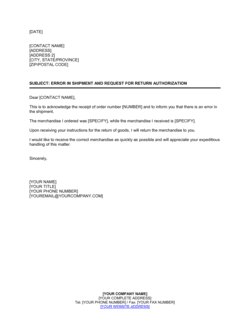
A Request For Proof Of Merchandise Return is a formal business letter sent by a seller, vendor, or accounts-payable team to a buyer or customer asking them to supply documented evidence that goods were physically returned. This free Word download is fully editable online and can be exported as PDF and sent immediately.
When you need it
Use it when a refund, credit memo, or replacement order has been requested but the corresponding return shipment has not been confirmed with tracking, receipt, or inspection documentation. It is also appropriate when internal records show a discrepancy between claimed and received returns.
What's inside
Sender and recipient details, a clear statement of the outstanding return, a specific list of required documentation, a response deadline, and contact information for follow-up. Each component keeps the request professional, traceable, and actionable.

What is a Request For Proof Of Merchandise Return?

A Request For Proof Of Merchandise Return is a formal business letter sent by a seller, vendor, or accounts-payable department to a buyer or customer asking them to provide documented evidence that goods were physically returned. It references the original transaction by invoice and order number, identifies the specific merchandise in question, and requests concrete documentation β€” such as a carrier tracking number, proof of delivery, or inspection report β€” before a refund, credit memo, or replacement order is processed. The letter establishes a written record of the request, sets a specific response deadline, and states the consequence of non-response.

Why You Need This Document

Processing a refund or credit without verified return documentation exposes your business to direct financial loss. Return fraud β€” where a buyer claims to have shipped goods back but never does β€” costs retailers and wholesalers measurably each year, and a formal written request is the simplest operational control against it. Beyond fraud prevention, unverified returns create inventory discrepancies that distort stock counts, complicate audits, and generate accounting entries that cannot be reconciled. A well-structured request letter creates the paper trail you need to escalate to collections, dispute a chargeback, or close a claim without further liability. This template gives you a professional, immediately usable letter that covers every element β€” from reference numbers and documentation checklist to deadline and consequence clause β€” so your return process is consistent, defensible, and resolved faster.

Which variant fits your situation?

If your situation is…Use this template
Requesting proof of return to process a refund for a retail customerRequest For Proof Of Merchandise Return
Notifying a vendor that returned goods were received and inspectedMerchandise Return Receipt Confirmation
Formally declining a return request due to missing documentationLetter Refusing Merchandise Return
Authorizing a customer to send back goods before they are shippedReturn Merchandise Authorization (RMA) Letter
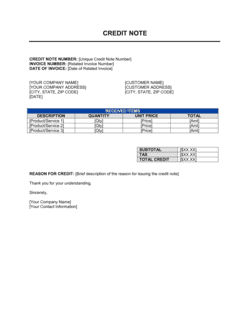
Issuing a credit to a customer after a confirmed returnCredit Note
Following up on a return claim with no response to a prior requestCollection Follow-Up Letter

Common mistakes to avoid

❌ No reference numbers in the subject line

Why it matters: The recipient's team cannot locate the transaction without an invoice or order number, causing delays and potential misrouting of the letter.

Fix: Always include the invoice number, order number, or both in the subject line and again in the body paragraph describing the merchandise.
❌ Vague documentation request

Why it matters: Asking for 'proof of return' without specifying acceptable documents results in recipients submitting whatever is convenient β€” often insufficient to process the claim.

Fix: List each required document as a numbered or lettered item: tracking number, proof of delivery, RMA copy, and inspection report.

❌ Open-ended or missing response deadline

Why it matters: Without a fixed date, recipients have no urgency to respond and the letter creates no enforceable timeline for escalation.

Fix: Set a specific calendar date β€” 10–15 business days from the letter date β€” and state the consequence of missing it.

❌ Sending to a general department address rather than a named contact

Why it matters: Letters addressed to 'Customer Service' or 'Returns Department' are frequently delayed, misrouted, or left unassigned in shared inboxes.

Fix: Identify the specific person responsible for return authorizations or accounts payable at the recipient's company and address the letter to them by name.

The 8 key clauses, explained

Sender and recipient header

In plain language: Identifies both parties β€” full names, company names, addresses, and contact details β€” and establishes the formal record of who sent the letter and to whom.

Sample language
[SENDER COMPANY NAME] | [SENDER ADDRESS] | [CITY, STATE, ZIP] | Date: [DATE] | To: [RECIPIENT NAME], [RECIPIENT COMPANY], [RECIPIENT ADDRESS]

Common mistake: Using a department name instead of a specific contact person. Letters addressed to 'Accounts Payable Department' are slower to action and harder to follow up.

Subject line

In plain language: A concise one-line reference identifying the return transaction in question, including the original order or invoice number.

Sample language
Re: Request for Proof of Return β€” Invoice No. [INVOICE NUMBER] / Order No. [ORDER NUMBER]

Common mistake: Omitting the invoice or order number from the subject line. Without a reference number, the recipient cannot quickly locate the transaction and the letter may be misrouted.

Opening statement of purpose

In plain language: States clearly and without ambiguity that the letter is a formal request for return documentation, and references the original purchase or return claim.

Sample language
We are writing to formally request documentation confirming the return of merchandise associated with Invoice No. [INVOICE NUMBER], dated [DATE], for [BRIEF PRODUCT DESCRIPTION].

Common mistake: Opening with a general greeting or lengthy context before stating the purpose. Recipients route formal letters by subject β€” state the request in the first two sentences.

Description of the outstanding return

In plain language: Identifies the specific goods subject to the return claim β€” item name, quantity, and original order details β€” so there is no confusion about which transaction is in question.

Sample language
The merchandise in question consists of [QUANTITY] units of [PRODUCT NAME / SKU], originally shipped on [SHIP DATE] under Purchase Order No. [PO NUMBER]. Our records do not reflect receipt of these items.

Common mistake: Describing the product vaguely as 'the returned goods' without referencing SKU, quantity, or order date. Ambiguous descriptions extend resolution time and invite disputes.

Specific documentation requested

In plain language: Lists the exact documents or records the sender needs to verify the return β€” carrier tracking, delivery confirmation, RMA paperwork, or inspection notes.

Sample language
Please provide the following: (a) carrier tracking number and proof of delivery, (b) copy of the Return Merchandise Authorization (RMA No. [RMA NUMBER]), and (c) any inspection report confirming receipt and condition of returned items.

Common mistake: Requesting 'supporting documentation' without specifying what is acceptable. Vague requests result in incomplete submissions that require a second round of correspondence.

Response deadline

In plain language: Sets a specific calendar date by which the recipient must respond, creating a clear timeline for resolution and establishing a paper trail if the deadline is missed.

Sample language
Please submit the requested documentation no later than [DATE β€” typically 10–15 business days from letter date]. If we do not receive the required information by this date, we will be unable to process your [refund / credit / replacement request].

Common mistake: Stating 'at your earliest convenience' instead of a fixed date. Open-ended deadlines are routinely ignored, and the absence of a date weakens any escalation that follows.

Consequence of non-response

In plain language: States clearly what will happen if documentation is not provided by the deadline β€” typically suspension of the refund, credit, or replacement process β€” without being threatening.

Sample language
Failure to provide the requested documentation by [DATE] may result in the cancellation of your return request and the forfeiture of any associated credit or refund.

Common mistake: Omitting consequences entirely. Without a stated outcome, the deadline has no weight and the recipient has no incentive to prioritize the response.

Contact information and closing

In plain language: Provides a named contact person, direct phone number, and email address for the recipient to submit documentation or ask questions, and closes the letter professionally.

Sample language
Please direct all correspondence and documentation to [CONTACT NAME] at [EMAIL ADDRESS] or [PHONE NUMBER]. We appreciate your prompt attention to this matter.

Common mistake: Providing only a general company phone number or email inbox. A named contact reduces friction and ensures the response reaches the right person.

How to fill it out

  1. 1

    Enter sender and recipient details

    Fill in your company's full legal name, mailing address, and the date. Then add the recipient's full name, title, company, and address. Use the recipient's accounts-payable or returns contact, not the general company address.

    πŸ’‘ Confirm the recipient's current mailing address before sending β€” addresses in your system may be outdated for wholesale or vendor accounts.

  2. 2

    Complete the subject line with reference numbers

    Enter the original invoice number, order number, or both in the subject line so the recipient can locate the transaction immediately. Include the RMA number if one was already issued.

    πŸ’‘ Adding both the invoice number and the PO number covers cases where the recipient files by either reference β€” reducing the chance the letter is misrouted.

  3. 3

    Describe the merchandise in the body

    Identify the product by name, SKU or item number, quantity, and original ship date. Reference the invoice or purchase order that initiated the transaction.

    πŸ’‘ Copy the product description directly from the original invoice to eliminate any discrepancy between your description and the recipient's records.

  4. 4

    List the specific documents you need

    Enumerate exactly what you require β€” carrier tracking number, proof of delivery, RMA paperwork, and any inspection report. Number each item as a lettered list so the recipient can check off each one before submitting.

    πŸ’‘ Limit the list to documents you actually need to process the return. Asking for unnecessary paperwork slows resolution and frustrates recipients.

  5. 5

    Set a specific response deadline

    Calculate a deadline of 10–15 business days from the letter date and enter the exact calendar date. State what action will be taken β€” or suspended β€” if documentation is not received.

    πŸ’‘ Use a business-days count rather than calendar days to account for weekends and public holidays, and state which convention you are using.

  6. 6

    Add your contact details and sign off

    Enter the name, direct email, and phone number of the person who will receive and process the documentation. Close with a professional sign-off and your name and title.

    πŸ’‘ If your company uses a returns management system or portal, include the portal URL as an alternative submission method β€” it speeds up receipt and auto-logs the documents.

Frequently asked questions

What is a request for proof of merchandise return?

A request for proof of merchandise return is a formal business letter sent by a seller or vendor to a buyer asking them to provide documented evidence that goods were physically returned. It typically requests a carrier tracking number, proof of delivery, and any return authorization paperwork. The letter creates a written record of the request and sets a deadline for the buyer to respond before refund or credit processing is affected.

When should I send a request for proof of merchandise return?

Send it when a customer or buyer claims to have returned goods but you have no confirmation of receipt in your warehouse or inventory system. It is also appropriate when a refund or credit memo request has been received but the return shipment cannot be matched to any incoming delivery record. Sending it promptly β€” before issuing any credit β€” protects you from processing refunds for merchandise that was never actually returned.

What documents should I ask for in the letter?

At minimum, request the carrier tracking number and a proof of delivery confirmation from the shipping carrier. If you issued a Return Merchandise Authorization, ask for the RMA number and any associated paperwork. For high-value goods, also request an inspection report or photographs of the returned items confirming condition. List each document separately so the recipient knows exactly what is required before submission.

What deadline should I set for the response?

Ten to fifteen business days from the date of the letter is a widely accepted standard for return documentation requests. This gives the recipient enough time to locate shipping records and gather paperwork without allowing the matter to stall indefinitely. Always state the deadline as a specific calendar date rather than a relative term like "within two weeks" to avoid interpretation differences.

Does this letter need to be signed?

A signature is not legally required for this type of letter to be effective, but including a handwritten or electronic signature from an authorized representative adds credibility and makes the document easier to use as evidence in a dispute. At minimum, the letter should include the full name and title of the sender.

Can this letter be sent by email?

Yes β€” email is an acceptable delivery method for most commercial correspondence of this type. Attach the letter as a PDF to preserve formatting and create a permanent record. Send it to the recipient's direct email address rather than a general inbox, and request a read receipt or delivery confirmation where your email system allows it.

What happens if the recipient does not respond by the deadline?

If no documentation is received by the stated deadline, you are generally entitled to suspend the refund or credit process and treat the return claim as unverified. Send a follow-up letter referencing the original request and stating that the claim will be closed without further action unless documentation is received within an additional specified period. Retain copies of all correspondence in case the matter escalates to a formal dispute.

Is this letter the same as a return merchandise authorization (RMA)?

No β€” these serve opposite functions. An RMA is issued by the seller before the return shipment to authorize and track an incoming return. A request for proof of merchandise return is sent after a return has been claimed but not confirmed, asking the buyer to supply evidence that the shipment actually took place. The two documents may reference each other but address different points in the return workflow.

How this compares to alternatives

vs Return Merchandise Authorization Letter

An RMA letter is issued before the return takes place, giving the buyer permission to ship goods back and assigning a tracking reference. A request for proof of merchandise return is sent after a return is claimed but unconfirmed, asking the buyer to document what was already sent. The RMA enables the return; this letter verifies it.

vs Credit Note

A credit note is issued by the seller after a return is confirmed and accepted, reducing the buyer's outstanding balance. A request for proof of merchandise return is the step that precedes the credit note β€” it confirms the return actually happened before any credit is applied. Issuing a credit note without verified return proof exposes you to unrecovered losses.

vs Letter Refusing Merchandise Return

A refusal letter is sent when a return request is rejected outright β€” due to policy, condition, or timing. A request for proof of merchandise return is sent when the return claim cannot yet be verified, leaving the outcome open pending documentation. Use the request letter when you need evidence; use the refusal letter when the decision is already made.

vs Collection Follow-Up Letter

A collection follow-up letter pursues an unpaid invoice from a buyer who owes money. A request for proof of merchandise return pursues missing documentation from a buyer who claims to have already sent goods back. Both are formal written escalations, but they address opposite sides of the accounts-receivable ledger.

Industry-specific considerations

Retail and e-commerce

High return volumes make documented proof essential to prevent fraudulent refund claims on orders that were never actually shipped back.

Manufacturing and wholesale

Bulk return claims involving hundreds of units require carrier-level documentation and inspection reports before any credit adjustment is posted to the vendor account.

Healthcare and medical supplies

Regulatory and lot-tracking requirements mean returned medical goods must be documented with serial numbers, lot numbers, and condition reports before processing.

Construction and building materials

High-value materials returned from job sites require delivery receipts and condition inspection to determine whether restocking or disposal credits apply.

Template vs pro β€” what fits your needs?

PathBest forCostTime
Use the templateAny business that needs to request return documentation from a customer, vendor, or buyer in a professional formatFree5–10 minutes
Template + professional reviewHigh-value return disputes where the letter may be used as evidence in a chargeback, insurance, or collections process$50–$150 (paralegal or business advisor review)1 business day
Custom draftedRecurring high-volume return operations requiring customized language aligned to your returns policy and legal terms$200–$500 (attorney or contract specialist)2–5 business days

Glossary

Proof of Return
Documentation confirming that returned merchandise was physically shipped or delivered back to the seller, such as a carrier tracking number, delivery receipt, or inspection report.
Return Merchandise Authorization (RMA)
A pre-approved code or number issued by a seller that authorizes a buyer to return specific goods and ties the shipment to an open return record.
Credit Memo
An accounting document issued by a seller to reduce the amount a buyer owes, typically issued after a confirmed return or billing adjustment.
Carrier Tracking Number
A unique identifier assigned by a shipping carrier β€” such as UPS, FedEx, or USPS β€” that allows both parties to verify when and where a parcel was delivered.
Proof of Delivery (POD)
A carrier-issued document or electronic record confirming that a shipment was delivered to the recipient at a specific date, time, and location.
Return Authorization Number
An internal reference number assigned to a return transaction, used to match incoming shipments to open return requests in an inventory or ERP system.
Inspection Report
A written record created when received goods are examined, noting condition, quantity, and any damage β€” used to validate return claims before issuing a refund.
Purchase Order (PO) Number
A buyer-generated reference number that identifies the original transaction, used in return correspondence to link the return to the specific order in question.

Part of your Business Operating System

This document is one of 3,000+ business & legal templates included in Business in a Box.

  • Fill-in-the-blanks β€” ready in minutes
  • 100% customizable Word document
  • Compatible with all office suites
  • Export to PDF and share electronically

Create your document in 3 simple steps.

From template to signed document β€” all inside one Business Operating System.
1
Download or open template

Access over 3,000+ business and legal templates for any business task, project or initiative.

2
Edit and fill in the blanks with AI

Customize your ready-made business document template and save it in the cloud.

3
Save, Share, Send, Sign

Share your files and folders with your team. Create a space of seamless collaboration.

Save time, save money, and create top-quality documents.

β˜…β˜…β˜…β˜…β˜…

"Fantastic value! I'm not sure how I'd do without it. It's worth its weight in gold and paid back for itself many times."

Managing Director Β· Mall Farm
Robert Whalley
Managing Director, Mall Farm Proprietary Limited
β˜…β˜…β˜…β˜…β˜…

"I have been using Business in a Box for years. It has been the most useful source of templates I have encountered. I recommend it to anyone."

Business Owner Β· 4+ years
Dr Michael John Freestone
Business Owner
β˜…β˜…β˜…β˜…β˜…

"It has been a life saver so many times I have lost count. Business in a Box has saved me so much time and as you know, time is money."

Owner Β· Upstate Web
David G. Moore Jr.
Owner, Upstate Web

Run your business with a system β€” not scattered tools

Stop downloading documents. Start operating with clarity. Business in a Box gives you the Business Operating System used by over 250,000 companies worldwide to structure, run, and grow their business.

Free Forever PlanΒ Β·Β No credit card required