1
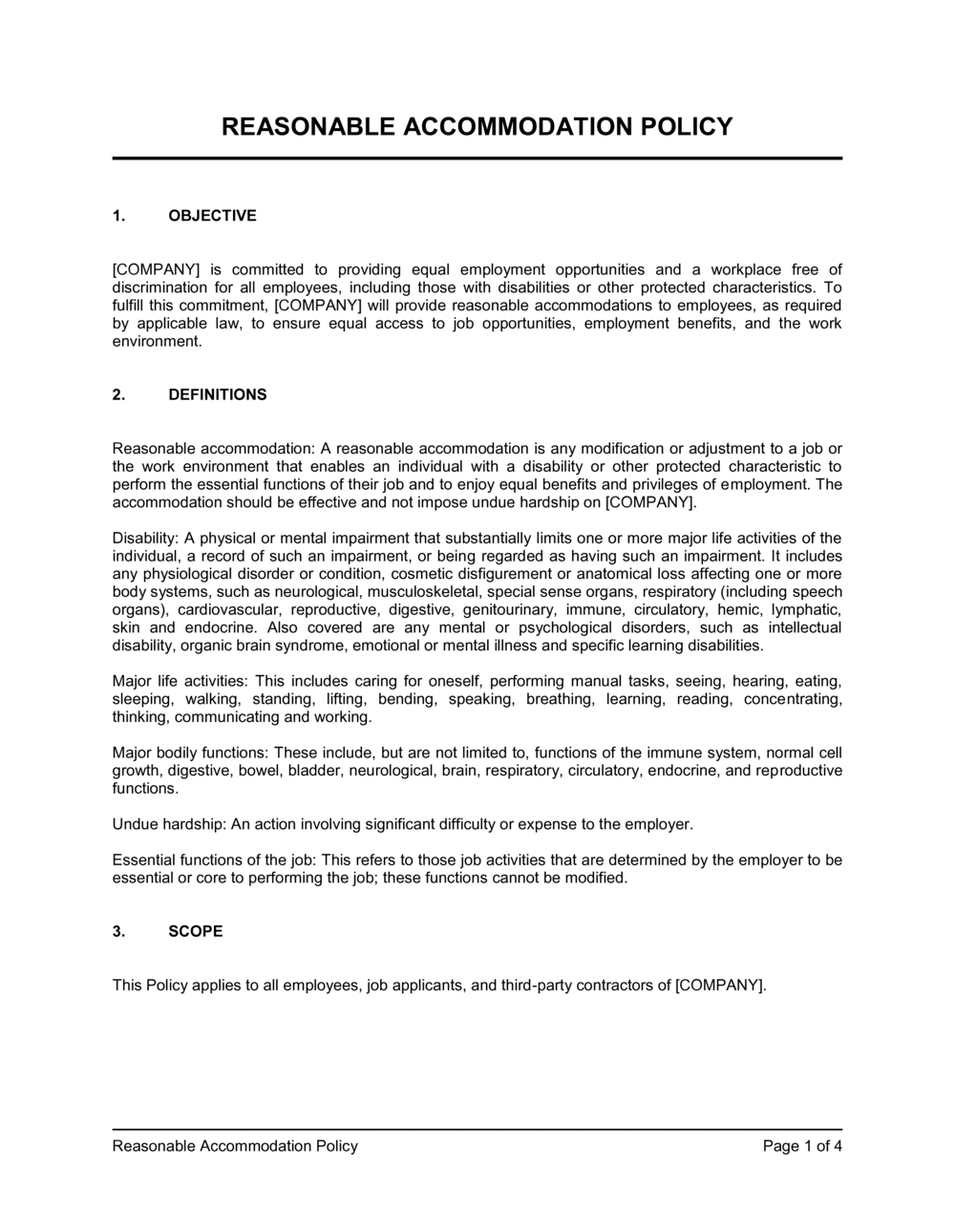
Insert your company name and jurisdiction
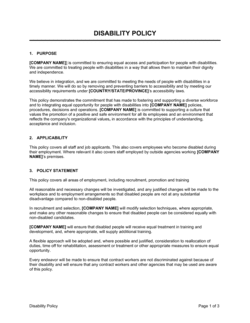
Replace all [COMPANY NAME] placeholders throughout the document. Add your state or province to the legal basis section if your jurisdiction imposes accommodation obligations broader than federal law.
💡 California (FEHA), New York (NYSHRL), and New Jersey (NJLAD) all cover employers with fewer than 15 employees and broader disability definitions — confirm your state's threshold before finalizing.
2
Confirm scope and covered characteristics
Review the scope section and confirm it covers all protected categories relevant to your jurisdiction: physical and mental disabilities, pregnancy, serious medical conditions, and religion. Add any state-specific categories your jurisdiction recognizes.
💡 Many states require accommodation for conditions not yet rising to an ADA-covered disability — including temporary impairments lasting fewer than six months. Erring toward broader coverage reduces your exposure.
3
Name the HR contact and submission method
Enter the name or title of the HR representative employees should contact and specify whether requests can be submitted by email, via an online form, or in person. Confirm that verbal requests are also accepted.
💡 Designating a backup contact (e.g., 'HR Manager or, in their absence, the HR Director') prevents requests from stalling when the primary contact is out.
4
Set your interactive process and decision timelines
Fill in the number of business days within which HR will schedule the interactive process meeting (5 is standard) and issue a written decision after receiving complete documentation (10 is standard). Shorter timelines signal good faith to regulators.
💡 EEOC guidance treats delays in initiating the interactive process as evidence of bad faith — even if the ultimate decision is correct. A defined timeline you actually follow is your best protection.
5
Define your documentation request threshold
Confirm when the company will request medical documentation — typically when the disability or limitation is not obvious or already known. Specify that you are requesting functional limitations, not diagnoses.
💡 Pre-draft a documentation request letter that asks only for functional information from the treating provider. Sending it immediately after the interactive process meeting keeps the process moving.
6
Review the undue hardship criteria
Customize the undue hardship evaluation criteria to reflect your organization's size, structure, and budget. Larger organizations face a higher burden to demonstrate hardship than small employers with limited resources.
💡 Document undue hardship evaluations in writing at the time of the decision — retroactive documentation is viewed skeptically in EEOC investigations and litigation.
7
Distribute and train managers before publishing
Share the finalized policy with all people managers in a brief training session before adding it to your employee handbook. Managers must understand their role in the interactive process before they receive a request.
💡 A one-page manager quick-reference card summarizing the five steps from request receipt to decision dramatically reduces process errors.
8
Add the policy to your employee handbook and onboarding materials
Incorporate the policy by reference into your employee handbook, post it on your HR intranet, and include it in new-hire onboarding packets. Confirm receipt in writing for each new employee.
💡 A dated acknowledgment signature from each employee confirms they received the policy and eliminates 'I didn't know' as a defense in disputes.