Progressive Discipline Policy Template

Free Word download β€’ Edit online β€’ Save & share with Drive β€’ Export to PDF

4 pagesβ€’20–30 min to fillβ€’Difficulty: Standard
Learn more ↓
FreeProgressive Discipline Policy Template

At a glance

What it is
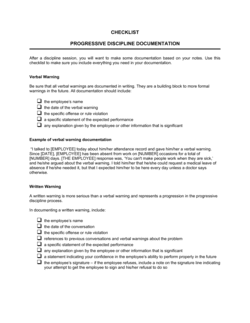
A Progressive Discipline Policy is a formal HR document that defines a structured, step-by-step process for addressing employee conduct and performance issues β€” typically moving from a verbal warning through written warning, suspension, and termination. This free Word download gives you an editable, manager-ready policy you can tailor to your organization and export as PDF for inclusion in an employee handbook or HR manual.
When you need it
Use it when onboarding new employees, updating an existing employee handbook, or responding to a pattern of conduct or performance issues that requires a documented, consistent management process. It is especially critical before a termination decision is challenged.
What's inside
Purpose and scope, definitions of disciplinary levels, conduct and performance triggers, step-by-step procedures for each stage, documentation requirements, manager and HR responsibilities, appeal rights, and exceptions for immediate termination.

What is a Progressive Discipline Policy?

A Progressive Discipline Policy is a formal HR document that establishes a structured, step-by-step process for addressing employee conduct and performance issues β€” moving from coaching and verbal warnings through written warnings, suspension, and, where improvement does not occur, termination. Rather than leaving managers to respond to incidents inconsistently or reactively, the policy defines who does what at each stage, what must be documented, and how employees can appeal a decision they believe was applied unfairly. It functions as both an operational management tool and a legal protection, creating the documented record that organizations need to defend disciplinary and termination decisions.

Why You Need This Document

Without a written progressive discipline policy, every termination decision is a liability. Managers apply inconsistent standards across teams, employees claim they were never warned, and documentation gaps turn defensible dismissals into costly disputes. Employment tribunals and civil courts in most jurisdictions evaluate whether the employer followed a fair process β€” not just whether the conduct warranted dismissal. A policy that is consistently applied and properly documented shifts that burden significantly. Beyond legal protection, a clear progressive process gives employees the specific feedback and improvement timeline they need to course-correct, which reduces turnover among employees who would have succeeded with structured guidance. This template gives you the procedural framework, the stage definitions, and the documentation requirements to build that process in under two hours.

Which variant fits your situation?

If your situation is…Use this template
General conduct and attendance issues across all departmentsProgressive Discipline Policy
Documenting a single formal warning with a corrective action planEmployee Written Warning
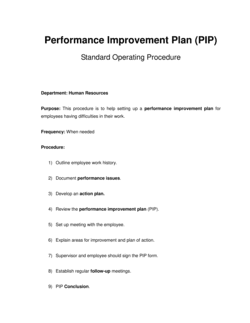
Recording a performance improvement plan alongside disciplinePerformance Improvement Plan (PIP)
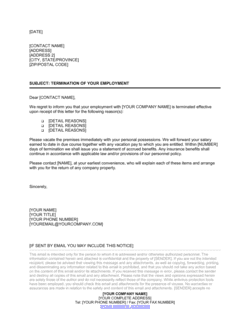
Communicating termination at the end of the disciplinary processEmployee Termination Letter
Documenting a verbal counseling session informallyEmployee Counseling Form
Establishing the full set of workplace conduct expectationsEmployee Handbook
Investigating a serious misconduct allegation before disciplineWorkplace Investigation Report

Common mistakes to avoid

❌ Skipping stages for difficult employees without documenting the reason

Why it matters: Jumping from a verbal warning to termination without following the policy's defined steps exposes the company to wrongful termination claims, even when the underlying conduct is legitimate grounds for dismissal.

Fix: Follow the defined steps or document the specific gross-misconduct exception that justifies skipping them. HR sign-off at each stage creates a defensible record.

❌ Using vague performance triggers like 'attitude problems' or 'not a team player'

Why it matters: Subjective language cannot be measured or rebutted β€” it signals bias to a tribunal and makes the disciplinary record legally indefensible.

Fix: Replace subjective descriptors with specific, observable behaviors: 'Failed to meet the agreed turnaround time of 24 hours on three documented occasions in the past 30 days.'

❌ Failing to give the employee a copy of the written warning

Why it matters: An employee who claims they never received notice of prior warnings can credibly argue the termination was the first they knew of a serious issue.

Fix: Build delivery confirmation into the documentation step β€” email with read receipt, physical signature, or a note in the personnel file confirming the copy was provided.

❌ Applying the policy inconsistently across managers or departments

Why it matters: Inconsistent application β€” faster progression for one demographic than another, or ignoring similar conduct in a different team β€” is the core fact pattern in disparate-treatment discrimination claims.

Fix: Require HR to review all formal disciplinary actions across departments quarterly and flag any patterns that suggest inconsistent application before they become litigation.

❌ Not reviewing the policy after organizational or legal changes

Why it matters: A policy written before a jurisdiction banned certain non-compete terms, changed minimum notice requirements, or updated anti-discrimination rules may inadvertently be non-compliant.

Fix: Schedule an annual policy review β€” in the first quarter of each calendar year β€” and cross-reference any changes to applicable employment legislation in your operating jurisdictions.

❌ Omitting an acknowledgment requirement for employees

Why it matters: Without a signed acknowledgment that the employee received and understood the policy, the employer cannot establish that the employee had notice of the rules they are accused of breaking.

Fix: Add an acknowledgment form to the end of the policy and collect signatures during onboarding and again each time the policy is materially updated.

The 9 key sections, explained

Purpose and scope

Policy statement and guiding principles

Definitions of disciplinary levels

Conduct and performance triggers

Step-by-step disciplinary procedure

Documentation requirements

Manager and HR responsibilities

Employee appeal rights

Exceptions: immediate termination

How to fill it out

  1. 1

    Set the scope and covered employees

    In the purpose section, identify every employment category the policy covers β€” full-time, part-time, probationary, and remote employees. State any exclusions explicitly.

    πŸ’‘ Probationary employees are often excluded from progressive steps but should still be covered by gross-misconduct provisions β€” note this distinction in the scope clause.

  2. 2

    Define the active period for each warning level

    Specify how long each stage of discipline remains on the employee's record β€” typically 6 to 12 months for verbal warnings and 12 to 18 months for written warnings β€” before resetting to a clean slate.

    πŸ’‘ Align active periods with your review cycle. A 12-month active period that coincides with the annual performance review is easier for managers to track.

  3. 3

    List conduct and performance triggers by severity

    Draft two lists: one for minor infractions eligible for Stage 1 (verbal warning) and one for serious infractions that may start at Stage 2 or 3. Add a separate gross-misconduct list for immediate-termination offenses.

    πŸ’‘ Use specific, observable behaviors rather than broad categories. 'Three unexcused absences in a 30-day period' is enforceable; 'excessive absenteeism' invites disputes about what counts.

  4. 4

    Map the step-by-step procedure for each stage

    For each disciplinary level, specify who must be present (manager, HR, witness), what form to complete, the timeline for issuing the notice, and what the employee must receive in writing.

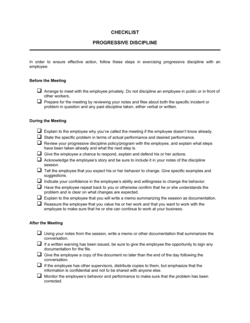
    πŸ’‘ Build a one-page manager checklist that mirrors this procedure β€” a checklist used at the meeting reduces documentation gaps by roughly half.

  5. 5

    Assign HR approval thresholds

    Decide which stages require HR sign-off before action is taken. A common structure: manager can issue verbal warnings independently; HR must approve written warnings, suspensions, and terminations.

    πŸ’‘ Require HR approval at least one stage earlier than you think necessary. Front-line managers consistently underestimate documentation requirements at the written-warning stage.

  6. 6

    Draft the appeal process with an independent reviewer

    Set the appeal window (10 business days is standard), name the reviewer role (HR director, skip-level manager, or a designated committee), and commit to a written response within 15 business days.

    πŸ’‘ Never route the appeal to the manager who issued the discipline β€” even if that person is correct, the appearance of bias undermines employee trust and makes the policy harder to defend externally.

  7. 7

    List gross-misconduct exceptions specifically

    Enumerate the exact categories of conduct that allow immediate termination without progressive steps. Keep this list to genuinely serious offenses β€” the more you add, the less the progressive process means.

    πŸ’‘ Cross-reference your gross-misconduct list against your employment contracts and any applicable collective agreement to confirm there are no conflicts.

  8. 8

    Publish and train managers before rollout

    Add the policy to the employee handbook, distribute it to all employees, and collect signed acknowledgment forms. Train every manager on the procedure before the policy takes effect.

    πŸ’‘ A 30-minute manager training session before rollout prevents more wrongful-termination claims than any policy language revision after the fact.

Frequently asked questions

What is a progressive discipline policy?

A progressive discipline policy is a formal HR document that defines a structured, step-by-step process for addressing employee conduct and performance issues. It typically moves through verbal warning, written warning, final written warning or suspension, and termination β€” giving the employee documented notice and a fair opportunity to improve at each stage before more serious consequences are applied.

Is a progressive discipline policy legally required?

In most jurisdictions, no law explicitly requires a progressive discipline policy. However, having one β€” and following it consistently β€” is one of the most effective ways to defend against wrongful termination, unfair dismissal, and discrimination claims. Employment tribunals and courts routinely consider whether the employer followed a fair process, and a documented policy creates the evidence trail needed to demonstrate that.

What are the typical stages of progressive discipline?

Most policies define four to five stages: verbal warning, written warning, final written warning (sometimes combined with a suspension), and termination. A performance improvement plan is often issued alongside the written warning stage. The number of stages and the duration of each can be adjusted to fit the organization's size and culture, but the key requirement is that each stage is documented and that the employee receives clear notice of what must change.

When can an employer skip progressive discipline steps?

Employers can typically bypass progressive steps when an employee commits gross misconduct β€” defined in the policy as conduct serious enough to destroy the employment relationship immediately. Common examples include theft, workplace violence, sexual harassment, falsification of records, and deliberate disclosure of confidential information. The gross-misconduct exception must be listed specifically in the policy; a general "at our discretion" carve-out is not adequate protection.

How long should each disciplinary warning stay active on record?

Most organizations set verbal warnings to expire after 6 to 12 months and written warnings after 12 to 18 months. After the active period, the warning is typically removed from the employee's personnel file or flagged as inactive, and the next offense is treated as a first occurrence at that level. Define these durations explicitly in the policy β€” without them, managers cannot consistently determine whether a new issue escalates or restarts the process.

Can a progressive discipline policy be used for performance issues as well as conduct issues?

Yes, and most policies cover both. Conduct issues β€” attendance, behavior, policy violations β€” and performance issues β€” missing targets, quality failures, skill gaps β€” often follow the same disciplinary stages, though performance issues typically pair each stage with a performance improvement plan. Some organizations maintain separate procedures for each, which can be useful if performance gaps are primarily training-related rather than conduct-related.

Does the employee have to sign the disciplinary notice?

Best practice is to request a signature as acknowledgment of receipt β€” not as agreement with the findings. If an employee refuses to sign, note the refusal on the form and have a witness countersign. The refusal itself does not invalidate the warning; the documentation of the refusal protects the employer's position if the employee later claims they were never formally warned.

What should a manager do if an employee cries or becomes upset during a disciplinary meeting?

Pause the meeting, allow the employee to compose themselves, and offer a short break if needed. Do not continue the formal process while the employee is too distressed to meaningfully participate. Document in the meeting notes that a break was offered and the approximate duration of any pause. If the employee requests to reschedule, set a specific date within 48 hours β€” delaying longer than that weakens the corrective effect of the action.

How often should a progressive discipline policy be reviewed and updated?

At minimum, review the policy annually β€” ideally in the first quarter of the year, aligned with any updates to employment law in your operating jurisdictions. Also trigger a review after any significant legal challenge to a termination decision, after a merger or acquisition that changes headcount or locations, and whenever you update the employee handbook or employment contracts that reference the policy.

How this compares to alternatives

vs Employee Written Warning

A written warning is a single-instance document used to record one specific disciplinary event. A progressive discipline policy is the overarching framework that defines when and how warnings are issued, what comes next, and who is responsible at each stage. You need the policy before the warning β€” the warning is one output of the policy in action.

vs Performance Improvement Plan (PIP)

A PIP targets a specific performance gap with measurable improvement targets and a defined timeframe β€” typically 30 to 90 days. A progressive discipline policy is broader, covering both conduct and performance, and sets the procedural framework within which a PIP is issued. PIPs are typically deployed at the written-warning stage of a progressive process, not as standalone documents.

vs Employee Termination Letter

A termination letter communicates the end of employment at the conclusion of the disciplinary process. A progressive discipline policy is the process that leads to and legally supports that letter. A termination without a documented progressive process behind it is far harder to defend against wrongful dismissal claims.

vs Employee Handbook

An employee handbook is a comprehensive reference document covering all workplace policies β€” benefits, conduct expectations, leave, and more. A progressive discipline policy is a standalone document that is typically incorporated by reference into the handbook. The standalone version provides the procedural depth and HR-specific detail that a handbook chapter cannot accommodate.

Industry-specific considerations

Retail and hospitality

High turnover and shift-based scheduling make consistent attendance tracking and documented verbal warnings at Stage 1 especially critical before escalating to written notice.

Manufacturing and warehousing

Safety-rule violations often qualify as gross misconduct requiring immediate termination β€” the policy must explicitly list PPE non-compliance and lockout/tagout violations in the exceptions section.

Healthcare

Patient safety incidents may bypass progressive steps entirely; licensing and credentialing requirements mean the policy must coordinate with professional conduct board obligations.

Professional services

Client-facing confidentiality breaches and billable-hour falsification are typically classified as gross misconduct, while performance gaps around utilization rates follow the standard progressive track.

Template vs pro β€” what fits your needs?

PathBest forCostTime
Use the templateSmall businesses and startups building a first-time HR policy without a dedicated legal teamFree1–2 hours to customize and publish
Template + professional reviewCompanies with 25 or more employees, multi-jurisdiction operations, or a recent termination dispute$300–$800 for an HR consultant or employment attorney review3–5 business days
Custom draftedUnionized workplaces, regulated industries (healthcare, finance), or organizations with a prior EEOC or tribunal finding$1,000–$3,500 for a custom policy drafted by employment counsel1–3 weeks

Glossary

Progressive Discipline
A structured corrective process that applies increasingly serious consequences for repeated or escalating conduct or performance issues, giving employees the opportunity to improve at each stage.
Verbal Warning
The first formal step in a disciplinary process β€” a documented oral notice to an employee that a specific behavior or performance gap must be corrected.
Written Warning
A formal written notice that records the specific violation, prior warnings, required corrective action, and the consequence if the issue continues.
Performance Improvement Plan (PIP)
A written plan that sets specific, measurable performance targets an employee must meet within a defined timeframe β€” often issued alongside or instead of a written warning.
Corrective Action
Any documented step β€” coaching, warning, suspension, or demotion β€” taken to address a conduct or performance issue and give the employee an opportunity to improve.
At-Cause Termination
Dismissal based on documented evidence of serious misconduct or sustained failure to improve after disciplinary steps β€” as opposed to layoff or position elimination.
Final Written Warning
The last formal notice before termination, stating explicitly that the next violation or failure to improve will result in immediate dismissal.
Suspension
A temporary removal of an employee from the workplace, with or without pay, typically used after a written warning or during an investigation into serious misconduct.
Gross Misconduct
A serious breach of workplace rules β€” such as theft, violence, harassment, or fraud β€” that typically warrants immediate termination without prior disciplinary steps.
Disciplinary Record
The cumulative file of documented warnings, counseling notes, PIPs, and management responses related to a specific employee's conduct or performance history.

Part of your Business Operating System

This document is one of 3,000+ business & legal templates included in Business in a Box.

  • Fill-in-the-blanks β€” ready in minutes
  • 100% customizable Word document
  • Compatible with all office suites
  • Export to PDF and share electronically

Create your document in 3 simple steps.

From template to signed document β€” all inside one Business Operating System.
1
Download or open template

Access over 3,000+ business and legal templates for any business task, project or initiative.

2
Edit and fill in the blanks with AI

Customize your ready-made business document template and save it in the cloud.

3
Save, Share, Send, Sign

Share your files and folders with your team. Create a space of seamless collaboration.

Save time, save money, and create top-quality documents.

β˜…β˜…β˜…β˜…β˜…

"Fantastic value! I'm not sure how I'd do without it. It's worth its weight in gold and paid back for itself many times."

Managing Director Β· Mall Farm
Robert Whalley
Managing Director, Mall Farm Proprietary Limited
β˜…β˜…β˜…β˜…β˜…

"I have been using Business in a Box for years. It has been the most useful source of templates I have encountered. I recommend it to anyone."

Business Owner Β· 4+ years
Dr Michael John Freestone
Business Owner
β˜…β˜…β˜…β˜…β˜…

"It has been a life saver so many times I have lost count. Business in a Box has saved me so much time and as you know, time is money."

Owner Β· Upstate Web
David G. Moore Jr.
Owner, Upstate Web

Run your business with a system β€” not scattered tools

Stop downloading documents. Start operating with clarity. Business in a Box gives you the Business Operating System used by over 250,000 companies worldwide to structure, run, and grow their business.

Free Forever PlanΒ Β·Β No credit card required