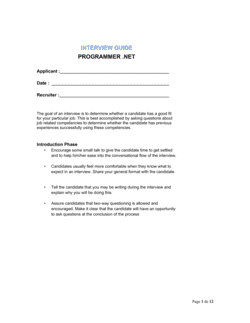
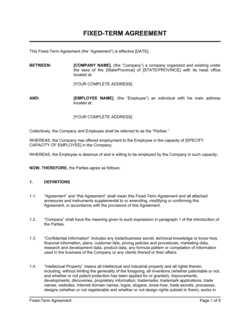
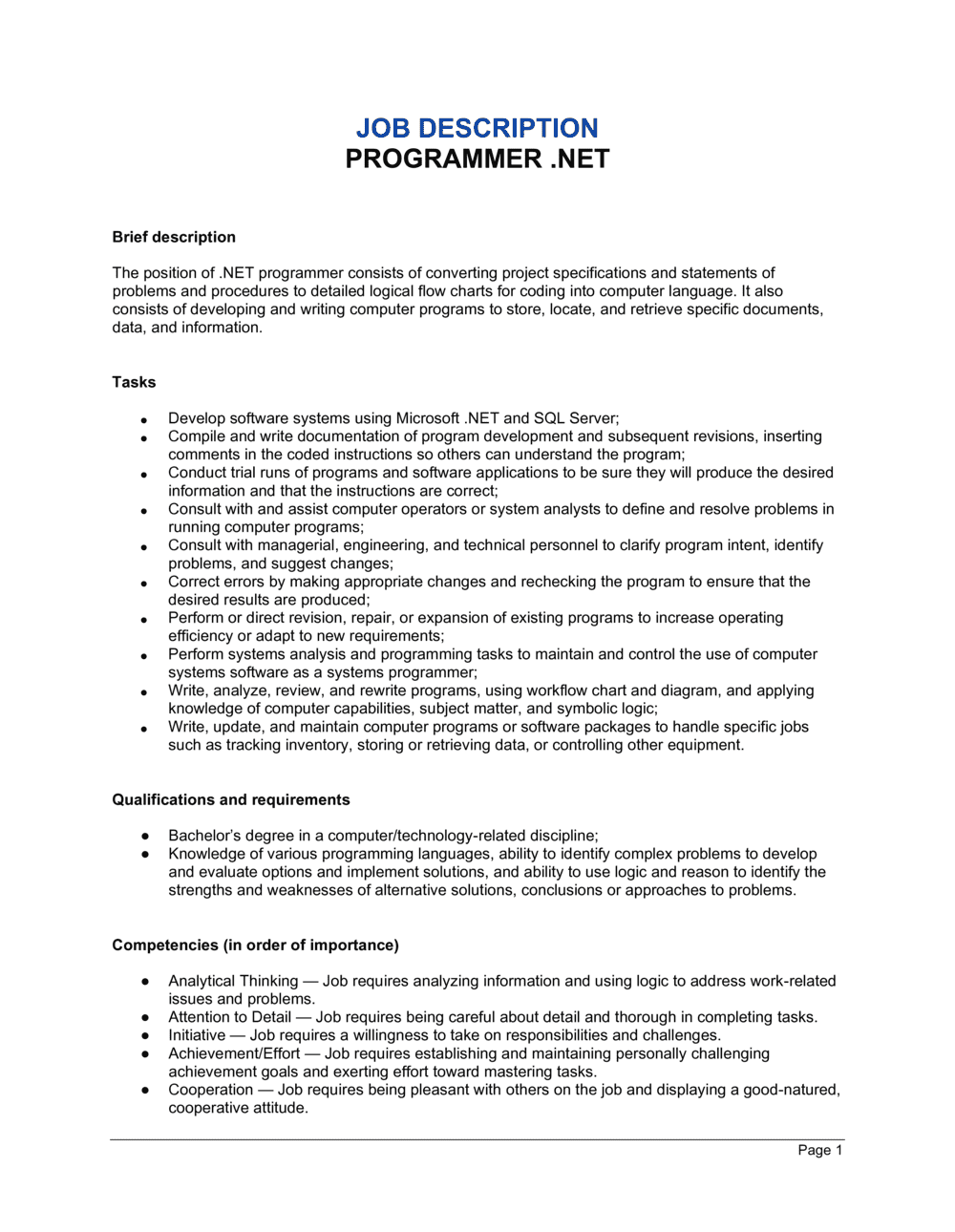
Programmer .NET Job Description Template

Free Word download • Edit online • Save & share with Drive • Export to PDF

2 pages20–30 min to fillDifficulty: StandardSignature requiredLegal review recommended
Learn more ↓
FreeProgrammer .NET Job Description Template

At a glance

What it is
A Programmer .NET Job Description is a formal document that defines the role, responsibilities, required technical skills, reporting structure, compensation range, and employment conditions for a .NET software developer position. This free Word download gives you a ready-to-edit template you can tailor to your stack, team structure, and hiring jurisdiction, then export as PDF for job postings, offer packages, or employment contract annexures.
When you need it
Use it whenever you are opening a new .NET developer headcount, backfilling a departing programmer, or formalizing a role that has been operating without documented expectations. It is also attached to employment contracts or offer letters as Schedule A to define the scope of duties.
What's inside
Position title and department, reporting structure, core development duties and .NET-specific technical responsibilities, required and preferred qualifications, compensation and benefits summary, working conditions, intellectual property and confidentiality obligations, and equal opportunity statement.

What is a Programmer .NET Job Description?

A Programmer .NET Job Description is a formal document that defines the title, duties, technical requirements, compensation range, reporting structure, and employment conditions for a developer working within the Microsoft .NET ecosystem — including C#, ASP.NET, and .NET Core. Beyond its function as a hiring tool, a signed job description attached to an employment contract as Schedule A creates legally enforceable obligations around intellectual property ownership, confidentiality of source code and system architecture, and post-employment restrictions on soliciting colleagues or clients. It serves simultaneously as the candidate-facing advertisement, the internal role standard, and the legal boundary document that protects the employer's most valuable asset: its codebase.

Why You Need This Document

Hiring a .NET developer without a formal, signed job description leaves four significant gaps open at once. First, any code the developer writes on a personal laptop or outside business hours may not legally belong to the company without an explicit IP assignment that names software, scripts, and algorithms. Second, a departing developer with no non-solicitation clause faces no enforceable restriction on calling your clients or recruiting your team. Third, undocumented duties make performance management and termination for cause far harder to defend — courts and employment tribunals look for written evidence of what the employee was actually required to do. Fourth, in jurisdictions with salary-transparency laws, posting without a compensation range carries direct regulatory risk. This template closes all four gaps in under 30 minutes, giving you a document that works as both an effective job posting and a legally defensible foundation for the employment relationship.

Which variant fits your situation?

If your situation is…Use this template
Hiring a senior architect-level .NET developer with system design responsibilitiesSenior Software Engineer Job Description
Engaging a .NET developer on a project basis rather than as an employeeIndependent Contractor Agreement
Hiring a junior or entry-level .NET programmer straight from a bootcamp or universityJunior Software Developer Job Description
Defining a full-stack role that combines .NET backend with front-end responsibilitiesFull-Stack Developer Job Description
Documenting a DevOps or platform engineer role with .NET CI/CD pipeline ownershipDevOps Engineer Job Description
Hiring a .NET programmer for a fixed-term project or seasonal engagementFixed-Term Employment Contract
Onboarding a remote .NET developer working from a different state or countryRemote Work Employment Agreement

Common mistakes to avoid

❌ Merging required and preferred qualifications into one list

Why it matters: Candidates treat every listed qualification as a hard requirement and self-select out if they lack one item, reducing your applicant pool unnecessarily. It also makes it harder to justify hiring decisions if a candidate later claims discriminatory screening.

Fix: Create two clearly labeled sections — 'Required qualifications' and 'Preferred qualifications' — with distinct bullet lists for each.

❌ Omitting the salary range in a pay-transparency jurisdiction

Why it matters: California, Colorado, New York, Washington, and several Canadian provinces now require salary ranges in job postings. Non-compliance results in regulatory fines, and postings without ranges receive significantly fewer qualified applicants.

Fix: Research the pay-transparency law for every jurisdiction where the role will be posted and include a salary band that is accurate and approved by your compensation team.

❌ Using a generic IP assignment clause not tailored to software development

Why it matters: A clause that covers 'work product' without specifically naming source code, algorithms, APIs, and documentation may fail to capture the most valuable assets a .NET developer creates — especially for work done remotely on personal hardware.

Fix: Expand the IP assignment to explicitly reference software, code, scripts, APIs, technical documentation, and related inventions, regardless of where or when created in connection with the role.

❌ Signing the job description after the employee's start date

Why it matters: In common-law jurisdictions, an employee who has already started work has provided no new consideration for post-start restrictions. IP assignment, non-compete, and confidentiality clauses signed after day one can be voided by a court.

Fix: Execute the job description — and the employment contract it supports — before or on the first day of work. If a late signature is unavoidable, provide documented additional compensation as fresh consideration.

❌ Applying identical non-compete restrictions regardless of seniority

Why it matters: A 12-month non-compete covering all .NET development work may be reasonable for a lead architect with access to proprietary system design but is routinely struck down for a junior developer with no client contact or competitive knowledge.

Fix: Calibrate restriction duration and scope to the specific role. Junior developers typically warrant non-solicitation only; senior developers or architects may warrant a narrowly scoped non-compete of 6–12 months.

❌ Omitting the equal opportunity and accommodation statement

Why it matters: Failure to include an EEO and reasonable accommodation notice in the job posting can expose the employer to pre-hire discrimination claims in the US, Canada, and the UK, even before an offer is made.

Fix: Include a standard equal opportunity statement and a one-sentence accommodation notice at the end of every job description, regardless of company size or jurisdiction.

The 10 key clauses, explained

Position title, department, and reporting structure

In plain language: Names the exact role (e.g., Programmer .NET), the team or department it belongs to, the direct manager, and whether any junior developers report to this position.

Sample language
Position: Programmer .NET | Department: [DEPARTMENT NAME] | Reports to: [MANAGER TITLE] | Direct reports: [NONE / LIST OF TITLES]

Common mistake: Listing a generic title like 'Developer' instead of the specific role. Vague titles cause misalignment in payroll bands, performance reviews, and compensation benchmarking.

Position summary

In plain language: A 3–5 sentence overview of the role's purpose, the primary technical environment, and how the position contributes to business objectives.

Sample language
The Programmer .NET is responsible for designing, developing, and maintaining [COMPANY NAME]'s [PRODUCT / INTERNAL SYSTEM] using [C# / ASP.NET / .NET CORE]. This role works within the [TEAM NAME] team to deliver [OUTCOME] in support of [BUSINESS OBJECTIVE].

Common mistake: Writing the summary as a marketing pitch rather than an operational description. Candidates and courts both read this as the authoritative statement of what the role does.

Core duties and technical responsibilities

In plain language: An itemized list of the developer's primary tasks — writing and reviewing code, designing system architecture, participating in sprints, and maintaining documentation.

Sample language
Design, develop, and unit-test [C# / ASP.NET / .NET CORE] applications per technical specifications. Participate in code reviews and enforce coding standards. Contribute to sprint planning, daily standups, and retrospectives under [AGILE / SCRUM] methodology.

Common mistake: Over-specifying tasks so narrowly that any change in project scope requires a contract amendment — or writing duties so broadly that performance management becomes impossible.

Required qualifications

In plain language: Non-negotiable education, certification, and experience thresholds the candidate must meet — typically a degree in computer science or equivalent, and a minimum number of years with .NET technologies.

Sample language
Bachelor's degree in Computer Science, Software Engineering, or a related field, or equivalent practical experience. Minimum [X] years of professional experience with [C#] and [ASP.NET / .NET CORE]. Demonstrated proficiency with [SQL SERVER / ENTITY FRAMEWORK / GIT].

Common mistake: Setting a degree requirement as mandatory when equivalent practical experience is acceptable — this unnecessarily narrows the candidate pool and can attract human-rights scrutiny in some jurisdictions.

Preferred qualifications

In plain language: Skills and experience that are desirable but not eliminatory — cloud platforms, specific frameworks, certifications, or domain knowledge — used to rank candidates, not screen them out.

Sample language
Experience with [AZURE / AWS / GCP] cloud services. Familiarity with [MICROSERVICES / REST API DESIGN / DOCKER]. Microsoft Certified: Azure Developer Associate or equivalent certification preferred.

Common mistake: Listing preferred qualifications indistinguishably from required ones. Merging both into a single list causes candidates to self-select out unnecessarily and reduces the effective applicant pool.

Compensation, benefits, and working conditions

In plain language: States the salary range or band, payment frequency, bonus eligibility, benefits summary, work location (on-site, hybrid, or remote), and standard working hours.

Sample language
Annual base salary: $[MIN] – $[MAX], commensurate with experience. Benefits: [HEALTH / DENTAL / VISION / RRSP / 401(k)]. Work location: [ON-SITE / HYBRID / REMOTE]. Standard hours: [X] hours per week, [SCHEDULE]. Discretionary performance bonus of up to [X]% of base salary.

Common mistake: Omitting the salary range entirely. Several US states (CA, CO, NY, WA) and Canadian provinces now require salary transparency in job postings — omission can result in regulatory fines and reduced applicant quality.

Intellectual property assignment

In plain language: Explicitly assigns ownership of all code, software, documentation, and inventions created by the developer in the course of employment to the employer.

Sample language
All software, code, algorithms, documentation, and work product created by [EMPLOYEE NAME] in connection with their employment at [COMPANY NAME] are the sole and exclusive property of [COMPANY NAME] and are hereby irrevocably assigned to [COMPANY NAME].

Common mistake: No IP assignment clause, or one limited to work done on company premises. Remote developers working on personal machines may create code outside the clause's reach if the language is not drafted broadly enough.

Confidentiality obligations

In plain language: Prohibits the developer from disclosing or misusing source code, architecture documents, client data, product roadmaps, and other proprietary information during and after employment.

Sample language
Employee shall not, during or after the term of employment, disclose or use any Confidential Information of [COMPANY NAME] without prior written consent. 'Confidential Information' includes source code, system architecture, customer data, trade secrets, and business strategies.

Common mistake: Failing to define 'Confidential Information' specifically for a software role. Generic confidentiality language that doesn't reference source code or proprietary algorithms may be unenforceable against a developer who argues the code was publicly available or independently developed.

Non-solicitation and post-employment restrictions

In plain language: Restricts the departing developer from recruiting colleagues or approaching the company's clients for a defined period after leaving, and optionally limits work for direct competitors.

Sample language
For [12] months following separation, Employee shall not solicit or hire any employee of [COMPANY NAME], or solicit business from any customer or prospect with whom Employee had material contact during employment.

Common mistake: Applying an identical non-compete restriction to a junior developer as to a senior architect. Courts assess enforceability proportionate to the employee's actual access to competitive information — overbroad restrictions for junior roles are routinely voided.

Equal opportunity and compliance statement

In plain language: Confirms that the employer is an equal-opportunity employer, that the role is posted in compliance with applicable employment law, and that accommodations are available.

Sample language
[COMPANY NAME] is an equal-opportunity employer. All qualified applicants will receive consideration for employment without regard to race, color, religion, sex, national origin, disability, or any other characteristic protected by applicable law. Reasonable accommodations are available upon request.

Common mistake: Omitting the accommodation statement. In the US, Canada, and the UK, failure to reference reasonable accommodations in a job posting can expose the employer to disability-discrimination claims before the hire is even made.

How to fill it out

  1. 1

    Enter the position title, department, and reporting line

    Replace all placeholders in the header block with the exact job title, the team or business unit, and the name or title of the direct manager. If the role manages junior developers, list those titles.

    💡 Use the title that appears in your payroll system — mismatches between the job description and HR records create administrative headaches during onboarding and performance reviews.

  2. 2

    Write the position summary in operational terms

    Describe what the developer will build, maintain, or improve, which systems or products they will work on, and how the role contributes to a specific business outcome. Keep it to 3–5 sentences.

    💡 Tie the summary to a real product or project name wherever possible — candidates evaluate fit faster, and the document holds up better as a Schedule A to the employment contract.

  3. 3

    Define core duties and separate required from preferred qualifications

    List duties in order of time allocation — primary responsibilities first. Then split qualifications into two distinct lists: non-negotiable thresholds versus nice-to-have skills.

    💡 Audit your required qualifications against the actual work. If the role doesn't use a skill in the first 90 days, move it to preferred — this expands your candidate pipeline without lowering the bar.

  4. 4

    Set the compensation range and confirm salary transparency requirements

    Enter the salary band, payment frequency, and benefits summary. Check whether the posting jurisdiction requires salary disclosure — California, Colorado, New York, Washington, Ontario, and the UK all have transparency obligations.

    💡 Use a range rather than a single figure. A band signals flexibility and tends to attract more applicants than a fixed number.

  5. 5

    Tailor the IP assignment clause for remote and personal-device work

    Expand the default IP language to cover work performed outside company premises and on personal equipment. Specify that all .NET code, scripts, and related documentation are employer property regardless of where or when created.

    💡 In California, Labor Code §2870 limits IP assignment for off-duty work not using company resources and not related to the employer's business — review the clause with a lawyer for California-based hires.

  6. 6

    Calibrate non-solicitation and non-compete scope to the role's seniority

    Set the restriction period (typically 6–12 months) and limit the scope to the specific technologies, clients, or markets the developer will actually work with. Remove non-compete language entirely for jurisdictions that prohibit it.

    💡 A non-solicitation clause covering employees and clients is enforceable in most jurisdictions even where broad non-competes are banned — keep these as two separate provisions.

  7. 7

    Review and sign before the start date

    Both the employer representative and the candidate must sign before the first day of employment. Post-start-date signatures create a fresh-consideration problem in common-law jurisdictions, potentially voiding the IP assignment and restrictive covenants.

    💡 Use an e-signature tool to timestamp execution and store the signed copy in the employee's HR file alongside the employment contract it annexures.

Frequently asked questions

What is a Programmer .NET job description?

A Programmer .NET job description is a formal document that defines the responsibilities, technical qualifications, compensation range, reporting structure, and employment conditions for a developer who works primarily with Microsoft's .NET platform — including C#, ASP.NET, and .NET Core. It serves both as a hiring tool for attracting qualified candidates and as a legal annexure to the employment contract that governs the working relationship.

What technical skills should a .NET programmer job description require?

At minimum, a Programmer .NET job description should require proficiency in C# and at least one version of the .NET framework (typically .NET Core or .NET 6+), experience with ASP.NET for web or API development, a working knowledge of SQL Server or another relational database, and version control using Git. Preferred qualifications commonly include Azure or AWS cloud services, Entity Framework, Docker, and familiarity with Agile or Scrum delivery methodologies.

Do I need to include a salary range in a .NET developer job description?

In an increasing number of jurisdictions, yes. California, Colorado, New York, Washington state, and Washington D.C. in the US, as well as Ontario and British Columbia in Canada, require salary ranges in job postings. The UK's voluntary pay transparency framework is moving toward mandatory disclosure. Even where not legally required, postings with salary ranges attract significantly more qualified applicants and reduce time-to-fill for technical roles.

Should the IP assignment clause cover work done on personal devices?

Yes, and it should say so explicitly. Remote .NET developers regularly write code on personal laptops using personal development environments. Without language covering work performed outside company premises and on personal equipment, the IP assignment clause may not capture code developed at home — even when that code is directly related to the employer's product. Note that California Labor Code §2870 limits assignment of off-duty work that doesn't use company resources and isn't related to the company's business, so review the clause for California-based hires with a qualified employment lawyer.

Are non-compete clauses enforceable for .NET developers?

Enforceability depends on jurisdiction and the scope of the restriction. California, Minnesota, and several other US states ban most post-employment non-competes for software developers. In jurisdictions that permit them, courts enforce restrictions that are reasonable in duration (typically 6–12 months), geographic scope, and breadth — a restriction covering all software development work is typically struck down as overbroad. Non-solicitation clauses covering employees and customers are generally enforceable in most US states, Canadian provinces, and the UK even where broader non-competes are restricted.

What is the difference between a job description and an employment contract?

A job description defines the role, duties, qualifications, and technical expectations. An employment contract is the comprehensive legal document governing the employment relationship — including IP assignment, confidentiality, termination, severance, and governing law. In practice, the job description is typically attached to the employment contract as Schedule A, with the contract's IP and confidentiality clauses incorporating the role's specific technical scope by reference.

How often should a .NET programmer job description be updated?

Review and update the job description any time the role's technical stack changes materially, when the reporting structure is reorganized, or when the developer takes on significantly different responsibilities. For active job postings, refresh the technology requirements at least annually — .NET framework versions and preferred tooling evolve quickly, and an outdated description attracts candidates who don't match the current stack.

Can I use the same job description for a contractor and an employee?

No — and using an employee job description for a contractor relationship is one of the most common misclassification triggers. A contractor agreement should describe the deliverables and project scope, not day-to-day duties and working hours. If the job description specifies a fixed schedule, a reporting manager, and daily standups, it describes an employment relationship regardless of what the engagement is called. Misclassification exposes the employer to back taxes, penalties, and retroactive benefit liability in all major jurisdictions.

How this compares to alternatives

vs Independent Contractor Agreement

An independent contractor agreement engages a .NET developer for project-based work without employment entitlements — no benefits, no payroll tax withholding, no overtime. A job description is used for employees. Using a job description with a contractor creates misclassification risk; the degree of behavioral control (fixed schedule, mandatory standups, assigned manager) is the key legal test in the US, Canada, and the UK.

vs Employment Contract

An employment contract is the comprehensive governing document covering IP assignment, confidentiality, termination, severance, and governing law. A job description defines the role's duties and qualifications. The two documents are complementary — the job description is typically attached to the employment contract as Schedule A and incorporated by reference for IP and scope-of-duties purposes.

vs Fixed-Term Employment Contract

A fixed-term contract governs employment for a defined project period with a set end date. A standard Programmer .NET job description is designed for ongoing employment and does not set a termination date. For project-based .NET development with a defined deliverable and timeline, a fixed-term contract with an attached job description is the appropriate combination.

vs Executive Employment Agreement

An executive employment agreement covers complex equity, change-of-control, and enhanced severance terms suited to C-suite or VP-level hires. A Programmer .NET job description is designed for individual contributor or team-lead developer roles. For a CTO or VP Engineering role that includes .NET architecture oversight, the executive agreement is the correct governing document.

Industry-specific considerations

Financial services and fintech

.NET developer roles in this sector typically require additional clauses covering financial data confidentiality, regulatory compliance obligations (SOX, PCI-DSS), and enhanced background check requirements.

Healthcare and health tech

HIPAA and PIPEDA confidentiality obligations must be incorporated by reference; job descriptions for developers handling patient data often include mandatory security training as a condition of employment.

SaaS and technology

IP assignment language is especially critical in SaaS environments where the entire product is built on developer-created code; stack specifications typically include cloud-native .NET deployment on Azure or AWS.

Manufacturing and industrial

.NET programmers in manufacturing often develop MES or ERP integrations with proprietary equipment data; job descriptions emphasize OT/IT boundary knowledge and may include export control compliance requirements.

Professional services and consulting

Client non-solicitation clauses are particularly important; developers may be seconded to client sites, requiring the job description to address multi-client confidentiality and conflict-of-interest obligations.

Government and public sector

Security clearance requirements, ITAR or equivalent compliance, and strict data residency obligations are commonly added to .NET developer job descriptions in public-sector roles.

Jurisdictional notes

United States

At-will employment is the default in 49 states, making the job description's scope-of-duties language particularly important for performance-management documentation. California, Colorado, New York, and Washington require salary ranges in job postings. California also voids many IP assignment clauses for off-duty work under Labor Code §2870, and bans most post-employment non-competes — review both clauses for California-based hires. The FTC's proposed non-compete ban remains enjoined as of 2025; check current status before relying on any non-compete provision.

Canada

At-will employment does not exist in Canada — all terminations require statutory or common-law notice regardless of what the job description says. Ontario's Working for Workers Act (Bill 27) banned non-competes for most employees as of October 2021, with exceptions only for C-suite executives. Quebec requires all employment documents including job descriptions to be provided in French for provincially regulated employers. British Columbia and Ontario have introduced pay-transparency requirements for job postings.

United Kingdom

Employers must provide a written statement of employment particulars — which incorporates the job description — on or before day one of employment. Post-termination restrictive covenants, including non-solicitation clauses, are enforceable if reasonable in scope and duration. The UK Equality Act 2010 requires that job descriptions avoid language or requirements that could constitute indirect discrimination; degree requirements for roles where equivalent experience is sufficient warrant particular care. IR35 rules apply if the developer is engaged through a personal service company.

European Union

The EU Transparent and Predictable Working Conditions Directive requires written employment terms — including a description of duties — within 7 days of hire. GDPR applies to any personal data the .NET developer accesses or processes, and confidentiality clauses should reference GDPR obligations explicitly. Post-employment non-competes typically require financial compensation to the employee to be enforceable — Germany requires at least 50% of last salary, France requires compensation agreed in the employment contract. Member-state variations are significant; local legal review is recommended for any EU-based hire.

Template vs lawyer — what fits your deal?

PathBest forCostTime
Use the templateStandard domestic .NET developer hires at individual contributor or team lead level in a single jurisdictionFree20–30 minutes
Template + legal reviewCross-border hires, roles with sensitive IP in competitive markets, or jurisdictions with complex employment law (CA, ON, UK)$300–$6001–3 days
Custom draftedSenior architects or technical leads with equity, regulated industries (healthcare, fintech, defense), or multi-jurisdiction distributed teams$1,000–$3,000+1–2 weeks

Glossary

.NET Framework / .NET Core
Microsoft's software development platforms used to build Windows, web, cloud, and cross-platform applications — the technical environment central to this role.
C# (C Sharp)
The primary object-oriented programming language used with the .NET ecosystem, typically listed as a mandatory qualification in this job description.
ASP.NET
A .NET framework for building dynamic web applications and APIs, commonly referenced in the duties and qualifications sections.
IP Assignment
A clause transferring ownership of all code, software, and work product created by the employee during employment to the employer.
Probationary Period
A defined initial period — typically 30 to 90 days — during which the employer evaluates the developer's technical performance with reduced termination formalities.
SDLC (Software Development Life Cycle)
The structured process for planning, creating, testing, and deploying software — referenced in responsibilities to define where the programmer's role fits.
At-Will Employment
Employment that either party may end at any time for any lawful reason without advance notice — the default standard in most US states.
Schedule A
An annexure to an employment contract that sets out detailed job duties — this job description template is commonly used as Schedule A to a standard employment agreement.
Non-Solicitation Clause
A restriction preventing a departing developer from recruiting colleagues or approaching the employer's clients for a defined period after leaving.
Agile / Scrum
Iterative software development methodologies typically referenced in the working conditions and duties sections to define how the team operates.
Code Review
A formal process in which one or more developers examine a colleague's code for quality, security, and adherence to standards — often listed as a core duty.
Version Control
A system — most commonly Git — for tracking changes to source code, enabling collaboration and rollback; typically listed as a required technical skill.

Part of your Business Operating System

This document is one of 3,000+ business & legal templates included in Business in a Box.

  • Fill-in-the-blanks — ready in minutes
  • 100% customizable Word document
  • Compatible with all office suites
  • Export to PDF and share electronically

Create your document in 3 simple steps.

From template to signed document — all inside one Business Operating System.
1
Download or open template

Access over 3,000+ business and legal templates for any business task, project or initiative.

2
Edit and fill in the blanks with AI

Customize your ready-made business document template and save it in the cloud.

3
Save, Share, Send, Sign

Share your files and folders with your team. Create a space of seamless collaboration.

Save time, save money, and create top-quality documents.

★★★★★

"Fantastic value! I'm not sure how I'd do without it. It's worth its weight in gold and paid back for itself many times."

Managing Director · Mall Farm
Robert Whalley
Managing Director, Mall Farm Proprietary Limited
★★★★★

"I have been using Business in a Box for years. It has been the most useful source of templates I have encountered. I recommend it to anyone."

Business Owner · 4+ years
Dr Michael John Freestone
Business Owner
★★★★★

"It has been a life saver so many times I have lost count. Business in a Box has saved me so much time and as you know, time is money."

Owner · Upstate Web
David G. Moore Jr.
Owner, Upstate Web

Run your business with a system — not scattered tools

Stop downloading documents. Start operating with clarity. Business in a Box gives you the Business Operating System used by over 250,000 companies worldwide to structure, run, and grow their business.

Start free · No credit card required