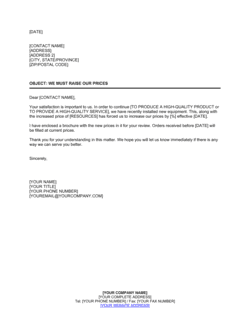
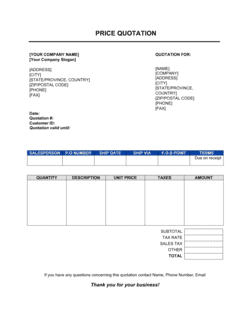
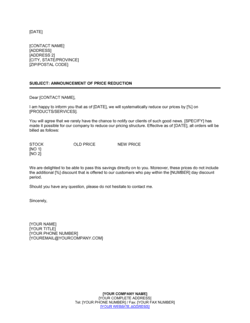
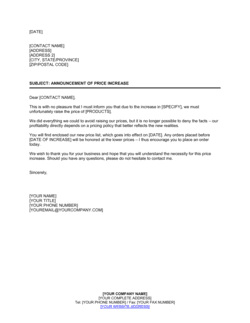
Price Setting Template

Free Word download • Edit online • Save & share with Drive • Export to PDF

2 pages20–30 min to fillDifficulty: StandardSignature requiredLegal review recommended
Learn more ↓
FreePrice Setting Template

At a glance

What it is
A Price Setting document is a formal, binding agreement between a supplier or seller and a buyer or distributor that establishes agreed pricing terms for goods or services over a defined period. This free Word download gives you a structured, editable starting point covering pricing schedules, volume discounts, adjustment mechanisms, and payment terms — exportable as PDF for immediate execution.
When you need it
Use it when entering a supply, distribution, or service relationship where both parties need clarity on how prices are determined, when they may change, and how disputes about pricing will be resolved. It is especially important for multi-year contracts where cost inputs — materials, labor, or currency exchange — are likely to fluctuate.
What's inside
Defined pricing schedules with unit rates and volume tiers, price adjustment and escalation clauses, discount and rebate terms, payment terms and invoicing requirements, currency provisions, and dispute resolution procedures specific to pricing disagreements.

What is a Price Setting Agreement?

A Price Setting Agreement is a binding commercial contract between a seller — typically a supplier, manufacturer, or service provider — and a buyer that formally establishes the pricing terms governing their relationship over a defined period. It goes beyond a quote or price list by creating enforceable obligations: both parties agree to the base unit prices, volume discount thresholds, price adjustment mechanisms, rebate structures, currency provisions, and the process by which prices may be changed during the contract term. Rather than leaving pricing subject to informal negotiation on each transaction, a price setting agreement provides a structured framework that both parties can rely on for budgeting, invoicing, and dispute resolution.

Why You Need This Document

Without a formal price setting agreement, pricing in an ongoing commercial relationship is governed by whatever was last communicated in an email, a quote, or a verbal conversation — none of which provides a reliable basis for either party to plan or enforce their position. Suppliers face buyers who dispute invoices by citing an older price list; buyers face unilateral mid-contract increases they have no contractual basis to reject. The absence of an adjustment clause means either the seller absorbs every input cost increase or the buyer is ambushed by price changes with no notice or limit. For any relationship involving recurring transactions above a modest value, the cost of a pricing dispute — lost margin, delayed payment, and damaged commercial relationships — far exceeds the time required to execute a clear agreement at the outset. This template gives both parties a single, signed document they can reference to resolve any pricing question before it becomes a dispute.

Which variant fits your situation?

If your situation is…Use this template
Setting prices for a long-term supply relationship with fixed annual termsPrice Setting Agreement (Fixed)
Establishing pricing for a one-off product or service purchasePurchase Order
Agreeing on wholesale pricing and reseller margins with a distributorDistribution Agreement
Setting prices for professional services billed by the hour or projectService Agreement
Documenting supplier terms including pricing within a broader supply contractSupply Agreement
Formalizing a recurring retainer fee with a fixed monthly rateRetainer Agreement
Setting promotional or seasonal pricing for a specific campaign periodSales Promotion Agreement

Common mistakes to avoid

❌ Embedding SKU-level pricing in the contract body

Why it matters: When prices are updated, the entire contract must be formally amended — a process that often requires re-execution by multiple signatories, creating delays and version-control problems.

Fix: Place all unit pricing in a Schedule A and include a clause allowing the schedule to be replaced by mutual written agreement without amending the main contract.

❌ No cap on annual price adjustments

Why it matters: An uncapped escalation clause allows a seller to pass through cost increases of any size, making the buyer's cost base effectively uncontrollable over a multi-year term.

Fix: Insert a maximum adjustment percentage per period — typically 3–5% for most industries — and tie any higher increase to a documented cost-input audit.

❌ Omitting currency specification in cross-border agreements

Why it matters: Without an explicit ISO currency code, every invoice in a cross-border relationship becomes a negotiation about whether the rate is USD or CAD, GBP or EUR — generating disputes on payment timing and amount.

Fix: State the pricing currency with its ISO 4217 code (e.g., USD, GBP, EUR, CAD) in the agreement header and repeat it in Schedule A.

❌ Vague or undefined MFN comparator criteria

Why it matters: An MFN clause without defined comparator criteria is unenforceable in practice — sellers can argue every customer deal is unique, and buyers have no factual basis to trigger the clause.

Fix: Define 'comparable customer' by purchase volume range, product mix, territory, and contract length so the MFN clause has an objective trigger.

❌ Auto-renewal without a pricing review right

Why it matters: Auto-renewal at prior-year prices locks sellers into below-cost terms or locks buyers into above-market rates with no contractual mechanism to correct either — creating resentment and eventual breach.

Fix: Pair every auto-renewal clause with a pricing review window — typically 60–90 days before renewal — during which either party can initiate a renegotiation.

❌ No dispute resolution mechanism specific to pricing

Why it matters: General dispute clauses route pricing disagreements to arbitration or litigation, which is slow and expensive for what are often arithmetic disputes about invoice calculations or rebate bases.

Fix: Include a tiered pricing-dispute clause: commercial-contact negotiation first, then executive escalation, then expert determination by an agreed independent accountant for disputes under $[THRESHOLD].

The 10 key clauses, explained

Parties and recitals

In plain language: Identifies the seller and buyer as legal entities, states the commercial relationship, and provides the purpose of the pricing agreement.

Sample language
This Price Setting Agreement ('Agreement') is entered into as of [DATE] between [SELLER LEGAL NAME], a [STATE/COUNTRY] [ENTITY TYPE] ('Seller'), and [BUYER LEGAL NAME], a [STATE/COUNTRY] [ENTITY TYPE] ('Buyer'), in connection with the supply of [GOODS/SERVICES DESCRIPTION].

Common mistake: Using trade names instead of registered legal entity names. If the contracting entity doesn't match invoices or purchase orders, enforcing the pricing terms in a dispute becomes significantly harder.

Price schedule and unit rates

In plain language: Sets out the specific price for each product SKU or service type, the unit of measure, the effective date, and references the schedule annexed to the agreement.

Sample language
The prices applicable to each Product shall be as set out in Schedule A ('Price Schedule'). Unit prices are denominated in [CURRENCY] and apply per [UNIT OF MEASURE]. The initial Price Schedule is effective from [DATE].

Common mistake: Embedding detailed SKU-level pricing in the body of the contract rather than a schedule. When pricing changes, the entire contract must be amended — a separate schedule can be replaced without reopening the core agreement.

Volume tiers and discounts

In plain language: Defines the quantity thresholds at which lower prices apply and whether the discount applies retroactively to all units or only to units above the threshold.

Sample language
Volume discounts shall apply as follows: purchases of [X]–[Y] units per calendar quarter shall attract a [Z]% discount off the base unit price; purchases exceeding [Y] units shall attract a [W]% discount. Discounts apply to incremental units above each threshold only.

Common mistake: Not specifying whether volume discounts are incremental or all-units. An all-units structure can create unexpected margin erosion for the seller once a buyer crosses a threshold by a single unit.

Price adjustment and escalation

In plain language: Establishes the conditions under which prices may be changed, the index or formula used to calculate adjustments, and the maximum permitted change in any single period.

Sample language
Seller may adjust unit prices annually on [DATE], by no more than the percentage change in the [CPI-U / PPI] index published by [AUTHORITY] for the preceding 12-month period, subject to a maximum increase of [X]% in any single year. Seller must provide [60] days' written notice of any adjustment.

Common mistake: Allowing open-ended price adjustments with no cap. Without a ceiling, a seller can pass through cost increases of any magnitude, eliminating the buyer's ability to plan or budget.

Price freeze period

In plain language: Locks prices at their current level for a defined period during which neither party may request a change, providing budget certainty for both sides.

Sample language
Notwithstanding the price adjustment provisions of Clause [X], no price adjustment shall take effect during the first [12] months following the Effective Date ('Price Freeze Period'). After expiry of the Price Freeze Period, adjustments may be requested in accordance with Clause [X].

Common mistake: Omitting a price freeze period entirely in a multi-year agreement. Without one, sellers can initiate price increases in the first months of a contract — undermining the commercial basis on which the deal was done.

Most favored nation (MFN) clause

In plain language: Assures the buyer that it receives pricing at least as favorable as that offered to any comparable customer, and requires the seller to automatically extend better pricing if a comparable customer receives it.

Sample language
Seller represents that the prices in Schedule A are no less favorable than those offered to any third party purchasing comparable volumes of comparable Products. If Seller offers more favorable pricing to a comparable customer, Seller shall promptly extend equivalent pricing to Buyer.

Common mistake: Failing to define 'comparable customer' with specific criteria. Without a definition tied to purchase volume, product mix, and territory, sellers can argue that every customer is unique and MFN never triggers.

Rebates and promotional pricing

In plain language: Defines any rebate programs the seller operates, the performance threshold that triggers them, the calculation method, and the payment timing.

Sample language
Seller shall pay Buyer a quarterly rebate equal to [X]% of total net purchases exceeding $[THRESHOLD] in the applicable quarter. Rebates shall be calculated within [30] days of each quarter end and paid within [45] days. Rebates are not cumulative across quarters.

Common mistake: Agreeing to rebates without specifying whether they are calculated on gross or net purchases. If returns, credits, and adjustments are not excluded from the base, the rebate calculation can produce disputes each quarter.

Currency, invoicing, and payment terms

In plain language: States the invoicing currency, the payment period, accepted payment methods, and the consequence of late payment including interest.

Sample language
All prices are denominated in [USD / GBP / EUR / CAD]. Invoices are payable within [Net 30] days of the invoice date. Late payments shall accrue interest at [1.5]% per month on outstanding balances from the due date. Seller shall issue invoices in accordance with Buyer's PO format requirements.

Common mistake: Not specifying the currency in cross-border agreements. USD and CAD, or GBP and EUR, are frequently confused in multi-jurisdictional relationships — the omission creates disputes on every invoice.

Dispute resolution for pricing disagreements

In plain language: Provides a structured escalation process for pricing disputes — starting with good-faith negotiation, moving to a designated executive escalation, and then to mediation or arbitration before litigation.

Sample language
Any dispute regarding prices, adjustments, or rebates shall first be referred to the respective commercial contacts in writing. If unresolved within [15] business days, the dispute shall escalate to senior management of each party. If unresolved within a further [30] days, either party may refer the matter to [MEDIATION / ARBITRATION] under the rules of [BODY] in [CITY].

Common mistake: Using a general dispute resolution clause from another contract without tailoring it to pricing mechanics. Pricing disputes often require expert determination rather than arbitration — a standard clause can lock parties into an inappropriate process.

Term, termination, and price renegotiation

In plain language: States the duration of the pricing agreement, the process for renewal, and the rights of each party to terminate or renegotiate if prices become commercially unworkable.

Sample language
This Agreement has an initial term of [12 / 24] months from the Effective Date and shall renew automatically for successive [12]-month periods unless either party provides [90] days' written notice of non-renewal. Either party may request a pricing renegotiation no more than once per contract year by written notice, with negotiations to commence within [30] days of receipt.

Common mistake: Auto-renewal clauses without a pricing review right. If prices auto-renew on outdated terms, sellers can be locked into below-cost pricing or buyers can face above-market rates with no contractual mechanism to correct either.

How to fill it out

  1. 1

    Identify both parties with their full legal entity names

    Enter the seller's and buyer's registered legal names, entity types (LLC, corporation, Ltd.), and states or countries of incorporation. Include the registered addresses for each party.

    💡 Cross-reference company registry filings before signing — trade names and legal names diverge more often than parties realize, and the mismatch can complicate enforcement.

  2. 2

    Build out the price schedule as a separate annexure

    List every product SKU or service category with a unit price, unit of measure, and effective date in Schedule A. Keep the price schedule separate from the agreement body so it can be replaced without amending the core contract.

    💡 Use a consistent unit-of-measure format (e.g., per 1,000 units, per linear meter, per hour) — mixing measures across line items is a frequent source of invoice disputes.

  3. 3

    Define volume discount thresholds and confirm incremental vs. all-units treatment

    Enter the quantity brackets that trigger discounts and state explicitly whether the lower price applies only to units above the threshold (incremental) or to all units purchased once the threshold is crossed (all-units).

    💡 Model both structures in a spreadsheet before agreeing — all-units discounts can swing margin significantly at the threshold boundary.

  4. 4

    Set the price freeze period and adjustment formula

    Enter the freeze duration (typically 12 months), the index used for escalation (CPI-U, PPI, or a custom basket), and the maximum permitted adjustment percentage per period. State the notice period the adjusting party must provide.

    💡 Choose an index published by a neutral government authority — proprietary indices or seller-calculated cost indices create verification disputes.

  5. 5

    Draft the MFN clause with a defined comparator standard

    If including an MFN clause, specify the criteria that define a 'comparable customer' — purchase volume range, product mix, territory, and contract length. Tie the MFN trigger to those criteria explicitly.

    💡 A well-drafted MFN clause saves renegotiation time each year; a vague one generates a dispute every time the seller wins a new account.

  6. 6

    Define rebate thresholds, base, and payment schedule

    Enter the spend threshold that triggers a rebate, the rebate percentage, whether it is calculated on net purchases after returns, and the payment timing (e.g., within 45 days of each quarter end).

    💡 Include an audit right in the rebate clause — buyers should be able to verify the seller's rebate calculation against purchase records once per year.

  7. 7

    State the currency, payment terms, and late-payment interest rate

    Enter the agreed currency (with ISO 4217 code for cross-border transactions), the payment period (Net 30 is standard), and the late-payment interest rate. Confirm the interest rate complies with applicable statutory caps.

    💡 For EU and UK buyers, check whether the Late Payment of Commercial Debts legislation imposes a minimum statutory interest rate that overrides the contractual rate.

  8. 8

    Execute before the first invoice is issued

    Both parties should sign the agreement and all schedules before any goods are delivered or services commenced. Obtain initials on Schedule A separately to confirm each party has reviewed the pricing detail.

    💡 Use a timestamped e-signature platform to create a clear execution record — unsigned price agreements are treated as proposals, not binding commitments, in most jurisdictions.

Frequently asked questions

What is a price setting agreement?

A price setting agreement is a binding contract between a seller and a buyer that formally establishes the prices for goods or services over a defined period. It covers the base unit prices, volume discount thresholds, price adjustment mechanisms, rebate structures, and payment terms. Unlike an informal quote or price list, a price setting agreement creates enforceable obligations on both parties and provides a structured process for managing pricing changes during the contract term.

When do I need a price setting agreement instead of a purchase order?

Use a price setting agreement when you have an ongoing commercial relationship where pricing needs to be locked in for 6 months or more, where prices may change based on volume or cost inputs, or where rebates and discounts require a contractual framework. A purchase order documents a single transaction at a point in time. If you issue purchase orders frequently to the same supplier at negotiated rates, a price setting agreement provides the overarching framework those POs operate under.

Is a price setting agreement legally binding?

Yes — a price setting agreement is generally enforceable as a binding contract when it includes offer, acceptance, and consideration, is signed by authorized representatives of both parties, and contains sufficiently certain pricing terms. Courts in most jurisdictions treat agreed price schedules as binding contractual terms. Enforceability of specific clauses such as MFN provisions or non-compete pricing restrictions may vary by jurisdiction and should be reviewed by a lawyer for high-value relationships.

What is a most favored nation clause in a pricing agreement?

A most favored nation (MFN) clause guarantees the buyer that it will receive pricing no less favorable than that offered to any comparable customer of the seller. If the seller offers a lower price to another buyer with similar volume and product mix, the MFN clause requires the seller to automatically extend the same lower price to the MFN buyer. MFN clauses are common in supply and distribution agreements and are particularly valuable for buyers who lack the volume to negotiate prices independently each cycle.

How does a price escalation clause work?

A price escalation clause allows the seller to increase prices at defined intervals — typically annually — by a formula tied to a published index such as CPI or PPI. The clause specifies the index, the reference period, the notice required before an increase takes effect, and usually a cap on the maximum increase in any single period. For example, a clause might allow a price increase equal to the CPI change for the prior 12 months, subject to a maximum of 4%, with 60 days' prior written notice.

Does a price setting agreement need to be signed to be enforceable?

In most jurisdictions, a contract does not strictly require a wet-ink signature to be enforceable — conduct and written communication can establish a binding agreement. However, having both parties sign the document — and initial any attached price schedules — significantly reduces the risk of a party claiming they never agreed to specific terms. For high-value or multi-year pricing relationships, execution before the first delivery or invoice is strongly recommended.

Can a price setting agreement restrict a supplier from changing prices?

Yes, within the bounds agreed by both parties. A price freeze clause prevents either party from initiating a change during a defined period. Outside the freeze period, adjustment clauses can limit the frequency, magnitude, and notice required for any change. Outright prohibition on any price change for the full contract term is unusual in multi-year agreements because it typically leads to renegotiation or breach when input costs shift significantly.

Are price fixing agreements between competitors different from buyer-seller price agreements?

Yes — completely. A price setting agreement between a buyer and a seller is a standard bilateral commercial arrangement that sets the price one party charges the other. Price fixing is an entirely separate concept: it refers to agreements between competitors to coordinate the prices they each charge to their own customers. Price fixing is illegal under competition law in virtually every jurisdiction. A buyer-seller pricing agreement of the type covered by this template is lawful commercial practice when it does not involve coordination between competing sellers.

How often should a price setting agreement be reviewed?

Most price setting agreements run for 12 months with annual renewal and a price review at each renewal. For volatile input-cost industries — commodities, logistics, energy — a mid-year benchmarking review right is common. At minimum, both parties should review pricing against current market rates before each auto-renewal window to confirm the agreement remains commercially viable for both sides.

What happens if a supplier raises prices mid-contract without following the adjustment clause?

An unauthorized mid-contract price increase typically constitutes a breach of contract. The buyer can reject the higher invoice, pay at the contracted rate, and pursue damages for any excess charged. In practice, most mid-contract disputes are resolved by invoking the escalation or dispute resolution clause. If the supplier persists, the buyer may have grounds to treat the breach as a repudiation and terminate the agreement, depending on how material the price deviation is relative to the contract value.

How this compares to alternatives

vs Purchase Order

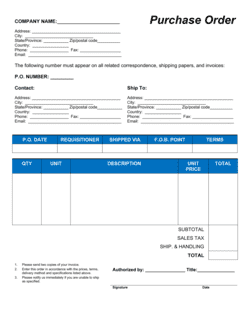
A purchase order documents a single transaction — specific goods or services at a point-in-time price. A price setting agreement establishes the pricing framework that governs all purchase orders between the parties over a defined period. The two documents work together: the price setting agreement sets the rates; the purchase order records each individual order placed under those rates.

vs Supply Agreement

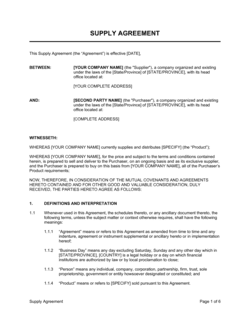
A supply agreement is a comprehensive contract covering the entire supply relationship — delivery obligations, quality standards, warranties, liability, and pricing. A price setting agreement focuses specifically on pricing terms and can be incorporated into a supply agreement as a schedule or executed as a standalone document when the supply obligations are already covered elsewhere.

vs Distribution Agreement

A distribution agreement governs the resale relationship between a supplier and distributor — territory, exclusivity, marketing obligations, and channel controls. A price setting agreement addresses only the pricing structure within that relationship. Many distribution agreements include a price schedule annexure; a standalone price setting agreement is used when pricing needs to be updated more frequently than the distribution agreement itself.

vs Service Agreement

A service agreement covers the full scope of a service engagement — deliverables, timelines, IP, liability, and fees. A price setting agreement is narrower, dealing specifically with how fees are structured, when they may change, and what discounts or rebates apply. For long-term service relationships with complex fee structures — rate cards, volume tiers, and annual escalation — a dedicated price setting document prevents fee disputes from disrupting the broader service relationship.

Industry-specific considerations

Manufacturing and wholesale

Raw material input costs make annual CPI-linked escalation clauses and mid-year benchmarking reviews standard in long-term supply pricing agreements.

Retail and consumer goods

Volume rebate tiers tied to quarterly purchase targets and promotional pricing windows for seasonal campaigns are the primary pricing mechanisms in retail supplier agreements.

Technology and SaaS

Seat-based or usage-based pricing schedules with annual true-up provisions and MFN clauses protecting enterprise customers from lower pricing offered to new accounts.

Professional services

Day-rate or fixed-fee schedules for multi-year engagements with annual rate-card reviews tied to staffing cost inflation and a defined notice period for rate changes.

Food and beverage

Commodity-linked pricing adjustments tied to published indices for key inputs (wheat, dairy, energy) with short freeze periods and frequent benchmarking rights reflecting high input-cost volatility.

Construction and infrastructure

Materials and labor price schedules with rise-and-fall clauses pegged to construction cost indices, milestone-based billing structures, and retention provisions linked to project completion stages.

Jurisdictional notes

United States

US federal antitrust law (Sherman Act) and state competition statutes prohibit price-fixing between competitors but place no restriction on bilateral buyer-seller pricing agreements. MFN clauses can attract scrutiny under Robinson-Patman Act price discrimination provisions in consumer goods sectors. Late-payment interest rate caps vary by state — confirm the contracted rate is within the applicable statutory ceiling. Arbitration clauses are broadly enforceable under the Federal Arbitration Act.

Canada

The Competition Act prohibits price maintenance — a supplier cannot legally require a buyer to resell at a specific minimum price, though suggested retail prices are permitted. Price adjustment clauses must not impose penalties that effectively function as liquidated damages under provincial contract law. Quebec contracts are subject to the Civil Code of Quebec, which has distinct rules on contract formation and interpretation that differ materially from common-law provinces. Ensure the governing law clause specifies the province.

United Kingdom

The Late Payment of Commercial Debts (Interest) Act 1998 imposes a statutory interest rate of 8% above the Bank of England base rate on late B2B payments — contractual interest rates below this floor may be unenforceable. Competition Act 1998 provisions mirror EU competition law for bilateral pricing agreements. Post-Brexit, UK GDPR applies to any personal data processed in connection with the agreement, including buyer contact details. Price adjustment clauses should reference a UK-published index such as the ONS CPI.

European Union

EU competition law (Article 101 TFEU) prohibits price coordination between competitors but permits bilateral supplier-buyer pricing agreements. Vertical agreements including price setting are assessed under the Vertical Block Exemption Regulation (VBER) — resale price maintenance remains prohibited. The EU Late Payment Directive sets a maximum 60-day payment term for B2B contracts and imposes statutory interest at 8 percentage points above the ECB reference rate for overdue payments. Price adjustment indices should reference Eurostat publications for cross-member-state credibility.

Template vs lawyer — what fits your deal?

PathBest forCostTime
Use the templateSmall to mid-sized businesses formalizing standard annual pricing terms with a supplier or buyerFree1–2 hours
Template + legal reviewMulti-year agreements above $100K annually, cross-border pricing with currency provisions, or MFN clauses$300–$800 for a commercial lawyer review2–5 days
Custom draftedComplex supply chains, regulated industries, enterprise agreements above $1M, or pricing structures tied to commodity indices$1,500–$5,000+1–3 weeks

Glossary

Price Schedule
A document annexed to the agreement listing specific goods or services with their agreed unit prices, volume tiers, and effective dates.
Price Escalation Clause
A contractual provision allowing the seller to increase prices by a defined formula — typically tied to a published index such as CPI — at specified intervals.
Most Favored Nation (MFN) Clause
A provision guaranteeing the buyer that it will receive pricing no less favorable than the seller offers to any comparable customer.
Volume Discount
A price reduction applied when a buyer purchases above a defined quantity threshold within a reference period, expressed as a percentage off the base price.
Rebate
A payment made by the seller to the buyer after a purchase milestone is achieved, calculated as a percentage of total spend over a defined period.
Price Adjustment Mechanism
The agreed formula or process by which either party may request a price change — including the notice period, index references, and cap on any single adjustment.
CPI (Consumer Price Index)
A government-published index measuring average price changes for a basket of goods and services, commonly used as a benchmark for annual price escalation.
Currency Clause
A provision specifying the currency in which prices are denominated and the exchange rate mechanism or conversion process for cross-border transactions.
Price Freeze Period
A defined period — typically 6 or 12 months — during which neither party may initiate a price change regardless of input cost fluctuations.
Anti-Price Fixing
Regulatory restrictions under competition law prohibiting agreements between competitors to coordinate pricing — distinct from bilateral buyer-seller price agreements.
Benchmarking Review
A periodic process in which the parties compare contracted prices against prevailing market rates and negotiate adjustments to maintain commercial alignment.

Part of your Business Operating System

This document is one of 3,000+ business & legal templates included in Business in a Box.

  • Fill-in-the-blanks — ready in minutes
  • 100% customizable Word document
  • Compatible with all office suites
  • Export to PDF and share electronically

Create your document in 3 simple steps.

From template to signed document — all inside one Business Operating System.
1
Download or open template

Access over 3,000+ business and legal templates for any business task, project or initiative.

2
Edit and fill in the blanks with AI

Customize your ready-made business document template and save it in the cloud.

3
Save, Share, Send, Sign

Share your files and folders with your team. Create a space of seamless collaboration.

Save time, save money, and create top-quality documents.

★★★★★

"Fantastic value! I'm not sure how I'd do without it. It's worth its weight in gold and paid back for itself many times."

Managing Director · Mall Farm
Robert Whalley
Managing Director, Mall Farm Proprietary Limited
★★★★★

"I have been using Business in a Box for years. It has been the most useful source of templates I have encountered. I recommend it to anyone."

Business Owner · 4+ years
Dr Michael John Freestone
Business Owner
★★★★★

"It has been a life saver so many times I have lost count. Business in a Box has saved me so much time and as you know, time is money."

Owner · Upstate Web
David G. Moore Jr.
Owner, Upstate Web

Run your business with a system — not scattered tools

Stop downloading documents. Start operating with clarity. Business in a Box gives you the Business Operating System used by over 250,000 companies worldwide to structure, run, and grow their business.

Free Forever Plan · No credit card required