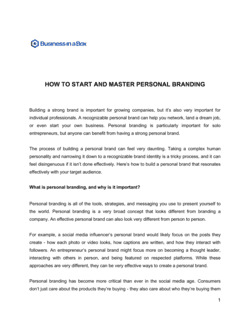
Personal Branding Strategy

Free Word download β€’ Edit online β€’ Save & share with Drive β€’ Export to PDF

11 pagesβ€’25–30 min to fillβ€’Difficulty: Complex
Learn more ↓
FreePersonal Branding Strategy Template

At a glance

What it is
A Personal Branding Strategy is a structured planning document that defines who you are professionally, what you stand for, who you serve, and how you communicate your value across platforms and channels. This free Word download gives you a step-by-step framework to articulate your positioning, content pillars, and 90-day goals β€” edit online and export as PDF to share with collaborators, coaches, or clients.
When you need it
Use it when launching a new career, pivoting to a new industry, building a thought-leadership presence, or aligning your online profiles and content output around a clear, consistent message.
What's inside
Brand audit, target audience definition, unique value proposition, core messaging and tone of voice, content pillars, channel strategy, 90-day action plan, and key performance indicators β€” organized into a single editable document.

What is a Personal Branding Strategy?

A Personal Branding Strategy is a structured planning document that defines how you want to be perceived professionally, who your target audience is, what you uniquely offer, and how you will communicate that value consistently across platforms and over time. It covers the full arc from brand audit and positioning to content pillars, channel priorities, and a 90-day action plan with measurable KPIs. Unlike an informal approach to reputation-building, a written strategy forces you to make deliberate choices β€” about audience, message, and channels β€” before investing time and effort that would otherwise compound in the wrong direction.

Why You Need This Document

Without a written personal branding strategy, effort goes in without a clear signal of what is working. Professionals post content inconsistently, maintain conflicting bios across platforms, and drift between topics β€” producing activity that generates no real traction. The cost is concrete: a fragmented online presence delays inbound opportunities, weakens referral quality, and makes it harder for the right clients, employers, or collaborators to find and trust you. A documented strategy eliminates guesswork by anchoring every content decision, profile update, and outreach effort to a defined audience and a consistent message β€” turning sporadic effort into compounding professional visibility.

Which variant fits your situation?

If your situation is…Use this template
Building a brand from scratch with no existing online presencePersonal Branding Strategy (Starter)
Auditing and repositioning an existing personal brandBrand Audit Report
Planning content output across LinkedIn, blog, and social mediaContent Marketing Plan
Defining messaging for a business or product brand, not a personMarketing Plan
Building a speaking or media presence alongside a written strategySpeaker One Sheet
Tracking brand-building activities and results over a quarterMarketing Action Plan
Launching a new consulting practice and needing full positioningBusiness Plan

Common mistakes to avoid

❌ Skipping the brand audit

Why it matters: Without knowing how you are currently perceived, you may invest months reinforcing the wrong positioning β€” or ignore an existing reputation that is already working in your favor.

Fix: Spend 30 minutes auditing your Google results, LinkedIn profile, and existing content before writing a single line of strategy.

❌ Defining the audience too broadly

Why it matters: Messaging built for 'anyone in business' resonates with no one specifically β€” broad positioning produces lower engagement, weaker referrals, and longer sales cycles.

Fix: Narrow your primary audience to a single role and industry combination. You can expand once you have traction in a defined niche.

❌ Writing a credential-first value proposition

Why it matters: A UVP that leads with your years of experience or certifications tells the audience about you, not about the outcome they will get β€” and it looks identical to dozens of competitors.

Fix: Rewrite your UVP from the audience's perspective, starting with the outcome they want and ending with why you deliver it differently.

❌ Spreading across too many channels at launch

Why it matters: Maintaining six platforms at low volume signals low credibility and burns time that could compound into meaningful traction on one well-chosen channel.

Fix: Commit fully to one primary channel for 90 days before activating a second. Master the format, cadence, and community norms of one platform first.

❌ No 90-day review checkpoint

Why it matters: A strategy without a mid-point review drifts β€” tasks slip, priorities shift, and you reach the end of the quarter without knowing what worked.

Fix: Calendar a 45-day review when you finalize the plan. Use it to drop tactics with no traction and double down on content formats generating engagement.

❌ Tracking follower count as the primary KPI

Why it matters: Follower growth is a lagging, gameable metric that does not correlate reliably with business outcomes like inbound inquiries, client conversions, or speaking invitations.

Fix: Add at least two business-outcome KPIs β€” inbound messages, discovery calls booked, or media mentions β€” alongside any audience-size metric.

The 10 key sections, explained

Brand Audit and Current State Assessment

Target Audience Definition

Unique Value Proposition

Core Values and Brand Personality

Content Pillars

Channel Strategy and Platform Priorities

Signature Story and Bio Variants

Social Proof and Credibility Markers

90-Day Action Plan

Key Performance Indicators

How to fill it out

  1. 1

    Complete the brand audit before writing anything else

    Search your name on Google, review your LinkedIn profile, and list every public platform where you appear. Note the current headline, bio, and top content. Identify where your current perception diverges from your target perception.

    πŸ’‘ Ask three colleagues or clients to describe your expertise in one sentence each β€” their language often reveals positioning gaps you cannot see yourself.

  2. 2

    Define your target audience with role-level specificity

    Write a one-paragraph description of your primary audience: their job title, industry, company size, the problem they face, and what they need from an expert like you. Limit to two audience segments maximum.

    πŸ’‘ If you cannot name five real people who fit your audience description, the definition is still too broad.

  3. 3

    Draft and pressure-test your unique value proposition

    Write one sentence using the formula: 'I help [AUDIENCE] [ACHIEVE OUTCOME] by [METHOD] β€” without [TRADE-OFF].' Share it with someone in your target audience and ask if it resonates and feels distinct.

    πŸ’‘ A UVP that makes your audience say 'that's exactly my problem' is more valuable than one that impresses peers in your own field.

  4. 4

    Choose three content pillars, not five

    Select three topic areas at the intersection of your expertise, your audience's needs, and gaps in your competitive space. Fewer pillars produce more consistent, recognizable content.

    πŸ’‘ Run a quick LinkedIn or Google search on each pillar topic. If the top results are from well-resourced competitors, narrow your pillar to a sub-topic where you have a differentiated point of view.

  5. 5

    Select one primary channel and one secondary channel

    Choose the platform where your target audience is most active and where your content format plays best. Commit to it fully before adding a second channel. Document the posting cadence you can sustain for 90 days β€” not the cadence you aspire to.

    πŸ’‘ Consistency over 90 days on one channel outperforms sporadic posting on four channels in almost every audience-building scenario.

  6. 6

    Write all three bio variants

    Draft a one-sentence bio, a three-sentence bio, and a full-paragraph bio using your finalized UVP and signature story. Update these versions across every platform before publishing any new content.

    πŸ’‘ Store the three bio variants in the template's appendix so you can copy-paste them quickly when guest posting, speaking, or updating profiles.

  7. 7

    Build the 90-day action plan week by week

    Fill in specific, time-bound tasks for each of the 12 weeks. Assign each task to yourself or a collaborator and set a review checkpoint at Day 45 to assess what is working.

    πŸ’‘ Limit Week 1 tasks to profile and foundation work only. Publishing content before your profiles are consistent undermines new visitors' first impression.

  8. 8

    Set KPIs and schedule a monthly review

    Choose three to six metrics tied to audience growth, engagement, and business outcomes. Enter them into your tracking sheet and calendar a 30-minute monthly review to assess progress and adjust tactics.

    πŸ’‘ Track the ratio of inbound opportunities to total content pieces published β€” this tells you which pillars and formats are actually driving business results.

Frequently asked questions

What is a personal branding strategy?

A personal branding strategy is a written plan that defines how you want to be perceived professionally, who your target audience is, what you stand for, and how you will communicate your value consistently across platforms and channels. It turns an informal reputation into a deliberate, managed asset β€” covering positioning, content pillars, channel priorities, and measurable 90-day goals.

Who needs a personal branding strategy document?

Executives building thought leadership, freelancers attracting inbound clients, founders establishing credibility for fundraising or recruiting, coaches and speakers clarifying their niche, and professionals pivoting into a new industry all benefit from a written strategy. Without one, personal brand-building tends to be reactive and inconsistent β€” producing effort without compounding results.

What is the difference between a personal brand and a business brand?

A personal brand is built around an individual's expertise, values, and perspective β€” it travels with the person across employers, clients, and platforms. A business brand belongs to an organization and must work without any single person. The two can complement each other, but they require separate strategies, separate messaging, and separate channel investments.

How long does it take to build a personal brand?

Meaningful traction β€” measurable audience growth, inbound inquiries, or media opportunities β€” typically takes 6 to 12 months of consistent execution after the strategy is set. The first 90 days are foundation work: auditing, positioning, updating profiles, and establishing a content cadence. Results compound over time; consistency matters more than any single high-performing piece of content.

How many content pillars should a personal branding strategy include?

Three content pillars is the recommended number for most personal brands. Three topics are enough to demonstrate range and depth without diluting focus β€” audiences associate you with a specific expertise cluster rather than a single narrow topic. More than four pillars typically produces inconsistent output and makes it harder for your audience to know what you stand for.

Which platform should I focus on for personal branding?

The right primary platform is where your target audience already spends time and where your preferred content format works best. LinkedIn is the default for B2B professionals, executives, and consultants. YouTube or podcasts suit long-form educational content. Instagram or TikTok work for visual or consumer-facing niches. Choosing based on where you are most comfortable, rather than where your audience is, is the most common platform-selection mistake.

Do I need a personal website for a personal branding strategy?

A personal website is a high-value asset but not a day-one requirement. It provides a platform you own and control β€” unlike social media profiles that can be de-prioritized by algorithm changes. For most professionals, a strong LinkedIn profile and consistent content output generate traction faster than building a website first. Add the website in Month 2 or 3 once your positioning and bio are fully refined.

How do I measure whether my personal branding strategy is working?

Track three to six KPIs across two categories. Leading indicators include content engagement rate, profile views, and follower growth on your primary channel. Lagging indicators β€” which matter more β€” include inbound inquiries, client conversations initiated by the prospect, speaking invitations, media requests, and referrals that name your content as the reason. Review these monthly and adjust tactics every quarter.

Can a personal branding strategy template work for executives at large companies?

Yes, with one adjustment: the strategy must distinguish between content that represents your personal expertise and content that speaks on behalf of your employer. Most large-company executives benefit from a clear editorial policy β€” typically approved by communications or legal β€” before publishing original opinions. The template's channel strategy and content pillar sections are designed to accommodate these constraints.

How this compares to alternatives

vs Marketing Plan

A marketing plan defines how a business generates demand for its products or services β€” covering market segmentation, campaign budgets, and sales pipeline targets. A personal branding strategy focuses on how an individual builds professional visibility and reputation. A founder may need both: a marketing plan for the company and a personal branding strategy for themselves.

vs Content Marketing Plan

A content marketing plan maps out the editorial calendar, formats, distribution channels, and conversion goals for a business's content. A personal branding strategy is broader β€” it covers positioning, values, and audience definition before touching content. The personal branding strategy informs what a content plan should say; the content plan governs how and when it gets published.

vs Strategic Plan

A strategic plan sets organizational objectives, initiatives, and resource allocation across a 3-to-5-year horizon. A personal branding strategy is individual-focused and typically covers a 90-day to 12-month execution cycle. Executives often need both: a strategic plan for their organization and a personal branding strategy for their own professional visibility.

vs Marketing Action Plan

A marketing action plan is a tactical execution document β€” tasks, owners, dates, and budgets tied to a specific campaign or initiative. A personal branding strategy is the upstream positioning document that defines what you stand for before any tactical activity begins. The action plan executes the strategy; the strategy tells you what is worth executing.

Industry-specific considerations

Professional Services

Consultants and advisors use personal branding to generate referrals and inbound leads, positioning their expertise in a specific methodology or industry vertical rather than competing on price.

Technology / SaaS

Founders and product leaders build personal brands to support recruiting, investor credibility, and community building β€” LinkedIn and X (Twitter) are the dominant channels for technical thought leadership.

Media and Content Creation

Writers, podcasters, and creators treat personal branding as the core business model β€” audience size and engagement rate directly drive sponsorship, product, and consulting revenue.

Healthcare and Life Sciences

Clinicians and researchers building public-facing brands must align their strategy with institutional guidelines and professional body standards, focusing on education-first content that avoids direct medical advice.

Template vs pro β€” what fits your needs?

PathBest forCostTime
Use the templateProfessionals, freelancers, and founders building or refreshing a personal brand without an agencyFree4–8 hours to complete
Template + professional reviewExecutives or high-profile founders who want a brand strategist or coach to pressure-test positioning and messaging$500–$2,000 for a strategy session or brand coaching engagement1–2 weeks
Custom draftedC-suite leaders, public figures, or authors launching a book who need a full brand agency engagement$5,000–$25,000+ for agency-level personal brand development4–12 weeks

Glossary

Personal Brand
The professional perception others hold of you β€” shaped by your expertise, communication style, values, and visible track record.
Unique Value Proposition (UVP)
A one-to-two sentence statement explaining what you do, for whom, and what outcome you deliver that others in your space do not.
Content Pillar
A recurring theme or topic area you consistently create content around, chosen because it reinforces your positioning and serves your target audience.
Target Audience
The specific group of people whose problems you solve, defined by role, industry, stage, or need β€” not 'everyone who could benefit.'
Brand Voice
The consistent personality and tone you use in all written and spoken communication β€” direct, empathetic, analytical, or conversational, for example.
Thought Leadership
Original perspectives, frameworks, or insights you share publicly that position you as a credible expert in a defined domain.
Brand Audit
A structured review of your existing online presence, messaging, and reputation to identify gaps between how you are currently perceived and how you want to be perceived.
Social Proof
Testimonials, case studies, credentials, media mentions, or endorsements that validate your claimed expertise to a skeptical audience.
Channel Strategy
A deliberate decision about which platforms and formats you will use to reach your target audience, and in what priority order.
90-Day Action Plan
A time-bound task list that translates your branding strategy into specific, weekly actions with owners and deadlines.

Part of your Business Operating System

This document is one of 3,000+ business & legal templates included in Business in a Box.

  • Fill-in-the-blanks β€” ready in minutes
  • 100% customizable Word document
  • Compatible with all office suites
  • Export to PDF and share electronically

Create your document in 3 simple steps.

From template to signed document β€” all inside one Business Operating System.
1
Download or open template

Access over 3,000+ business and legal templates for any business task, project or initiative.

2
Edit and fill in the blanks with AI

Customize your ready-made business document template and save it in the cloud.

3
Save, Share, Send, Sign

Share your files and folders with your team. Create a space of seamless collaboration.

Save time, save money, and create top-quality documents.

β˜…β˜…β˜…β˜…β˜…

"Fantastic value! I'm not sure how I'd do without it. It's worth its weight in gold and paid back for itself many times."

Managing Director Β· Mall Farm
Robert Whalley
Managing Director, Mall Farm Proprietary Limited
β˜…β˜…β˜…β˜…β˜…

"I have been using Business in a Box for years. It has been the most useful source of templates I have encountered. I recommend it to anyone."

Business Owner Β· 4+ years
Dr Michael John Freestone
Business Owner
β˜…β˜…β˜…β˜…β˜…

"It has been a life saver so many times I have lost count. Business in a Box has saved me so much time and as you know, time is money."

Owner Β· Upstate Web
David G. Moore Jr.
Owner, Upstate Web

Run your business with a system β€” not scattered tools

Stop downloading documents. Start operating with clarity. Business in a Box gives you the Business Operating System used by over 250,000 companies worldwide to structure, run, and grow their business.

Free Forever PlanΒ Β·Β No credit card required