- Peer Review
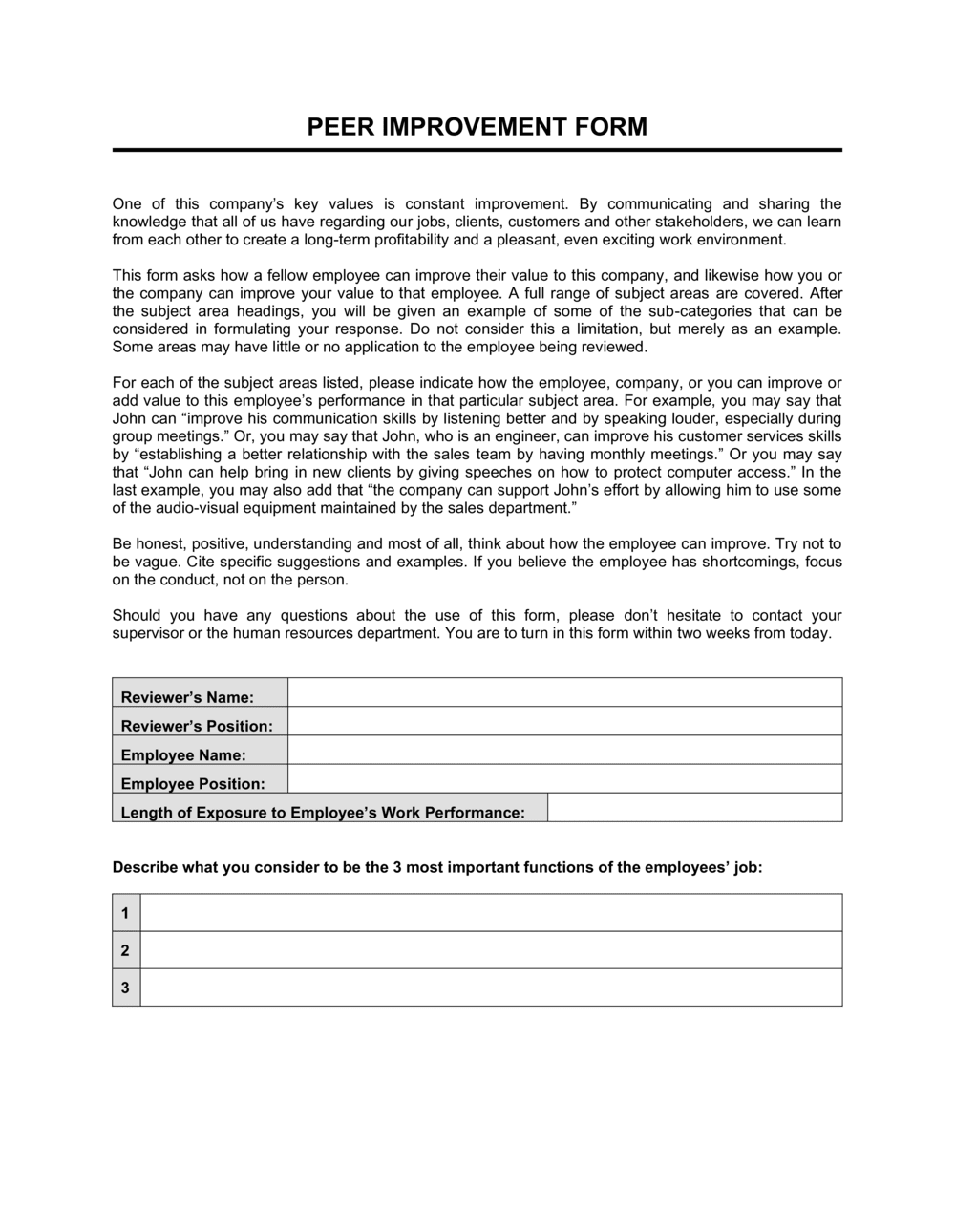
- A structured process in which colleagues at a similar level assess each other's work quality, behaviors, or professional skills.
- 360-Degree Feedback
- A performance input method that collects observations from managers, peers, direct reports, and sometimes clients — not just one source.
- Competency Rating Scale
- A numeric or descriptive scale (e.g., 1–5 or Needs Improvement to Exceeds Expectations) used to score specific observable behaviors.
- Behavioral Observation
- A specific, factual description of what someone said or did in a work context, as opposed to a general character judgment.
- Development Goal
- A defined, time-bound objective the employee will work toward to close a skill or behavior gap identified during feedback.
- Improvement Action
- A concrete step — such as completing a training, attending a workshop, or adjusting a process — that supports progress toward a development goal.
- Anonymity
- The practice of withholding the reviewer's identity from the subject, used to encourage more candid peer feedback.
- Follow-Up Review
- A scheduled check-in after an improvement period to assess whether the development goals outlined in the form have been met.
- Calibration
- A session in which managers compare and adjust peer ratings across reviewers to reduce bias and ensure consistent scoring standards.
- Constructive Feedback
- Feedback focused on specific, actionable behaviors and their impact, delivered in a way that supports improvement rather than assigns blame.