Notice of Overdue Payment Template

Free Word download β€’ Edit online β€’ Save & share with Drive β€’ Export to PDF

1 pageβ€’15–20 min to fillβ€’Difficulty: Standard
Learn more ↓
FreeNotice of Overdue Payment Template

At a glance

What it is
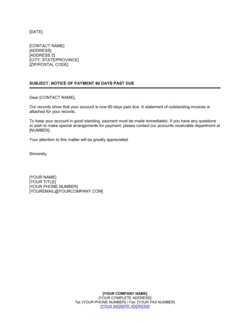
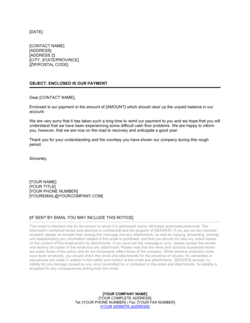
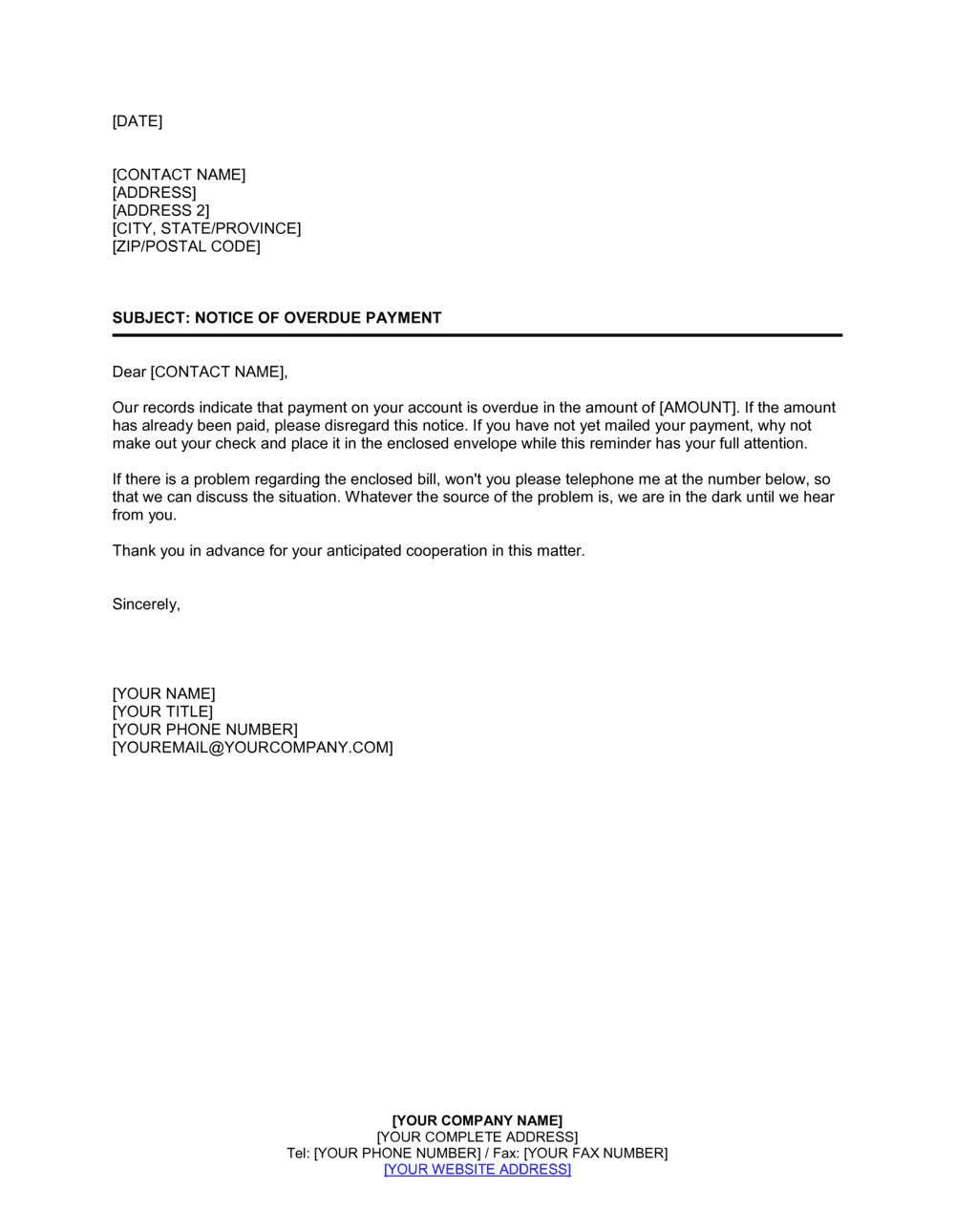
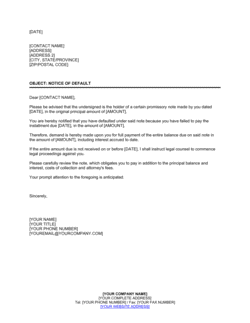
A Notice of Overdue Payment is a formal written letter sent to a customer whose invoice has passed its due date without payment. This free Word download lets you fill in the invoice number, original due date, outstanding amount, any accrued late fees, and a firm new deadline β€” then export as PDF and send within minutes.
When you need it
Send it as soon as an invoice crosses its due date with no payment received. It is the first formal step in the dunning sequence, before escalating to a demand letter or engaging a collections agency.
What's inside
Sender and recipient details, a clear statement of the overdue amount and original due date, the invoice reference number, late-fee calculation, a firm new payment deadline, accepted payment methods, and a professional closing that preserves the business relationship while signalling urgency.

What is a Notice of Overdue Payment?

A Notice of Overdue Payment is a formal written letter sent by a seller or service provider to a customer whose invoice has not been paid by the agreed due date. It states the invoice reference number, the original amount owed, the date payment was due, any late fees accruing under the original terms, and a firm new deadline by which payment must be received. Unlike a casual email reminder, a formal overdue notice creates a documented paper trail that supports escalation to a collections agency or legal action if the debt remains unpaid.

Why You Need This Document

Every day an invoice goes unpaid past its due date, your cash flow suffers and your leverage to collect diminishes. Customers who receive no formal written notice quickly learn that slow payment carries no consequences. A properly issued overdue notice changes that dynamic: it puts the customer on formal notice that late fees are accruing, establishes a new hard deadline, and creates the documented record that collections agencies and small-claims courts require before they will act on your behalf. Without this letter, escalating to a demand letter or collections referral becomes procedurally harder and legally weaker. This template gives you a professional, firm notice you can complete in under ten minutes β€” preserving the business relationship while making clear that payment is not optional.

Which variant fits your situation?

If your situation is…Use this template
First contact β€” invoice 1–14 days past duePayment Reminder Letter
Formal first notice β€” invoice 15–30 days past dueNotice of Overdue Payment
Second escalation β€” invoice 30–60 days past dueSecond Notice of Overdue Payment
Final notice before collections β€” invoice 60+ days past dueDemand Letter for Payment
Disputing a charge while acknowledging the rest is dueInvoice Dispute Letter
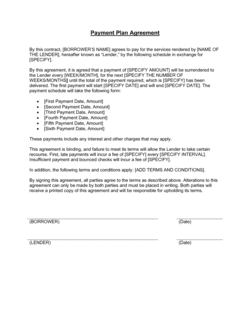
Offering a payment plan to a customer who cannot pay in fullPayment Plan Agreement
Recovering a debt through a third party after all notices failDebt Collection Letter

Common mistakes to avoid

❌ Using vague deadline language

Why it matters: Phrases like 'please remit immediately' give the customer no specific date to act on. AP departments process payments on scheduled runs β€” without a hard date, your notice waits for the next convenient cycle.

Fix: Always state a specific calendar date β€” 'Payment must be received by [DATE]' β€” so the recipient and their AP team know exactly when action is required.
❌ Charging late fees not disclosed on the original invoice

Why it matters: Customers and courts reject fees that were not agreed to upfront. Adding them retroactively shifts the dispute from 'pay the invoice' to 'justify the fee,' stalling resolution.

Fix: Only apply the late-fee rate stated verbatim on the original invoice or in the signed contract. If no fee was disclosed, waive it for the first notice.

❌ Sending the notice to the wrong contact

Why it matters: A project manager or sales contact who receives an overdue notice has no authority to release payment. The notice sits in their inbox while the AP team remains unaware.

Fix: Confirm the accounts-payable email address before sending. When in doubt, CC both the project contact and the AP department.

❌ Making specific legal threats in a first notice

Why it matters: Threatening a lawsuit or lien in a first overdue letter is rarely credible at that stage and can trigger a defensive response β€” counter-claims, dispute escalation, or complete silence β€” rather than payment.

Fix: Limit escalation language to service suspension or collections referral in the first notice. Reserve legal threats for a formal demand letter sent after two or three unanswered notices.

The 8 key clauses, explained

Sender and recipient header

In plain language: Identifies the sending business and the recipient with their full legal names, addresses, and the date the letter is issued.

Sample language
[YOUR COMPANY NAME] | [YOUR ADDRESS] | [CITY, STATE, ZIP] | [DATE] To: [CUSTOMER LEGAL NAME] | Attn: [CONTACT NAME / ACCOUNTS PAYABLE] | [CUSTOMER ADDRESS]

Common mistake: Addressing the letter to a project contact instead of the accounts-payable department β€” the person who received the work often cannot approve payment and the notice sits in the wrong inbox.

Subject line and invoice reference

In plain language: States the purpose of the letter immediately β€” overdue payment notice β€” and cites the invoice number so the recipient can locate it without reading further.

Sample language
Subject: Notice of Overdue Payment β€” Invoice #[INVOICE NUMBER] | Amount Due: $[AMOUNT]

Common mistake: Omitting the invoice number from the subject line. Recipients with many open payables cannot prioritize or route the letter without this reference.

Statement of overdue balance

In plain language: Clearly states the original invoice amount, the due date that has passed, and the number of days the payment is now overdue.

Sample language
As of [TODAY'S DATE], Invoice #[INVOICE NUMBER] dated [INVOICE DATE] for $[ORIGINAL AMOUNT], with a payment due date of [ORIGINAL DUE DATE], remains unpaid. This invoice is now [NUMBER] days overdue.

Common mistake: Rounding or approximating the overdue amount. An incorrect figure gives the recipient grounds to dispute the notice rather than pay it.

Late-fee accrual notice

In plain language: Informs the recipient that late fees are accruing under the original contract or invoice terms and states the current total including fees.

Sample language
Per our agreed payment terms, a late fee of [X]% per month has been applied to the outstanding balance. The current total due, including accrued late fees, is $[UPDATED TOTAL].

Common mistake: Citing a late-fee rate that was never stated on the original invoice or in the contract. Courts and customers will reject fees that were not disclosed upfront.

New payment deadline

In plain language: Sets a specific calendar date by which payment must be received β€” typically 7 to 14 days from the letter date β€” making the urgency concrete.

Sample language
We require full payment of $[TOTAL DUE] by [NEW DEADLINE DATE]. If payment is not received by this date, we will be required to take further action.

Common mistake: Using vague language such as 'immediately' or 'as soon as possible' instead of a specific date. Vague deadlines produce vague responses.

Accepted payment methods

In plain language: Lists how the customer can pay β€” bank transfer, check, online portal, or credit card β€” with all necessary details to complete the transaction.

Sample language
Payment may be made by bank transfer to [BANK NAME], Account: [ACCOUNT NUMBER], Routing: [ROUTING NUMBER], Ref: INV-[NUMBER]; or online at [PAYMENT PORTAL URL].

Common mistake: Omitting payment instructions from the notice. Customers who want to pay but cannot find the details use the missing instructions as a reason to delay.

Escalation warning

In plain language: Advises the recipient of the next step if payment is not received β€” collections referral, suspension of services, or legal action β€” without making a specific legal threat that would require a lawyer's involvement.

Sample language
If we do not receive payment by [NEW DEADLINE DATE], we will have no alternative but to suspend your account and refer this matter to a collections agency.

Common mistake: Threatening specific legal action β€” 'we will sue you' β€” in a first-notice letter. This is premature, often ignored, and may require legal counsel before following through.

Preservation-of-relationship closing

In plain language: Ends on a professional tone, acknowledges that the non-payment may be an oversight, and invites the recipient to contact the sender if there is a dispute or hardship.

Sample language
If you believe this notice was sent in error, or if you are experiencing difficulty making payment, please contact [NAME] at [PHONE / EMAIL] by [DATE] to discuss your options.

Common mistake: Ending the letter with purely adversarial language that closes off dialogue. Customers who feel cornered are more likely to go silent than to pay or negotiate.

How to fill it out

  1. 1

    Enter your business and the customer's details

    Fill in your legal business name, address, and contact information in the sender block. Add the customer's legal entity name, billing address, and the accounts-payable contact name if known.

    πŸ’‘ Call the customer's main number before sending to confirm the correct AP contact and email β€” a correctly addressed notice gets actioned 40–50% faster than one routed through a general inbox.

  2. 2

    Reference the specific invoice

    Enter the invoice number, the original invoice date, the amount on the invoice, and the due date that has now passed. Pull these from your accounting system to ensure the figures are exact.

    πŸ’‘ Attach a copy of the original invoice to the notice β€” customers claiming they never received it cannot use that excuse when a copy is enclosed.

  3. 3

    Calculate and state the days overdue

    Count the calendar days from the original due date to today's letter date. State this number explicitly β€” '45 days overdue' β€” to convey urgency without ambiguity.

    πŸ’‘ Sending on the 1st, 15th, or 30th of the month aligns with when most AP teams process payments, increasing the chance of same-cycle clearance.

  4. 4

    Apply any late fees and state the updated total

    If your original invoice or contract included a late-fee clause, calculate the accrued amount at the stated rate and add it to the original balance. Display both figures β€” original amount and updated total β€” so the calculation is transparent.

    πŸ’‘ Only charge late fees if they were explicitly stated on the original invoice or in a signed agreement. Retroactive fees give customers a legitimate reason to dispute the notice.

  5. 5

    Set a specific new payment deadline

    Choose a date 7–14 days from the letter date and enter it explicitly. Do not use phrases like 'immediately' or 'promptly' β€” they are routinely ignored.

    πŸ’‘ A 10-day window is long enough for a check to clear but short enough to signal that escalation is real and imminent.

  6. 6

    Include complete payment instructions

    List every accepted payment method with all necessary details β€” bank account and routing numbers for wire or ACH, a check payable-to name, or a direct link to your payment portal.

    πŸ’‘ Add the invoice number as the required payment reference. This ensures the payment is matched to the correct account the moment it arrives.

  7. 7

    Send via email with the letter as a PDF attachment

    Email the notice directly to the accounts-payable contact with the subject line matching the letter's subject line. Attach the PDF and a copy of the original invoice.

    πŸ’‘ Request a read receipt or use email-tracking software so you have documented proof of delivery if the matter escalates to collections or legal action.

Frequently asked questions

What is a notice of overdue payment?

A notice of overdue payment is a formal letter sent by a seller to a customer whose invoice has not been paid by the agreed due date. It states the invoice reference, the outstanding amount including any accrued late fees, a new payment deadline, and the consequences of continued non-payment. It is the first formal step in the collections process, sent before escalating to a demand letter or engaging a collections agency.

When should I send a notice of overdue payment?

Send it as soon as an invoice moves past its due date with no payment received β€” typically within 1–7 days of the missed due date. The sooner you send a formal written notice, the shorter your average days-sales- outstanding and the stronger your documentation trail if the matter escalates to collections or legal action later.

What is the difference between a payment reminder and an overdue notice?

A payment reminder is a soft, informal nudge sent a few days before or immediately after a due date β€” often an email with no late-fee mention. A notice of overdue payment is a formal letter that references the specific past-due amount, states that fees are accruing, sets a new firm deadline, and signals that escalation is coming. The tone and legal weight are materially different.

Can I charge late fees if I didn't mention them on the original invoice?

In most jurisdictions, you can only charge late fees that were clearly disclosed in the original invoice or a signed agreement before the work began. Adding fees retroactively is generally unenforceable and gives the customer a legitimate ground to dispute the notice. If no late-fee clause exists, omit the fee from the first notice and add one to all future invoices.

How many overdue notices should I send before escalating?

A standard dunning sequence runs three notices: a first notice at 15–30 days past due, a second notice at 45–60 days, and a final demand letter at 60–90 days before referring to a collections agency or attorney. Some businesses compress this to two notices for larger balances. Sending more than three notices with no escalation signals that you are not serious, which reduces the likelihood of payment.

Should I send the notice by email, post, or both?

Email is faster and provides a delivery timestamp, which is useful if the matter escalates. For balances above $1,000 or accounts that have ignored email reminders, send the notice by certified mail as well β€” it creates a legally documented delivery record. Attaching a copy of the original invoice to both versions removes any 'never received it' objection.

What happens if the customer ignores all overdue notices?

After two or three unanswered formal notices, the next steps are a formal demand letter β€” which explicitly threatens legal action or liens β€” followed by referral to a commercial collections agency or filing a small-claims or civil court claim. Document every notice sent, the delivery method, and any responses received. This paper trail is essential for collections agencies and courts to act on your behalf.

Does sending an overdue notice damage the customer relationship?

A professionally worded notice that acknowledges the non-payment may be an oversight, offers a direct contact for disputes, and invites a payment plan conversation rarely damages a solid relationship. Most customers understand that overdue invoices require formal follow-up. What damages relationships is an aggressive tone in a first notice or threatening language that closes off dialogue before the customer has had a chance to respond.

How do I handle a partial payment received after sending the notice?

Acknowledge the partial payment in writing, apply it to the oldest outstanding balance first, and send a revised notice stating the remaining amount due and a new deadline. Do not treat a partial payment as resolution β€” it resets the dunning clock but does not close the account. Update your accounting system immediately to reflect the partial receipt.

How this compares to alternatives

vs Payment Reminder Letter

A payment reminder is a soft, friendly nudge sent shortly before or just after a due date. A notice of overdue payment is a formal letter issued once the invoice is clearly past due β€” it references late fees, sets a firm new deadline, and signals that escalation is the next step. Use the reminder first; graduate to the overdue notice when the reminder goes unanswered.

vs Demand Letter for Payment

A demand letter is a final, legally weighted notice β€” typically drafted with attorney involvement β€” that explicitly threatens litigation, a collections referral, or a mechanic's lien. A notice of overdue payment is the earlier, less adversarial step in the same sequence. Send the overdue notice first; escalate to a demand letter only after one or two notices go unanswered.

vs Payment Plan Agreement

If a customer responds to the overdue notice but cannot pay in full, a payment plan agreement formalizes an installment schedule β€” amount per payment, frequency, and consequences of missed installments. The overdue notice triggers the conversation; the payment plan agreement closes it with an enforceable structure.

vs Invoice

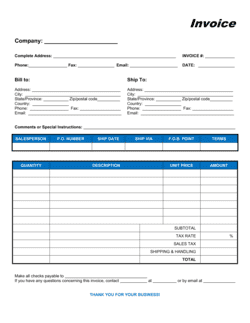
An invoice is the original billing document requesting payment for goods or services delivered. A notice of overdue payment is the follow-up document sent when that invoice goes unpaid past its due date. The notice always references the original invoice number and should be sent with a copy of the invoice attached.

Industry-specific considerations

Professional Services

Project-based billing means overdue notices must cite specific deliverable milestones and dates to prevent clients from disputing whether work was completed.

Construction and Trades

Progress-billing structures mean multiple invoices may be overdue simultaneously; notices should reference each invoice separately and note any lien rights that may apply.

Retail and Wholesale

High invoice volumes require batch dunning runs; overdue notices should include account numbers and PO references so buyers can match payments to open orders quickly.

Creative and Marketing Agencies

Retainer and milestone invoices are common; the notice should specify whether the overdue amount relates to a retainer, a deliverable, or a third-party expense pass-through.

Template vs pro β€” what fits your needs?

PathBest forCostTime
Use the templateAny business chasing a standard overdue invoice without a contractual disputeFree5–10 minutes per notice
Template + professional reviewLarger balances or accounts where late fees or service suspension need to be worded carefully$50–$150 (paralegal or accountant review)1–2 hours
Custom draftedPre-litigation demand letters or overdue notices involving disputed contract terms$200–$500 (attorney-drafted demand letter)1–3 days

Glossary

Dunning
The process of sending a series of increasingly firm notices to a customer to collect an unpaid debt.
Net 30 / Net 60
Payment terms stating the full invoice amount is due 30 or 60 days after the invoice date.
Late Fee
A penalty charge added to an overdue balance, typically expressed as a monthly percentage β€” for example, 1.5% per month on the outstanding amount.
Overdue Date
The date on which an invoice officially became past due β€” the day after the agreed payment due date.
Invoice Reference Number
A unique sequential identifier assigned to each invoice, used to match the notice to the correct transaction in both parties' accounting systems.
Payment Deadline
The new, specific calendar date by which the recipient must remit payment before further action is taken.
Accounts Receivable
Money owed to a business by its customers for goods or services already delivered but not yet paid for.
Demand Letter
A formal legal notice β€” sent after dunning notices fail β€” requiring payment by a specific date or threatening legal action or collections.
Days Sales Outstanding (DSO)
The average number of days a business takes to collect payment after a sale, used as a measure of accounts-receivable efficiency.
Charge-Off
An accounting entry that writes off an uncollectable debt as a loss, typically after 90–180 days of non-payment and exhausted collection efforts.

Part of your Business Operating System

This document is one of 3,000+ business & legal templates included in Business in a Box.

  • Fill-in-the-blanks β€” ready in minutes
  • 100% customizable Word document
  • Compatible with all office suites
  • Export to PDF and share electronically

Create your document in 3 simple steps.

From template to signed document β€” all inside one Business Operating System.
1
Download or open template

Access over 3,000+ business and legal templates for any business task, project or initiative.

2
Edit and fill in the blanks with AI

Customize your ready-made business document template and save it in the cloud.

3
Save, Share, Send, Sign

Share your files and folders with your team. Create a space of seamless collaboration.

Save time, save money, and create top-quality documents.

β˜…β˜…β˜…β˜…β˜…

"Fantastic value! I'm not sure how I'd do without it. It's worth its weight in gold and paid back for itself many times."

Managing Director Β· Mall Farm
Robert Whalley
Managing Director, Mall Farm Proprietary Limited
β˜…β˜…β˜…β˜…β˜…

"I have been using Business in a Box for years. It has been the most useful source of templates I have encountered. I recommend it to anyone."

Business Owner Β· 4+ years
Dr Michael John Freestone
Business Owner
β˜…β˜…β˜…β˜…β˜…

"It has been a life saver so many times I have lost count. Business in a Box has saved me so much time and as you know, time is money."

Owner Β· Upstate Web
David G. Moore Jr.
Owner, Upstate Web

Run your business with a system β€” not scattered tools

Stop downloading documents. Start operating with clarity. Business in a Box gives you the Business Operating System used by over 250,000 companies worldwide to structure, run, and grow their business.

Free Forever PlanΒ Β·Β No credit card required