Notice of Debt Acknowledgment Template

Free Word download β€’ Edit online β€’ Save & share with Drive β€’ Export to PDF

1 pageβ€’15–20 min to fillβ€’Difficulty: Standard
Learn more ↓
FreeNotice of Debt Acknowledgment Template

At a glance

What it is
A Notice of Debt Acknowledgment is a formal letter a debtor sends to a creditor confirming that a specific outstanding debt exists, stating the agreed amount, and putting the acknowledgment in writing. This free Word download is fully editable online and can be exported as PDF for immediate delivery by email or post.
When you need it
Use it when a creditor requests written confirmation of an outstanding balance, when you are negotiating a payment plan or settlement and need to establish a shared starting point, or when you want to voluntarily reset the statute of limitations clock with a documented acknowledgment.
What's inside
Party details, a precise statement of the outstanding amount and original debt basis, the acknowledgment declaration, any noted payment intent or proposed arrangement, and a closing courtesy block. Each component is structured to meet the written-acknowledgment standard recognized in most jurisdictions.

What is a Notice of Debt Acknowledgment?

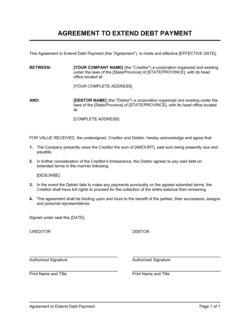
A Notice of Debt Acknowledgment is a formal letter sent by a debtor to a creditor confirming in writing that a specific outstanding debt exists, identifying the precise amount owed, and documenting the debtor's awareness of the obligation. Unlike a payment plan agreement or promissory note, it does not create new repayment terms β€” it establishes a documented starting point that both parties can reference in any subsequent negotiation, restructuring, or legal proceeding. Because it constitutes written acknowledgment of the debt, it also typically resets the statute of limitations period in most jurisdictions, giving the creditor a fresh window to pursue the claim if repayment does not follow.

Why You Need This Document

Without a written acknowledgment, debt disputes often devolve into a creditor's claim against a debtor's denial, with no paper trail to settle the disagreement. A creditor who receives nothing in writing may escalate to collections or litigation faster than necessary, damaging a business relationship that could otherwise be preserved through transparent communication. For debtors, an unacknowledged debt does not disappear β€” it continues to accrue interest and can surface in credit reports, contract references, or legal proceedings at the worst possible moment. Sending a clear, professionally structured acknowledgment demonstrates good faith, freezes the balance at a documented figure, and opens the door to a negotiated repayment arrangement rather than a courtroom. This template gives you the structure to do that in under 15 minutes, with every clause needed to protect your position while maintaining a cooperative tone with your creditor.

Which variant fits your situation?

If your situation is…Use this template
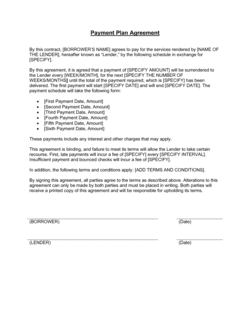
Acknowledging a debt and proposing a structured repayment schedulePayment Plan Agreement
Offering a lump-sum settlement for less than the full balanceDebt Settlement Agreement
Creditor sending a formal demand for an unpaid amountDemand Letter for Payment
Documenting a formal loan between two private partiesPromissory Note
Acknowledging a debt that has already been fully paidDebt Release Letter
Creditor confirming receipt of a payment against an outstanding balancePayment Receipt

Common mistakes to avoid

❌ Using hedging or conditional language in the acknowledgment

Why it matters: Phrases like 'I believe I owe' or 'approximately' may not meet the written-acknowledgment standard that resets the statute of limitations, defeating one of the letter's primary purposes.

Fix: State the amount and obligation in definitive terms. Use 'I acknowledge that I owe' followed by the exact figure and a clear description of the debt's origin.
❌ Omitting the debt calculation breakdown

Why it matters: A single total figure with no supporting arithmetic leaves room for the creditor to dispute the number later or add charges the debtor never agreed to.

Fix: Show principal, interest rate, accrued interest to date, and any fees separately so every component of the total is documented and traceable.

❌ Treating the acknowledgment letter as a binding payment plan

Why it matters: Including specific installment dates and amounts without a 'subject to separate agreement' qualifier can create contractual obligations you may not be able to fulfill, exposing you to immediate default.

Fix: Add 'subject to a formal payment arrangement to be agreed in writing' whenever you mention proposed repayment terms in this letter.

❌ Sending the letter to the wrong contact

Why it matters: An acknowledgment sent to a general inbox or the wrong department may go unrecorded, leaving no evidence the letter was received β€” which matters enormously if the limitations period is in dispute.

Fix: Address the letter to the creditor's named accounts-receivable contact and send via tracked email or certified post to create a delivery record.

The 8 key clauses, explained

Date and party identification

In plain language: States the date the letter is sent, the debtor's full legal name and address, and the creditor's full legal name and address.

Sample language
[DATE] | From: [DEBTOR FULL NAME], [DEBTOR ADDRESS] | To: [CREDITOR FULL NAME / COMPANY NAME], [CREDITOR ADDRESS]

Common mistake: Using a trade name or nickname instead of the legal entity name β€” if the letter is later used in proceedings, a name mismatch can create identity disputes.

Subject line and reference

In plain language: A clear subject line that identifies the letter as a debt acknowledgment and references any account or invoice number.

Sample language
Re: Acknowledgment of Outstanding Debt β€” Account No. [ACCOUNT NUMBER] / Loan Reference [REFERENCE]

Common mistake: Omitting the account or reference number. Without it, the creditor's accounts-receivable team may struggle to match the letter to the correct obligation.

Opening acknowledgment statement

In plain language: The core declaration β€” the debtor unambiguously confirms that the stated debt is owed to the creditor.

Sample language
I, [DEBTOR FULL NAME], hereby acknowledge and confirm that I owe [CREDITOR FULL NAME] the outstanding amount of $[AMOUNT] ([AMOUNT IN WORDS]) arising from [BRIEF DESCRIPTION OF DEBT ORIGIN, e.g., 'the personal loan advanced on [DATE]'].

Common mistake: Using hedging language such as 'I believe I may owe' β€” this weakens the acknowledgment and may not meet the written-acknowledgment standard required to reset the limitations period.

Debt particulars

In plain language: Specifies the original principal, any accrued interest, applicable interest rate, and the total balance outstanding as of the letter date.

Sample language
Original principal: $[PRINCIPAL AMOUNT]. Interest accrued at [RATE]% per annum from [ORIGINAL DATE] to [CURRENT DATE]: $[INTEREST AMOUNT]. Total outstanding balance as of [DATE]: $[TOTAL AMOUNT].

Common mistake: Stating a round or approximate figure without showing the calculation. A disputed interest amount can void the acknowledgment's usefulness if the parties later disagree on the balance.

Payment intent or proposed arrangement

In plain language: Optionally states the debtor's intention to repay β€” whether in full by a target date or in installments β€” without making it a binding contractual commitment in this letter.

Sample language
I intend to satisfy this balance [in full by [DATE] / through monthly installments of $[AMOUNT] beginning [DATE]], subject to a formal payment arrangement to be agreed in writing between the parties.

Common mistake: Stating specific payment installment dates in this letter and treating it as a binding payment plan. An acknowledgment letter is not a payment agreement β€” include a 'subject to separate written agreement' qualifier.

Request for creditor response or confirmation

In plain language: Invites the creditor to confirm that the stated balance is accurate and to communicate any discrepancy within a reasonable period.

Sample language
I respectfully request that you confirm in writing whether the outstanding balance of $[TOTAL AMOUNT] as stated above is accurate as of [DATE], and advise of any discrepancy within [14] days of receipt of this letter.

Common mistake: Skipping this clause entirely. Without a request for confirmation, the debtor has no documented basis to challenge the balance if the creditor later claims a higher amount.

Reservation of rights

In plain language: Clarifies that the acknowledgment does not waive any defenses or rights the debtor retains, and does not constitute an admission of liability for amounts beyond those stated.

Sample language
This acknowledgment is limited to the amount stated above. Nothing in this letter shall be construed as an admission of liability for any amount in excess of $[TOTAL AMOUNT] or as a waiver of any rights or defenses available to the undersigned.

Common mistake: Omitting this clause when the creditor may be claiming a higher amount than the debtor accepts. Without it, a broad acknowledgment could be used to argue admission of the full disputed balance.

Closing and contact details

In plain language: A professional closing with the debtor's printed name, signature line, and preferred contact details for follow-up.

Sample language
Please do not hesitate to contact me at [PHONE NUMBER] or [EMAIL ADDRESS] to discuss next steps. Yours sincerely, [DEBTOR FULL NAME] | [DATE]

Common mistake: Not including a direct contact method. If the creditor cannot easily reach the debtor to confirm receipt or discuss the arrangement, goodwill deteriorates and correspondence delays mount.

How to fill it out

  1. 1

    Enter the date and both parties' legal details

    Fill in the current date and the full legal names and addresses of both the debtor and the creditor. Use registered entity names for businesses, not trading names.

    πŸ’‘ Double-check the creditor's legal name against any original loan agreement or invoice β€” a mismatch creates a paper-trail inconsistency.

  2. 2

    Add the account or reference number in the subject line

    Include any account number, loan reference, or invoice number that the creditor uses to track this debt in their system.

    πŸ’‘ If you don't have a reference number, call the creditor's accounts-receivable team before sending β€” it saves a round trip of emails.

  3. 3

    Write a clear, unambiguous acknowledgment statement

    State in plain language that you owe the specified amount to the named creditor, with a brief description of how the debt arose. Avoid conditional or hedging language.

    πŸ’‘ Read the acknowledgment sentence aloud β€” if it sounds like you're not sure you owe the money, rewrite it until it sounds definitive.

  4. 4

    List the debt particulars with the calculation shown

    Enter the original principal, interest rate, accrued interest calculated to today's date, and the total balance. Show the arithmetic rather than just stating a final figure.

    πŸ’‘ If you're unsure of the accrued interest, request a current balance statement from the creditor before completing this section.

  5. 5

    State your payment intent clearly and conditionally

    If you have a proposed repayment approach, include it here β€” but qualify it as 'subject to a separate written agreement.' Do not commit to specific dates or amounts in this letter.

    πŸ’‘ Keeping the payment terms out of the acknowledgment letter protects you if the formal plan later changes.

  6. 6

    Request written confirmation of the balance

    Add a paragraph asking the creditor to confirm the stated balance in writing within 14 days. Set a specific response window rather than leaving it open-ended.

    πŸ’‘ A 14-day confirmation window is standard; shorter windows may feel pressuring and damage the cooperative tone you want to establish.

  7. 7

    Review the reservation-of-rights clause before sending

    If there is any possibility the creditor claims a higher amount than you accept, ensure the reservation of rights limits your acknowledgment to the amount stated. Remove it only if the balance is undisputed.

    πŸ’‘ When in doubt, leave the clause in β€” it costs you nothing if the balance is agreed and protects you significantly if it isn't.

Frequently asked questions

What is a notice of debt acknowledgment?

A notice of debt acknowledgment is a formal letter a debtor sends to a creditor confirming in writing that a specific debt exists, stating the outstanding amount, and documenting the debtor's awareness of the obligation. It is often used to reset the statute of limitations, establish goodwill before a payment negotiation, or satisfy a creditor's request for written confirmation of a balance.

Does acknowledging a debt reset the statute of limitations?

In most common-law jurisdictions β€” including most US states, Canada, the UK, and Australia β€” a written acknowledgment of a debt typically resets the limitation period, giving the creditor a fresh window to pursue legal action. The exact effect varies by jurisdiction and by how the acknowledgment is worded. If resetting the limitations period is a concern, consider consulting a lawyer before sending the letter.

Is a debt acknowledgment letter legally binding?

A debt acknowledgment letter is generally treated as an admission of the debt for evidentiary purposes, but it is not the same as a payment agreement or promissory note. It does not create a binding repayment schedule on its own. To be legally effective, it should state the amount clearly and unambiguously β€” conditional or approximate language may reduce its enforceability.

What is the difference between a debt acknowledgment and a promissory note?

A debt acknowledgment confirms that an existing obligation is owed β€” it does not create new payment terms. A promissory note is a formal financial instrument that documents both the debt and the debtor's promise to repay it under specific terms, including schedule, interest rate, and consequences of default. If you need to formalize a repayment arrangement, a promissory note or payment plan agreement is the appropriate next step after the acknowledgment.

Should I include proposed payment terms in the acknowledgment letter?

You may mention a payment intention to demonstrate good faith, but you should qualify it with language like 'subject to a separate written agreement.' Avoid committing to specific installment amounts and dates in this letter β€” if circumstances change before a formal plan is signed, you could be held to terms you stated here even without a separate contract.

Can a business use this template as well as an individual?

Yes. Both individuals and businesses can use a debt acknowledgment letter. Businesses should use their registered legal entity name β€” not a trading name β€” and the letter should be signed by an authorized representative such as a director, officer, or manager. Include the signer's title beneath their name to establish their authority to bind the entity.

Do I need to have the letter notarized or witnessed?

Notarization is not required for a debt acknowledgment letter in most jurisdictions. The letter is most effective when it is signed, dated, and sent in a way that creates a delivery record β€” such as tracked email or certified post. If the debt is large or contested, having a witness sign and date the letter alongside the debtor adds an extra layer of documentary support.

What happens if the creditor disputes the amount I state in the letter?

If the creditor claims a higher balance, your acknowledgment letter limits your admission to the amount you stated β€” particularly if you included a reservation-of-rights clause. Request the creditor's full breakdown in writing and compare it against your own records before agreeing to any revised figure. Do not issue a second acknowledgment for the higher amount until you have verified the difference.

How this compares to alternatives

vs Demand Letter for Payment

A demand letter is sent by the creditor to the debtor, formally requesting payment and warning of legal action. A debt acknowledgment letter is sent by the debtor to the creditor, confirming the obligation voluntarily. The two letters represent opposite sides of the same obligation β€” the acknowledgment is a cooperative response; the demand is a formal escalation.

vs Promissory Note

A promissory note is a formal binding instrument that documents both the debt and a structured repayment promise, including interest rate, schedule, and default consequences. A debt acknowledgment letter confirms the debt exists but does not create a repayment obligation. Use the acknowledgment to establish the starting balance, then formalize repayment in a promissory note.

vs Payment Plan Agreement

A payment plan agreement is a bilateral contract setting out installment amounts, due dates, and consequences of missed payments β€” both parties sign it. A debt acknowledgment is a unilateral letter from the debtor that confirms the balance but does not bind either party to specific repayment terms. The acknowledgment often precedes and informs the payment plan.

vs Debt Settlement Agreement

A debt settlement agreement documents a negotiated resolution in which the creditor accepts less than the full balance as final satisfaction. A debt acknowledgment confirms the full amount owed without any reduction. If settlement is the goal, the acknowledgment establishes the baseline figure from which the settlement discount is then negotiated.

Industry-specific considerations

Financial Services

Debtors acknowledging outstanding loan balances to banks or non-bank lenders as part of workout or restructuring discussions.

Retail and Trade

Businesses confirming unpaid trade payables to suppliers before renegotiating payment terms or requesting extended credit.

Real Estate

Property owners or developers acknowledging construction finance or bridging loan balances ahead of refinancing or asset sale.

Professional Services

Clients acknowledging overdue invoices to consultants or law firms before entering into a structured payment arrangement.

Template vs pro β€” what fits your needs?

PathBest forCostTime
Use the templateIndividuals and small businesses acknowledging a straightforward, undisputed balanceFree10–15 minutes
Template + professional reviewDebtors where the limitations period is a specific concern or the creditor is disputing the amount$100–$300 for a brief lawyer review1–2 days
Custom draftedLarge corporate debts, insolvency-adjacent situations, or debts with cross-border complications$400–$1,500+3–7 days

Glossary

Debt Acknowledgment
A written statement by a debtor confirming that a specific debt exists and that they are obligated to repay it.
Statute of Limitations
The maximum period of time a creditor has to initiate legal action to collect a debt β€” a written acknowledgment typically resets this clock in most jurisdictions.
Outstanding Balance
The total amount of a debt that remains unpaid at the time the acknowledgment is made, including any accrued interest.
Creditor
The party to whom a debt is owed β€” a person, business, or financial institution that extended money, goods, or services on credit.
Debtor
The party who owes a debt and is issuing the acknowledgment confirming that obligation.
Promissory Note
A written financial instrument in which the debtor promises to repay a specific sum under defined terms β€” more formal and binding than an acknowledgment letter.
Payment Plan
An arrangement between debtor and creditor to repay a debt in scheduled installments rather than in a single lump sum.
Debt Settlement
An agreement in which the creditor accepts less than the full outstanding balance as full satisfaction of the debt.
Principal
The original sum of money borrowed or owed, before interest or fees are added.
Accrued Interest
Interest that has built up on the principal balance over time but has not yet been paid.

Part of your Business Operating System

This document is one of 3,000+ business & legal templates included in Business in a Box.

  • Fill-in-the-blanks β€” ready in minutes
  • 100% customizable Word document
  • Compatible with all office suites
  • Export to PDF and share electronically

Create your document in 3 simple steps.

From template to signed document β€” all inside one Business Operating System.
1
Download or open template

Access over 3,000+ business and legal templates for any business task, project or initiative.

2
Edit and fill in the blanks with AI

Customize your ready-made business document template and save it in the cloud.

3
Save, Share, Send, Sign

Share your files and folders with your team. Create a space of seamless collaboration.

Save time, save money, and create top-quality documents.

β˜…β˜…β˜…β˜…β˜…

"Fantastic value! I'm not sure how I'd do without it. It's worth its weight in gold and paid back for itself many times."

Managing Director Β· Mall Farm
Robert Whalley
Managing Director, Mall Farm Proprietary Limited
β˜…β˜…β˜…β˜…β˜…

"I have been using Business in a Box for years. It has been the most useful source of templates I have encountered. I recommend it to anyone."

Business Owner Β· 4+ years
Dr Michael John Freestone
Business Owner
β˜…β˜…β˜…β˜…β˜…

"It has been a life saver so many times I have lost count. Business in a Box has saved me so much time and as you know, time is money."

Owner Β· Upstate Web
David G. Moore Jr.
Owner, Upstate Web

Run your business with a system β€” not scattered tools

Stop downloading documents. Start operating with clarity. Business in a Box gives you the Business Operating System used by over 250,000 companies worldwide to structure, run, and grow their business.

Free Forever PlanΒ Β·Β No credit card required