Call Sheet Template

Free Word download β€’ Edit online β€’ Save & share with Drive β€’ Export to PDF

1 pageβ€’15–25 min to fillβ€’Difficulty: Standard
Learn more ↓
FreeCall Sheet Template

At a glance

What it is
A Call Sheet is a structured production form distributed to cast, crew, and vendors before each shoot day or event. It consolidates every logistical detail β€” location addresses, call times, schedule, contacts, and special instructions β€” into a single reference document. This free Word download is editable online and exportable as PDF for same-day distribution.
When you need it
Issue it 12–24 hours before every shoot day, live event, or production session where multiple people need to show up at the right place, at the right time, with the right equipment. Without it, even a small crew of six people generates a flood of individual questions that stall the day before it starts.
What's inside
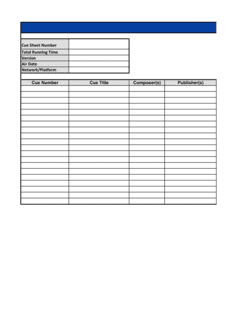
Project title and date, general crew call time, location details with parking and access notes, scene or segment schedule, individual call times by department or role, key contacts with direct phone numbers, equipment and prop notes, and emergency or weather contingency information.

What is a Call Sheet?

A Call Sheet is a structured daily production form that consolidates every logistical detail crew, cast, and vendors need to execute a shoot day or live event. It lists each person's individual arrival time, the shoot location with parking and access instructions, a scene-by-scene or segment-by-segment schedule, key contacts with direct mobile numbers, equipment requirements, and emergency information β€” all on a single page distributed 12–24 hours in advance. On film sets, commercial productions, corporate video shoots, and live events alike, the call sheet is the one document everyone is expected to have read before they arrive.

Why You Need This Document

Running a shoot day without a call sheet means every crew member and vendor independently calls or texts someone for the address, the parking situation, their specific call time, and the day's schedule β€” a problem that compounds with every person added to the crew. A disorganized morning call costs real money: a 10-person crew arriving 30 minutes late due to missing location details represents over five person-hours lost before a single frame is captured. Beyond time, the absence of a call sheet leaves no clear record of who was responsible for which equipment, what the planned schedule was, or whether safety information was communicated β€” all of which matter when disputes or incidents arise. This template gives you a consistent, professional format that takes 15–30 minutes to complete and eliminates the most common sources of shoot-day confusion before they happen.

Which variant fits your situation?

If your situation is…Use this template
Narrative film or TV episode with multiple scenes and a full castFilm Call Sheet
Single-day commercial or brand video shootCommercial Production Call Sheet
Live event with vendor check-in times and a run-of-showEvent Call Sheet
Photography shoot with talent, wardrobe, and location changesPhoto Shoot Call Sheet
Music video production with talent riders and playback requirementsMusic Video Call Sheet
Corporate interview or talking-head video seriesInterview Day Call Sheet
Multi-day production requiring a master schedule and daily breakdownsProduction Schedule

Common mistakes to avoid

❌ Distributing the call sheet the morning of the shoot

Why it matters: Crew members need time to plan their commute, confirm childcare, and prepare equipment. A same-morning distribution causes late arrivals and stressed setups.

Fix: Send the call sheet by 8 PM the evening before. For 6 AM calls, send it no later than 6 PM the prior day to give crew adequate notice.

❌ Using a single general call time for everyone

Why it matters: Having talent on set two hours before their scene wastes budget and goodwill, while having grip and electric arrive at the same time as the director means the set is not ready.

Fix: Assign staggered call times by department based on actual prep requirements. Hair and makeup and art department almost always need the earliest calls.

❌ Omitting the nearest hospital address

Why it matters: On locations far from crew's home base, no one knows the nearest emergency room by default. A 60-second search for that address on the call sheet can save critical minutes in an emergency.

Fix: Make the nearest hospital address and phone number a required field in your template. Pre-fill it during the location advance and confirm it has not changed before distributing.

❌ Not assigning a named person to each equipment and prop item

Why it matters: When a prop or rental item is missing on shoot day, 'someone was supposed to get it' is not actionable. The day stalls while responsibility is debated.

Fix: Every item in the equipment and special requirements field must have a named owner and a confirmation status β€” 'confirmed' or 'pending' β€” listed next to it.

The 9 key fields, explained

Project title and shoot date

General crew call time and location

Scene or segment schedule

Individual department call times

Talent and character details

Key contacts with direct phone numbers

Equipment and special requirements

Nearest hospital and emergency contacts

Weather and contingency notes

How to fill it out

  1. 1

    Enter the project title, shoot date, and day number

    Fill in the full project name, the calendar date, and the shoot day number out of the total scheduled days. This orients every recipient immediately.

    πŸ’‘ Save a blank master template with your production company logo and standard emergency contacts pre-filled, then duplicate it for each shoot day.

  2. 2

    Confirm the location address and access details

    Enter the full street address, parking instructions, gate codes, and the name and number of the location contact. Test the address in a mapping app before distributing.

    πŸ’‘ For multi-location days, list each location separately with its own call time and directions β€” do not combine them in a single address field.

  3. 3

    Build the scene or segment schedule

    List every planned setup chronologically with estimated start times and durations based on the script breakdown or production schedule. Include buffer time between setups.

    πŸ’‘ Work backward from your permit expiry or location release time to confirm the schedule is achievable β€” then add 20% to every setup estimate.

  4. 4

    Set individual department call times

    Calculate each department's call time based on how long they need to prep before their first setup. Hair and makeup, art department, and grip/electric typically need 1–2 hours before the general crew call.

    πŸ’‘ Confirm call times directly with each department head the day before β€” they know their prep time better than any production coordinator does.

  5. 5

    List all talent with scenes and wardrobe notes

    Enter each actor's legal name, character name, scenes for the day, call time, and any wardrobe, special effects, or stunt notes.

    πŸ’‘ Cross-reference against the day-out-of-days to confirm you haven't accidentally scheduled talent who is released or not yet contracted.

  6. 6

    Add key contacts with direct mobile numbers

    Include direct mobile numbers for the director, 1st AD, producer, DP, production coordinator, and location contact. Verify every number before distribution.

    πŸ’‘ Put the 1st AD's number first β€” they are the primary operational point of contact on shoot day for 90% of crew questions.

  7. 7

    Distribute 12–24 hours before the shoot

    Send the finalized call sheet by email to all crew and cast, and share via a group messaging channel if your team uses one. Include a PDF attachment, not just inline text.

    πŸ’‘ Send a brief confirmation message asking crew to acknowledge receipt β€” silence is not confirmation, especially for early morning calls.

Frequently asked questions

What is a call sheet?

A call sheet is a daily production document distributed to cast, crew, and vendors before a shoot day or live event. It lists who needs to be where, at what time, with what equipment, and who to call if something goes wrong. It is the single reference document that replaces dozens of individual logistical questions and keeps a production running on schedule.

When should a call sheet be sent out?

The standard practice is to distribute the call sheet 12–24 hours before the shoot β€” typically by 8 PM the evening prior. For very early morning calls (5–6 AM), send it no later than 6 PM the day before. Last-minute distribution is one of the most common causes of late arrivals and disorganized setups on shoot day.

Who receives a call sheet?

Every person involved in the shoot day receives a call sheet: cast, director, all department heads, crew members, production assistants, location contact, caterer, and any vendors or rental house contacts who need to coordinate delivery. On larger productions, a separate condensed version with only location and timing details is sometimes sent to talent separately.

What is the difference between a call sheet and a production schedule?

A production schedule is the master calendar covering all shoot days across the entire production β€” which scenes are shot on which days, in what order, and at which location. A call sheet is the daily tactical document for a single shoot day, breaking down the schedule into specific call times, contacts, and logistics for each person involved. You need both.

Does a call sheet need to include emergency information?

Yes. The nearest hospital address and phone number, on-set medic contact (if applicable), and the general emergency number should always appear on a call sheet. Most union agreements and production insurance policies require it. Even on small non-union shoots, this information is essential and takes 60 seconds to add.

Can I use this template for events, not just film shoots?

Yes. The call sheet format translates directly to live events, corporate productions, webinar recordings, and conference coverage. Replace scene numbers with event segments, swap cast names for speaker or vendor names, and adapt department call times to reflect vendor load-in, AV setup, and staff briefing times. The underlying structure β€” who, where, when, and who to call β€” is identical.

How is a call sheet different from a run-of-show?

A run-of-show is the minute-by-minute sequence of events within a single day β€” the agenda, essentially. A call sheet is the full logistical document that includes the run-of-show as one component, along with individual arrival times, contact details, location information, and emergency contacts. The run-of-show tells people what happens; the call sheet tells them everything they need to show up ready for it.

What format should I send the call sheet in?

PDF is the standard distribution format because it renders consistently across all devices and cannot be accidentally edited by recipients. Edit the template in Word or your preferred tool, then export to PDF before sending. Include the PDF as an email attachment and, where possible, also post it to a shared production drive or group messaging channel as a backup.

How this compares to alternatives

vs Production Schedule

A production schedule is the master calendar for an entire shoot β€” which scenes are filmed on which days across the full project. A call sheet is the single-day tactical document generated from that schedule. You use the production schedule to plan weeks in advance and the call sheet to execute each day. Both are needed on any multi-day production.

vs Shot List

A shot list details every individual camera setup β€” lens, angle, movement, and description β€” for each scene. A call sheet tells everyone where to be and when. The director and DP work from the shot list during the shoot; every crew and cast member works from the call sheet. They are complementary documents, not substitutes.

vs Run-of-Show Template

A run-of-show is a chronological event agenda covering segment timing and transitions. A call sheet is the full logistical wrapper around that agenda, adding individual arrival times, contacts, locations, and emergency information. For live events, the call sheet contains the run-of-show as one of its sections.

vs Crew Contact Sheet

A crew contact sheet is a standalone directory of every team member's name, role, and contact information for the full production. A call sheet includes a condensed version of key contacts for a single day. The full contact sheet is a reference document kept on file; the call sheet is the daily operational document distributed before each shoot day.

Industry-specific considerations

Film and Television

Union call time rules, forced call penalties, and SAG-AFTRA turnaround requirements make precise individual call times and wrap time tracking essential on every call sheet.

Advertising and Commercial Production

Client and agency representatives attending the shoot require a separate condensed call sheet version with location, parking, and catering details without internal crew logistics.

Events and Live Production

Vendor load-in windows, AV rehearsal schedules, and speaker briefing times replace scene breakdowns, but the core call sheet structure maps directly to live event coordination.

Corporate Communications

Executive interview shoots require discreet location details, minimal crew calls, and careful scheduling around the subject's availability β€” all of which a call sheet communicates clearly to a small team.

Template vs pro β€” what fits your needs?

PathBest forCostTime
Use the templateFreelance producers, small crews, content teams, and event managers running straightforward shoot daysFree15–30 minutes per shoot day
Template + professional reviewProductions with union crew where call time and turnaround rules require careful verification$50–$150 (production coordinator review)30–60 minutes
Custom draftedLarge-scale productions using dedicated production management software with automated call sheet generation$200–$800/month (software platforms such as StudioBinder or Celtx)Setup: 1–2 days; per-day generation: 5–10 minutes

Glossary

General Crew Call
The time the majority of crew members are expected on set β€” the baseline from which individual department call times are calculated.
Call Time
The specific time a particular person or department is required to arrive at the shoot location, which may differ from the general crew call.
Basecamp
The staging area on or near a shoot location where crew, equipment trucks, and talent holding areas are assembled.
Run of Show
A chronological breakdown of every segment, scene, or event within the production day, including estimated start times and durations.
Day Out of Days
A grid showing which cast members work on which shoot days across the full production schedule β€” used alongside the call sheet to confirm who is needed each day.
Advance
A preliminary location visit or planning session conducted before the shoot day to confirm access, parking, power sources, and setup logistics.
Wrap Time
The estimated or actual time the shoot day ends and crew is released β€” critical for overtime calculations and next-day turnaround compliance.
NDB / Forced Call
A situation where a crew member's turnaround time (typically 10–12 hours between wrap and next call) is violated, triggering a contractual overtime penalty.
Contact List
The section of the call sheet listing direct phone numbers for key department heads, the AD, producer, and location contact β€” separate from the full crew list.
Weather Day
A pre-designated alternate shoot date activated when outdoor conditions prevent the primary shoot day from proceeding.

Part of your Business Operating System

This document is one of 3,000+ business & legal templates included in Business in a Box.

  • Fill-in-the-blanks β€” ready in minutes
  • 100% customizable Word document
  • Compatible with all office suites
  • Export to PDF and share electronically

Create your document in 3 simple steps.

From template to signed document β€” all inside one Business Operating System.
1
Download or open template

Access over 3,000+ business and legal templates for any business task, project or initiative.

2
Edit and fill in the blanks with AI

Customize your ready-made business document template and save it in the cloud.

3
Save, Share, Send, Sign

Share your files and folders with your team. Create a space of seamless collaboration.

Save time, save money, and create top-quality documents.

β˜…β˜…β˜…β˜…β˜…

"Fantastic value! I'm not sure how I'd do without it. It's worth its weight in gold and paid back for itself many times."

Managing Director Β· Mall Farm
Robert Whalley
Managing Director, Mall Farm Proprietary Limited
β˜…β˜…β˜…β˜…β˜…

"I have been using Business in a Box for years. It has been the most useful source of templates I have encountered. I recommend it to anyone."

Business Owner Β· 4+ years
Dr Michael John Freestone
Business Owner
β˜…β˜…β˜…β˜…β˜…

"It has been a life saver so many times I have lost count. Business in a Box has saved me so much time and as you know, time is money."

Owner Β· Upstate Web
David G. Moore Jr.
Owner, Upstate Web

Run your business with a system β€” not scattered tools

Stop downloading documents. Start operating with clarity. Business in a Box gives you the Business Operating System used by over 250,000 companies worldwide to structure, run, and grow their business.

Start freeΒ Β·Β No credit card required