1
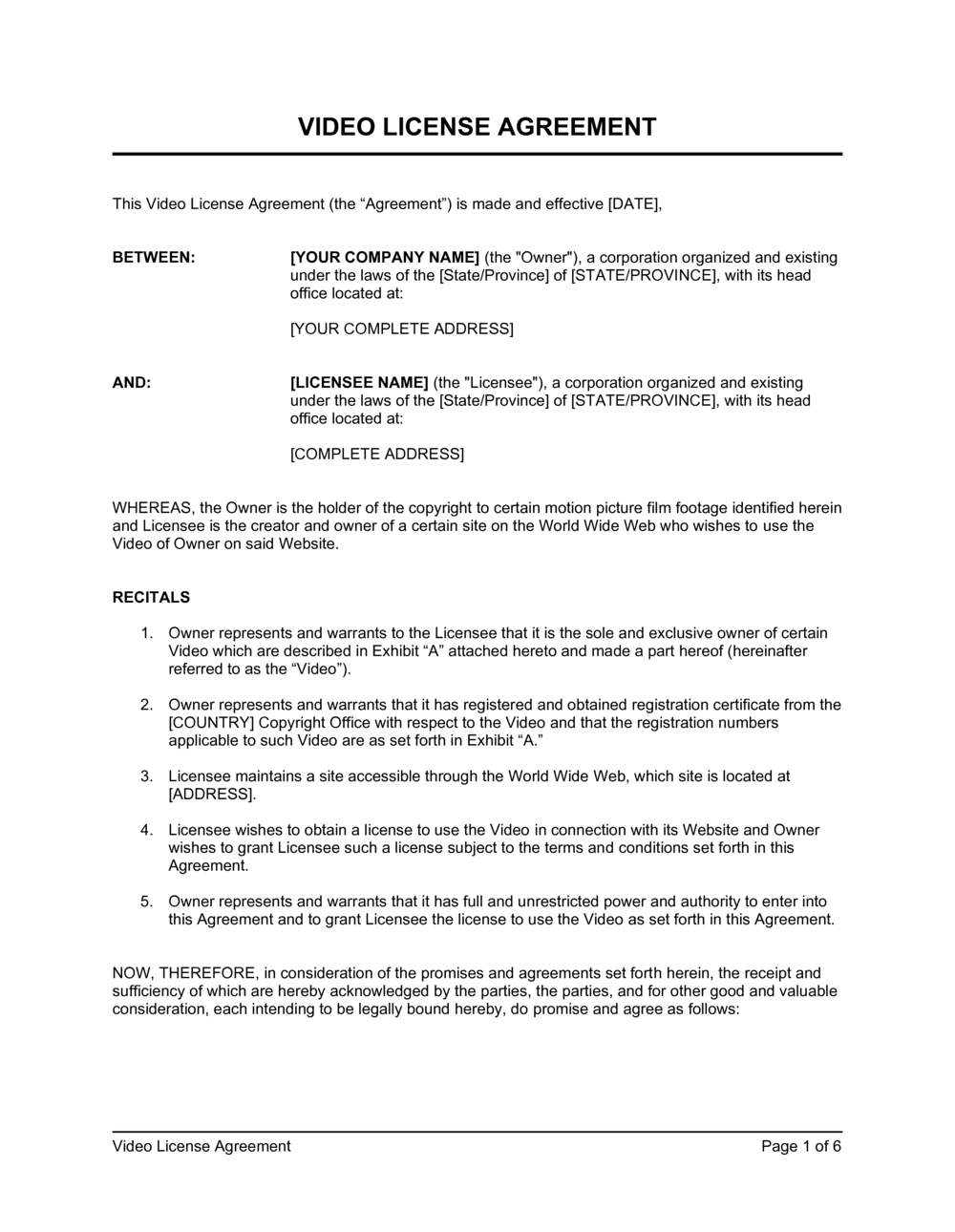
Identify both parties using their registered legal names
Enter the full legal name and entity type (LLC, corporation, sole proprietor) for both the licensor and the licensee. Include principal business addresses and relevant contact information.
💡 Cross-check both names against company registry filings before execution — a mismatch between the contract name and the signing entity can make the agreement hard to enforce.
2
Describe the licensed content precisely
List the specific video title, runtime, format, and any production or catalog ID numbers. If licensing multiple clips, attach a schedule listing each one with its identifying details.
💡 For video content stored online, include the permanent URL or asset hash alongside the title — this eliminates any dispute about which version was licensed.
3
Define the grant of rights and explicitly list restrictions
State every permitted use — broadcast, streaming, embedding, social media, out-of-home display — and equally important, list what is not permitted: sublicensing, creating derivative works, or commercial resale.
💡 If the licensee is a platform that may embed the video in multiple client deliverables, address sublicensing rights explicitly rather than leaving them to interpretation.
4
Set the territory and platform scope
Name the geographic territory covered and specify the permitted platforms or media — online streaming only, terrestrial broadcast, in-store display, or all media worldwide.
💡 For digital content, specify whether 'worldwide' includes territories where the licensor has separate exclusive deals — streaming rights are often sold by region.
5
Set the license term and renewal mechanics
Enter specific start and end dates. Decide whether renewal is automatic (and on what notice) or requires a signed amendment. Add a clause addressing what happens to already-distributed copies after expiration.
💡 A 30-day wind-down period after expiration — during which previously published uses are permitted but new uses are not — prevents unreasonable disruption for the licensee.
6
Complete the fee and royalty block
Enter the upfront flat fee, any royalty percentage, and the royalty calculation base. Define the payment schedule (monthly, quarterly) and include the licensor's right to audit royalty statements once per year.
💡 Define 'net revenue' explicitly — specify which deductions (platform fees, returns, taxes) are permitted before the royalty base is calculated.
7
Confirm clearances and complete the warranties section
Verify that all music, talent appearances, trademarks, and third-party footage within the licensed video have been cleared for the permitted uses before executing the agreement.
💡 Attach a clearance log as a schedule — listing each third-party element, the clearing party, and the license reference — so both parties have a shared record.
8
Sign before any use of the content begins
Both parties must sign the agreement before the licensee begins using the video in any way. Confirm governing law, attach all schedules, and store the fully executed copy securely.
💡 Use a timestamped eSign solution so there is no dispute about whether the license was in place before the first use date.