Resignation 2 Template

Free Word download β€’ Edit online β€’ Save & share with Drive β€’ Export to PDF

1 pageβ€’20–30 min to fillβ€’Difficulty: Standardβ€’Signature requiredβ€’Legal review recommended
Learn more ↓
FreeResignation 2 Template

At a glance

What it is
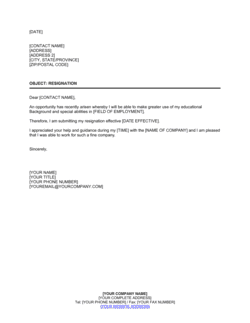
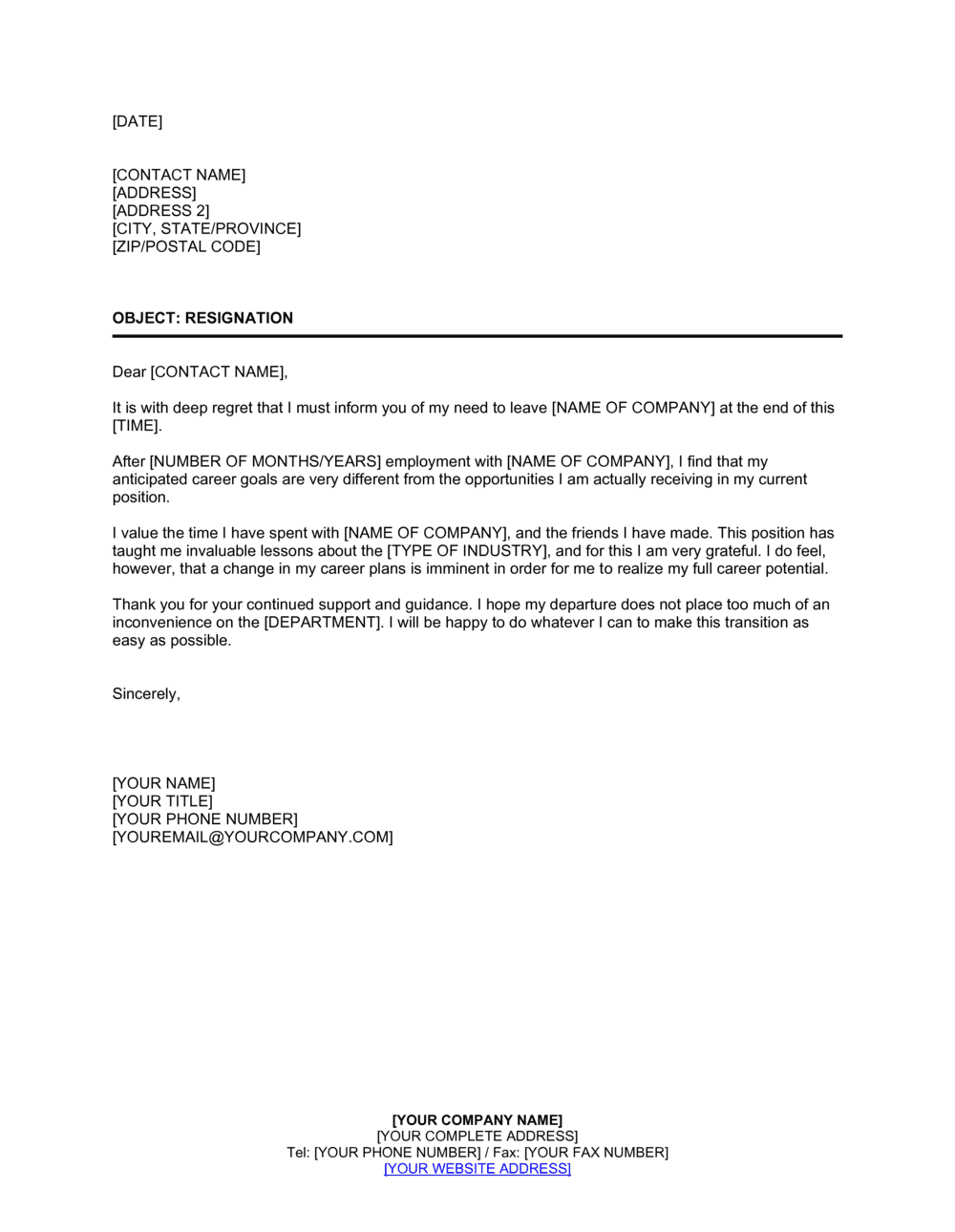
A Resignation Letter is a formal written notice from an employee to their employer confirming the decision to end the employment relationship. This template is a free Word download you can edit online and export as PDF β€” covering notice period, last day of work, transition commitments, and any relevant entitlements in a single professional document.
When you need it
Use it whenever you are leaving a position and need to provide formal written notice to satisfy your employment contract, company policy, or statutory obligation. It is equally important for at-will employees in the US and for employees in jurisdictions where written notice is legally required.
What's inside
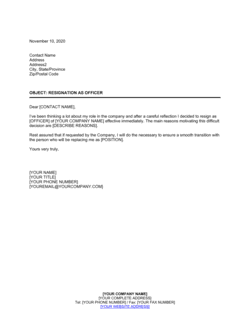
Opening declaration of resignation and last working day, notice period confirmation, handover and transition commitments, acknowledgment of outstanding obligations (confidentiality, IP, and return of property), gratitude and professional closing, and a dated signature block.

What is a Resignation Letter?

A Resignation Letter is a formal written notice from an employee to their employer declaring the decision to end the employment relationship, confirming the last day of work, and activating the notice period required under the employment contract or applicable law. Unlike an informal verbal notice, a signed resignation letter creates a dated, auditable record that establishes exactly when the notice period began, what transition commitments were made, and what post-employment obligations were acknowledged. It functions as both a professional courtesy and a legally significant document β€” the final instrument in the employment relationship that determines when final pay is owed, when restrictive covenants take effect, and whether the departure was voluntary or potentially disputed.

Why You Need This Document

Leaving a job without a written resignation letter creates immediate and lasting problems on both sides of the relationship. For the employee, the absence of a dated written notice means the start of the notice period is disputed, accrued vacation pay and final entitlements lack a clear trigger date, and there is no documented record to rebut claims of abandonment or breach of contract. For employers, a missing letter complicates payroll processing, makes it harder to enforce post-employment restrictions, and creates gaps in the HR audit trail that can complicate future disputes. In Canada, the UK, and across the EU, written notice is either legally required or a contractual standard β€” failing to provide it can expose the departing employee to a breach-of-contract claim, delay their final paycheck, or compromise their eligibility for unemployment benefits. This template gives both employees and HR teams a professionally structured, jurisdiction-aware document that takes 20 minutes to complete and creates a clean, enforceable record of the separation from day one.

Which variant fits your situation?

If your situation is…Use this template
Leaving a standard salaried role with two weeks' noticeResignation Letter (Standard)
Resigning immediately without serving a notice periodImmediate Resignation Letter
Leaving due to hostile, unsafe, or intolerable working conditionsConstructive Dismissal Resignation Letter
Retiring from a long-term position with an extended notice periodRetirement Resignation Letter
Resigning from a board or directorship roleBoard Director Resignation Letter
Resigning during a probationary period before full employment beginsProbationary Period Resignation Letter
Requesting mutual agreement to waive the full notice periodNotice Period Waiver Letter

Common mistakes to avoid

❌ Using ambiguous or conditional resignation language

Why it matters: Phrases like 'I am thinking of resigning' or 'I may be leaving' do not legally start the notice period and can be interpreted as an expression of dissatisfaction rather than formal notice.

Fix: Use clear, present-tense declarative language: 'I am writing to formally resign' β€” and state the last day explicitly. Leave no room for interpretation.

❌ Venting grievances in the resignation letter

Why it matters: Detailed complaints about management, pay disputes, or hostile colleagues convert a routine resignation into a document that can be used in employment tribunal or litigation proceedings.

Fix: Keep the letter professional and factual. If you have genuine workplace grievances, raise them separately through the company's formal grievance procedure β€” not in the resignation letter itself.

❌ Not dating or misaddressing the letter

Why it matters: An undated letter creates a dispute about when the notice period began. A letter addressed to the wrong person may not be treated as effective notice under the employment contract.

Fix: Date the letter on the day it is delivered and address it to the person named in your contract as the recipient of formal notices β€” typically your direct manager or the HR director.

❌ Failing to keep a signed copy with proof of delivery

Why it matters: Without evidence of delivery, an employer can claim the notice period never started β€” delaying your ability to leave and potentially exposing you to a breach-of-contract claim.

Fix: Deliver in person and request a countersigned acknowledgment, or send by email with a read receipt and retain the confirmation. Keep a copy of the signed letter in your personal files.

❌ Omitting final entitlements from the letter

Why it matters: Employees who do not put accrued vacation and outstanding pay requests in writing are more likely to receive a final paycheck that undervalues their entitlements, with no written record to support a claim.

Fix: Include a short paragraph in the letter requesting written confirmation of all amounts owed, referencing company policy and applicable employment standards legislation.

❌ Making open-ended handover promises

Why it matters: Committing to 'complete all outstanding work' or 'support the team as long as needed' without specifics gives the employer grounds to argue that your last day cannot be honored until undefined tasks are finished.

Fix: Limit handover commitments to two to four concrete, time-bound activities that are achievable within the notice period β€” and do not agree to any post-employment consulting role without a separate written agreement.

The 9 key clauses, explained

Opening Declaration and Last Working Day

In plain language: States clearly that the employee is resigning from their position and specifies the exact date on which employment will end.

Sample language
I am writing to formally notify you of my resignation from the position of [JOB TITLE] at [COMPANY NAME], effective [LAST DAY OF EMPLOYMENT β€” e.g., Friday, June 13, 2026].

Common mistake: Writing 'I intend to resign' or 'I am considering leaving' instead of an unambiguous declaration. Conditional or hedged language can prevent the notice period from starting and creates confusion about whether resignation has actually occurred.

Notice Period Confirmation

In plain language: Confirms the length of the notice period being served and how it was calculated β€” referencing the employment contract, company policy, or statutory minimum.

Sample language
This letter constitutes [X weeks'] written notice as required by my employment agreement dated [DATE]. My last working day will therefore be [DATE], calculated from the date of this letter.

Common mistake: Stating the last day without confirming the notice period calculation. If the date is disputed β€” particularly when a longer contractual notice period applies β€” the absence of a clear calculation exposes the employee to a breach-of-contract claim.

Reason for Leaving (Optional but Strategic)

In plain language: Briefly states the reason for departure β€” personal growth, a new opportunity, or personal circumstances β€” without detail that could create legal liability.

Sample language
I have accepted a position that aligns with my long-term career goals. I want to be clear that my decision is positive and reflects an exciting opportunity rather than any dissatisfaction with [COMPANY NAME].

Common mistake: Detailing grievances, criticizing management, or referencing workplace disputes in the body of the resignation letter. Doing so converts a resignation letter into a potential legal exhibit and damages the professional relationship unnecessarily.

Transition and Handover Commitments

In plain language: Outlines the employee's commitment to supporting a smooth handover of responsibilities, including knowledge transfer, documentation, and training a replacement.

Sample language
During my notice period, I am committed to completing [SPECIFIC PROJECTS], documenting [KEY PROCESSES / FILES], and supporting the transition of my responsibilities to [COLLEAGUE NAME / SUCCESSOR ROLE] to minimize disruption.

Common mistake: Making open-ended promises like 'I will do whatever it takes' with no specifics. Vague transition language can be cited by an employer to extend informal obligations beyond the notice period or to dispute final-pay release.

Acknowledgment of Ongoing Confidentiality Obligations

In plain language: Reminds both parties that post-employment confidentiality and IP obligations under the original contract continue after the last working day.

Sample language
I acknowledge that my obligations under the confidentiality and intellectual property provisions of my employment agreement dated [DATE] remain in full force and effect after the termination of my employment.

Common mistake: Omitting this clause in senior or technical roles. Without it, both parties lack a clear written acknowledgment β€” and any subsequent dispute over information use after departure becomes harder to resolve.

Return of Company Property

In plain language: Confirms the employee's commitment to returning all company equipment, access credentials, documents, and materials on or before the last working day.

Sample language
I will return all company property in my possession β€” including [LAPTOP MODEL / DEVICE], access passes, and any confidential documents β€” on or before my last day of employment, [DATE].

Common mistake: Leaving this out of the letter entirely. Without a documented commitment, disputes over property return β€” and any associated deductions from final pay β€” become a 'he said, she said' exchange.

Final Entitlements and Outstanding Compensation

In plain language: Requests confirmation of any accrued but unpaid vacation, outstanding expenses, or pro-rated compensation owed to the employee upon separation.

Sample language
I request written confirmation of any accrued vacation pay, outstanding expense reimbursements, and any other amounts owing to me as of my last day of employment, [DATE], in accordance with [COMPANY NAME]'s policies and applicable law.

Common mistake: Not addressing final entitlements at all, leaving the employee in a weak position when the final paycheck is issued. Employers are less likely to overlook accrued vacation pay when the employee has put the request in writing.

Expression of Gratitude and Professional Tone

In plain language: Closes the letter on a professional note, expressing appreciation for the opportunity and signaling willingness to maintain a positive professional relationship.

Sample language
I am grateful for the opportunities for professional development and the experiences I have gained during my time at [COMPANY NAME]. I hope to maintain a positive professional relationship going forward.

Common mistake: Skipping this section in the belief it is merely social formality. Omitting any expression of appreciation signals hostility and can affect the tone of the reference provided β€” which follows the employee into their next role.

Dated Signature Block

In plain language: Records the employee's full name, signature, and the date of signing, establishing the formal start of the notice period.

Sample language
Sincerely, [EMPLOYEE FULL NAME] [JOB TITLE] [DATE SIGNED] [SIGNATURE]

Common mistake: Not dating the letter at the time of signing, or backdating it. The notice period legally runs from the date the employer receives written notice β€” not from a date the employee decides later. An undated letter creates a dispute about when the period began.

How to fill it out

  1. 1

    Check your employment contract for notice requirements

    Locate your contract and identify the required notice period, any garden leave provisions, and whether the contract requires notice to be addressed to a specific person or department.

    πŸ’‘ If your contract specifies a longer notice period than you intend to serve, review whether your employer is likely to enforce it β€” most will waive excess notice in writing if approached professionally.

  2. 2

    Calculate and confirm your last working day

    Add the required notice period to today's date to determine your last day. Confirm the date is a business day and does not conflict with any contractual end-of-month payment provisions.

    πŸ’‘ If your contract says notice is effective 'on receipt,' count from the day the employer physically receives the letter β€” not the date you write or send it.

  3. 3

    Draft the opening declaration

    State your full job title, the company's legal name, and your exact last day of employment in the first sentence. Use unambiguous, declarative language β€” do not hedge or qualify.

    πŸ’‘ Address the letter to your direct manager and, if required by company policy, copy HR. Using the correct recipient ensures the notice period starts on the right date.

  4. 4

    Confirm the notice period and its basis

    State whether the notice period comes from your employment contract, company policy, or statutory minimum, and reference the source document by date or title.

    πŸ’‘ If the notice period in your contract is shorter than the statutory minimum in your jurisdiction, the statutory minimum applies automatically β€” note this in your letter to avoid confusion.

  5. 5

    Outline your transition commitments

    List two to four specific handover activities you will complete during the notice period β€” project completion, documentation, or training a colleague. Be specific but do not overcommit.

    πŸ’‘ Framing handover as a professional commitment rather than a condition of your departure protects you if the employer tries to delay your last day on the basis of incomplete handover.

  6. 6

    Include the confidentiality and property clauses

    Add the acknowledgment of post-employment obligations and the return-of-property commitment. If you hold any sensitive IP or client data, name the categories explicitly.

    πŸ’‘ Keep these clauses factual and neutral β€” do not admit to any potential breach or raise any IP dispute in the resignation letter itself.

  7. 7

    Request confirmation of final entitlements

    Add a short paragraph asking for written confirmation of accrued vacation, outstanding expenses, and any other amounts owed. Include the date by which you expect confirmation.

    πŸ’‘ Specifying a response date β€” typically within 5 business days of your last day β€” creates a clear record if you need to pursue unpaid amounts later.

  8. 8

    Sign, date, and deliver correctly

    Sign and date the letter on the day you intend notice to begin. Deliver it in person where possible and follow up with an email copy to create a timestamped electronic record.

    πŸ’‘ If delivering by email only, request a read receipt or a brief acknowledgment reply from your manager. This establishes the exact receipt date and prevents any dispute over when the notice period started.

Frequently asked questions

What is a resignation letter?

A resignation letter is a formal written document an employee submits to their employer to notify them of the decision to leave a position. It triggers the contractual or statutory notice period, establishes the last day of employment, and creates a documented record of the separation. Beyond satisfying legal requirements, a well-written resignation letter protects the employee's professional reputation and final entitlements.

Is a resignation letter legally required?

In many jurisdictions and under most employment contracts, written resignation notice is either contractually required or strongly recommended to create an enforceable record. In the UK, for example, written notice is generally required by contract. In Canada, most provincial employment standards legislation requires written notice or payment in lieu. In the US, no federal law mandates a written letter, but virtually all employment contracts specify the form notice must take. Failing to provide written notice can constitute breach of contract and may affect severance or final entitlement calculations.

How much notice should I give when resigning?

The required notice period is usually stated in your employment contract. If the contract is silent, jurisdictional statutory minimums apply β€” typically one week per year of service in the UK (capped at 12 weeks), a reasonable period at common law in Canada, and two weeks as the professional standard in most US roles. Always check your contract first; contractual notice periods for senior roles routinely run one to three months.

What should a resignation letter include?

At minimum: a clear declaration of resignation, your exact last day of employment, the notice period being served and its basis, a brief transition commitment, acknowledgment of post-employment obligations, a request for confirmation of final entitlements, a professional closing, and a dated signature. Missing the last day or the notice calculation is the most common and consequential omission.

Can I resign without serving the full notice period?

Yes, but it requires the employer's written agreement β€” known as a mutual waiver or early release. If you leave before completing your notice period without employer consent, you may be in breach of contract, and the employer may theoretically pursue damages equal to the cost of replacing you for the remaining notice period. In practice, most employers accept an early release, particularly when you make the request professionally and offer a reasonable handover.

Can my employer reject my resignation?

No. In virtually all common-law and civil-law jurisdictions, resignation is a unilateral act β€” once clearly communicated, it cannot be rejected by the employer. However, employers can hold you to the full contractual notice period, place you on garden leave, or pay you in lieu of notice to end employment immediately. What they cannot do is refuse to accept the resignation itself.

What happens to my accrued vacation when I resign?

In most jurisdictions, accrued but unused vacation pay must be paid out to the employee upon separation, regardless of the reason for leaving. This includes resignation. The specific calculation method varies β€” some jurisdictions pay out at the regular rate; others use an average earnings formula. Include a written request for your vacation balance in the resignation letter and follow up in writing if it is not addressed in your final paycheck.

Should I state my reason for resigning in the letter?

Stating a reason is optional and should be kept brief and positive if included β€” typically a reference to a new opportunity or personal career goals. Detailed reasons, criticisms of management, or references to workplace disputes should never appear in a resignation letter. If you have genuine concerns about workplace conduct, raise them through the company's grievance process separately, where they are more likely to be addressed and less likely to be used against you.

Do I need a lawyer to write a resignation letter?

For most standard resignations, a high-quality template is sufficient. Consider consulting an employment lawyer if you are a senior executive with equity vesting or severance triggers, if you are resigning under duress or in a constructive dismissal situation, if you have a complex non-compete or garden leave arrangement, or if there is a pending dispute with your employer. A one-hour consultation typically costs $150–$400 and can prevent costly missteps in high-stakes separations.

How this compares to alternatives

vs Immediate Resignation Letter

An immediate resignation letter terminates employment on the date of delivery with no notice period served. It is used when an employee cannot or chooses not to work through notice β€” typically due to health, personal emergency, or constructive dismissal. This standard resignation letter serves the full contractual or statutory notice period, which is the legally safer option in most jurisdictions and protects the employee's right to a positive reference and full final entitlements.

vs Employment Contract

An employment contract establishes the terms of the working relationship at the start β€” including the notice obligations that the resignation letter must satisfy at the end. The resignation letter does not replace or modify the contract; it activates the termination provisions within it. Always check your employment contract before completing the resignation letter to ensure the notice period, form, and recipient are correct.

vs Employee Dismissal Letter

A dismissal letter is issued by the employer to terminate employment β€” the mirror image of a resignation letter. A resignation letter is employee-initiated; a dismissal letter is employer-initiated. The key practical difference is financial: employees who resign typically receive no severance, while those who are dismissed without cause are generally entitled to notice pay or severance under their contract and applicable law.

vs Retirement Resignation Letter

A retirement resignation letter announces a planned transition to retirement rather than a move to a new employer. It typically involves a longer notice period, a phased handover, and specific pension or superannuation trigger language. A standard resignation letter is appropriate for most working-age departures; use a retirement variant when the employee's age, tenure, or pension arrangement makes the departure circumstances materially different.

Industry-specific considerations

Technology / SaaS

IP assignment and source-code return provisions are critical; senior engineers and product leads often have accelerated equity vesting that the resignation date directly triggers.

Financial Services

Garden leave arrangements are routine for client-facing roles; regulatory obligations (FINRA, FCA) require proper notice to enable registration transfers and compliance handovers.

Healthcare

Patient care continuity requirements mean notice periods are often longer and handover plans must be more detailed; credentialing and licensing transfers must be initiated before the last day.

Professional Services

Client non-solicitation obligations are often triggered on resignation; billing and matter handover documentation must be completed to avoid liability for client abandonment.

Retail / Hospitality

High turnover means resignation letters are processed frequently; employers in this sector often waive notice and pay PILON rather than have departing employees remain on the floor.

Manufacturing

Safety certification handover and shift coverage planning are essential; union agreements may override standard notice provisions with collectively bargained terms.

Jurisdictional notes

United States

No federal law requires a written resignation letter, but most employment contracts specify written notice and a minimum period β€” typically two weeks for professional roles. At-will employment means either party can end the relationship at any time, but failing to honor contractual notice periods can technically constitute breach. Some states, including California, have specific rules on final paycheck timing upon resignation β€” typically within 72 hours or the next regular payday.

Canada

Provincial employment standards legislation across Canada requires employees to provide written notice of resignation or payment in lieu, with minimum notice periods typically ranging from one to two weeks depending on tenure. Ontario's Employment Standards Act, for example, requires notice equal to one week per year of service up to a maximum of eight weeks. Quebec employees may be subject to Civil Code provisions in addition to provincial labour standards. Accrued vacation pay must be paid out upon separation in all provinces.

United Kingdom

UK employees must give at least the statutory minimum notice of one week, rising by one week per year of service up to a maximum of 12 weeks β€” or the longer contractual period, whichever applies. Written notice is standard and strongly recommended to establish the notice start date. Garden leave and PILON provisions are common in senior roles and must be provided for expressly in the employment contract to be enforceable. Final pay must include all accrued holiday under the Working Time Regulations 1998.

European Union

EU member states set their own notice period requirements, which vary significantly: Germany applies statutory notice periods of four weeks to three months depending on tenure; France requires one to three months depending on role classification; Spain mandates 15 days for most workers. The EU Transparent and Predictable Working Conditions Directive requires employers to inform employees of notice period lengths in writing at the start of employment. Post-employment non-compete restrictions typically require financial compensation to be enforceable across most member states.

Template vs lawyer β€” what fits your deal?

PathBest forCostTime
Use the templateStandard resignations from non-executive roles without pending disputes or complex equity arrangementsFree15–20 minutes
Template + legal reviewSenior managers or executives with garden leave, PILON, or equity vesting triggered by resignation date$150–$400 for a one-hour employment lawyer consultation1–2 days
Custom draftedConstructive dismissal situations, resignations involving active workplace disputes, or high-value severance negotiations$400–$1,500+3–7 days

Glossary

Notice Period
The length of time an employee must continue working β€” or remain on payroll β€” after submitting a resignation before the employment officially ends.
Last Day of Employment
The specific calendar date on which the employment relationship formally terminates, calculated from the resignation date plus the contractual or statutory notice period.
Garden Leave
A notice arrangement where the employer pays the employee's salary for the notice period but requires them to stay away from the workplace, preventing access to clients, systems, or colleagues.
Pay in Lieu of Notice (PILON)
A lump-sum payment made instead of requiring the employee to work through the notice period, terminating employment immediately on payment.
Constructive Dismissal
When an employer's conduct β€” such as a unilateral pay cut or hostile environment β€” is so serious that the employee is effectively forced to resign, which courts may treat as a wrongful termination.
Final Entitlements
Amounts owed to the employee upon separation, including accrued but unused vacation pay, outstanding expense reimbursements, and any contractual bonus pro-ration.
Handover Plan
A documented transition process in which the departing employee transfers knowledge, files, contacts, and ongoing responsibilities to a colleague or successor.
Statutory Minimum Notice
The minimum notice period required by law in a given jurisdiction, which cannot be waived by contract or agreement to the employee's detriment.
Without Prejudice
A legal designation indicating that a communication cannot be used as evidence in subsequent legal proceedings β€” sometimes applied to resignation letters that raise workplace grievances.
Post-Employment Obligations
Contractual duties that survive the end of employment, such as confidentiality, non-compete restrictions, non-solicitation, and return of company property.
Acknowledgment of Receipt
A written confirmation from the employer that they have received the resignation letter, establishing a clear record of the notice date.

Part of your Business Operating System

This document is one of 3,000+ business & legal templates included in Business in a Box.

  • Fill-in-the-blanks β€” ready in minutes
  • 100% customizable Word document
  • Compatible with all office suites
  • Export to PDF and share electronically

Create your document in 3 simple steps.

From template to signed document β€” all inside one Business Operating System.
1
Download or open template

Access over 3,000+ business and legal templates for any business task, project or initiative.

2
Edit and fill in the blanks with AI

Customize your ready-made business document template and save it in the cloud.

3
Save, Share, Send, Sign

Share your files and folders with your team. Create a space of seamless collaboration.

Save time, save money, and create top-quality documents.

β˜…β˜…β˜…β˜…β˜…

"Fantastic value! I'm not sure how I'd do without it. It's worth its weight in gold and paid back for itself many times."

Managing Director Β· Mall Farm
Robert Whalley
Managing Director, Mall Farm Proprietary Limited
β˜…β˜…β˜…β˜…β˜…

"I have been using Business in a Box for years. It has been the most useful source of templates I have encountered. I recommend it to anyone."

Business Owner Β· 4+ years
Dr Michael John Freestone
Business Owner
β˜…β˜…β˜…β˜…β˜…

"It has been a life saver so many times I have lost count. Business in a Box has saved me so much time and as you know, time is money."

Owner Β· Upstate Web
David G. Moore Jr.
Owner, Upstate Web

Run your business with a system β€” not scattered tools

Stop downloading documents. Start operating with clarity. Business in a Box gives you the Business Operating System used by over 250,000 companies worldwide to structure, run, and grow their business.

Start freeΒ Β·Β No credit card required