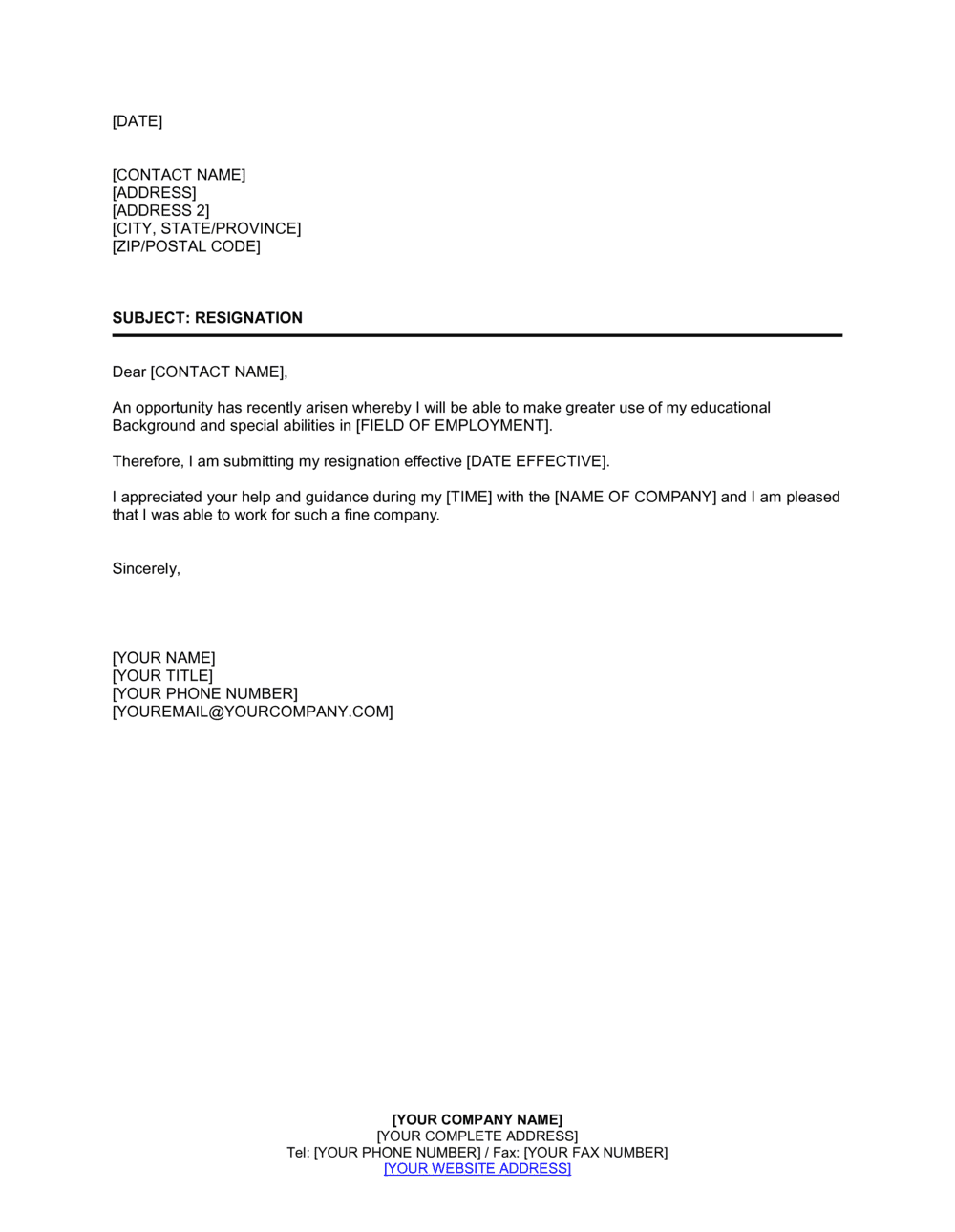
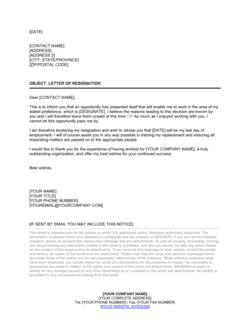
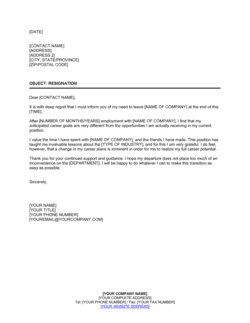
Resignation Template

Free Word download β€’ Edit online β€’ Save & share with Drive β€’ Export to PDF

1 pageβ€’20–30 min to fillβ€’Difficulty: Standardβ€’Signature requiredβ€’Legal review recommended
Learn more ↓
FreeResignation Template

At a glance

What it is
A Resignation is a formal written notice an employee delivers to their employer to communicate their intent to end the employment relationship. This free Word download provides a professionally structured template you can edit online and export as PDF β€” covering your notice period, final working day, handover commitments, and formal sign-off in a single clear document.
When you need it
Use it any time you intend to leave a position voluntarily β€” whether working a standard notice period, departing immediately, or triggering a contractual garden-leave arrangement. Submitting a written resignation protects both parties and creates a clear record of the separation date.
What's inside
Formal notice of resignation, last working day, notice period confirmation, transition and handover offer, expression of gratitude, and a signed closing block. Optional clauses cover accrued leave, return of company property, and reference requests.

What is a Resignation Letter?

A Resignation Letter is a formal written notice submitted by an employee to their employer declaring their intent to voluntarily end the employment relationship. It records the submission date, the applicable notice period, and the precise last working day β€” converting a verbal intention into a legally effective written notice that triggers payroll, benefits, and separation obligations on both sides. Beyond the bare legal function, a well-drafted resignation letter documents handover commitments, addresses accrued leave entitlements, acknowledges surviving post-employment obligations such as confidentiality and non-compete clauses, and preserves the professional relationship that determines future reference quality.

Why You Need This Document

Leaving a role without a formal written resignation creates tangible risk on both sides of the employment relationship. For the employee, the absence of a signed, dated letter means the notice period start date is open to dispute β€” which directly affects the final pay date, benefit continuation, and vesting milestones tied to the separation date. Accrued vacation entitlements, often worth thousands of dollars, are routinely denied or underpaid when not claimed in writing. Post-employment obligations β€” confidentiality, IP assignment, non-compete restrictions β€” remain enforceable regardless, but an acknowledgment in the resignation letter creates a clear evidentiary record if enforcement is ever needed. For employers, a documented resignation with a defined last working day is the foundation for off-boarding, payroll finalization, and reference management. This template gives both parties a clear, complete record from day one of the separation process β€” reducing disputes, protecting entitlements, and ensuring the departure reflects well on everyone involved.

Which variant fits your situation?

If your situation is…Use this template
Leaving a standard full-time role with two weeks' noticeStandard Resignation Letter
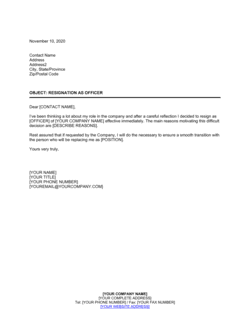
Resigning immediately without working a notice periodImmediate Resignation Letter
Departing due to constructive dismissal or hostile work conditionsConstructive Dismissal Resignation Letter
Retiring from employment permanentlyRetirement Resignation Letter
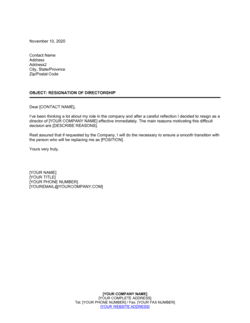
Resigning from a board director or trustee positionBoard Director Resignation Letter
An employee being asked to resign in lieu of terminationVoluntary Separation Agreement
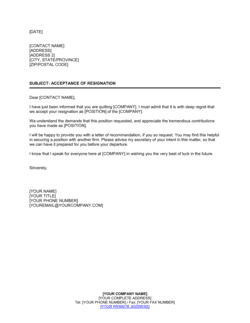
Employer acknowledging and accepting a submitted resignationResignation Acceptance Letter

Common mistakes to avoid

❌ Using ambiguous or conditional language

Why it matters: Phrases like 'I am thinking of resigning' or 'I may need to leave' do not constitute formal notice in most jurisdictions. The notice period clock does not start, and payroll and benefits remain in limbo.

Fix: Open with a single declarative sentence: 'I am writing to formally resign from my position of [TITLE], effective [DATE].' No conditional language, no hedging.

❌ Miscalculating the last working day

Why it matters: Starting the notice count from the send date rather than the receipt date β€” or miscounting weeks β€” can result in the employee leaving before the contractual period ends, exposing them to breach-of-contract liability or loss of final benefits.

Fix: Count forward from the confirmed delivery date, not the drafting date. For email delivery, use the date the recipient opens or acknowledges the message as the start date.

❌ Detailing workplace grievances in the letter

Why it matters: Written complaints about management, colleagues, or company culture become a permanent part of your employment record and can influence reference quality, severance negotiations, and in some jurisdictions, unemployment eligibility.

Fix: Keep the resignation letter strictly factual and professional. Address genuine grievances separately through an exit interview or formal HR process if warranted.

❌ Failing to address accrued annual leave in writing

Why it matters: Accrued leave entitlements are often disputed at separation when not documented. Employers may claim the leave was informally taken or deny the balance without a written record.

Fix: State your accrued leave balance in the resignation letter and request written confirmation of payout arrangements before your last working day.

❌ Sending the letter by email only with no signature

Why it matters: In several jurisdictions, a valid written resignation requires a signed document. A plain-text email may be deemed insufficient formal notice, restarting the notice period or giving the employer grounds to contest the resignation date.

Fix: Attach a signed PDF to any email resignation. For senior roles or contentious departures, also deliver a printed signed copy in person or by tracked post.

❌ Not obtaining a written acknowledgment from the employer

Why it matters: Without written confirmation of the resignation receipt, final working day, and pay arrangements, disputes over final pay, benefits continuation, and reference terms are significantly harder to resolve.

Fix: Request a formal resignation acceptance letter from HR or your manager before your last working day. Follow up in writing if one is not provided within 48 hours of submitting your notice.

The 10 key clauses, explained

Header and Addressee

In plain language: Identifies the sender, the recipient (typically the direct manager or HR), the date, and the employer's legal entity name and address.

Sample language
[EMPLOYEE FULL NAME] | [EMPLOYEE ADDRESS] | [DATE] | [MANAGER NAME], [TITLE] | [COMPANY LEGAL NAME] | [COMPANY ADDRESS]

Common mistake: Addressing the letter to a job title rather than a named individual. If the named manager is unavailable or has left, the letter may not reach the correct person and the notice period start date becomes disputed.

Formal Notice of Resignation

In plain language: The opening statement clearly declaring the employee's intent to resign from their specific role and the company, leaving no ambiguity about the nature of the communication.

Sample language
I am writing to formally notify you of my resignation from the position of [JOB TITLE] at [COMPANY NAME], effective [LAST WORKING DAY].

Common mistake: Using tentative language such as 'I am considering leaving' or 'I may need to resign.' Ambiguous wording can make it unclear whether a formal notice period has started, creating disputes over the final pay date.

Notice Period and Last Working Day

In plain language: States the length of notice being given, confirms it meets the contractual or statutory minimum, and gives the precise final working date.

Sample language
In accordance with my employment contract, I am providing [X weeks'/months'] notice. My last working day will therefore be [SPECIFIC DATE].

Common mistake: Calculating the last working day incorrectly β€” for example, starting the count from the day before the letter is delivered rather than the date of receipt. A one-day error can trigger payroll disputes or benefit continuation issues.

Reason for Leaving (Optional)

In plain language: A brief, professional explanation of the departure reason β€” career development, personal circumstances, or a new opportunity. This clause is optional and should be kept concise and neutral.

Sample language
I have accepted a new opportunity that aligns closely with my long-term career goals. This decision was not made lightly, and I have great respect for the team and the work we have accomplished together.

Common mistake: Using the resignation letter to detail grievances about management, colleagues, or company culture. Negative language creates a permanent record that can affect reference checks and, in some jurisdictions, future unemployment or severance claims.

Transition and Handover Commitment

In plain language: The employee's offer to assist with knowledge transfer, training a replacement, and completing outstanding work during the notice period.

Sample language
During my notice period, I am committed to ensuring a smooth handover of my responsibilities. I will prepare documentation for ongoing projects, brief my successor on key accounts, and complete any deliverables agreed with you by [DATE].

Common mistake: Making vague handover promises without specifying what will be documented or handed over. Vague commitments are unenforceable and can result in the employer withholding final pay or disputing whether notice obligations were met.

Outstanding Leave and Benefits

In plain language: Addresses any accrued but untaken annual leave, outstanding expense claims, or benefit entitlements the employee expects to receive on separation.

Sample language
As of [DATE], I have [X] days of accrued annual leave remaining. I would appreciate confirmation of whether these days will be taken during the notice period or paid out on my final paycheck, per company policy and applicable employment law.

Common mistake: Not raising accrued leave in the resignation letter itself. Employees who leave this until verbal discussion often find it disputed or forgotten, with no written record to rely on.

Return of Company Property

In plain language: Confirms the employee's commitment to return company equipment, access credentials, and confidential documents by the last working day.

Sample language
I will return all company property β€” including my laptop, access badge, and any confidential materials β€” on or before my last working day, [LAST WORKING DAY].

Common mistake: Omitting this clause when the employee holds sensitive equipment or data. Without written acknowledgment of the return obligation, disputes over missing assets or data become difficult to resolve after the employee has left.

Confidentiality and Post-Employment Obligations Acknowledgment

In plain language: A brief acknowledgment that the employee remains bound by any confidentiality, non-compete, and non-solicitation clauses from their employment contract after departure.

Sample language
I acknowledge that the confidentiality, intellectual property, and post-employment restriction clauses in my employment agreement dated [ORIGINAL CONTRACT DATE] remain in full force following my departure.

Common mistake: Omitting this acknowledgment entirely. Its absence does not void the original contract, but a written acknowledgment creates a stronger evidentiary record if the employer later needs to enforce those obligations.

Expression of Gratitude and Professional Closing

In plain language: A short, genuine acknowledgment of the opportunity and the working relationship, maintaining goodwill for future references and professional networking.

Sample language
I am grateful for the opportunities for professional growth and development that [COMPANY NAME] has provided over the past [X years/months]. I wish the team continued success.

Common mistake: Skipping this section entirely to keep the letter 'purely professional.' A cold, transactional resignation letter with no closing goodwill is more likely to produce a bare-minimum reference and damage long-term professional relationships.

Signature Block

In plain language: The employee's handwritten or electronic signature, printed name, job title, and date β€” formalizing the document as a signed legal notice.

Sample language
Sincerely, [SIGNATURE] | [EMPLOYEE FULL NAME] | [JOB TITLE] | [DATE]

Common mistake: Sending an unsigned resignation by email without any signature formality. In jurisdictions that require written notice, a plain-text email without a signature may be challenged as insufficient formal notice, restarting the notice period clock.

How to fill it out

  1. 1

    Check your employment contract for notice requirements

    Before drafting your resignation, locate your employment contract and confirm the required notice period. Your contractual notice period may be longer than the statutory minimum, and failing to honor it can expose you to breach-of-contract claims or forfeiture of certain benefits.

    πŸ’‘ If your contract is unavailable, request a copy from HR before submitting β€” do not guess the notice period.

  2. 2

    Fill in the header with your details and the addressee

    Enter your full legal name, address, and the submission date. Address the letter to your direct manager by name and title, with the company's registered legal name and address in the addressee block.

    πŸ’‘ Use the same name format that appears on your employment contract to avoid any identity ambiguity in your personnel file.

  3. 3

    State your resignation clearly in the opening paragraph

    Write one unambiguous sentence declaring your resignation from your specific job title and the company name, and state your intended last working day. Avoid any language that could be read as conditional or tentative.

    πŸ’‘ Including both the notice start date and the last working day in the same sentence removes any calculation dispute from the outset.

  4. 4

    Calculate and confirm the notice period

    Count forward from the date the letter will be received β€” not sent β€” to arrive at your last working day. State the notice length and confirm it matches your contractual obligation.

    πŸ’‘ If delivering by email, send a read-receipt request or follow up with a printed copy to ensure the notice period start date is documented.

  5. 5

    Describe your handover plan specifically

    List the two or three most critical responsibilities you will document or transfer, and name the colleague or successor you will brief where known. Specific commitments protect you from claims that you left the employer in an unreasonable position.

    πŸ’‘ Offering to prepare a written handover document β€” even one page per active project β€” signals professionalism and typically results in a smoother exit and a stronger reference.

  6. 6

    Address outstanding leave and final pay

    Note your accrued annual leave balance and ask for written confirmation of how it will be handled. Reference the company policy or applicable employment standards legislation if the leave payout requirement is statutory.

    πŸ’‘ In Canada, the UK, and most EU countries, paying out accrued leave on termination is a statutory obligation β€” you do not need to negotiate it, but you do need to flag it in writing.

  7. 7

    Sign, date, and deliver the letter formally

    Sign the letter by hand or with a recognized e-signature. Deliver it by email with a PDF attachment and, for senior roles or where disputes are possible, also by printed copy delivered in person or by tracked mail.

    πŸ’‘ Keep a timestamped copy of everything you send β€” email delivery confirmation, read receipts, and any employer acknowledgment β€” as your record of the official resignation date.

  8. 8

    Follow up to obtain a written acknowledgment

    Ask HR or your manager to send a written acknowledgment confirming receipt of your resignation, your last working day, and the arrangements for final pay and company property return.

    πŸ’‘ A resignation acceptance letter from the employer closes the loop on any ambiguity and is particularly important in jurisdictions where employment termination disputes are common.

Frequently asked questions

What is a resignation letter?

A resignation letter is a formal written notice from an employee to their employer declaring their intent to end the employment relationship. It records the resignation date, the last working day based on the applicable notice period, and any handover commitments. It creates a written record that protects both parties in the event of a dispute over the separation date, final pay, or reference terms.

Is a resignation letter legally required?

In most jurisdictions, the law requires written notice of resignation but does not mandate a specific format. In the US, no federal law requires written notice, but most employment contracts do. In the UK, written notice is standard practice and contractually required for most employees. In Canada and across the EU, employment standards legislation sets minimum notice requirements, and a written resignation is the clearest way to trigger and document them. Failing to provide written notice may expose you to breach-of-contract liability.

How much notice should I give when resigning?

Your contractual notice period controls β€” check your employment agreement first. In the absence of a contract, the standard in the US is two weeks. In Canada, provincial employment standards set statutory minimums that increase with length of service, though common law often requires more. In the UK, the statutory minimum is one week after one month of service, rising to one week per year of service up to 12 weeks. Across the EU, notice periods vary significantly by country, sector, and seniority, often running four to twelve weeks.

Can I resign with immediate effect?

You can resign immediately, but doing so without working your notice period may constitute a breach of your employment contract. The employer could, in theory, sue for damages β€” though this is rarely pursued for standard employees. Immediate resignation is more defensible when it follows serious employer misconduct, constructive dismissal, or when the employer has waived the notice requirement in writing. Always confirm whether your employer will accept pay in lieu of notice before departing immediately.

What should I not include in a resignation letter?

Do not include complaints about management, colleagues, salary dissatisfaction, or cultural grievances. Avoid emotional language, ultimatums, or anything that reads as a threat. The letter is a permanent record in your HR file and will be referenced by anyone who contacts your former employer for a reference. Keep it factual, professional, and brief. Save candid feedback for an exit interview where it can be delivered verbally and managed appropriately.

Do I need to give a reason for resigning?

No. In most jurisdictions, employees are not required to provide a reason for resigning. A brief, neutral explanation β€” such as pursuing a new opportunity or personal reasons β€” is professionally courteous but not legally obligatory. Providing too much detail can unnecessarily complicate the departure, especially if the reason involves dissatisfaction with the employer.

What happens to my accrued vacation days when I resign?

Treatment of accrued annual leave on resignation varies by jurisdiction. In California and several other US states, accrued vacation pay is treated as earned wages and must be paid out on termination. In Canada, most provinces require payment of accrued vacation on departure. In the UK, employees are entitled to be paid for unused statutory holiday accrued in the current leave year. In the EU, similar statutory protections apply. Some employers allow the leave to be taken during the notice period instead. Raise this in writing in your resignation letter to ensure it is addressed formally.

Can my employer refuse to accept my resignation?

In most common-law jurisdictions, an employer cannot compel an employee to continue working against their will β€” forced labor protections apply. However, the employer can hold the employee to their contractual notice period or seek damages for failing to work it. Practically, employers rarely refuse resignation; they may negotiate the notice period, place the employee on garden leave, or offer pay in lieu of notice. The resignation itself is effective regardless of whether the employer formally accepts it.

What is the difference between a resignation letter and a resignation acceptance letter?

A resignation letter is submitted by the employee to formally notify the employer of their departure. A resignation acceptance letter is issued by the employer in response, confirming receipt, acknowledging the final working day, and documenting arrangements for final pay, benefits, and company property return. Both documents together form the complete written record of the separation and are important to retain should any dispute arise later.

Should I resign in person or in writing?

Best practice is to inform your direct manager verbally first β€” in person or by phone β€” and then follow up immediately with a formal written resignation letter. This approach preserves the professional relationship while ensuring a legally sound written record exists. Resigning by email alone, without any personal conversation, is acceptable but can be perceived negatively in close-knit workplaces or senior roles.

How this compares to alternatives

vs Resignation Acceptance Letter

A resignation letter is submitted by the departing employee to formally notify the employer. A resignation acceptance letter is issued by the employer in response, confirming the last working day and final pay arrangements. Both documents together form the complete written separation record. The resignation letter triggers the process; the acceptance letter closes it.

vs Termination Letter

A resignation is initiated by the employee and is a voluntary separation. A termination letter is issued by the employer and ends employment involuntarily. The distinction matters for unemployment eligibility, severance entitlement, and reference framing. Using a resignation letter in a situation that is actually a forced separation may waive rights the employee would otherwise have.

vs Separation Agreement

A resignation letter is a simple notice document confirming an employee's intent to leave. A separation agreement is a broader bilateral contract β€” typically signed by both parties β€” that covers final pay, severance, benefits continuation, mutual release of claims, and non-disparagement. Senior or contentious departures often require both: the resignation letter as notice and a separation agreement as the binding settlement.

vs Board Director Resignation Letter

A standard employee resignation terminates the employment relationship and triggers employment law obligations around notice and final pay. A director resignation terminates a fiduciary role and triggers corporate governance obligations β€” including filing with the relevant company registry, board notification procedures, and potential securities disclosure requirements. Directors who are also employees typically need both documents simultaneously.

Industry-specific considerations

Professional Services

Client non-solicitation obligations and restrictive covenants are routinely triggered on departure, making a clear written resignation with an explicit acknowledgment of post-employment obligations especially important.

Financial Services

Regulatory and compliance requirements β€” including FINRA or FCA notification obligations β€” may require the firm to report the departure, making a precise and documented resignation date critical.

Healthcare

Patient continuity of care obligations and licensing board notification requirements mean that healthcare professionals typically must give extended notice β€” often 30 to 90 days β€” and document handover plans in detail.

Technology / SaaS

IP assignment and confidentiality obligations are often the most material post-employment restrictions in tech; the resignation letter should explicitly acknowledge these obligations and address the return of company devices and data access credentials.

Jurisdictional notes

United States

At-will employment means most US employees are not legally required to give any notice, and most employers cannot compel them to work a notice period. However, many employment contracts specify two weeks as the standard, and failing to give notice may affect eligibility for rehire, bonus payout, and vesting cliff dates. California requires mandatory payout of all accrued vacation on separation. Some states treat signed resignation letters as a waiver of certain unemployment benefits if the resignation is deemed voluntary without good cause.

Canada

Provincial employment standards legislation sets statutory minimum notice of resignation, typically ranging from one to two weeks depending on length of service, though common-law obligations may require more for senior employees. Accrued vacation pay must be paid out on termination in all provinces. Quebec requires that resignation letters for provincially regulated employers comply with French-language requirements. Constructive dismissal resignation letters carry particular legal weight and should be reviewed by counsel before submission.

United Kingdom

The statutory minimum notice an employee must give is one week after one month of continuous service, but most employment contracts require longer periods β€” typically one to three months for professional roles. Accrued statutory holiday pay must be paid out on resignation. Garden leave during the notice period is common for senior employees and must be expressly authorized in the employment contract to be enforceable. Post-termination restrictive covenants are only enforceable if reasonable in scope and duration.

European Union

Notice periods on resignation vary widely across EU member states β€” France and Germany typically require one to three months depending on seniority and length of service, while shorter periods apply in other countries. The EU Transparent and Predictable Working Conditions Directive requires that employees be informed of notice requirements in writing. In many member states, post-employment non-competes require financial compensation to the departing employee to remain enforceable. Employees should confirm whether their resignation must be submitted in the local language to be legally valid.

Template vs lawyer β€” what fits your deal?

PathBest forCostTime
Use the templateStandard employee resignations with a clear notice period and no disputes over pay, equity, or restrictive covenantsFree15–30 minutes
Template + legal reviewSenior roles with equity vesting, garden-leave provisions, or significant non-compete or non-solicitation obligations$200–$500 for a 1-hour employment lawyer review1–2 days
Custom draftedContentious departures, constructive dismissal situations, executive exits with severance negotiations, or cross-border employment arrangements$500–$2,000+3–7 days

Glossary

Notice Period
The contractually or statutorily required length of time an employee must continue working after submitting their resignation before leaving.
Last Working Day
The specific calendar date on which the employee's active employment ends, calculated from the resignation date plus the notice period.
Garden Leave
A notice-period arrangement where the employer pays the employee in full but requires them to stay away from the workplace and clients.
Pay in Lieu of Notice (PILON)
A lump-sum payment made to the employee instead of requiring them to work their notice period, allowing an immediate clean separation.
Constructive Dismissal
A situation where an employer's conduct is so unreasonable that an employee is effectively forced to resign β€” treated legally as a termination initiated by the employer.
Accrued Annual Leave
Unused vacation or paid-time-off days earned but not yet taken at the time of resignation, typically paid out on departure depending on jurisdiction.
Handover
The process of transferring ongoing responsibilities, files, contacts, and institutional knowledge from the departing employee to a successor or colleague.
Separation Agreement
A broader document that may accompany a resignation, confirming final pay, benefit cessation, reference terms, and mutual release of claims.
At-Will Employment
A US employment doctrine under which either party may end the relationship at any time for any lawful reason β€” meaning no minimum notice period is legally required unless contracted.
Statutory Minimum Notice
The legally mandated minimum notice period an employee must give, set by employment legislation in the applicable jurisdiction β€” separate from any longer period in the employment contract.
Reference Letter
A written statement from the former employer confirming dates of employment, role, and β€” optionally β€” a performance assessment, used by the departing employee in future job applications.

Part of your Business Operating System

This document is one of 3,000+ business & legal templates included in Business in a Box.

  • Fill-in-the-blanks β€” ready in minutes
  • 100% customizable Word document
  • Compatible with all office suites
  • Export to PDF and share electronically

Create your document in 3 simple steps.

From template to signed document β€” all inside one Business Operating System.
1
Download or open template

Access over 3,000+ business and legal templates for any business task, project or initiative.

2
Edit and fill in the blanks with AI

Customize your ready-made business document template and save it in the cloud.

3
Save, Share, Send, Sign

Share your files and folders with your team. Create a space of seamless collaboration.

Save time, save money, and create top-quality documents.

β˜…β˜…β˜…β˜…β˜…

"Fantastic value! I'm not sure how I'd do without it. It's worth its weight in gold and paid back for itself many times."

Managing Director Β· Mall Farm
Robert Whalley
Managing Director, Mall Farm Proprietary Limited
β˜…β˜…β˜…β˜…β˜…

"I have been using Business in a Box for years. It has been the most useful source of templates I have encountered. I recommend it to anyone."

Business Owner Β· 4+ years
Dr Michael John Freestone
Business Owner
β˜…β˜…β˜…β˜…β˜…

"It has been a life saver so many times I have lost count. Business in a Box has saved me so much time and as you know, time is money."

Owner Β· Upstate Web
David G. Moore Jr.
Owner, Upstate Web

Run your business with a system β€” not scattered tools

Stop downloading documents. Start operating with clarity. Business in a Box gives you the Business Operating System used by over 250,000 companies worldwide to structure, run, and grow their business.

Start freeΒ Β·Β No credit card required