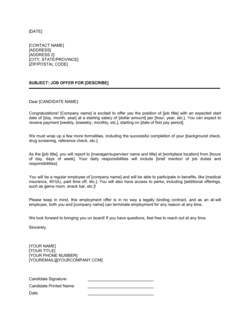
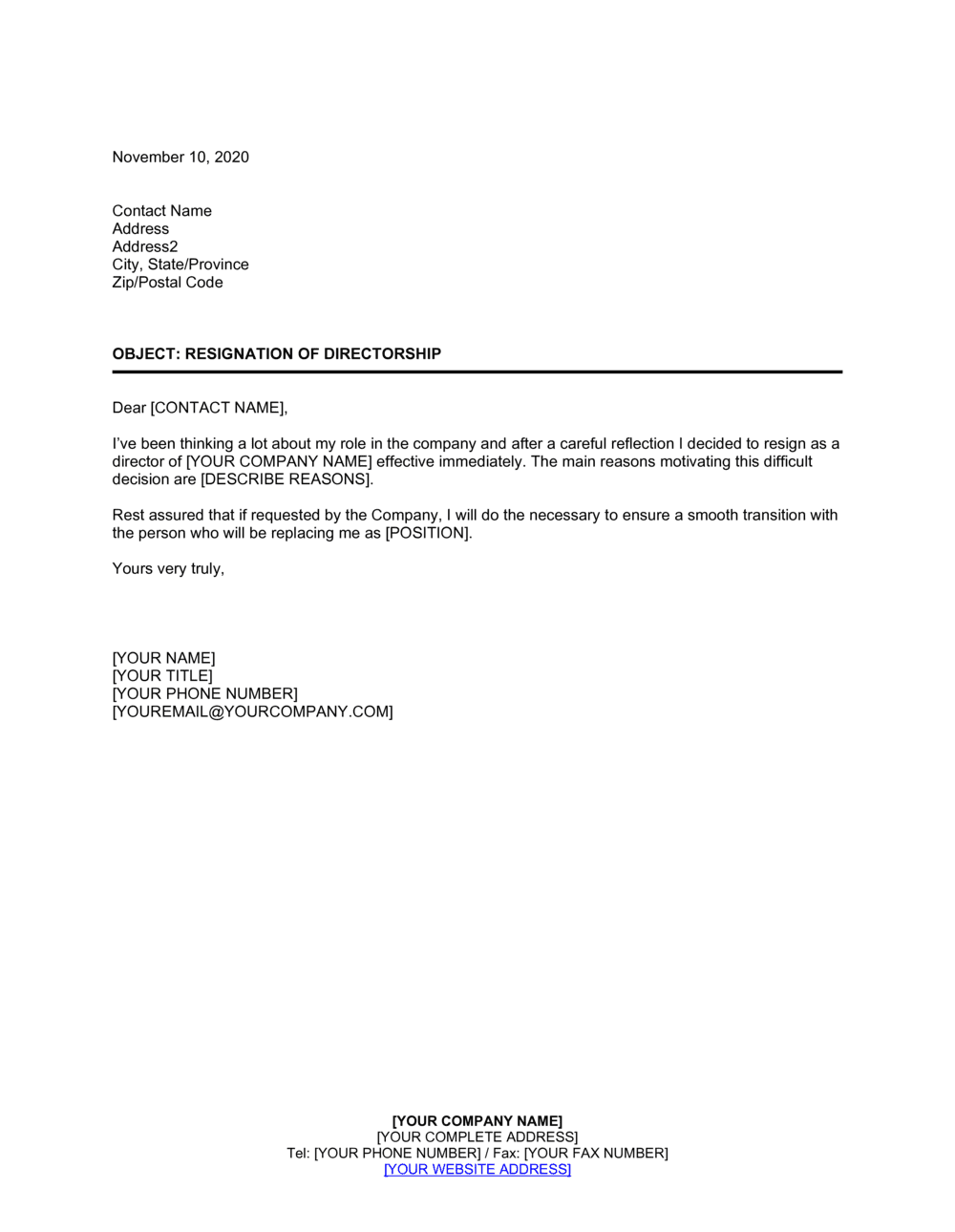
Resignation of Directorship Template

Free Word download β€’ Edit online β€’ Save & share with Drive β€’ Export to PDF

1 pageβ€’20–30 min to fillβ€’Difficulty: Standardβ€’Signature requiredβ€’Legal review recommended
Learn more ↓
FreeResignation of Directorship Template

At a glance

What it is
A Resignation of Directorship is a formal legal document by which a sitting director notifies the company of their intention to vacate their position on the board. This free Word download captures the director's name, the company, the effective resignation date, any handover obligations, and a release of ongoing liability β€” giving both parties a clean, documented exit.
When you need it
Use it whenever a board member steps down voluntarily, whether due to a career change, conflict of interest, health, or strategic disagreement. It is also required when a director is resigning as part of a business sale, restructuring, or shareholder-driven transition.
What's inside
Identifying parties and board position, effective resignation date, notice period confirmation, post-resignation obligations (confidentiality and non-disparagement), handover and cooperation duties, indemnity and outstanding liability statement, and signature block for both the resigning director and an authorised company representative.

What is a Resignation of Directorship?

A Resignation of Directorship is a formal legal document through which a sitting board director gives written notice to a company that they are vacating their position on the board of directors. Unlike a general resignation letter used in employment contexts, this document addresses the specific legal obligations that attach to a directorship β€” including fiduciary duties, confidentiality obligations, handover cooperation, and the survival of indemnity rights after departure. It identifies both parties by their full registered names, states a precise effective resignation date, and creates a contemporaneous written record that satisfies corporate registry filing requirements in most jurisdictions.

Why You Need This Document

Resigning verbally or by email without a formal resignation document leaves both the outgoing director and the company exposed to significant risk. Until a properly documented resignation is executed and filed with the relevant corporate registry, the departing director remains a named officeholder of record β€” continuing to owe fiduciary duties and bearing personal liability for company decisions made after they believed they had left. For the company, the absence of a formal resignation creates gaps in the statutory minute book, delays registry filings, and can complicate subsequent board appointments, financing events, and due diligence reviews. A well-drafted resignation of directorship document closes these gaps in a single instrument: it sets a hard effective date, confirms compliance with notice requirements, extends the resignation to subsidiary roles, and preserves the director's post-departure indemnity protections. This template gives both parties a professionally structured, jurisdiction-aware document that can be executed in under 30 minutes and filed with confidence.

Which variant fits your situation?

If your situation is…Use this template
Director resigning voluntarily with standard noticeResignation of Directorship
Director also holds a senior executive role and is resigning both positionsExecutive Resignation Letter
Director being removed by shareholders rather than resigning voluntarilyBoard Resolution to Remove a Director
Director resigning as part of a company sale or change of controlBoard Resignation in Connection with M&A
Director stepping down from a nonprofit or charitable boardNonprofit Board Member Resignation Letter
Director notifying shareholders of resignation via a formal board resolutionBoard Resolution β€” Resignation of Director
Director resigning and simultaneously appointing a replacement nomineeDirector Appointment and Resignation Letter

Common mistakes to avoid

❌ No specific effective date

Why it matters: Without a precise calendar date, the point at which the director's fiduciary duties cease is ambiguous β€” exposing both the director and the company to claims arising from actions taken in the grey period.

Fix: Always state the effective date as a specific day, month, and year. If the resignation is immediate, write today's full date rather than 'effective immediately.'

❌ Forgetting subsidiary directorships

Why it matters: A director who resigns from the parent company but remains on the corporate register of subsidiaries continues to owe fiduciary duties and can be held personally liable for those entities' actions.

Fix: Include a clause extending the resignation to all associated entities and file separate change-of-director notices with each relevant registry.

❌ Omitting the indemnity survival provision

Why it matters: If the resignation document is silent on post-resignation indemnity, the director may lose protection for claims arising from acts taken before their departure β€” particularly relevant in litigation or regulatory investigations.

Fix: Include an express clause confirming that any indemnity granted to directors under the articles, a D&O policy, or a director agreement survives the resignation.

❌ Failing to file with the corporate registry on time

Why it matters: Until the change is filed publicly, the outgoing director remains a named officer of record and continues to bear legal and reputational exposure for company actions.

Fix: File the required form with the relevant registry (Companies House TM01 in the UK, state filing in the US, etc.) within the statutory deadline β€” typically 14 days in the UK and varies by state in the US.

❌ Using a resignation letter instead of a formal resignation document

Why it matters: An informal letter lacks the clauses addressing confidentiality survival, handover obligations, and indemnity β€” leaving both parties exposed and creating disputes that a formal document would have pre-empted.

Fix: Use a dedicated resignation of directorship template that covers all material obligations, not a generic letter of resignation drafted for employment contexts.

❌ No acknowledgement from the company

Why it matters: A resignation signed only by the director but not acknowledged by an authorised company representative creates an evidentiary gap β€” the company could later dispute when or whether the resignation was received.

Fix: Include a signature block for an authorised company representative to acknowledge receipt and acceptance of the resignation, and date-stamp the acknowledgement.

The 10 key clauses, explained

Parties and Board Position

In plain language: Identifies the resigning director by full legal name and the company by its registered legal name, and states the specific directorship being vacated.

Sample language
This Resignation is submitted by [DIRECTOR FULL NAME] ('Director') to [COMPANY LEGAL NAME], a [STATE/COUNTRY] [ENTITY TYPE] ('Company'), in respect of the Director's position as a member of the Board of Directors.

Common mistake: Using a trade name or nickname instead of the company's full registered legal name β€” the document may be rejected by the corporate registry if names do not match public records exactly.

Effective Resignation Date

In plain language: States the precise date on which the resignation takes effect, which may be the date of signing or a future date following a notice period.

Sample language
The Director hereby resigns from the Board of Directors of the Company, effective [DATE] ('Effective Date'), or such earlier date as the Board may determine in writing.

Common mistake: Leaving the effective date blank or writing 'immediately' without a specific calendar date, which can create disputes about when fiduciary duties actually ceased.

Confirmation of Notice Period Compliance

In plain language: Confirms that the notice given satisfies any requirement in the company's articles of association, shareholder agreement, or applicable statute.

Sample language
The Director confirms that this resignation constitutes [X] days' written notice as required under the Company's Articles of Association dated [DATE] / Section [X] of [APPLICABLE STATUTE].

Common mistake: Failing to cross-reference the articles of association before specifying the notice period β€” many companies require 30, 60, or 90 days, and a shorter notice can expose the director to a breach claim.

Return of Company Property

In plain language: Requires the resigning director to return all company property β€” devices, documents, access credentials, and confidential materials β€” on or before the effective date.

Sample language
On or before the Effective Date, the Director shall return to the Company all property in the Director's possession belonging to the Company, including but not limited to devices, documents, access tokens, and any Confidential Information in any medium.

Common mistake: Omitting electronic assets such as email accounts, cloud storage access, and software licences β€” these are routinely overlooked and cause operational problems after departure.

Post-Resignation Confidentiality

In plain language: Reminds the resigning director that confidentiality obligations established in a prior director agreement or shareholder agreement survive the resignation.

Sample language
The Director acknowledges that all confidentiality obligations owed to the Company, whether arising under a Director's Agreement dated [DATE], a Shareholders' Agreement, or applicable law, shall survive and continue in full force following the Effective Date.

Common mistake: Treating the resignation letter as the primary confidentiality instrument instead of referencing the underlying agreement β€” standalone NDAs in a resignation letter are harder to enforce than surviving obligations in a pre-existing agreement.

Non-Disparagement

In plain language: Prohibits the resigning director from making negative or misleading public statements about the company, its board, officers, or employees after stepping down.

Sample language
Following the Effective Date, the Director agrees not to make any statement, written or oral, that disparages or adversely affects the reputation of the Company, its directors, officers, employees, products, or services.

Common mistake: Making the non-disparagement obligation unilateral β€” applying it only to the director but not the company. Mutual non-disparagement is increasingly expected and harder for a departing director to challenge.

Cooperation and Handover Obligations

In plain language: Requires the director to assist with transition activities β€” completing ongoing matters, signing required documents, and cooperating with successors β€” for a defined period after the effective date.

Sample language
For a period of [X] days following the Effective Date, the Director shall cooperate reasonably with the Company to ensure an orderly transition, including executing any documents and providing information reasonably required to complete matters initiated during the Director's tenure.

Common mistake: Setting no time limit on handover obligations β€” an open-ended cooperation clause can be exploited to require the former director's involvement years after departure.

Outstanding Liabilities and Indemnity Statement

In plain language: Addresses any outstanding financial liabilities of the director to the company or vice versa, and confirms whether the director retains indemnification rights for acts performed during their tenure.

Sample language
The Director confirms there are no outstanding liabilities owed by the Director to the Company as of the Effective Date, save as disclosed in Schedule A. The Company confirms that the Director shall retain the benefit of any indemnity provisions applicable to board members in respect of acts and omissions occurring prior to the Effective Date.

Common mistake: Omitting the indemnity survival clause entirely β€” directors who are not expressly told they retain post-resignation indemnity coverage may face unprotected exposure from claims that arise after they leave.

Resignation from Subsidiary and Associated Roles

In plain language: Extends the resignation to cover any subsidiary, affiliated entity, or associated committee roles the director holds in connection with the primary board seat.

Sample language
This resignation shall also apply to any directorship, officership, or committee position held by the Director in any subsidiary or affiliated entity of the Company, effective as of the Effective Date, unless expressly agreed otherwise in writing.

Common mistake: Resigning only from the parent company board while forgetting active directorships in subsidiaries β€” those roles remain on public record and carry ongoing legal obligations until separately vacated.

Governing Law and Execution

In plain language: Specifies the legal jurisdiction governing the document and provides the signature block for the director and an authorised company representative.

Sample language
This Resignation shall be governed by the laws of [STATE / PROVINCE / COUNTRY]. Executed as of [DATE] by [DIRECTOR FULL NAME] (Director) and acknowledged by [AUTHORISED SIGNATORY NAME], [TITLE], on behalf of the Company.

Common mistake: Choosing a governing law that differs from both the company's place of incorporation and the director's location without legal justification β€” courts may disregard the chosen law if there is no meaningful connection.

How to fill it out

  1. 1

    Enter the registered legal names of both parties

    Use the company's exact registered name as it appears on its certificate of incorporation or corporate registry filing. Use the director's full legal name as it appears on government-issued ID.

    πŸ’‘ Search the relevant corporate registry before drafting β€” even minor name discrepancies can cause a filing to be rejected.

  2. 2

    Confirm the notice requirement in the articles of association

    Review the company's articles of association and any shareholders' agreement to identify the minimum notice period required for a director to resign. Enter that period in the notice-compliance clause.

    πŸ’‘ If no notice period is specified in the articles, most jurisdictions default to reasonable notice β€” 14–30 days is typically considered reasonable for a non-executive director.

  3. 3

    Set a specific effective resignation date

    Calculate the effective date by adding the required notice period to today's date. Enter it as a specific calendar date β€” day, month, and year β€” rather than a relative reference like 'in 30 days.'

    πŸ’‘ Align the effective date with a board meeting date where possible so the resignation can be formally acknowledged and minuted at the same time.

  4. 4

    List all subsidiary and associated roles being vacated

    Identify every subsidiary, affiliated entity, or committee role the director holds in connection with the primary board seat. The resignation clause should explicitly extend to all of them or enumerate each.

    πŸ’‘ Request a current officeholder search from your company secretary before drafting β€” directors often hold more subsidiary roles than they recall.

  5. 5

    Confirm or attach the schedule of outstanding liabilities

    Confirm in writing whether any financial obligations β€” unpaid director loans, expense claims, or guarantees β€” exist between the director and the company. If they do, attach a Schedule A itemising them.

    πŸ’‘ Leaving this clause blank does not mean no liabilities exist β€” it creates ambiguity. A nil statement ('the Director confirms there are no outstanding liabilities') is always better than silence.

  6. 6

    Specify the handover period and obligations

    Enter the number of days during which the director agrees to cooperate with the transition. Define the scope β€” document signing, client introductions, knowledge transfer β€” to avoid disputes about what cooperation is required.

    πŸ’‘ For a director with significant client relationships or regulatory responsibilities, 30–60 days is standard; for a non-executive director with a limited operational role, 7–14 days is typically sufficient.

  7. 7

    Execute and file with the corporate registry

    Both the resigning director and an authorised company representative should sign the document. Once signed, the company secretary must file the change of directorship with the relevant corporate registry within the statutory deadline.

    πŸ’‘ In the UK, Companies House requires a TM01 form within 14 days of the resignation date. In most US states, an amended statement of information or change of officers form is required β€” deadlines vary by state.

Frequently asked questions

What is a resignation of directorship?

A resignation of directorship is a formal legal document by which a sitting company director gives written notice of their intention to vacate their board position. It specifies the effective date of resignation, confirms compliance with any notice period required by the company's articles or applicable law, and sets out post-resignation obligations such as confidentiality and handover duties. It is the standard instrument for creating a clean, documented exit from a board role.

Is a formal resignation document required to resign as a director?

In most jurisdictions, a written resignation is required or strongly recommended to create a legally clear record of the departure. In the UK, the Companies Act 2006 allows a director to resign without board approval, but a written notice is necessary evidence for the Companies House filing. In the US, most state corporation statutes and most articles of association require or expect written notice. An informal verbal resignation creates ambiguity about the effective date and ongoing duties.

Does a director need the board's approval to resign?

Generally, no β€” in most common-law jurisdictions a director has an inherent right to resign and cannot be compelled to remain on the board. However, the company's articles of association or a shareholders' agreement may impose a notice period or require the director to cooperate with finding a replacement. The board typically passes a formal resolution acknowledging the resignation for governance and minute-book purposes, but that resolution does not block the resignation from taking effect.

What happens to a director's liabilities after they resign?

Resignation does not automatically extinguish liabilities arising from acts or omissions during the director's tenure. A resigning director remains exposed to claims β€” regulatory, shareholder, or third-party β€” related to decisions made while they were on the board. This is why the resignation document should expressly confirm that D&O insurance coverage and any contractual indemnity granted under the articles survive the resignation date.

Does a director also need to resign from subsidiary company boards?

Yes. Holding a directorship in a parent company does not automatically terminate directorships in subsidiaries or affiliated entities. Until a separate resignation or removal is filed for each entity, the director remains on the public register and owes fiduciary duties to every entity listed. The resignation document should include a clause extending the resignation to all associated roles, and separate registry filings should be made for each entity.

How long after resignation must a director change be filed with the corporate registry?

Filing deadlines vary by jurisdiction. In the UK, Companies House requires a TM01 form within 14 days of the resignation date. In the US, filing requirements depend on the state of incorporation β€” most states require an amended statement of information or change of officers form, with deadlines ranging from 30 to 90 days. In Canada, filing is required with the relevant provincial or federal registry, typically within 15 days. Late filings can result in penalties and leave the director on the public record longer than intended.

Can a director resign during a period of financial difficulty or insolvency?

A director can technically resign at any time, but timing matters significantly in insolvency contexts. In the UK and Australia, resigning immediately before insolvency to avoid liability is not effective β€” courts and liquidators can examine the director's conduct up to the point of insolvency regardless of resignation date. In some jurisdictions, a director who resigns while aware of impending insolvency without taking appropriate steps may face personal liability for insolvent trading or wrongful trading. Consider seeking legal advice before resigning in circumstances of financial stress.

What is the difference between a resignation of directorship and a removal of director?

A resignation is voluntary β€” the director initiates the departure by providing written notice to the company. A removal is compulsory β€” shareholders or the board exercise a statutory or contractual power to terminate the directorship, typically by passing a special or ordinary resolution. The legal consequences, notice requirements, and documents required differ significantly between the two processes.

Do I need a lawyer to resign as a director?

For a straightforward voluntary resignation from a private company with no outstanding disputes, a well-structured template is typically sufficient. Legal advice is recommended when the resignation involves contested circumstances (shareholder disputes, potential litigation, or insolvency), when significant indemnity or D&O insurance rights are at stake, when the director holds roles in multiple jurisdictions, or when the resignation triggers change-of-control provisions in a shareholders' agreement or financing document.

How this compares to alternatives

vs Board Resolution β€” Removal of Director

A resignation of directorship is initiated by the director and is voluntary. A board resolution to remove a director is initiated by the board or shareholders and is compulsory, typically requiring a shareholder vote under the relevant companies act. The procedural requirements, notice periods, and compensation implications differ significantly between the two.

vs Resignation Letter (Employment)

An employment resignation letter terminates a contract of employment. A resignation of directorship terminates a fiduciary board role, which is a distinct legal office. A director who is also an employee needs both documents β€” the employment letter alone does not vacate the board seat, and the directorship resignation alone does not terminate the employment relationship.

vs Director Appointment Letter

A director appointment letter establishes the terms under which a person joins a board β€” duties, remuneration, and expectations. A resignation of directorship formally terminates that appointment. Both documents should be retained together in the company's statutory records and minute book.

vs Shareholders' Agreement

A shareholders' agreement often contains provisions that govern or restrict director resignations β€” drag-along rights, tag-along rights, or consent requirements tied to a director who is also a shareholder. The resignation of directorship document operates alongside but does not replace those provisions; the shareholders' agreement governs what happens to the departing director's equity.

Industry-specific considerations

Technology / SaaS

Founder departures in VC-backed companies often require investor consent clauses and trigger vesting acceleration provisions that must be referenced alongside the resignation.

Financial Services

Regulated directors in banking and investment firms must notify regulators (FCA, SEC, FINRA) directly in addition to filing with the corporate registry, and resignation timing is subject to regulator approval in some cases.

Healthcare

Directors of licensed healthcare entities may need to notify licensing bodies or accreditation bodies separately, and handover obligations often extend to patient safety governance roles.

Professional Services

Partners stepping down from a firm's corporate board while remaining equity partners require careful drafting to distinguish directorship obligations from ongoing partnership rights and profit-sharing.

Jurisdictional notes

United States

Director resignation procedures are governed primarily by state corporation law and the company's articles of incorporation and bylaws. Most states β€” including Delaware β€” allow a director to resign at any time by delivering written notice, with no board approval required. A resignation may be effective immediately or at a future date as specified. The company must update its public filings (e.g., statement of information or annual report) with the state secretary of state within the applicable deadline, which varies by state from 30 to 90 days.

Canada

Under the Canada Business Corporations Act and most provincial equivalents, a director may resign by sending written resignation to the company. The resignation takes effect on the date the written notice is received or on the later date specified in the notice. The company must file a Notice of Change of Directors with the relevant federal or provincial registry β€” Corporations Canada for federal companies, or the applicable provincial registrar β€” typically within 15 days. Directors of federally regulated financial institutions may also need to notify the Office of the Superintendent of Financial Institutions.

United Kingdom

Under the Companies Act 2006, a director of a UK company may resign at any time by giving notice to the company β€” no board approval or shareholder consent is required. The company must notify Companies House by filing a TM01 form within 14 days of the resignation taking effect. Failure to file on time can result in a civil penalty. Directors of FCA-regulated firms must also notify the Financial Conduct Authority and may be subject to a regulatory approval period before the resignation becomes effective in their regulated capacity.

European Union

Director resignation procedures vary across EU member states but most require written notice and a filing with the national commercial or corporate registry within a specified period β€” typically 7 to 30 days depending on the country. In Germany, the resignation must be entered in the Handelsregister; in France, the INPI business registry. GDPR considerations apply to how personal data about directors is handled and retained in public filings after departure. Some member states, including France and Spain, require a board meeting to formally acknowledge the resignation before the registry filing can proceed.

Template vs lawyer β€” what fits your deal?

PathBest forCostTime
Use the templateStraightforward voluntary resignations from private companies with no active disputes or complex indemnity arrangementsFree20–30 minutes
Template + legal reviewResignations involving subsidiary entities, regulated industries, or significant D&O insurance and indemnity considerations$300–$7001–3 days
Custom draftedContested resignations, insolvency contexts, multi-jurisdiction board roles, or departures tied to shareholder disputes or M&A transactions$1,000–$4,000+1–2 weeks

Glossary

Directorship
The office held by a person who sits on a company's board of directors, carrying fiduciary duties to act in the best interests of the company.
Effective Date
The specific calendar date on which the resignation takes legal effect and the director's duties and authority formally cease.
Fiduciary Duty
The legal obligation of a director to act in good faith, with due care, and in the best interests of the company and its shareholders.
Notice Period
The minimum advance warning a director must give before their resignation takes effect, as required by the company's articles of association or applicable law.
Articles of Association
The internal governance document that governs how a company is managed, including rules about the appointment and removal of directors.
Board Resolution
A formal written record of a decision made by the board of directors, often required to acknowledge and accept a director's resignation.
Indemnity
A contractual protection holding a party harmless from claims, losses, or liabilities arising from specified past acts or omissions.
Non-Disparagement Clause
A contractual obligation preventing the resigning director from making negative public statements about the company, its officers, or its operations after departure.
Corporate Registry
The government body responsible for maintaining public records of company officeholders β€” such as Companies House in the UK or the state secretary of state in the US β€” with which a director change must typically be filed.
Handover Period
A defined transition window during which the resigning director cooperates with the company to transfer knowledge, sign documents, and assist with continuity.

Part of your Business Operating System

This document is one of 3,000+ business & legal templates included in Business in a Box.

  • Fill-in-the-blanks β€” ready in minutes
  • 100% customizable Word document
  • Compatible with all office suites
  • Export to PDF and share electronically

Create your document in 3 simple steps.

From template to signed document β€” all inside one Business Operating System.
1
Download or open template

Access over 3,000+ business and legal templates for any business task, project or initiative.

2
Edit and fill in the blanks with AI

Customize your ready-made business document template and save it in the cloud.

3
Save, Share, Send, Sign

Share your files and folders with your team. Create a space of seamless collaboration.

Save time, save money, and create top-quality documents.

β˜…β˜…β˜…β˜…β˜…

"Fantastic value! I'm not sure how I'd do without it. It's worth its weight in gold and paid back for itself many times."

Managing Director Β· Mall Farm
Robert Whalley
Managing Director, Mall Farm Proprietary Limited
β˜…β˜…β˜…β˜…β˜…

"I have been using Business in a Box for years. It has been the most useful source of templates I have encountered. I recommend it to anyone."

Business Owner Β· 4+ years
Dr Michael John Freestone
Business Owner
β˜…β˜…β˜…β˜…β˜…

"It has been a life saver so many times I have lost count. Business in a Box has saved me so much time and as you know, time is money."

Owner Β· Upstate Web
David G. Moore Jr.
Owner, Upstate Web

Run your business with a system β€” not scattered tools

Stop downloading documents. Start operating with clarity. Business in a Box gives you the Business Operating System used by over 250,000 companies worldwide to structure, run, and grow their business.

Start freeΒ Β·Β No credit card required