Letter of Intent (Commodity) Template

Free Word download β€’ Edit online β€’ Save & share with Drive β€’ Export to PDF

1 pageβ€’15–20 min to fillβ€’Difficulty: Standard
Learn more ↓
FreeLetter of Intent (Commodity) Template

At a glance

What it is
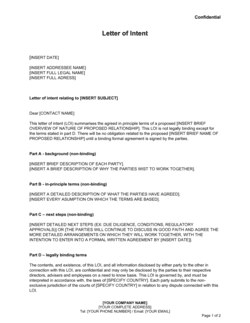
A Letter of Intent β€” Commodity is a formal written declaration from a buyer or seller expressing their intention to enter into a commodity transaction. This free Word download outlines the key commercial terms β€” commodity type, grade, quantity, price formula, delivery schedule, and payment method β€” before both parties invest time in drafting a full purchase-and-sale agreement.
When you need it
Use it at the start of a commodity trade negotiation to establish a shared understanding of terms before committing to a binding contract. It is especially useful when multiple rounds of negotiation are expected, when a broker or intermediary is involved, or when financing depends on a documented transaction outline.
What's inside
Identification of buyer and seller, commodity description and grade specification, quantity and delivery schedule, price formula or fixed price, payment terms and banking instructions, inspection and testing rights, exclusivity and confidentiality provisions, and the path to a definitive contract.

What is a Letter of Intent β€” Commodity?

A Letter of Intent β€” Commodity is a formal written document in which a buyer or seller declares their intention to enter into a commodity transaction β€” covering goods such as petroleum products, agricultural commodities, or base and precious metals. It summarizes the proposed commercial terms β€” commodity type and grade, quantity, price formula, delivery conditions, and payment method β€” before either party commits to drafting a full sale-and-purchase agreement. Unlike a binding contract, it gives both sides a documented basis for negotiation while preserving flexibility to refine terms through due diligence.

Why You Need This Document

Entering a commodity negotiation without a written letter of intent leaves both parties exposed to misunderstanding, scope creep, and wasted resources. Without documented terms, verbal agreements on pricing benchmarks, grade specifications, or payment instruments are easily disputed β€” and in international commodity trading, those disputes are expensive and slow to resolve. A commodity LOI anchors the agreed framework from the first meeting, gives the seller confidence to hold the goods, and gives the buyer a basis to arrange financing or logistics. It also creates a clear path β€” and a deadline β€” for executing the definitive contract, preventing negotiations from drifting indefinitely. This template gives commodity traders, procurement teams, and brokers a professional, structured starting point that covers every material term in under 30 minutes.

Which variant fits your situation?

If your situation is…Use this template
Buying or selling petroleum products or fuel in bulkLetter of Intent β€” Commodity (Fuel/Petroleum)
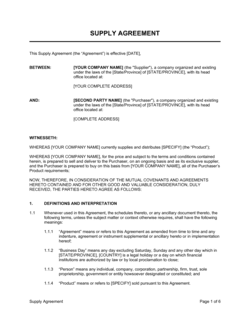
Entering a long-term supply arrangement for a raw materialSupply Agreement
Purchasing goods from an overseas supplierLetter of Intent to Purchase
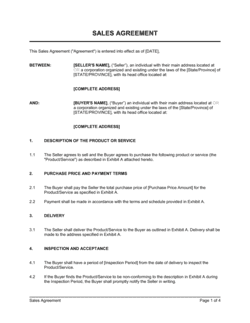
Formalizing a completed commodity transactionSales Agreement
Engaging a broker to source or place a commodityBrokerage Agreement
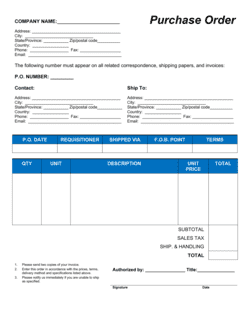
Confirming pricing and delivery before issuing a purchase orderPurchase Order
Securing exclusivity during commodity due diligenceExclusivity Agreement

Common mistakes to avoid

❌ Omitting a non-binding disclaimer

Why it matters: In several jurisdictions, a detailed LOI with specific price, quantity, and delivery terms has been treated as a binding agreement β€” exposing both parties to unintended liability before due diligence is complete.

Fix: Include a clearly worded clause stating that the LOI is a statement of intent only and does not create binding obligations except for specifically identified provisions such as confidentiality.

❌ Using vague grade or quality language

Why it matters: Terms like 'standard quality' or 'good merchantable grade' mean different things in different markets and to different buyers β€” the resulting delivery dispute is expensive and time-consuming to resolve.

Fix: Reference a specific industry standard (ASTM, ISO, or a named exchange specification) and list at least three measurable parameters with minimum and maximum thresholds.

❌ No defined exclusivity end date

Why it matters: An open-ended exclusivity clause can leave the seller unable to market their commodity for weeks or months if the buyer is slow to act, resulting in significant opportunity cost.

Fix: Set a specific calendar date β€” not a relative period like 'until further notice' β€” and include an automatic expiry provision if the definitive agreement is not executed by that date.

❌ Leaving payment terms as 'to be agreed'

Why it matters: Sellers cannot arrange logistics, financing, or insurance without knowing how and when they will be paid β€” vague payment terms stall the entire transaction.

Fix: State the payment instrument, the triggering event, the number of banking days, and the issuing or receiving bank in the LOI, even if minor details are subject to revision in the final contract.

The 8 key clauses, explained

Parties and transaction overview

In plain language: Identifies the buyer and seller by full legal name and jurisdiction, and states the purpose of the LOI β€” to outline terms for a proposed commodity transaction.

Sample language
This Letter of Intent is issued by [BUYER LEGAL NAME] ('Buyer'), a company incorporated under the laws of [JURISDICTION], to [SELLER LEGAL NAME] ('Seller'), in connection with a proposed purchase of [COMMODITY TYPE] on the terms set out below.

Common mistake: Identifying parties by trade name or individual name rather than the registered legal entity. If the LOI is referenced in a dispute, an unregistered name can make the document harder to enforce.

Commodity description and grade specification

In plain language: Describes the exact commodity, grade, and quality parameters the goods must meet, referencing recognized industry standards or testing methods.

Sample language
The commodity shall be [COMMODITY NAME], meeting the following specifications: [SPECIFICATION 1 e.g., API Gravity: 32–35Β°, Sulfur: max 0.5%]. Quality shall be determined by inspection at [LOADING PORT / DESTINATION PORT] by [INSPECTION AGENCY].

Common mistake: Using generic descriptions like 'standard grade' without referencing a recognized specification. Vague grade language is the single most common trigger for commodity disputes at delivery.

Quantity and delivery schedule

In plain language: States the total volume, unit of measure, delivery frequency, and whether the quantity is firm or subject to adjustment.

Sample language
Buyer intends to purchase approximately [QUANTITY] metric tons per [month / quarter / shipment], for a total of [TOTAL QUANTITY] MT, delivered [FOB / CIF / DAP] [PORT / LOCATION] on or before [DATE].

Common mistake: Writing 'approximately' without a tolerance range. Without a defined variance β€” e.g., plus or minus 5% β€” disputes arise over whether a short delivery constitutes a breach.

Price and pricing formula

In plain language: States the agreed price or the benchmark index and premium/discount formula used to calculate the final price, and the currency.

Sample language
The purchase price shall be [USD $X per MT / calculated as [BENCHMARK INDEX] plus/minus $[X] per MT], expressed in US Dollars. The pricing date shall be [BILL OF LADING DATE / MONTH OF SHIPMENT AVERAGE].

Common mistake: Omitting the pricing date or index publication source. If Brent crude is the reference but no edition or publisher is named, parties can use different quotes for the same date.

Payment terms and banking details

In plain language: Specifies how and when payment will be made β€” irrevocable letter of credit, wire transfer, or documentary collection β€” and the banking coordinates.

Sample language
Payment shall be made by [Irrevocable Letter of Credit / TT Wire Transfer] within [X] banking days of [presentation of documents / bill of lading date]. Buyer's issuing bank: [BANK NAME, SWIFT CODE].

Common mistake: Leaving payment terms as 'to be agreed.' Even in an LOI, ambiguous payment terms give the seller no basis to arrange financing or logistics, delaying the entire transaction.

Inspection and testing rights

In plain language: Confirms each party's right to appoint an independent inspector at loading and/or discharge, and establishes whose test result controls in case of a discrepancy.

Sample language
Each party may appoint an independent inspector at its own cost. In the event of conflicting results, the findings of a mutually agreed umpire inspector shall be final and binding.

Common mistake: No umpire provision. Without a tiebreaker, contradictory inspection results create a standoff that halts delivery and triggers costly arbitration.

Exclusivity and confidentiality

In plain language: Restricts the seller from negotiating with other buyers for the duration of the exclusivity period, and requires both parties to keep the transaction terms confidential.

Sample language
During the period from the date of this LOI until [DATE / X days after signing], Seller shall not negotiate or enter into any agreement with a third party for the sale of the Commodity. Both parties shall keep the terms of this LOI strictly confidential.

Common mistake: Omitting an end date on the exclusivity period. An open-ended exclusivity clause can lock the seller out of the market indefinitely if the buyer delays.

Non-binding nature and path to definitive contract

In plain language: Clarifies that the LOI is not a binding purchase commitment, and states the intended timeline for negotiating and signing the definitive sale-and-purchase agreement.

Sample language
This LOI is a statement of intent only and does not constitute a binding obligation to complete the Transaction. The parties intend to negotiate and execute a definitive Sale and Purchase Agreement within [X] days of the date hereof.

Common mistake: Failing to include a non-binding disclaimer at all. Without it, a well-drafted LOI with specific commercial terms can be construed as a binding contract in some jurisdictions.

How to fill it out

  1. 1

    Enter full legal names and jurisdictions for both parties

    Replace the buyer and seller placeholders with the registered legal entity names β€” not trade names or individual names. Include the jurisdiction of incorporation for each.

    πŸ’‘ Ask the counterparty for a copy of their trade license or registration document before issuing the LOI β€” name mismatches create delays when drafting the final agreement.

  2. 2

    Specify the commodity with exact grade and quality parameters

    Reference a recognized industry standard (e.g., ASTM, ISO, or a commodity exchange specification) for every key quality parameter. List at least three measurable parameters β€” gravity, sulfur content, moisture β€” rather than a generic grade label.

    πŸ’‘ Attach a product specification sheet as an annex rather than embedding every parameter in the body β€” this makes updates easier if specs are revised during negotiation.

  3. 3

    State quantity with a tolerance range

    Enter the total volume and per-shipment quantity in metric tons. Add a tolerance clause β€” typically plus or minus 5% at seller's or buyer's option β€” so minor shipping variations do not constitute a breach.

    πŸ’‘ Align the tolerance range with what your logistics provider can actually achieve β€” vessel loading tolerances for bulk carriers typically run 3–10%.

  4. 4

    Define the price formula and pricing date

    Enter either a fixed price per MT or a formula referencing a named benchmark index (e.g., Platts Brent Dated, LME Official Settlement Price). Specify the pricing date β€” bill of lading date or monthly average β€” and the publication source.

    πŸ’‘ Using a monthly average rather than a spot date reduces exposure to single-day price spikes and is generally easier for both parties to verify independently.

  5. 5

    Confirm payment method and banking coordinates

    Select the payment instrument β€” irrevocable LC or TT wire β€” and enter the issuing bank name, SWIFT code, and the trigger event for payment (e.g., presentation of bill of lading, packing list, and certificate of origin).

    πŸ’‘ For first-time counterparties, an irrevocable letter of credit protects both sides β€” the seller has guaranteed payment; the buyer controls document requirements.

  6. 6

    Set the exclusivity period and expiry date

    Enter a specific calendar end date for exclusivity β€” typically 14 to 30 days from signing. Confirm that the period is long enough to complete due diligence and draft the definitive agreement.

    πŸ’‘ Build in a 5-business-day buffer beyond your realistic negotiation timeline β€” unexpected delays in banking or logistics paperwork are common.

  7. 7

    Review the non-binding disclaimer before sending

    Confirm the non-binding clause is present and clearly worded. If any term is intended to be immediately binding β€” such as a confidentiality obligation or break fee β€” identify it explicitly as a binding exception.

    πŸ’‘ Have your counterparty countersign the LOI with a date. A countersigned LOI anchors the agreed terms and reduces scope creep in the definitive contract negotiation.

Frequently asked questions

What is a commodity letter of intent?

A commodity letter of intent is a formal written document in which a buyer or seller expresses their intention to complete a commodity transaction β€” covering goods such as fuel, agricultural products, or metals. It outlines the key commercial terms before both parties invest time and cost in drafting a full sale-and-purchase agreement. It is generally non-binding except for specific provisions like confidentiality.

Is a commodity LOI legally binding?

In most jurisdictions, a commodity LOI is not a binding contract unless it explicitly states otherwise or contains terms specific enough that a court treats it as an agreement. To keep it non-binding, include a clear disclaimer stating it is a statement of intent only. Certain provisions β€” confidentiality, exclusivity, and break fees β€” can be made binding within an otherwise non-binding LOI by identifying them specifically.

What is the difference between an LOI and a sale-and-purchase agreement for a commodity?

A letter of intent outlines the proposed terms at a high level and is typically non-binding β€” it signals intent and anchors the negotiation. A sale-and-purchase agreement is the definitive binding contract that governs the full transaction, including force majeure, inspection procedures, dispute resolution, and title transfer. The LOI is the starting point; the sale-and-purchase agreement is the finish line.

Do I need a broker or intermediary to use this template?

No β€” this template is designed for direct use by buyers, sellers, or their authorized representatives. If a broker is involved, add a clause identifying the broker and confirming commission arrangements to avoid disputes after the transaction closes.

What commodities does this LOI template cover?

The template is drafted broadly to cover any physical commodity trade β€” petroleum products and fuel, agricultural commodities such as grain and oilseeds, base and precious metals, and industrial raw materials. Adjust the grade specification clause to reference the appropriate industry standard for your specific commodity.

Should the commodity LOI be signed by both parties?

Countersignature by both parties is strongly recommended, even though the LOI is non-binding. A countersigned and dated LOI confirms that both parties reviewed and accepted the outlined terms, reducing scope creep and misunderstandings during the definitive contract negotiation.

How long should the exclusivity period in a commodity LOI be?

Fourteen to thirty calendar days is the typical range for commodity transactions. Complex international trades involving letters of credit, multiple shipments, or regulatory approvals may warrant 30 to 45 days. The period should be long enough to complete due diligence and negotiate the final agreement, but short enough to protect the seller from an indefinite market hold.

What payment method is most common in commodity LOIs?

An irrevocable letter of credit is the most widely used instrument for international commodity transactions because it protects both sides β€” the seller receives guaranteed payment once shipping documents are presented, and the buyer controls the documentary requirements. TT wire transfers are used for smaller or established trading relationships where counterparty risk is lower.

Can I use this template for a recurring or long-term supply arrangement?

This template is designed for a single proposed transaction or shipment cycle. For a long-term or recurring supply arrangement β€” such as a monthly fuel supply or an annual grain off-take β€” use a Supply Agreement or Off-take Agreement template, which includes provisions for volume adjustments, price reviews, and multi-year term governance.

How this compares to alternatives

vs Letter of Intent to Purchase

A general letter of intent to purchase covers any product or asset acquisition. The commodity-specific LOI adds grade specifications, benchmark price formulas, inspection rights, and Incoterms β€” elements that a general purchase LOI does not address. Use the commodity version whenever the goods are traded by weight, volume, or unit against a market index.

vs Supply Agreement

A supply agreement is a binding long-term contract for recurring deliveries over a defined period. A commodity LOI is a non-binding pre-contract document for a single proposed transaction or shipment. Use the LOI to anchor the first negotiation; use the supply agreement when both parties are ready to commit to a multi-shipment program.

vs Sales Agreement

A sales agreement is a binding contract that legally completes a transaction. The commodity LOI precedes it β€” outlining intent before either party commits resources. Once the LOI terms are agreed, the sale-and-purchase agreement captures them in binding, enforceable form with full legal protections.

vs Purchase Order

A purchase order is a buyer's formal, binding commitment to purchase specific goods at a set price. It is issued after negotiations are complete. A commodity LOI comes earlier in the process β€” it opens the negotiation and confirms mutual intent without triggering a financial obligation on either side.

Industry-specific considerations

Energy and Petroleum

Crude oil, diesel, and LNG trades reference Platts or Argus benchmark pricing, API gravity and sulfur specifications, and irrevocable LCs are standard payment instruments.

Agriculture and Food Processing

Grain, oilseed, and feed trades cite CBOT or ICE futures as pricing benchmarks, with moisture and protein tolerances as the primary grade parameters.

Mining and Metals

Copper, zinc, and precious metal trades reference LME official settlement prices, with assay certificates from a named laboratory determining final payable metal content.

Import and Export Trading

Cross-border commodity LOIs require explicit Incoterms selection, currency denomination, and port-of-loading inspection clauses to satisfy customs and banking requirements.

Template vs pro β€” what fits your needs?

PathBest forCostTime
Use the templateTraders, importers, and buyers issuing a standard commodity LOI for a single transaction with a known counterpartyFree15–30 minutes
Template + professional reviewFirst-time international commodity trades, transactions above $500K, or deals involving a letter of credit from an unfamiliar bank$200–$600 (commodity lawyer or trade finance specialist review)1–2 days
Custom draftedMulti-shipment off-take arrangements, trades in regulated commodities, or transactions with sovereign or state-owned counterparties$1,500–$5,000+1–2 weeks

Glossary

Letter of Intent (LOI)
A written document expressing one party's intention to enter into a transaction, outlining key terms before a binding contract is drafted.
Commodity
A raw material or primary agricultural product that is interchangeable with other goods of the same type β€” such as crude oil, wheat, copper, or natural gas.
Grade Specification
The defined quality standard for a commodity β€” such as API gravity for crude oil or protein content for wheat β€” that the delivered goods must meet.
Price Formula
A pricing mechanism tied to a benchmark index (e.g., Brent crude, LME copper) plus or minus a fixed premium or discount, rather than a fixed dollar amount.
Metric Ton (MT)
The standard unit of weight used in international commodity trading, equal to 1,000 kilograms or approximately 2,205 pounds.
Incoterms
Internationally recognized trade terms published by the ICC that define the responsibilities of buyer and seller for delivery, risk transfer, and freight costs β€” e.g., FOB, CIF, or DAP.
Irrevocable Letter of Credit (ILOC)
A bank instrument guaranteeing payment to the seller once defined shipping and documentation conditions are met β€” commonly used in international commodity trades.
Off-take Agreement
A long-term commitment by a buyer to purchase a defined quantity of a commodity from a producer over a set period, often used to finance production.
Exclusivity Period
A defined window during which the seller agrees not to negotiate or transact with other buyers while the parties work toward a definitive contract.
Force Majeure
A clause excusing a party from performance obligations when an unforeseeable event beyond their control β€” war, natural disaster, or government action β€” prevents fulfillment.

Part of your Business Operating System

This document is one of 3,000+ business & legal templates included in Business in a Box.

  • Fill-in-the-blanks β€” ready in minutes
  • 100% customizable Word document
  • Compatible with all office suites
  • Export to PDF and share electronically

Create your document in 3 simple steps.

From template to signed document β€” all inside one Business Operating System.
1
Download or open template

Access over 3,000+ business and legal templates for any business task, project or initiative.

2
Edit and fill in the blanks with AI

Customize your ready-made business document template and save it in the cloud.

3
Save, Share, Send, Sign

Share your files and folders with your team. Create a space of seamless collaboration.

Save time, save money, and create top-quality documents.

β˜…β˜…β˜…β˜…β˜…

"Fantastic value! I'm not sure how I'd do without it. It's worth its weight in gold and paid back for itself many times."

Managing Director Β· Mall Farm
Robert Whalley
Managing Director, Mall Farm Proprietary Limited
β˜…β˜…β˜…β˜…β˜…

"I have been using Business in a Box for years. It has been the most useful source of templates I have encountered. I recommend it to anyone."

Business Owner Β· 4+ years
Dr Michael John Freestone
Business Owner
β˜…β˜…β˜…β˜…β˜…

"It has been a life saver so many times I have lost count. Business in a Box has saved me so much time and as you know, time is money."

Owner Β· Upstate Web
David G. Moore Jr.
Owner, Upstate Web

Run your business with a system β€” not scattered tools

Stop downloading documents. Start operating with clarity. Business in a Box gives you the Business Operating System used by over 250,000 companies worldwide to structure, run, and grow their business.

Free Forever PlanΒ Β·Β No credit card required