How To Master Networking As A Freelancer

Free to read β€’ Save or share with one click

FreeHow To Master Networking As A Freelancer Template

At a glance

What it is
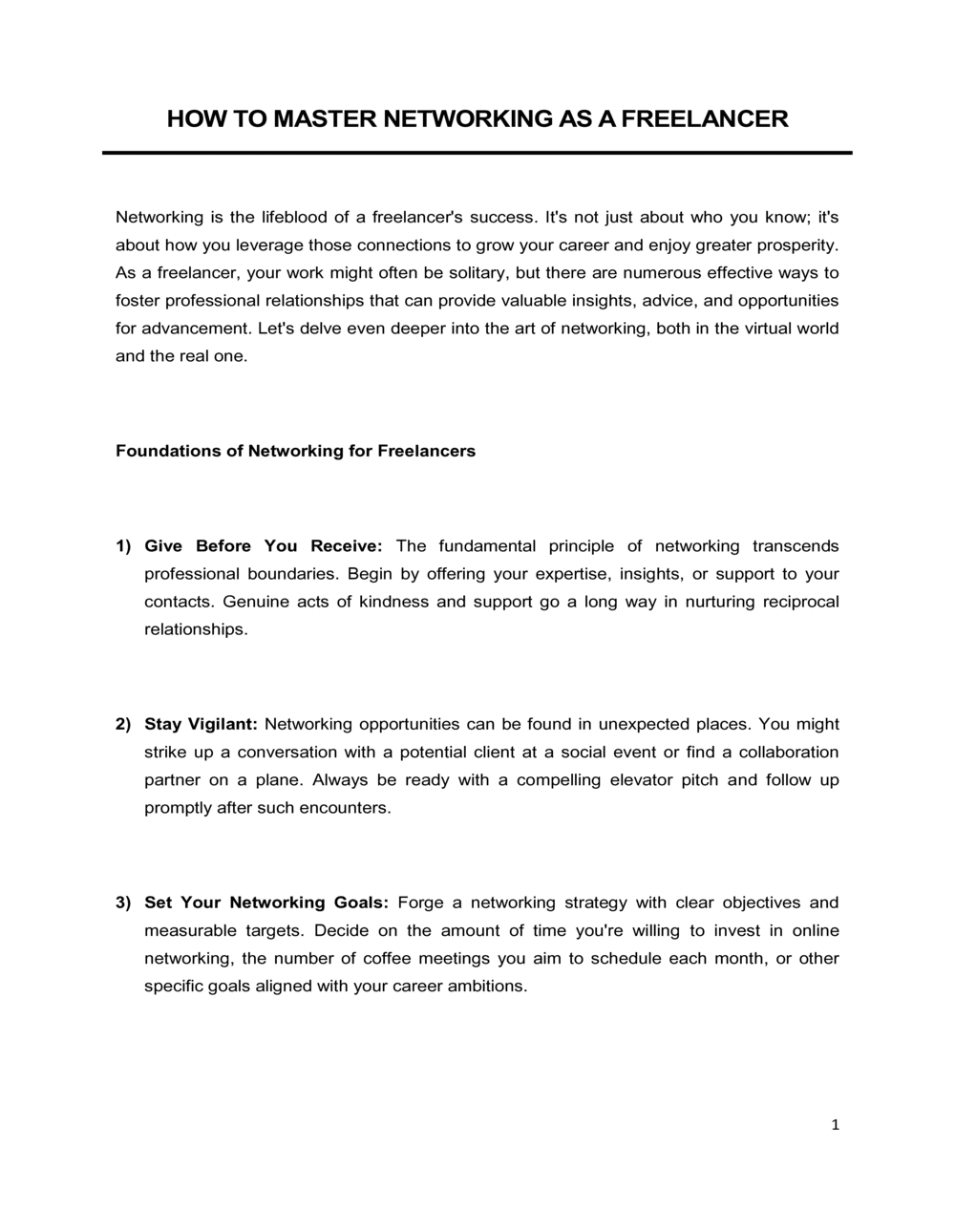
A freelancer networking guide is a structured operational document that maps out a repeatable system for building professional relationships, generating referrals, and maintaining a steady pipeline of client opportunities. This free Word download walks you through every stage β€” from defining your target contacts to scripting outreach messages β€” so you can edit it online and export as PDF to use as your personal business development playbook.
When you need it
Use it when you are launching a freelance practice, experiencing a dry spell in new client inquiries, or transitioning from word-of-mouth referrals to a more deliberate outreach system. It is also useful when entering a new industry vertical or geographic market where your existing network does not reach.
What's inside
A goal-setting framework, a contact segmentation matrix, an online presence audit checklist, event and community selection criteria, outreach message templates, a follow-up cadence schedule, a referral partner program structure, and a simple tracking system for measuring networking ROI.

What is a Freelancer Networking Guide?

A Freelancer Networking Guide is a structured operational document that turns relationship-building from an occasional, reactive activity into a managed system with defined goals, segmented contacts, scripted outreach, and a follow-up schedule you can repeat every week. It covers every layer of business development specific to independent professionals β€” from optimizing your online presence so warm contacts find a credible profile, to building referral partnerships with complementary freelancers who encounter your ideal clients regularly. Unlike generic networking advice, this guide is designed around the specific constraints of a solo practice: limited time, no marketing budget, and a pipeline that must stay full while you are simultaneously delivering client work.

Why You Need This Document

Without a deliberate networking system, most freelancers oscillate between two states: fully booked with no time to prospect, or underbooked and scrambling for any lead they can find. That cycle is not a workload problem β€” it is a pipeline problem caused by networking only when desperate. The cost is concrete: revenue gaps between projects, rate pressure when you need work urgently, and relationships that go cold because you only reach out when you need something. A completed networking guide eliminates the guesswork by telling you exactly who to contact, what to say, when to follow up, and how to measure whether the time is producing results. This template gives you a ready-made structure so you can focus on executing the strategy rather than designing it from scratch.

Which variant fits your situation?

If your situation is…Use this template
Just starting out with no existing professional networkFreelancer Networking Guide (Starter)
Targeting corporate clients through LinkedIn and emailClient Outreach Email Templates
Growing through referrals from past clientsClient Referral Program Template
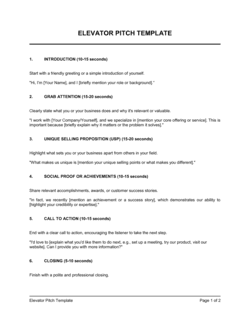
Pitching services at industry conferences and eventsElevator Pitch Template
Tracking leads from networking contactsFreelance CRM Tracker
Building a portfolio to share at networking eventsFreelance Portfolio Presentation
Formalizing a referral arrangement with another freelancerReferral Agreement

Common mistakes to avoid

❌ Networking only when pipeline is empty

Why it matters: Outreach sent from a position of desperation is detectable β€” the urgency shows in the message tone, and contacts who sense it disengage. Dry spells also mean you are starting from zero relationship equity each time.

Fix: Treat networking as a fixed weekly time investment of two to four hours regardless of how full your project schedule is. Consistent low-level activity prevents the feast-and-famine cycle.

❌ Attending events without a clear follow-up plan

Why it matters: Business cards and LinkedIn connections made at events decay rapidly β€” if you do not follow up within 48 hours, the contact has forgotten the conversation and your message becomes cold.

Fix: Before attending any event, write the follow-up message you will send, leaving only the name and one personal detail to fill in after the conversation. Send it the same evening or the next morning.

❌ Leading every outreach message with your credentials

Why it matters: Opening with 'I am a freelance designer with 8 years of experience' immediately signals that the message is about you, not the recipient β€” most people stop reading.

Fix: Open with a specific observation about the recipient's work, a relevant question, or a shared connection. Introduce your credentials only after establishing relevance to their situation.

❌ Treating referral arrangements as purely transactional

Why it matters: Offering a referral fee to someone you have never worked with or helped produces almost no referrals β€” people refer based on trust, not incentives, especially when their own reputation is on the line.

Fix: Build the relationship first β€” collaborate on a small project, promote their work publicly, or make an introduction that benefits them. The referral conversation becomes natural once trust is established.

❌ Neglecting existing contacts in favor of new ones

Why it matters: Past clients and warm contacts are five to ten times more likely to generate a new project than a cold outreach β€” ignoring them while chasing strangers is the lowest-ROI networking strategy.

Fix: Allocate at least 40% of your weekly networking time to staying in touch with past clients and warm contacts through relevant check-ins, shared resources, or congratulatory messages on their milestones.

❌ Tracking outputs instead of outcomes

Why it matters: Counting messages sent and events attended feels productive but tells you nothing about what is actually generating client conversations β€” you can be very busy and still see no pipeline growth.

Fix: Add an outcome column to your networking tracker and record whether each contact led to a conversation, a referral, or a project. Review this monthly to double down on what actually converts.

The 9 key sections, explained

Networking goals and success metrics

Target contact matrix

Online presence audit and optimization

Event and community selection

Outreach message templates

Follow-up cadence schedule

Referral partner program

Networking activity tracker

30-60-90 day networking action plan

How to fill it out

  1. 1

    Set specific, time-bound networking goals

    Start by writing down exactly what you want networking to produce β€” number of new client conversations per month, project revenue sourced from referrals, or referral partners added per quarter. Attach a number and a date to each goal.

    πŸ’‘ Commit to no more than two or three goals for your first 90 days β€” too many metrics dilutes focus and makes it hard to identify what is actually working.

  2. 2

    Build your target contact matrix

    List your top five to ten direct prospects by name or role, three to five complementary freelancers who could send you referrals, and two or three peer groups worth joining. Note where each group spends time β€” online communities, specific conferences, or LinkedIn groups.

    πŸ’‘ Start with Tier 2 (referral partners) if you are new β€” they are easier to approach than direct clients and can generate multiple introductions from a single relationship.

  3. 3

    Audit and update your online presence

    Review your LinkedIn profile, personal website, and portfolio against the checklist in Section 3. Update your headline to reflect the specific outcome you deliver, add at least one recent case study with a measurable result, and confirm your contact information is current.

    πŸ’‘ Ask a trusted peer to read your LinkedIn profile cold and tell you in one sentence what you do β€” if they cannot answer accurately, rewrite the headline.

  4. 4

    Select two or three events or communities to focus on

    Use the event selection framework to identify where your target clients actually spend time, not just where other freelancers gather. Commit to attending each selected event or engaging in each community at least once a week for 60 days before evaluating whether to continue.

    πŸ’‘ One community where you are genuinely active and visible outperforms five communities where you post sporadically.

  5. 5

    Customize your outreach message templates

    Fill in the outreach templates with specific, relevant details for each contact β€” a reference to their recent work, a shared connection, or a specific topic they have written about. Save the customized versions so you can adapt them quickly for future outreach.

    πŸ’‘ Spend 90 seconds researching each contact before writing β€” one specific detail in the opening line doubles response rates compared to a generic message.

  6. 6

    Schedule follow-up actions in your calendar

    For each new contact you make, immediately block calendar time for the Day 3, Day 10, and Day 30 follow-up actions described in Section 6. Treat follow-ups as fixed appointments, not optional reminders.

    πŸ’‘ Set a weekly 30-minute calendar block to process your networking tracker and schedule any follow-ups that are due β€” this keeps the system running without requiring daily attention.

  7. 7

    Log every networking activity in the tracker

    After each event, message, or call, add a row to the networking tracker with the date, activity type, contact details, current status, and any next step. Review the tracker weekly to catch contacts that have fallen through the cracks.

    πŸ’‘ Color-code tracker rows by status β€” new contact, follow-up due, active conversation, and closed β€” so you can see your pipeline health at a glance.

  8. 8

    Review metrics and adjust after 30 days

    At the end of your first month, compare your actual results β€” conversations held, referrals received, proposals sent β€” against the goals you set in Step 1. Identify the one or two activities that produced the most traction and increase time spent on those in Month 2.

    πŸ’‘ If a channel produces zero conversations after 30 days of consistent effort, replace it rather than persisting β€” some channels simply do not match your specific client type.

Frequently asked questions

What is a freelancer networking guide?

A freelancer networking guide is a structured operational document that outlines a repeatable system for building professional relationships, generating referrals, and maintaining a consistent pipeline of client opportunities. It covers goal setting, contact segmentation, outreach messaging, follow-up scheduling, and activity tracking β€” turning networking from an ad-hoc activity into a managed business development function.

How often should a freelancer network?

Two to four hours per week is a sustainable baseline for most freelancers maintaining an active practice. This can be split across online activity β€” LinkedIn engagement, community participation, personalized outreach β€” and in-person events attended monthly or quarterly. The key is consistency: two hours every week outperforms a full day once a month because relationships compound with regular contact rather than sporadic bursts.

What is the best networking channel for freelancers?

The best channel is wherever your specific target clients already spend time β€” which varies by industry. LinkedIn is the most versatile starting point for B2B freelancers across most disciplines. Industry-specific Slack communities, trade associations, and niche conferences often produce higher-quality connections than general freelancer networks because attendees are potential clients, not competitors. Test two channels for 60 days each before committing your time.

How do I network as a freelancer with no existing contacts?

Start with second-degree connections β€” people connected to former colleagues, classmates, or past clients who can make a warm introduction. Reach out to your existing network and be specific: 'Do you know anyone who hires freelance [your discipline]?' is far more effective than a general ask. Join two or three active online communities in your target industry and contribute value consistently for 30 days before making any direct outreach.

How do I ask for referrals without feeling pushy?

The least pushy referral request is specific and timed correctly. Ask after a successful project delivery, when client satisfaction is highest, and frame it as a question rather than a favor: 'Do you know of anyone else in your network who might have a similar challenge?' Providing a one-sentence description of your ideal client makes it easier for them to think of a specific name rather than feeling obligated to generate leads for you.

Should freelancers network online or in person?

Both serve different purposes and work best in combination. Online networking β€” LinkedIn, Slack communities, X β€” scales efficiently and allows asynchronous contact with people across geographies. In-person events build trust faster and produce stronger relationships from a single interaction. A practical split for most freelancers: online activity weekly, one in-person event per month or quarter in your core target market.

How long does it take for freelance networking to generate clients?

Most freelancers see their first network-sourced client conversation within 30 to 60 days of consistent, structured outreach. However, referral relationships and warm pipelines typically take three to six months to mature into regular project flow. Networking works on a lag β€” relationships built today produce opportunities two to four months from now, which is why starting before you need clients is critical.

What should a freelancer say when networking?

Lead with curiosity about the other person's work rather than a pitch about your own. A simple opening β€” 'What kind of projects are you focused on right now?' β€” generates far more productive conversation than launching into your services. When asked what you do, answer with an outcome statement: 'I help [CLIENT TYPE] achieve [SPECIFIC RESULT]' rather than a job title. Have a specific call to action ready if the conversation goes well β€” a follow-up call, a portfolio link, or a mutual introduction.

How do I measure whether my networking is working?

Track three metrics: conversations initiated (output), conversations that turned into a discovery call or referral (conversion), and projects sourced from networking contacts (outcome). Review these monthly and calculate a simple networking ROI β€” revenue from network-sourced projects divided by hours invested. If the ROI from one channel is significantly higher than another after 60 days, reallocate time accordingly.

How this compares to alternatives

vs Freelance Business Plan

A freelance business plan covers the full operational and financial strategy for your independent practice β€” pricing, service offerings, financial projections, and legal structure. A networking guide is a focused subset of that plan, specifically covering how you will generate client relationships. Use both together: the business plan sets the direction, the networking guide drives client acquisition.

vs Client Outreach Email Template

An outreach email template provides the specific scripts for contacting prospects directly. A networking guide covers the broader system β€” who to contact, where to find them, how to follow up, and how to measure results β€” within which outreach templates are just one component. The guide gives context; the templates give the words.

vs Elevator Pitch Template

An elevator pitch template helps you craft a clear, concise spoken or written description of what you do and who you serve. A networking guide shows you how and where to deploy that pitch within a broader relationship-building system. The pitch is a tool; the networking guide is the strategy that determines when and how to use it.

vs Marketing Plan

A marketing plan covers brand positioning, content strategy, paid channels, and audience targeting β€” typically to generate inbound interest at scale. A networking guide focuses specifically on direct, relationship-driven outreach and referral development. For freelancers, both are useful: marketing builds visibility while networking builds trust and shortens the sales cycle.

Industry-specific considerations

Creative and Design

Portfolio sharing at industry events, relationships with creative directors and brand managers, and referral partnerships with copywriters, developers, and strategists who work on the same projects.

Technology and Software Development

Open-source contributions, GitHub presence, and engagement in developer Slack communities and technical conferences where CTOs and engineering managers hire contract talent.

Professional Services

Referral networks with accountants, lawyers, and business advisors who regularly encounter clients needing specialized consulting support.

Freelance Writing and Content

Editor relationships at target publications, LinkedIn thought leadership to attract inbound inquiries, and partnerships with marketing agencies that outsource content production.

Template vs pro β€” what fits your needs?

PathBest forCostTime
Use the templateFreelancers at any stage who want a structured networking system without hiring a business coachFree2–3 hours to complete the guide, then 2–4 hours per week to execute
Template + professional reviewFreelancers targeting enterprise clients or entering a new industry where strategic positioning matters$200–$600 for a session with a freelance business coach or positioning consultant1–2 weeks to refine strategy with expert input
Custom draftedHigh-earning consultants building a formal business development function or transitioning to an agency model$1,000–$3,000 for a business development strategist engagement2–4 weeks

Glossary

Warm Outreach
Contacting someone with whom you share a mutual connection, prior interaction, or common context β€” significantly higher response rates than cold contact.
Cold Outreach
Initiating contact with a potential client or collaborator who has no prior awareness of you, typically via email or LinkedIn message.
Referral Partner
A professional in a complementary field who agrees to send qualified leads your way, often reciprocally.
Pipeline
The pool of prospective clients at various stages of awareness and engagement β€” from first contact through to a signed contract.
Value Proposition
A clear, one-to-two sentence statement of the specific outcome you deliver, the client type you serve, and what makes your approach distinctive.
Follow-Up Cadence
A predetermined schedule of touchpoints β€” email, LinkedIn message, phone β€” spaced over days or weeks after an initial networking contact.
Second-Degree Connection
A professional you do not know directly but who is connected to someone in your existing network β€” the most efficient source of warm introductions.
Elevator Pitch
A 30-to-60 second spoken or written summary of who you are, what you do, and the problem you solve β€” designed for in-person or cold-contact situations.
Networking ROI
A measure of the revenue or client relationships generated relative to the time and money invested in networking activities.
Personal Brand
The professional identity and reputation you communicate consistently across your online presence, portfolio, and in-person interactions.

Part of your Business Operating System

This document is one of 3,000+ business & legal templates included in Business in a Box.

  • Fill-in-the-blanks β€” ready in minutes
  • Compatible with all office suites
  • Export to PDF and share electronically

Create your document in 3 simple steps.

From template to signed document β€” all inside one Business Operating System.
1
Download or open template

Access over 3,000+ business and legal templates for any business task, project or initiative.

2
Edit and fill in the blanks with AI

Customize your ready-made business document template and save it in the cloud.

3
Save, Share, Send, Sign

Share your files and folders with your team. Create a space of seamless collaboration.

Save time, save money, and create top-quality documents.

β˜…β˜…β˜…β˜…β˜…

"Fantastic value! I'm not sure how I'd do without it. It's worth its weight in gold and paid back for itself many times."

Managing Director Β· Mall Farm
Robert Whalley
Managing Director, Mall Farm Proprietary Limited
β˜…β˜…β˜…β˜…β˜…

"I have been using Business in a Box for years. It has been the most useful source of templates I have encountered. I recommend it to anyone."

Business Owner Β· 4+ years
Dr Michael John Freestone
Business Owner
β˜…β˜…β˜…β˜…β˜…

"It has been a life saver so many times I have lost count. Business in a Box has saved me so much time and as you know, time is money."

Owner Β· Upstate Web
David G. Moore Jr.
Owner, Upstate Web

Run your business with a system β€” not scattered tools

Stop downloading documents. Start operating with clarity. Business in a Box gives you the Business Operating System used by over 250,000 companies worldwide to structure, run, and grow their business.

Free Forever PlanΒ Β·Β No credit card required