How To Improve Customer Experience

Free to read β€’ Save or share with one click

FreeHow To Improve Customer Experience Template

At a glance

What it is
A How To Improve Customer Experience document is a structured operational plan that guides a business through auditing its current customer journey, identifying friction points, setting measurable CX goals, and deploying specific initiatives to close the gap. This free Word download gives you a ready-to-edit framework you can tailor to your industry and export as PDF to share with leadership, frontline teams, or external consultants.
When you need it
Use it when customer satisfaction scores are declining, churn is rising, or leadership has identified CX improvement as a strategic priority for the year. It is equally useful when launching a new product line, entering a new market segment, or onboarding a customer success function for the first time.
What's inside
Current-state CX audit, customer journey map, pain-point analysis, KPI and measurement framework, prioritized initiative roadmap, owner assignments, budget summary, and a 90-day quick-win action plan. Each section includes guidance notes and placeholder data so you can adapt it to your business without starting from scratch.

What is a How To Improve Customer Experience document?

A How To Improve Customer Experience document is a structured operational plan that gives a business a repeatable method for auditing its current customer journey, diagnosing specific friction points, setting measurable improvement targets, and executing a prioritized roadmap of initiatives across every touchpoint β€” from first contact through renewal and advocacy. It translates raw customer data (NPS scores, CSAT responses, churn patterns, and support ticket themes) into concrete actions with named owners, target dates, and budget allocations. Unlike a general customer service policy, it is forward-looking and cross-functional: it addresses not just how staff handle customers, but how the product, processes, communications, and operations either add to or subtract from the experience customers actually have.

Why You Need This Document

Without a structured CX improvement plan, organizations respond to customer dissatisfaction reactively β€” resolving individual complaints while the underlying causes persist and drive continued churn. The business cost is direct: replacing a churned customer typically costs five times more than retaining one, and a five-point NPS improvement has been linked to revenue growth of 2–7% in studies across multiple industries. Teams that lack a shared plan work on competing priorities β€” support reduces ticket volume while product ships features that create new friction β€” because no one has mapped the full journey and ranked where improvement delivers the most value. This template gives you the structure to audit what customers actually experience, align cross-functional teams around the same priorities, and demonstrate measurable progress to leadership within 90 days of launch.

Which variant fits your situation?

If your situation is…Use this template
Mapping the full end-to-end customer journey across all touchpointsCustomer Journey Map
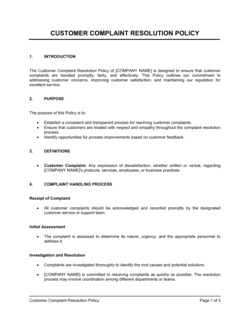
Setting up a repeatable process for handling customer complaintsCustomer Complaint Policy
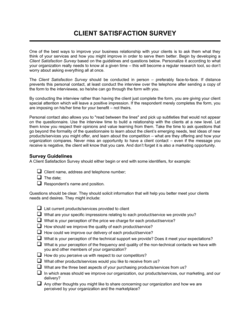
Measuring and tracking customer satisfaction over timeCustomer Satisfaction Survey
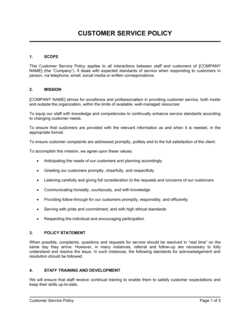
Defining service standards for frontline staffCustomer Service Policy
Onboarding new customers to reduce early churnCustomer Onboarding Plan
Documenting how to handle returns, refunds, and escalationsCustomer Service Standard Operating Procedure
Reporting CX performance metrics to executive leadershipCustomer Experience Report

Common mistakes to avoid

❌ Building the journey map from internal assumptions

Why it matters: A map built without real customer interviews reflects the team's mental model of the experience, not the customer's lived reality β€” leading to initiatives that solve the wrong problems.

Fix: Conduct at least five customer interviews or analyze 30+ support tickets before finalizing the journey map. Use actual customer language to describe each stage.

❌ Tracking too many CX metrics simultaneously

Why it matters: Teams that track eight or more metrics spend their review meetings on reporting rather than problem-solving, and struggle to explain which needle moved because of which initiative.

Fix: Select three to five primary metrics and assign a single owner to each. Review secondary metrics quarterly rather than monthly.

❌ Assigning initiatives to teams rather than named individuals

Why it matters: When a cross-functional team owns an initiative, everyone assumes someone else is managing it β€” and nothing ships.

Fix: Every initiative in the roadmap must have a single named person as the accountable owner, even when multiple teams contribute to execution.

❌ Skipping the budget section because numbers are uncertain

Why it matters: Plans without cost estimates are approved in principle but never funded β€” the absence of a budget line signals that execution has not been seriously considered.

Fix: Use rough order-of-magnitude estimates if precise costs are unavailable. Even a range ($10K–$30K) is enough to initiate a budget conversation.

❌ Launching only long-horizon initiatives with no quick wins

Why it matters: Six-month initiatives produce zero visible results in the first 90 days β€” stakeholders lose confidence in the plan and resource commitments are pulled before impact is demonstrated.

Fix: Identify at least three improvements that can be completed within 30–60 days and include them in a dedicated quick-win sprint to build early momentum.

❌ Conducting a CX audit once and treating the plan as static

Why it matters: Customer expectations and competitive benchmarks shift continuously β€” a plan written in January and never updated becomes irrelevant by Q3 and misleads decision-making.

Fix: Schedule a formal quarterly plan review with a standing agenda and a named facilitator. Update KPI baselines and reprioritize the roadmap against current data at each session.

The 10 key sections, explained

Executive Summary

Current-State CX Audit

Customer Journey Map

Pain Point Prioritization

KPI and Measurement Framework

Initiative Roadmap

Cross-Functional Ownership and Accountability

Budget and Resource Summary

90-Day Quick-Win Action Plan

Review Cadence and Governance

How to fill it out

  1. 1

    Gather your baseline CX data before writing anything

    Pull at least three months of NPS, CSAT, churn, and support ticket data. Supplement with 5–10 customer interviews or review themes. You cannot write an honest current-state section without real numbers.

    πŸ’‘ If you have no formal survey data yet, a 10-question customer email survey sent to your last 90-day customer list will generate enough signal in 48–72 hours.

  2. 2

    Write the company overview and scope

    Define which customer segments, channels, and journey stages the plan covers. A focused scope (e.g., post-purchase experience for SMB customers in North America) produces better results than a plan that tries to fix everything at once.

    πŸ’‘ Name the segment and channel in the document title β€” 'CX Improvement Plan: SMB Post-Purchase, 2026 H1' is clearer than a generic title and keeps the team focused.

  3. 3

    Complete the current-state audit section

    Enter your baseline metrics, list the data sources you used, and summarize the top three to five findings from qualitative inputs. Be specific about what the data shows β€” avoid vague language like 'customers are somewhat dissatisfied.'

    πŸ’‘ Use direct quotes from customer interviews or reviews as pull quotes in this section β€” a verbatim customer voice is more persuasive than a paraphrase.

  4. 4

    Build the customer journey map collaboratively

    Run a 90-minute workshop with representatives from sales, support, product, and operations to map the journey together. Each team sees a different slice β€” the combined view reveals handoff failures that no single team would identify alone.

    πŸ’‘ Focus on the three to four stages with the highest negative emotion scores β€” these are almost always where the highest-impact improvements live.

  5. 5

    Score and rank pain points using a frequency-severity matrix

    For each pain point identified, estimate what percentage of customers encounter it and rate its severity on a 1–5 scale based on churn attribution and complaint volume. Plot them and focus the roadmap on the top-right quadrant.

    πŸ’‘ Anything with a frequency above 20% and a severity of 4 or 5 should have at least one initiative in the 90-day quick-win plan.

  6. 6

    Define no more than five KPIs with baselines and targets

    Select the metrics that most directly reflect the pain points you are targeting. Enter the current baseline value, the target value, the date by which you expect to reach it, and the name of the person responsible for each metric.

    πŸ’‘ Pick metrics you can measure monthly without building new infrastructure β€” if you can't report a number in the next 30 days, it's not a useful near-term KPI.

  7. 7

    Populate the initiative roadmap with owners and dates

    For each prioritized initiative, write a one-sentence description of what will be done, assign a single named owner (not a team), set a target completion date, and estimate the budget required.

    πŸ’‘ If an initiative has no completion date, treat it as aspirational β€” move it to a backlog and exclude it from the active roadmap.

  8. 8

    Present the 90-day plan to leadership before distributing the full document

    Share the quick-win section and KPI targets in a 20-minute leadership briefing before circulating the full plan. Secure verbal commitment on budget and owners before the plan is published internally.

    πŸ’‘ Frame the quick wins in terms of the business impact β€” 'reducing call handle time by 45 seconds saves $X per month at current volume' lands better than a process improvement description.

Frequently asked questions

What is a customer experience improvement plan?

A customer experience improvement plan is a structured operational document that audits the current state of a company's customer interactions, identifies specific friction points that reduce satisfaction or drive churn, sets measurable targets (such as NPS or CSAT goals), and maps out a prioritized set of initiatives to close the gap. It gives cross-functional teams a shared framework and clear accountability for improving how customers experience the business at every touchpoint.

Why does customer experience matter for business performance?

Companies that rank in the top quartile of customer experience outperform competitors on revenue growth by 4–8% above their industry average, according to Bain & Company research. Beyond growth, CX directly affects churn β€” customers who report a poor experience are three to five times more likely to defect than those who report a positive one. Improving CX reduces churn-driven customer acquisition costs and increases customer lifetime value, making it one of the highest-return operational investments available to most businesses.

What metrics should I track to measure customer experience?

The three most widely used CX metrics are Net Promoter Score (NPS), which measures overall loyalty and likelihood to recommend; Customer Satisfaction Score (CSAT), which measures satisfaction with specific interactions; and Customer Effort Score (CES), which measures how easy it is for customers to resolve issues. Supplement these with operational metrics like First Contact Resolution rate and churn rate to connect experience data to business outcomes. Avoid tracking more than five metrics actively β€” focus drives faster improvement.

How long does it take to improve customer experience?

Quick-win improvements β€” such as reducing response time SLAs, fixing a confusing onboarding email sequence, or resolving a known checkout friction β€” can show measurable CSAT impact within 30–60 days. Structural improvements that touch product, process, or team design typically take 3–6 months to move the needle on NPS or churn. A realistic planning horizon for a full CX transformation in a mid-size business is 12–18 months, with quarterly checkpoints to measure progress and adjust priorities.

Who should own the customer experience improvement plan?

Ownership depends on company size and structure. In small businesses, the founder or operations lead typically owns it. In mid-size companies, a Head of Customer Success or VP of Operations is the most common owner. In larger organizations, a dedicated CX or CX Operations function drives the plan with cross-functional working groups covering product, marketing, support, and ops. The key is that a single named individual is accountable for progress β€” shared ownership without a tie-breaker produces the same result as no ownership.

What is the difference between customer experience and customer service?

Customer service is a subset of customer experience β€” it covers the interactions a customer has when they need help, primarily through support channels. Customer experience is the sum of every interaction across the entire relationship: the website, the sales process, the product, billing, onboarding, support, renewal, and advocacy. A company can have excellent customer service and still deliver a poor customer experience if the product is confusing, the billing process is opaque, or the onboarding is poorly designed.

How do I identify the most important pain points to fix first?

Plot each identified pain point on a two-axis matrix: frequency (what percentage of customers encounter it) on one axis and severity (how much it damages satisfaction or churn risk) on the other. Focus first on high-frequency, high-severity issues in the top-right quadrant. Use churn exit survey data, support ticket volume by category, and direct customer quotes to calibrate severity scores β€” internal team perception of severity is almost always different from what customers actually report.

Can a small business use this template without a dedicated CX team?

Yes β€” the template is designed to be completed by a single business owner or operations manager using existing data (Google reviews, support emails, and basic survey responses) and a straightforward cross-functional workshop with whoever handles sales, delivery, and support. The 90-day quick-win section is particularly useful for small businesses because it produces visible results without requiring a large team or budget. Most small businesses start with three to five focused improvements rather than a full transformation roadmap.

How often should a customer experience improvement plan be updated?

Review the plan monthly at the KPI level β€” track whether metrics are moving in the right direction and identify any blockers to initiative progress. Conduct a full plan review quarterly to update baselines, reprioritize the initiative roadmap against current data, and add or retire initiatives. Trigger an off-cycle revision whenever NPS or CSAT drops by more than five points in a single reporting period, a major product change affects a key touchpoint, or a competitor significantly raises the experience bar in your market.

What tools do businesses typically use to collect CX data?

For NPS and CSAT surveys, Delighted, Medallia, and SurveyMonkey are common options across small to enterprise businesses. For support ticket analysis, Zendesk, Intercom, and Freshdesk provide category and sentiment data. Session replay tools like Hotjar or FullStory help identify digital friction points. For structured VoC research, even a simple Google Form survey sent to recent customers generates enough qualitative signal to populate a meaningful current-state audit. The tool matters less than the discipline of collecting data on a regular, predictable cadence.

How this compares to alternatives

vs Customer Service Policy

A customer service policy defines the standards, procedures, and response expectations for support interactions β€” it tells staff how to handle customers who reach out for help. A customer experience improvement plan is broader in scope, covering every touchpoint from awareness to renewal, and is forward-looking: it identifies gaps and maps out initiatives to close them. The policy governs day-to-day operations; the plan drives strategic change.

vs Customer Satisfaction Survey

A customer satisfaction survey is a data collection instrument β€” it generates the scores and qualitative inputs that an improvement plan needs as its foundation. The improvement plan is the response to what surveys reveal: it translates data into a prioritized action roadmap. Use surveys to diagnose the problem; use the improvement plan to fix it.

vs Customer Complaint Policy

A complaint policy defines the reactive process for handling individual complaints as they arise β€” escalation paths, resolution timeframes, and documentation requirements. A CX improvement plan is proactive: it identifies systemic issues that generate complaints in the first place and removes them at the source. Both documents are needed; the complaint policy manages current reality while the improvement plan changes it.

vs Strategic Plan

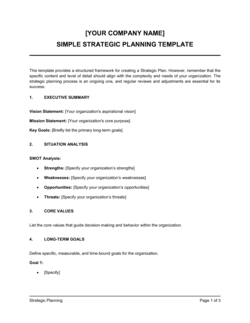
A strategic plan covers the full scope of a business's direction β€” markets, products, financials, and organizational priorities β€” over a 3–5 year horizon. A customer experience improvement plan is a focused operational document within that broader strategy, addressing a single dimension of business performance with specific initiatives and a 12-month or shorter execution window. The strategic plan sets the direction; the CX plan executes one critical piece of it.

Industry-specific considerations

SaaS / Technology

CX improvements focus on in-app onboarding completion rates, time-to-first-value, support deflection through self-service documentation, and NPS measured at 30, 60, and 90 days post-activation.

Retail / E-commerce

Key touchpoints include checkout friction, shipping communication, returns experience, and post-purchase follow-up β€” CSAT and repeat purchase rate are the primary outcome metrics.

Professional Services

CX is shaped by responsiveness, communication clarity, and delivery transparency β€” plans typically address project status updates, billing clarity, and end-of-engagement feedback loops.

Healthcare

Patient experience plans address appointment scheduling friction, wait time communication, billing transparency, and post-visit follow-up β€” HCAHPS scores or proprietary patient satisfaction surveys provide the baseline data.

Template vs pro β€” what fits your needs?

PathBest forCostTime
Use the templateSmall businesses, startups, and operations managers building their first structured CX improvement planFree4–8 hours across two to three working sessions
Template + professional reviewMid-size businesses with multiple customer segments, channels, or a CX investment requiring executive budget approval$500–$2,000 for a CX consultant review or facilitated journey-mapping workshop1–2 weeks
Custom draftedEnterprise organizations running a formal CX transformation program with dedicated research, tooling, and change management$10,000–$50,000+ for a full CX consulting engagement6–12 weeks

Glossary

Net Promoter Score (NPS)
A loyalty metric derived from asking customers how likely they are to recommend your business on a 0–10 scale, calculated as the percentage of Promoters (9–10) minus the percentage of Detractors (0–6).
Customer Satisfaction Score (CSAT)
A transactional survey metric asking customers to rate their satisfaction with a specific interaction, typically on a 1–5 or 1–10 scale.
Customer Effort Score (CES)
A metric measuring how much effort a customer had to exert to resolve an issue or complete a task β€” lower effort consistently predicts higher loyalty.
Customer Journey Map
A visual or structured document that traces every touchpoint a customer has with a business from first awareness through post-purchase, identifying emotions and pain points at each stage.
Touchpoint
Any interaction between a customer and a business β€” a website visit, a support call, a delivery, or an invoice β€” that shapes the customer's overall perception.
Churn Rate
The percentage of customers who stop doing business with a company within a given period, used as a direct indicator of CX health.
Voice of the Customer (VoC)
A structured research process for capturing customers' stated and unstated expectations, preferences, and complaints through surveys, interviews, reviews, and support data.
First Contact Resolution (FCR)
The percentage of customer issues resolved in a single interaction without requiring a follow-up contact β€” a core efficiency and satisfaction metric.
Customer Lifetime Value (CLV)
The total gross profit a business expects to generate from a single customer over the entire relationship, used to justify CX investment levels.
Pain Point
A specific friction, frustration, or unmet need a customer experiences at a particular stage of their journey that reduces satisfaction or increases churn risk.

Part of your Business Operating System

This document is one of 3,000+ business & legal templates included in Business in a Box.

  • Fill-in-the-blanks β€” ready in minutes
  • Compatible with all office suites
  • Export to PDF and share electronically

Create your document in 3 simple steps.

From template to signed document β€” all inside one Business Operating System.
1
Download or open template

Access over 3,000+ business and legal templates for any business task, project or initiative.

2
Edit and fill in the blanks with AI

Customize your ready-made business document template and save it in the cloud.

3
Save, Share, Send, Sign

Share your files and folders with your team. Create a space of seamless collaboration.

Save time, save money, and create top-quality documents.

β˜…β˜…β˜…β˜…β˜…

"Fantastic value! I'm not sure how I'd do without it. It's worth its weight in gold and paid back for itself many times."

Managing Director Β· Mall Farm
Robert Whalley
Managing Director, Mall Farm Proprietary Limited
β˜…β˜…β˜…β˜…β˜…

"I have been using Business in a Box for years. It has been the most useful source of templates I have encountered. I recommend it to anyone."

Business Owner Β· 4+ years
Dr Michael John Freestone
Business Owner
β˜…β˜…β˜…β˜…β˜…

"It has been a life saver so many times I have lost count. Business in a Box has saved me so much time and as you know, time is money."

Owner Β· Upstate Web
David G. Moore Jr.
Owner, Upstate Web

Run your business with a system β€” not scattered tools

Stop downloading documents. Start operating with clarity. Business in a Box gives you the Business Operating System used by over 250,000 companies worldwide to structure, run, and grow their business.

Free Forever PlanΒ Β·Β No credit card required