How Leaders Can Give More Effective Feedback Template

Free to read • Save or share with one click

FreeHow Leaders Can Give More Effective Feedback Template

At a glance

What it is
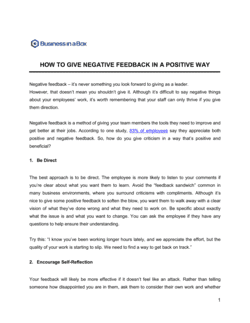
How Leaders Can Give More Effective Feedback is a structured Word guide that equips managers and executives with documented frameworks, scripted language, and step-by-step processes for delivering feedback that drives measurable performance improvement. This free Word download gives you an editable, ready-to-use resource you can tailor to your team's culture, adapt to individual situations, and reference before any feedback conversation — whether it is a one-on-one check-in, a formal review, or a real-time coaching moment.
When you need it
Use it when onboarding new managers, preparing for performance review cycles, addressing a specific performance or behavior concern, or building a consistent feedback culture across a department or organization. It is especially valuable when a team shows signs of feedback avoidance — performance issues going unaddressed, repeat mistakes, or low engagement scores tied to poor manager communication.
What's inside
Core feedback principles, situation-specific delivery frameworks (SBI, STAR, and feedforward), scripts for positive and corrective feedback, documentation guidance, follow-up cadence recommendations, and a self-assessment checklist managers complete before each feedback session.

What is How Leaders Can Give More Effective Feedback?

How Leaders Can Give More Effective Feedback is a structured leadership guide that equips managers and executives with documented frameworks, scripted language, and step-by-step processes for delivering feedback that produces measurable behavioral change. It covers the full feedback cycle — from preparation and delivery using evidence-based models like SBI (Situation, Behavior, Impact), through documentation and follow-up, to an escalation pathway connecting informal coaching to formal performance management. Unlike a generic management article, this template is an operational resource leaders complete, customize, and reference before and after every significant feedback conversation.

Why You Need This Document

Organizations that rely on informal or ad hoc feedback practices consistently score lower on employee engagement surveys, experience higher turnover among high performers, and face greater legal exposure when performance-related terminations are challenged. Without a documented feedback standard, managers in the same organization apply wildly different approaches — some avoiding corrective conversations entirely, others delivering feedback so bluntly it damages the relationship. The result is a dual failure: performance gaps go unaddressed until they require formal discipline, and the documentation trail needed to defend that discipline does not exist. This template gives every people manager a consistent, legally supportable feedback process — one that reduces the frequency of escalations, shortens the time between a performance gap appearing and being addressed, and produces the written records that protect the organization if an employment dispute arises.

Which variant fits your situation?

If your situation is…Use this template
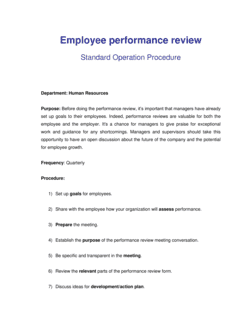
Delivering feedback during a scheduled annual or mid-year performance reviewPerformance Review Template
Documenting a verbal warning about a specific behavior or performance issueEmployee Warning Letter
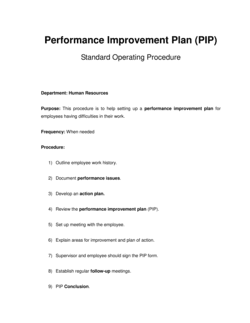
Setting goals and tracking progress for direct reportsEmployee Performance Improvement Plan
Structuring a recurring one-on-one meeting with a direct reportOne-on-One Meeting Agenda
Gathering upward or peer feedback as part of a 360 review process360-Degree Feedback Form
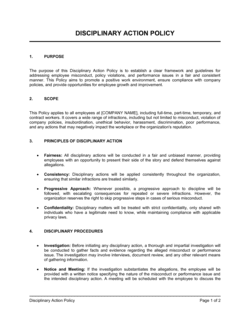
Documenting a formal disciplinary action after repeated feedback has failedEmployee Disciplinary Action Form
Coaching a manager on their own feedback and communication styleLeadership Development Plan

Common mistakes to avoid

❌ Delivering corrective feedback without a specific observable example

Why it matters: Feedback without a cited example is perceived as opinion or personal bias, triggering defensiveness rather than reflection. The employee focuses on disputing the characterization rather than examining the behavior.

Fix: Before any corrective conversation, write down the specific situation, date, and observable behavior. If you cannot produce at least one concrete example, delay the conversation until you can.

❌ Using the feedback sandwich for serious performance issues

Why it matters: Framing a significant corrective message between two pieces of positive feedback consistently causes employees to underestimate the severity of the issue and repeat the problem behavior.

Fix: Reserve the feedback sandwich for minor, low-stakes corrections. For significant performance concerns, state the issue directly first, explain the impact, then discuss the path forward.

❌ Failing to document feedback conversations

Why it matters: Without a written record, the organization has no defensible basis for escalation to a PIP, disciplinary action, or termination. In the UK, Canada, and the EU, undocumented dismissals regularly result in successful unfair-dismissal claims.

Fix: Record the date, topic, key points, and agreed next steps within 24 hours of every significant feedback conversation, and store the record in the designated HRIS or documentation system.

❌ Skipping preparation for routine or low-stakes feedback

Why it matters: Managers who skip the preparation checklist for 'quick' feedback conversations are the most likely to deliver vague, biased, or inconsistent messages — which erode employee trust over time even when individual incidents seem minor.

Fix: Use the preparation checklist for every corrective conversation regardless of perceived severity. Positive feedback requires less formal prep but should still name the specific behavior being reinforced.

❌ Soliciting upward feedback and visibly acting on none of it

Why it matters: When managers ask for feedback from direct reports but never change any observable behavior in response, direct reports stop providing honest input within two feedback cycles — eliminating the upward feedback channel entirely.

Fix: After collecting upward feedback, close the loop with the team: name at least one thing you heard, explain what you will do differently, and follow up at the next team meeting with a visible example of the change.

❌ Conflating the feedback conversation with the performance rating conversation

Why it matters: When feedback and rating are delivered simultaneously, employees focus entirely on the rating outcome and cannot process the behavioral feedback — making the developmental content effectively invisible.

Fix: Separate developmental feedback conversations from performance rating discussions by at least 48 hours. Deliver feedback first, give the employee time to reflect, then discuss the formal rating in a separate session.

The 10 key clauses, explained

Purpose and Scope Statement

In plain language: Declares why the guide exists, which roles it applies to, and what outcomes it is designed to achieve across the organization.

Sample language
This guide applies to all people managers at [ORGANIZATION NAME] and is intended to establish a consistent standard for delivering feedback that supports employee development, performance accountability, and a culture of continuous improvement.

Common mistake: Framing the purpose as a policy mandate rather than a development tool. Managers who perceive feedback guidance as compliance obligation engage with it far less than those who see it as skill-building.

Core Feedback Principles

In plain language: Establishes the foundational beliefs that govern how feedback should be given — timely, specific, behavior-focused, and two-directional.

Sample language
Effective feedback at [ORGANIZATION NAME] is (1) timely — delivered within [48 hours / one week] of the observed behavior; (2) specific — tied to observable actions, not personality; (3) two-directional — the manager listens as much as speaks; (4) forward-focused — oriented toward improvement, not blame.

Common mistake: Listing principles without behavioral definitions. 'Be specific' means nothing without an example of what specific versus vague feedback looks like in practice.

Feedback Framework — SBI Model

In plain language: Describes the Situation-Behavior-Impact model step by step, with example scripts for both positive and corrective feedback conversations.

Sample language
Situation: 'In last Tuesday's client presentation...' Behavior: 'you interrupted the client twice before they finished their question...' Impact: '...which led the client to disengage for the remainder of the session. I'd like to discuss how we approach that differently next time.'

Common mistake: Jumping directly to Impact without grounding the feedback in a specific Situation and observable Behavior. Without context, the recipient experiences the impact statement as an accusation rather than an observation.

Positive Feedback Delivery

In plain language: Provides scripted language and guidance for recognizing strong performance in a way that reinforces the specific behavior rather than the person's general character.

Sample language
'[EMPLOYEE NAME], during [SITUATION], you [SPECIFIC BEHAVIOR], which resulted in [POSITIVE OUTCOME]. That approach directly supported [TEAM / COMPANY GOAL]. I want to make sure you know that was noticed and valued.'

Common mistake: Generic praise such as 'Great job this week.' Vague positive feedback does not tell the employee what to repeat — it functions as social noise rather than a reinforcement signal.

Corrective Feedback Delivery

In plain language: Scripts and structures for addressing performance gaps or behavioral issues in a direct, non-punitive way that preserves the relationship and motivates change.

Sample language
'I want to talk about [SPECIFIC SITUATION]. What I observed was [BEHAVIOR]. The impact was [CONSEQUENCE]. Going forward, what I need to see is [SPECIFIC EXPECTATION]. What support do you need from me to make that happen?'

Common mistake: Using the 'feedback sandwich' — positive, negative, positive — for serious corrective messages. The technique dilutes the corrective message and leaves the employee unclear about severity.

Preparation Checklist

In plain language: A structured pre-conversation checklist the manager completes to ensure the feedback is grounded in observable facts, free of bias, and tied to a specific development goal.

Sample language
Before this feedback conversation, I have confirmed: [ ] I can cite a specific situation and observable behavior. [ ] I have checked for recency bias. [ ] I know the expected standard I am measuring against. [ ] I have a development suggestion, not just a criticism.

Common mistake: Skipping preparation for what feels like a 'small' piece of feedback. Underprepared corrective feedback frequently escalates into unproductive conflict because the manager cannot cite specific examples under pressure.

Documentation and Follow-Up Protocol

In plain language: Explains what to record after a feedback conversation, where to store it, and how to schedule a follow-up to track whether the agreed change occurred.

Sample language
Following each significant feedback conversation, document: date, employee name, topic, key points discussed, agreed next steps, and follow-up date. Store in [HRIS / Shared Drive / Manager Notes File] within [24 hours] of the conversation.

Common mistake: Relying on memory rather than written documentation. Undocumented feedback conversations cannot support a performance improvement plan or defend a termination decision if challenged.

Receiving Feedback as a Leader

In plain language: Addresses the manager's own obligation to model receptivity — how to solicit, accept, and act on feedback from direct reports and peers without defensiveness.

Sample language
'I want to make sure I'm supporting you effectively. What is one thing I could do differently in how I run our team meetings or communicate priorities? I'm asking because I want your honest input, not a polished answer.'

Common mistake: Soliciting upward feedback publicly but failing to visibly act on any of it. Managers who ask and never change train their teams to stop responding honestly within two cycles.

Escalation Pathway

In plain language: Defines the sequence from informal verbal feedback to documented written feedback to a formal performance improvement plan, specifying the trigger conditions for each level.

Sample language
Step 1: Verbal coaching conversation (undocumented). Step 2: Documented feedback conversation (recorded in [SYSTEM]). Step 3: Written warning or formal feedback letter. Step 4: Performance Improvement Plan. Step 5: HR-assisted review or disciplinary action.

Common mistake: Skipping steps to fast-track a problem employee to termination. Courts and employment tribunals in the UK, Canada, and the EU consistently rule against dismissals that lack a documented progressive feedback and warning trail.

Self-Assessment and Continuous Improvement

In plain language: A post-conversation reflection tool the manager uses to evaluate their own feedback delivery and identify one specific adjustment for the next conversation.

Sample language
After this conversation: Was my feedback tied to a specific observable behavior? (Y/N) Did I listen for at least 40% of the conversation? (Y/N) Did we agree on a specific next step with a date? (Y/N) What would I do differently next time? [OPEN FIELD]

Common mistake: Treating the self-assessment as an optional add-on rather than a core part of the feedback cycle. Managers who do not reflect on their own delivery style plateau quickly and repeat the same ineffective patterns.

How to fill it out

  1. 1

    Customize the organization name and scope

    Replace all [ORGANIZATION NAME] placeholders and define which roles and levels the guide applies to. Specify whether it covers all people managers, senior leaders only, or a specific department.

    💡 Narrower scope documents get higher adoption rates — a guide written for 'all managers at Acme Corp' is more actionable than one framed as a generic resource.

  2. 2

    Define your feedback timeliness standard

    In the Core Feedback Principles section, set a specific time window — 48 hours for real-time feedback, one week for project-based feedback — and explain the rationale behind the standard.

    💡 Research consistently shows feedback delivered within 48 hours of an observed behavior produces 3× better retention than feedback delivered at a quarterly review.

  3. 3

    Adapt the SBI scripts to your team's language

    Edit the sample scripts in the SBI Framework section to match your industry's terminology, your team's communication norms, and your organization's values language.

    💡 Run the adapted scripts by one trusted manager before distributing. If the language sounds foreign to them, it will sound foreign to everyone.

  4. 4

    Set the documentation storage location

    In the Documentation and Follow-Up Protocol section, specify the exact system, folder path, or HRIS module where feedback records must be stored, and the required turnaround time for entry.

    💡 If managers have to navigate more than two clicks to document feedback, most will not do it consistently. The simpler the storage path, the higher the compliance rate.

  5. 5

    Define the escalation triggers for each step

    In the Escalation Pathway section, specify the observable conditions that move a situation from verbal coaching to documented feedback to a formal PIP — rather than leaving it to managerial judgment.

    💡 Common trigger examples: same behavior observed three times within 90 days, or a single incident that affects a client relationship or team safety.

  6. 6

    Complete the preparation checklist before each feedback session

    Work through every item on the preparation checklist before any corrective or significant feedback conversation. Verify you can cite a specific observable behavior, the expected standard, and at least one concrete development suggestion.

    💡 If you cannot answer every checklist item, the feedback is not ready to be delivered. Underprepared feedback consistently backfires and damages trust faster than no feedback at all.

  7. 7

    Schedule the follow-up date during the conversation

    Before closing any feedback conversation, agree on a specific follow-up date — not 'we'll revisit this' — and enter it in both your calendar and the documentation record.

    💡 A follow-up that happens within 2–3 weeks signals to the employee that the feedback was real, not a checkbox exercise.

  8. 8

    Complete the self-assessment after each session

    Fill in the post-conversation self-assessment within 24 hours while the exchange is still clear in your memory. Identify one specific adjustment to make in the next feedback conversation.

    💡 Keep a running log of your self-assessment answers across multiple conversations. Patterns — such as consistently failing to reach a next-step agreement — are only visible across a series of entries.

Frequently asked questions

What is this feedback guide and who is it for?

This guide is a structured leadership tool for people managers at all levels who want to deliver feedback that produces real behavioral change. It covers core feedback principles, delivery frameworks like the SBI model, scripts for positive and corrective conversations, documentation protocols, and an escalation pathway. It is designed for first-time managers building foundational skills and for experienced leaders who want a consistent, documented approach they can use across their team.

What is the SBI feedback model and why does it work?

SBI stands for Situation, Behavior, Impact — a three-part structure that grounds every piece of feedback in a specific observable event rather than a general impression. By naming the situation, describing only what was observable (not interpreted motives), and explaining the concrete impact, the SBI model reduces defensiveness and gives the recipient a clear, actionable picture of what to change. It is one of the most consistently validated feedback frameworks in organizational psychology research.

How often should managers give feedback to direct reports?

Positive reinforcement feedback should be delivered as close as possible to the moment the behavior occurs — ideally within 24–48 hours. Corrective feedback should follow within 48 hours to one week of the observed behavior, before context fades. In addition, most organizations schedule monthly one-on-ones and quarterly check-ins as structured feedback touchpoints. Annual performance reviews alone are insufficient to drive behavior change and are widely documented to reduce engagement when used as the primary feedback mechanism.

Why is documenting feedback conversations important?

Written documentation of feedback conversations serves two functions. Operationally, it creates a shared record that both manager and employee can reference, improving accountability for agreed next steps. Legally, it provides the organization with a defensible paper trail if an employment dispute, unfair-dismissal claim, or discrimination allegation arises. In the UK, Canada, and the EU, employment tribunals routinely rule against employers who cannot produce documented evidence of a progressive feedback and warning process prior to termination.

What is the difference between feedback and a performance review?

Feedback is an ongoing, conversation-based process focused on specific behaviors and their impact — it happens continuously throughout the year. A performance review is a periodic, structured evaluation of overall performance against goals and competencies, typically occurring once or twice annually. Effective performance reviews depend on ongoing feedback having already occurred — they should contain no surprises. Conflating the two into a single annual event is one of the most common and consequential management failures in people development.

How should leaders handle feedback that is met with defensiveness?

Defensiveness is a normal initial response to corrective feedback and does not mean the feedback should be withdrawn or softened. Acknowledge the emotional reaction briefly without abandoning the substance: 'I can see this is landing hard, and I want to give you space to respond.' Then re-anchor to the specific observable behavior and its impact rather than the interpretation of motives. Pausing the conversation and scheduling a follow-up in 24–48 hours is often more productive than pressing through significant defensiveness in a single session.

How can organizations ensure managers actually use a feedback guide?

Adoption requires three conditions: the guide must be short enough to reference quickly, managers must be trained on the SBI model and scripts in a live session rather than reading them cold, and leaders above the manager level must visibly model the same feedback behaviors. Embedding the preparation checklist into the organization's existing calendar templates for one-on-ones and review meetings increases consistent use significantly. Annual reinforcement training after the initial rollout maintains usage rates over time.

What is the escalation pathway from feedback to formal action?

A well-designed escalation pathway moves through five stages: informal verbal coaching (undocumented), documented feedback conversation, written warning or formal feedback letter, Performance Improvement Plan, and HR-assisted review or disciplinary action. Each step requires documented evidence that the prior step occurred and did not produce the required change. Skipping steps — particularly to fast-track a termination — is the single most common procedural error in employment disputes across all major jurisdictions.

How this compares to alternatives

vs Performance Review Template

A performance review is a formal, periodic evaluation of an employee's overall performance against set goals and competencies — typically occurring once or twice per year. This feedback guide is an ongoing, conversation-based tool for continuous behavioral coaching. The two are complementary: the feedback guide feeds the data and documentation that makes performance reviews accurate and defensible. Using a performance review as a substitute for ongoing feedback is a recognized driver of employee disengagement.

vs Performance Improvement Plan

A Performance Improvement Plan is a formal, documented action plan issued after multiple rounds of coaching and feedback have failed to produce the required change. This feedback guide operates earlier in the process — it is the tool managers use before escalation to a PIP becomes necessary. A well-used feedback guide typically reduces the frequency of PIPs by surfacing and addressing gaps before they become formal performance failures.

vs Employee Warning Letter

An employee warning letter is a formal written record of a specific disciplinary or performance issue, issued as part of a progressive discipline process. It is a legal document with defined consequences. This feedback guide is a coaching and development resource used before formal discipline is warranted. The guide's documentation protocol produces the records that support a warning letter if escalation eventually becomes necessary.

vs Employee Handbook

An employee handbook establishes organizational policies, expectations, and conduct standards for all staff. This feedback guide is a manager-facing operational tool focused specifically on the skills and processes needed to deliver feedback effectively. The handbook sets the rules; the feedback guide equips leaders to have the conversations required when those rules need to be reinforced or applied to individual performance situations.

Industry-specific considerations

Technology / SaaS

Fast iteration cycles mean feedback must address both technical delivery and cross-functional communication, with particular attention to remote feedback delivery across distributed teams.

Financial Services

Regulatory conduct standards require that feedback on compliance behavior is documented with the same rigor as formal disciplinary actions, given the licensing consequences of misconduct.

Healthcare

Clinical feedback must address both performance and patient safety implications, with documentation protocols aligned to credentialing and risk-management requirements.

Professional Services

Billable-hour environments create feedback avoidance pressure — managers resist conversations that 'cost' client time — making a structured guide and clear time expectations essential.

Retail / Hospitality

High turnover and shift-based staffing mean feedback must be brief, specific, and delivered immediately after the observed behavior rather than in a scheduled sit-down session.

Manufacturing

Safety-critical environments require feedback on procedural compliance to be documented and escalated on a tighter timeline than standard performance feedback, with zero tolerance for unaddressed repeat violations.

Jurisdictional notes

United States

In at-will employment states, documentation of feedback and progressive discipline is not legally required before termination but is strongly recommended as a defense against discrimination claims under Title VII, the ADA, and the ADEA. Inconsistent feedback practices that produce disparate outcomes across protected groups are a primary source of employment litigation. California, New York, and Illinois have additional anti-retaliation protections that make documented feedback trails especially important.

Canada

Canadian employment law — particularly in Ontario, British Columbia, and Quebec — effectively requires a progressive and documented feedback and warning process before termination without cause is defensible. Common-law courts routinely award additional damages when employers cannot produce evidence of prior coaching and feedback. Quebec's distinct labor standards under the Act Respecting Labour Standards add additional procedural requirements for disciplinary actions that must be reflected in escalation protocols.

United Kingdom

The ACAS Code of Practice on Disciplinary and Grievance Procedures requires employers to follow a fair, documented process before any disciplinary action, including dismissal. Employment tribunals apply an uplift of up to 25% to any compensation award where an employer fails to follow the ACAS Code. Documented feedback conversations that precede formal disciplinary steps are the primary evidence of procedural fairness in unfair dismissal claims. The statutory right to be accompanied at formal feedback meetings applies once a conversation crosses into disciplinary territory.

European Union

EU member states universally provide stronger employee protections than the US, and most require documented evidence of progressive performance management before a dismissal is legally valid. Germany's Kündigungsschutzgesetz (Dismissal Protection Act) and France's Code du Travail impose particularly detailed procedural requirements. The EU Transparent and Predictable Working Conditions Directive also requires that performance expectations communicated to employees are documented. GDPR applies to any feedback records stored in digital HR systems — data minimization and retention limits must be reflected in documentation protocols.

Template vs lawyer — what fits your deal?

PathBest forCostTime
Use the templateSmall to mid-size organizations building a feedback culture without a dedicated HR legal teamFree1–2 hours to customize and deploy
Template + legal reviewOrganizations in regulated industries or those operating across multiple jurisdictions where escalation and documentation protocols carry employment-law implications$300–$800 for an employment lawyer or HR consultant review3–5 business days
Custom draftedEnterprise organizations with complex HR frameworks, union environments, or documented history of employment disputes requiring legally defensible feedback and escalation protocols$2,000–$8,000 for a custom HR legal framework2–6 weeks

Glossary

SBI Model
A feedback framework — Situation, Behavior, Impact — that structures observations by describing the specific context, the observable behavior, and its concrete effect.
Feedforward
A future-focused feedback technique that replaces criticism of past behavior with specific suggestions for what to do differently going forward.
Constructive Feedback
Feedback that identifies a specific gap between current and expected performance and pairs it with actionable guidance for improvement.
Positive Reinforcement Feedback
Feedback that names a specific behavior the recipient did well and explains why it mattered, making it more likely to be repeated.
Psychological Safety
A team climate in which individuals feel safe to speak up, take risks, and receive feedback without fear of embarrassment or punishment.
Performance Improvement Plan (PIP)
A formal, documented action plan specifying performance gaps, required improvements, timelines, and consequences — typically issued after verbal and written feedback has not produced change.
Documentation Trail
A chronological record of feedback conversations, including dates, topics discussed, and agreed-upon next steps, used to support HR decisions and legal defenses.
Bias in Feedback
Systematic distortions — such as recency bias, halo effect, or affinity bias — that cause a manager to evaluate performance inaccurately based on factors unrelated to the work itself.
Feedback Conversation
A structured, purposeful discussion between a manager and an employee focused on observed behavior, its impact, and agreed next steps.
Radical Candor
A management philosophy advocating feedback that combines genuine personal care for the individual with direct, honest challenge — avoiding both aggression and avoidance.
Active Listening
A communication technique in which the listener fully concentrates, understands, and responds to the speaker before formulating a reply.

Part of your Business Operating System

This document is one of 3,000+ business & legal templates included in Business in a Box.

  • Fill-in-the-blanks — ready in minutes
  • Compatible with all office suites
  • Export to PDF and share electronically

Create your document in 3 simple steps.

From template to signed document — all inside one Business Operating System.
1
Download or open template

Access over 3,000+ business and legal templates for any business task, project or initiative.

2
Edit and fill in the blanks with AI

Customize your ready-made business document template and save it in the cloud.

3
Save, Share, Send, Sign

Share your files and folders with your team. Create a space of seamless collaboration.

Save time, save money, and create top-quality documents.

★★★★★

"Fantastic value! I'm not sure how I'd do without it. It's worth its weight in gold and paid back for itself many times."

Managing Director · Mall Farm
Robert Whalley
Managing Director, Mall Farm Proprietary Limited
★★★★★

"I have been using Business in a Box for years. It has been the most useful source of templates I have encountered. I recommend it to anyone."

Business Owner · 4+ years
Dr Michael John Freestone
Business Owner
★★★★★

"It has been a life saver so many times I have lost count. Business in a Box has saved me so much time and as you know, time is money."

Owner · Upstate Web
David G. Moore Jr.
Owner, Upstate Web

Run your business with a system — not scattered tools

Stop downloading documents. Start operating with clarity. Business in a Box gives you the Business Operating System used by over 250,000 companies worldwide to structure, run, and grow their business.

Start free · No credit card required