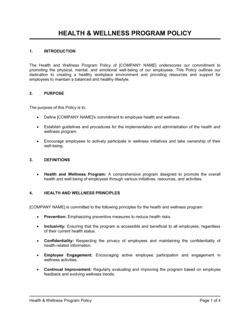
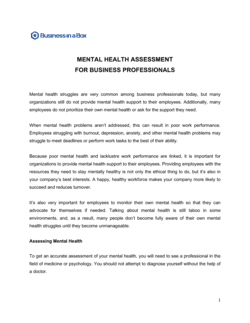
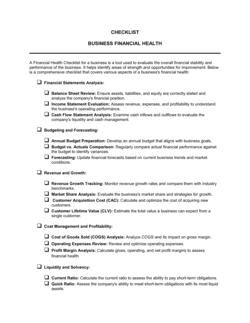
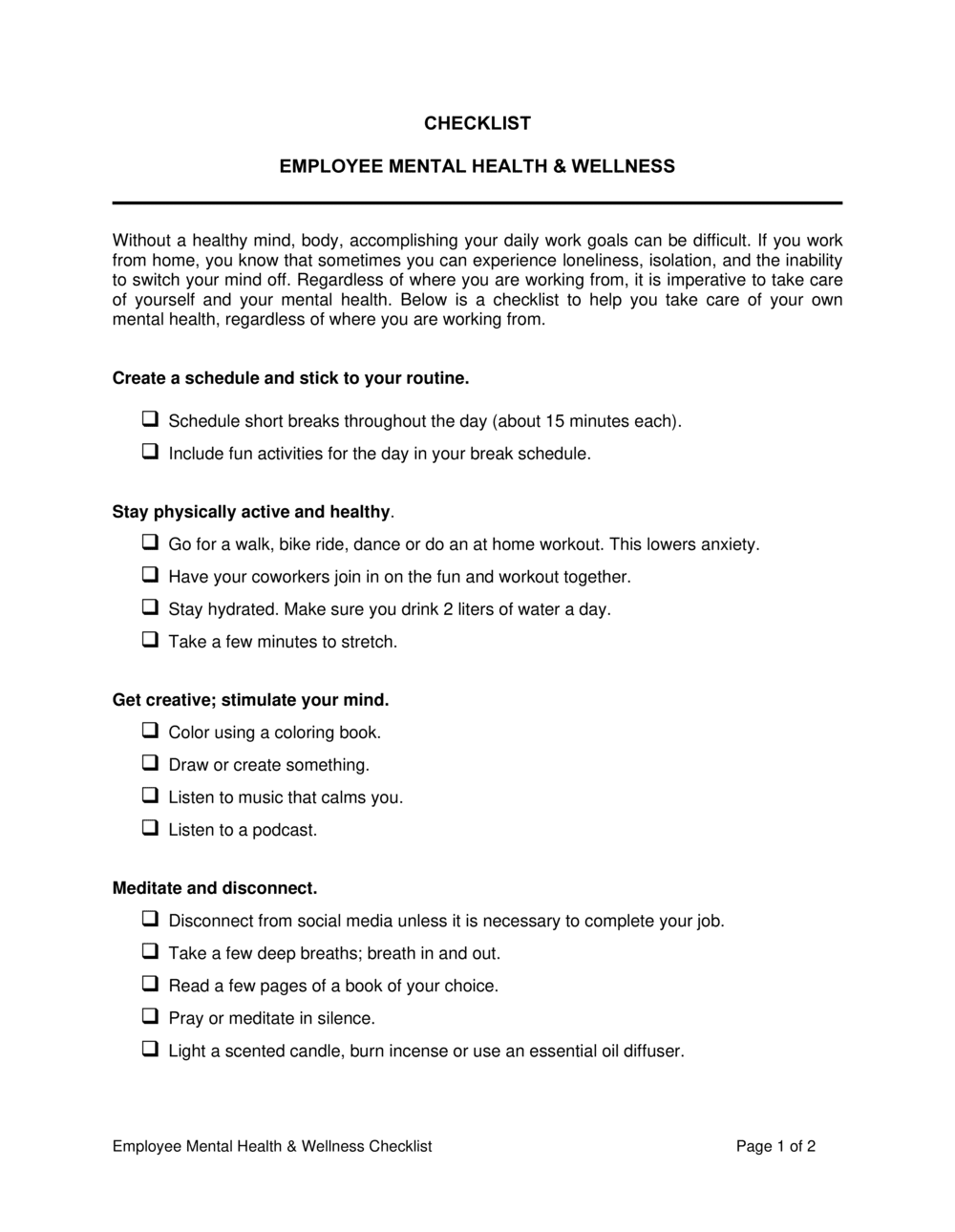
Employee Mental Health And Wellness Checklist

Free download • Use as a template • Print or share

2 pages20–25 min to useDifficulty: Standard
Learn more ↓
FreeEmployee Mental Health And Wellness Checklist Template

At a glance

What it is
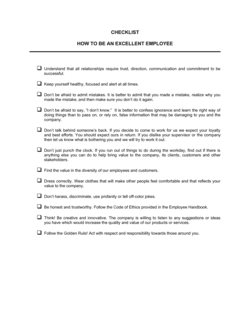
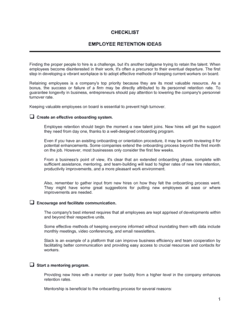
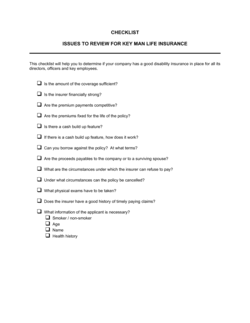
An Employee Mental Health and Wellness Checklist is a structured form HR managers and team leaders use to assess employee wellbeing across key dimensions — stress, workload, engagement, sleep, and access to support resources. This free Word download gives you a ready-to-use checklist you can edit online, distribute digitally, or print and complete in one-on-one check-in meetings.
When you need it
Use it during regular manager check-ins, quarterly HR reviews, or any time a pattern of absenteeism, disengagement, or performance decline suggests an employee may need additional support.
What's inside
Employee and manager identification fields, rated scales for stress and workload, yes/no indicators for engagement and sleep quality, a support resources section, action items, and a follow-up scheduling block.

What is an Employee Mental Health and Wellness Checklist?

An Employee Mental Health and Wellness Checklist is a structured form that HR managers and team leaders use to assess individual employee wellbeing across key dimensions — stress levels, workload capacity, engagement, sleep quality, and awareness of available support resources. Unlike an annual satisfaction survey, it is designed for regular one-on-one use throughout the employee lifecycle, creating a consistent and documented record of check-in conversations. This free Word download gives you a ready-to-use form you can customize with your company's EAP details and branding, then distribute digitally or use in person.

Why You Need This Document

Without a structured wellness check-in process, managers rely on informal observation to identify employees who are struggling — and informal observation routinely misses burnout, disengagement, and mental health decline until they surface as absenteeism, performance problems, or resignation. A completed checklist creates a documented record that a check-in occurred, what was discussed, and what action was taken — protecting the organization if a duty-of-care question arises later. Regular use also signals to employees that mental health is taken seriously, which measurably improves psychological safety and retention. This template gives your HR team a consistent, privacy-conscious framework that any manager can use in 20 minutes, with no specialist training required.

Which variant fits your situation?

If your situation is…Use this template
Conducting a broad annual survey across the entire organizationEmployee Satisfaction Survey
Documenting a formal performance improvement conversationEmployee Performance Review
Tracking return-to-work after medical or mental health leaveReturn to Work Plan
Logging a specific workplace incident or complaintEmployee Incident Report
Onboarding a new hire and setting initial expectationsEmployee Onboarding Checklist
Conducting a structured exit interviewExit Interview Form

Common mistakes to avoid

❌ Using check-in responses in performance reviews

Why it matters: Employees who learn that wellness disclosures influenced their performance ratings will stop sharing honestly — destroying the program's value and potentially exposing the company to discrimination claims.

Fix: Store wellness check-in records in a separate HR file with restricted access, and document explicitly in your HR policy that responses are not used for performance or disciplinary purposes.

❌ Skipping the confidentiality statement

Why it matters: Without a clear confidentiality statement, employees assume their responses will be shared broadly and default to 'everything is fine' — generating data that is useless for identifying genuine needs.

Fix: Add a two-sentence confidentiality statement to the top of every checklist: who sees it, how it is stored, and what it cannot be used for.

❌ No follow-up after flagged concerns

Why it matters: An employee who discloses a concern and receives no follow-up action is less likely to participate in future check-ins and more likely to disengage silently.

Fix: Require at least one documented action item per check-in — even 'no action required, next check-in in 90 days' — and assign a named owner and date.

❌ Running the checklist only after a visible problem appears

Why it matters: Reactive use of a wellness checklist signals to employees that it is a crisis tool rather than a supportive one, increasing stigma and reducing honest participation.

Fix: Embed the checklist in a regular, predictable cadence — quarterly at minimum — so check-ins feel routine rather than alarming.

The 9 key fields, explained

Employee and manager identification

Stress level rating

Workload and capacity assessment

Engagement and motivation indicators

Sleep and physical health self-report

Support resources awareness

Open-ended concerns and requests

Agreed action items

Follow-up scheduling

How to fill it out

  1. 1

    Set the check-in cadence before distributing

    Decide whether the checklist will be used monthly, quarterly, or on a triggered basis (e.g., after extended leave or a performance flag). Document the cadence in your HR policy so employees know what to expect.

    💡 Quarterly is the minimum effective frequency — monthly check-ins catch issues earlier and normalize the conversation around mental health.

  2. 2

    Explain confidentiality before the employee fills it in

    Tell the employee in writing how responses will be stored, who will have access, and that responses will not be used in performance evaluations or disciplinary actions.

    💡 A two-sentence confidentiality statement at the top of the form increases honest response rates more than any other single change.

  3. 3

    Complete the identification and date fields

    Enter the employee's full name, department, job title, the name of the manager conducting the check-in, and today's date. These fields are required for record-keeping and follow-up routing.

    💡 If the form is self-administered, pre-populate the manager and HR contact fields before sending so the employee immediately knows who to contact.

  4. 4

    Work through the rated and yes/no fields together or separately

    For in-person check-ins, complete the form together in real time. For remote or async check-ins, send the form in advance and review responses before the conversation.

    💡 Reviewing responses before a video call lets you ask follow-up questions on specific answers rather than reading responses aloud during the meeting.

  5. 5

    Record agreed action items before ending the check-in

    Before closing the conversation, write at least one action item — even if it is 'no action required at this time.' This closes the loop and creates a record that the check-in was completed.

    💡 Phrase action items as tasks with owners and dates: 'HR to send EAP contact information by [DATE]' rather than 'follow up on EAP.'

  6. 6

    Store the completed form securely

    File the completed checklist in a secure HR folder separate from the employee's general personnel file. Limit access to HR and the direct manager who conducted the check-in.

    💡 Never store wellness check-in forms in the same folder as performance reviews — co-mingling them erodes employee trust in the process.

  7. 7

    Schedule the next check-in before filing

    Enter the next check-in date on the form and send a calendar invite before the current session closes. A date on the form without a corresponding calendar entry is rarely honored.

    💡 If the employee flagged a concern, schedule the next check-in within 30 days rather than waiting for the regular quarterly cycle.

Frequently asked questions

What is an employee mental health and wellness checklist?

An employee mental health and wellness checklist is a structured form used by HR teams and managers to assess employee wellbeing across key dimensions including stress, workload, engagement, sleep, and awareness of available support resources. It provides a consistent, documented framework for wellness check-in conversations and replaces informal, unrecorded discussions with a replicable process.

How often should a wellness check-in be conducted?

Quarterly is the standard minimum frequency for most organizations. Monthly check-ins are more effective at catching early signs of burnout or disengagement before they escalate. Additional triggered check-ins are appropriate after extended medical leave, a significant organizational change, or a visible performance decline.

Are employee wellness check-in responses confidential?

They should be, and the form should say so explicitly. Best practice is to store completed checklists in a restricted HR file separate from performance records, limit access to the HR contact and direct manager, and document in writing that responses cannot be used in performance evaluations or disciplinary decisions. Employees who trust confidentiality engage more honestly.

Can a wellness checklist be used as evidence in a disciplinary process?

No — and doing so is both counterproductive and potentially legally problematic. Using wellness disclosures in disciplinary or performance contexts can expose employers to disability discrimination claims in many jurisdictions. The checklist is a support tool, not a performance measurement instrument.

What should a manager do if an employee flags a serious mental health concern?

Document the concern in the action items field, refer the employee to your EAP or HR contact immediately, and schedule a follow-up within two weeks. Do not attempt to diagnose or counsel the employee yourself. If the employee discloses a safety risk to themselves or others, follow your organization's emergency response protocol and contact HR or occupational health immediately.

Should employees fill out the checklist themselves or complete it with their manager?

Both approaches work depending on the organizational culture. Self- administered forms allow more honest responses before a face-to-face conversation. Completing it jointly in real time allows the manager to ask clarifying questions. Many organizations use a hybrid: the employee completes the form in advance and the manager reviews it before a brief check-in call to discuss any flagged items.

Does a wellness checklist need to comply with any privacy laws?

While a basic wellness checklist is not a medical record, it contains sensitive personal information that should be handled in line with applicable data privacy regulations — including HIPAA in the US for health-adjacent data, GDPR in the EU for employee personal data, and PIPEDA in Canada. Store forms securely, limit access, and do not request clinical diagnoses or medical history on the form.

What is the difference between a wellness checklist and an employee satisfaction survey?

A wellness checklist is a one-on-one check-in tool focused on individual wellbeing, stress, and support needs — completed regularly for each employee. An employee satisfaction survey is typically an anonymous, organization-wide instrument measuring collective sentiment about compensation, culture, and management. They serve complementary but distinct purposes and should both be part of a complete HR program.

How this compares to alternatives

vs Employee Satisfaction Survey

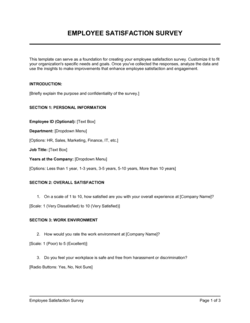
An employee satisfaction survey collects anonymous, aggregate feedback about company culture, management, and compensation across the entire workforce. A wellness checklist is a named, individual check-in tool focused on personal wellbeing and support needs. The survey identifies systemic issues; the checklist surfaces individual concerns that need direct action.

vs Employee Performance Appraisal Form

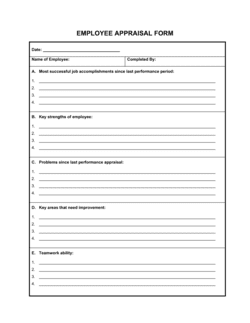
A performance appraisal evaluates output, competencies, and goal attainment against defined standards and directly informs compensation and promotion decisions. A wellness checklist assesses wellbeing and stress — it must never be used to inform performance ratings. Conflating the two destroys employee trust in both processes.

vs Exit Interview Form

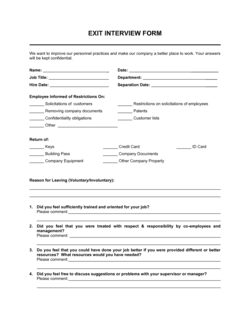
An exit interview captures retrospective feedback from a departing employee about their experience. A wellness checklist is a proactive, ongoing tool designed to identify and address issues before they lead to resignation. Regular wellness check-ins reduce the volume of exit interviews needed by catching disengagement early.

vs Employee Onboarding Checklist

An onboarding checklist tracks the administrative and training steps required to integrate a new hire into the organization. A wellness checklist begins where onboarding ends — it is a recurring wellbeing tool used throughout the employee lifecycle, not a one-time process document.

Industry-specific considerations

Technology / SaaS

High-pressure sprint cycles and remote-first teams make burnout and isolation two of the leading disengagement drivers, making regular structured check-ins especially high-value.

Healthcare

Clinical staff face compounding stressors including high patient loads and secondary trauma, requiring a wellness checklist calibrated to shift-based schedules and occupational health referral pathways.

Professional Services

Billable-hour pressure and client-deadline intensity create chronic overload risk, making workload and capacity fields the most critical section of the checklist.

Retail / Hospitality

High turnover, shift variability, and customer-facing stress mean wellness check-ins are most effective when conducted by shift supervisors at regular intervals rather than exclusively by HR.

Template vs pro — what fits your needs?

PathBest forCostTime
Use the templateHR teams, managers, and small business owners running structured wellness check-ins with a consistent processFree10 minutes to customize, 15–20 minutes per check-in
Template + professional reviewOrganizations adding EAP referral workflows, legal confidentiality language, or integrating with an HRIS system$200–$500 for an HR consultant or employment lawyer review2–5 business days
Custom draftedLarge enterprises with regulated workforces, mental health first-aid programs, or occupational health compliance requirements$1,000–$3,000 for an occupational health consultant or employment law firm2–4 weeks

Glossary

Employee Assistance Program (EAP)
An employer-sponsored benefit offering confidential counseling, mental health referrals, and support services to employees at no direct cost to them.
Burnout
A state of chronic workplace stress that has not been managed, characterized by exhaustion, reduced performance, and emotional detachment from work.
Psychological Safety
A team climate in which employees feel safe to speak up, share concerns, and ask for help without fear of punishment or embarrassment.
Presenteeism
The practice of attending work while unwell or mentally depleted, leading to reduced productivity despite physical presence.
Workload Assessment
A structured review of the volume, complexity, and urgency of tasks assigned to an employee relative to available time and capacity.
Wellness Check-In
A scheduled, structured conversation between a manager and employee focused on wellbeing, stress levels, and access to support — distinct from a performance review.
Reasonable Accommodation
An employer-provided adjustment to work conditions, schedule, or duties that enables an employee with a health condition to perform their role effectively.
Confidentiality Boundary
The principle that wellness check-in responses are shared only with authorized HR personnel and not used in performance evaluations or disciplinary decisions.

Part of your Business Operating System

This document is one of 3,000+ business & legal templates included in Business in a Box.

  • Fill-in-the-blanks — ready in minutes
  • 100% customizable Word document
  • Compatible with all office suites
  • Export to PDF and share electronically

Create your document in 3 simple steps.

From template to signed document — all inside one Business Operating System.
1
Download or open template

Access over 3,000+ business and legal templates for any business task, project or initiative.

2
Edit and fill in the blanks with AI

Customize your ready-made business document template and save it in the cloud.

3
Save, Share, Send, Sign

Share your files and folders with your team. Create a space of seamless collaboration.

Save time, save money, and create top-quality documents.

★★★★★

"Fantastic value! I'm not sure how I'd do without it. It's worth its weight in gold and paid back for itself many times."

Managing Director · Mall Farm
Robert Whalley
Managing Director, Mall Farm Proprietary Limited
★★★★★

"I have been using Business in a Box for years. It has been the most useful source of templates I have encountered. I recommend it to anyone."

Business Owner · 4+ years
Dr Michael John Freestone
Business Owner
★★★★★

"It has been a life saver so many times I have lost count. Business in a Box has saved me so much time and as you know, time is money."

Owner · Upstate Web
David G. Moore Jr.
Owner, Upstate Web

Run your business with a system — not scattered tools

Stop downloading documents. Start operating with clarity. Business in a Box gives you the Business Operating System used by over 250,000 companies worldwide to structure, run, and grow their business.

Free Forever Plan · No credit card required