Mental Health and Substance Abuse Social Worker Job Description Template

Free Word download • Edit online • Save & share with Drive • Export to PDF

2 pages20–30 min to fillDifficulty: StandardSignature requiredLegal review recommended
Learn more ↓
FreeMental Health and Substance Abuse Social Worker Job Description Template

At a glance

What it is
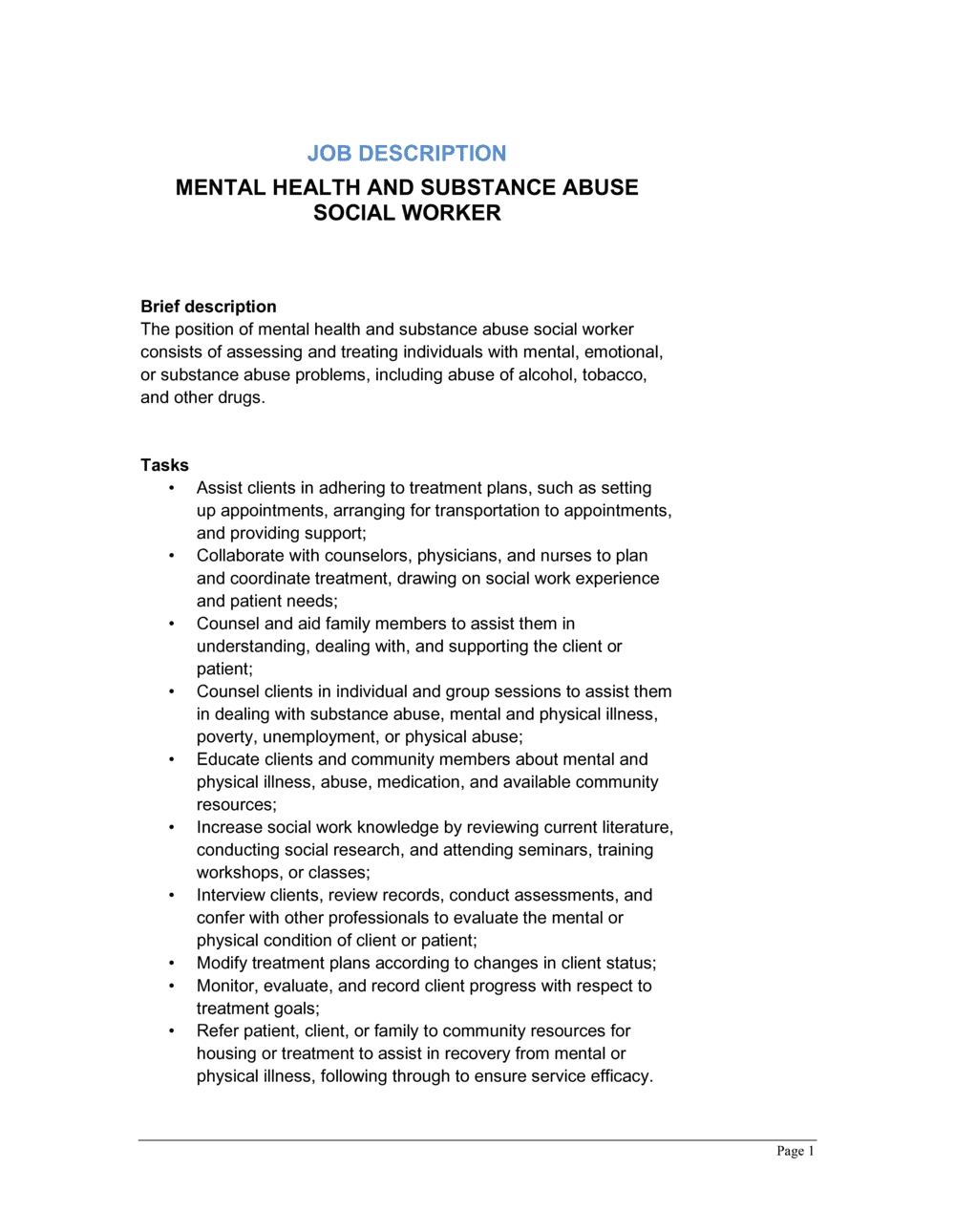
A Mental Health and Substance Abuse Social Worker Job Description is a binding employment document that defines the role, responsibilities, required credentials, and compliance obligations for a licensed social worker providing behavioral health and addiction services. This free Word download gives healthcare organizations and behavioral health agencies a structured, legally grounded starting point they can edit online and export as PDF for recruitment, credentialing, and regulatory audits.
When you need it
Use it when hiring a new social worker for a mental health clinic, substance abuse treatment program, hospital, or community health organization — or when updating an existing role to reflect new licensing requirements, HIPAA obligations, or scope-of-practice changes. Regulators and accreditation bodies routinely request role-specific job descriptions during audits and program reviews.
What's inside
Position title and reporting structure, detailed clinical duties, mandatory licensing and certification requirements, HIPAA and confidentiality obligations, supervision and documentation standards, performance expectations, compensation framework, and governing law and jurisdiction clauses.

What is a Mental Health and Substance Abuse Social Worker Job Description?

A Mental Health and Substance Abuse Social Worker Job Description is a legally structured employment document that defines the duties, required credentials, compliance obligations, and performance expectations for a licensed social worker providing behavioral health and addiction services. Unlike a general job posting, this document establishes enforceable obligations — including scope-of-practice boundaries, HIPAA and 42 CFR Part 2 confidentiality requirements, mandated reporting duties, clinical supervision arrangements, and explicit license-lapse termination provisions — in a format accepted by licensing boards, accreditation bodies, and federal and state healthcare regulators. It is typically incorporated by reference into the accompanying employment contract and retained in the employee's credentialing file as a compliance record.

Why You Need This Document

Operating a behavioral health or substance abuse treatment program without role-specific, legally grounded job descriptions creates compounding risk on multiple fronts. Accreditation surveyors from CARF and The Joint Commission routinely request signed job descriptions during on-site reviews — a missing or generic document is a direct finding against your program. SAMHSA-funded programs must document that each staff member's role aligns with their licensure and the program's approved service model; a vague or mismatched description can trigger a grant condition violation. Payers including Medicaid and Medicare tie claim eligibility to documented scope-of-practice compliance — services delivered by a clinician working outside their documented and licensed scope can be recouped. Without an explicit license-lapse termination clause, an employer who discovers a social worker's license has been suspended faces a wrongful-termination exposure before they can act on the patient safety risk. This template closes each of these gaps with role-specific, jurisdiction-aware language that generic employment documents and offer letters simply do not cover.

Which variant fits your situation?

If your situation is…Use this template
Hiring a clinical social worker in an inpatient hospital settingClinical Social Worker Job Description
Recruiting a school-based social worker for K-12 settingsSchool Social Worker Job Description
Defining a community outreach social worker roleCommunity Health Worker Job Description
Hiring a case manager for a transitional housing programCase Manager Job Description
Onboarding a licensed counselor alongside a social workerLicensed Professional Counselor Job Description
Documenting the full employment relationship, not just the roleEmployment Contract
Engaging a social worker on a per-diem or contract basisIndependent Contractor Agreement

Common mistakes to avoid

❌ Assigning duties beyond the employee's license tier

Why it matters: Directing an LSW to perform independent clinical assessments or diagnoses that require LCSW licensure exposes the employer to licensing board complaints, insurance claim denials, and professional liability claims.

Fix: Map every listed duty against the employee's specific license tier before issuing the job description, and add a supervision clause for any pre-licensed clinician.

❌ Omitting 42 CFR Part 2 from the confidentiality clause

Why it matters: Substance use disorder records carry stricter re-disclosure restrictions than general health records under federal law — relying only on HIPAA language leaves a specific compliance gap that regulators and accreditors will flag.

Fix: Add an explicit 42 CFR Part 2 reference and require the employee to complete Part 2-specific training, documented in their personnel file.

❌ Leaving documentation timeframes undefined

Why it matters: Vague language like 'timely documentation' gives no enforceable standard — payers, licensing boards, and accreditation surveyors all apply specific timeframes that the employer cannot enforce without a matching contractual requirement.

Fix: State the specific number of hours or business days for each documentation type (progress notes, treatment plans, discharge summaries) and tie them to your payer and accreditation requirements.

❌ No license-lapse termination trigger

Why it matters: Without an explicit clause, an employer who discovers a social worker's license has been suspended must navigate the general 'cause' standard — creating ambiguity, potential wrongful-termination exposure, and a gap in patient safety protocols.

Fix: Add a specific clause listing license suspension or revocation as a standalone ground for immediate termination, separate from the general corrective action process.

❌ Selecting a governing law that differs from the practice state

Why it matters: Social work licensing, scope of practice, and mandated reporting obligations are state-specific — a job description governed by a different state's law creates unenforceable clauses and compliance blind spots.

Fix: Always set governing law to the state where the employee will physically practice and hold their license, regardless of where the employer's headquarters is located.

❌ Using a generic job description not tailored to behavioral health

Why it matters: A generic healthcare or social services job description will omit substance-use-specific compliance requirements (42 CFR Part 2, MAT protocols, SAMHSA conditions) that regulators and funders require for this role.

Fix: Use a role-specific template like this one and review it against your SAMHSA grant conditions, Medicaid provider agreement, and accreditation standards before finalizing.

The 9 key clauses, explained

Position identification and reporting structure

In plain language: States the official job title, employment classification (full-time, part-time, per-diem), the department or program, and the supervisor the worker reports to.

Sample language
Position Title: Mental Health and Substance Abuse Social Worker | Classification: Full-Time, Non-Exempt | Department: [BEHAVIORAL HEALTH PROGRAM NAME] | Reports To: [CLINICAL DIRECTOR TITLE]

Common mistake: Using a generic title like 'Social Worker' without specifying the clinical specialization — this creates scope-of-practice ambiguity during licensing board audits and credentialing reviews.

Clinical duties and scope of practice

In plain language: Details the specific clinical activities the social worker is authorized and expected to perform, including assessment, diagnosis, treatment planning, and direct client services.

Sample language
Employee shall conduct biopsychosocial assessments, develop individualized treatment plans, provide individual and group therapy for clients with [MENTAL HEALTH / SUBSTANCE USE DISORDER DIAGNOSES], and coordinate care with multidisciplinary teams in accordance with [EMPLOYER NAME]'s clinical protocols.

Common mistake: Listing duties beyond the scope of the employee's actual license tier — assigning independent diagnostic authority to an LSW who requires LCSW-level supervision creates liability exposure for the employer.

Licensing, certification, and credentialing requirements

In plain language: States the minimum and preferred licenses, certifications, and education credentials required for the role, and the employer's right to terminate if licensure lapses.

Sample language
Employee must hold a current, unrestricted [LCSW / LSW] license issued by [STATE LICENSING BOARD] and maintain all required continuing education credits. Loss of licensure constitutes grounds for immediate termination. Preferred: CADC or equivalent substance use disorder certification.

Common mistake: Omitting the requirement to maintain active licensure in good standing — without this clause, an employer has no clear contractual basis to act on a license suspension before it is formally revoked.

HIPAA and confidentiality obligations

In plain language: Requires the employee to comply with all federal and state patient privacy laws, including HIPAA and 42 CFR Part 2 for substance use disorder records, and prohibits unauthorized disclosure of protected health information.

Sample language
Employee shall comply with all requirements of HIPAA (45 CFR Parts 160 and 164), 42 CFR Part 2 governing confidentiality of substance use disorder patient records, and [EMPLOYER NAME]'s Privacy and Security Policies. Unauthorized disclosure of PHI may result in immediate termination and personal legal liability.

Common mistake: Referencing HIPAA generally without including 42 CFR Part 2 — substance use disorder records are subject to stricter confidentiality rules than general health records, and the omission creates a compliance gap unique to this role.

Documentation and EHR standards

In plain language: Defines the employer's requirements for clinical documentation timeliness, format, and accuracy within the electronic health record system.

Sample language
Employee shall complete all clinical documentation — including intake assessments, progress notes, treatment plans, and discharge summaries — in [EHR SYSTEM NAME] within [24 / 48] hours of each client contact, in compliance with [PAYER / ACCREDITATION BODY] standards.

Common mistake: Leaving documentation timeframes undefined — payers including Medicaid and Medicare impose specific timely-documentation requirements, and non-compliance can trigger claim denials and audit findings.

Supervision requirements and professional development

In plain language: Specifies whether the role requires clinical supervision (and at what frequency), who provides it, and the employer's expectations for continuing education and license renewal.

Sample language
Employee at the LSW level shall participate in a minimum of [1 hour] of individual clinical supervision per [week / bi-weekly] with [SUPERVISOR TITLE]. Employee is responsible for maintaining the [X] CEUs per biennial renewal cycle required by [STATE] licensure. Employer will reimburse up to $[X] annually for approved CEU activities.

Common mistake: Assigning supervision responsibilities to a supervisor whose license tier does not meet state board requirements — many states require LCSW-level supervisors for pre-licensed workers, and non-compliance can invalidate the supervisee's licensure hours.

Mandated reporting and duty to warn obligations

In plain language: Acknowledges the employee's statutory obligations as a mandated reporter of abuse and neglect, and their duty-to-warn obligations under applicable state law.

Sample language
Employee acknowledges status as a mandated reporter under [STATE] law and shall report suspected child, elder, or dependent adult abuse or neglect to [DESIGNATED AGENCY] within [APPLICABLE STATUTORY TIMEFRAME]. Employee shall comply with the duty to warn and protect as required under [STATE] law and [EMPLOYER NAME]'s clinical risk management protocols.

Common mistake: Using a generic mandated-reporter clause without referencing the specific statutory timeframe and reporting agency — this creates ambiguity about the process, which is itself a liability during an incident investigation.

Termination, corrective action, and license-lapse provisions

In plain language: States the grounds for termination with and without cause, the corrective action process for performance issues, and the specific consequence of a license lapse or disciplinary action by a licensing board.

Sample language
Employment may be terminated immediately for cause upon: (a) loss or suspension of required licensure; (b) substantiated patient abuse or neglect; (c) HIPAA or 42 CFR Part 2 violations; or (d) falsification of clinical records. All other performance issues are subject to [EMPLOYER NAME]'s progressive corrective action policy.

Common mistake: Failing to list license lapse as an explicit termination trigger — without it, an employer facing an employee with a suspended license may have to navigate a general 'cause' standard rather than an unambiguous contractual provision.

Governing law and jurisdiction

In plain language: Specifies which state's employment and healthcare regulatory law governs the agreement and where any disputes are resolved.

Sample language
This Job Description and any related Employment Agreement shall be governed by the laws of [STATE], without regard to conflict-of-laws principles. Any disputes shall be resolved in the courts of [COUNTY], [STATE], except as otherwise required by applicable federal law.

Common mistake: Selecting a governing law that differs from the state where the employee will actually practice — healthcare licensing is state-specific, and a mismatch creates unenforceable scope-of-practice and licensure clauses.

How to fill it out

  1. 1

    Enter the employer's legal entity name and program details

    Replace all [EMPLOYER NAME] placeholders with your organization's full registered legal name, not a program brand name. Add the specific behavioral health program or department the worker will join.

    💡 Credentialing bodies and licensing boards verify the legal entity — a brand name mismatch can delay CARF or Joint Commission approvals.

  2. 2

    Define the exact license tier required

    Specify whether the role requires an LCSW (for independent practice) or an LSW (requiring supervision). If the role involves substance use disorder treatment, add the preferred certification (CADC, LCDC, or state equivalent).

    💡 Check your state licensing board's website for the exact license designation — titles vary by state (e.g., LICSW in Massachusetts, LCSW-C in Maryland).

  3. 3

    List clinical duties within the license's scope of practice

    Write duties specific to the license tier you identified in Step 2. For LSW-level hires, include a supervision clause. For LCSW-level hires, specify whether independent diagnostic authority applies.

    💡 Cross-reference your state board's scope-of-practice statement to ensure no duty exceeds the license tier — this is the single most audited element in healthcare job descriptions.

  4. 4

    Add HIPAA and 42 CFR Part 2 compliance language

    If the program treats substance use disorders, insert the 42 CFR Part 2 reference explicitly in addition to the standard HIPAA clause. Reference your organization's specific privacy and security policies by name.

    💡 42 CFR Part 2 imposes stricter re-disclosure restrictions than HIPAA — most social workers who exclusively treat behavioral health must comply with both.

  5. 5

    Set documentation timeframes and EHR system references

    Enter the name of your EHR system and the specific timeframe for completing progress notes, assessments, and treatment plans. Confirm the timeframe aligns with your primary payer's requirements.

    💡 Medicaid managed care organizations often require progress notes within 24 hours for crisis services and 72 hours for routine outpatient — check your contracts before setting this timeframe.

  6. 6

    Complete the supervision and CEU requirements

    Specify the supervision frequency, the supervisor's title and license tier, and the CEU reimbursement amount. Confirm the supervisor's license meets state board requirements for the supervisee's tier.

    💡 Document supervision arrangements in a separate supervision agreement as well — many state boards require it as a standalone record distinct from the employment contract.

  7. 7

    Insert state-specific mandated reporting details

    Replace [STATE] placeholders with your state's specific mandated reporting statute, the designated reporting agency (e.g., CPS hotline name), and the applicable statutory timeframe (commonly 24–72 hours).

    💡 If the employee will work with multiple vulnerable populations (children and elders), verify that both reporting obligations are addressed — they often reference different agencies.

  8. 8

    Execute before the employee's first patient contact

    Both parties must sign the job description and any accompanying employment agreement before the social worker sees their first client. In addition to legal enforceability, many accreditation standards require a signed job description on file prior to clinical duties.

    💡 Store the executed copy in the employee's credentialing file, not just the HR file — surveyors from CARF and The Joint Commission check credentialing files specifically.

Frequently asked questions

What is a mental health and substance abuse social worker job description?

A mental health and substance abuse social worker job description is a formal employment document that defines the duties, required credentials, compliance obligations, and performance expectations for a licensed social worker specializing in behavioral health and addiction services. It functions as both a hiring document and a regulatory compliance record, establishing the scope of practice, HIPAA and 42 CFR Part 2 obligations, supervision requirements, and grounds for termination — including license lapse — in writing.

What licenses does a mental health and substance abuse social worker need?

Requirements vary by state, but most clinical roles require at minimum a Licensed Social Worker (LSW) credential for supervised practice, or a Licensed Clinical Social Worker (LCSW) — sometimes titled LICSW or LCSW-C depending on state — for independent clinical practice including diagnosis and treatment planning. Positions focused on substance use disorder treatment often additionally require a Certified Alcohol and Drug Counselor (CADC) or equivalent state certification. Always verify current requirements with your specific state licensing board.

What is 42 CFR Part 2 and why does it matter for this job description?

42 CFR Part 2 is a federal regulation that imposes stricter confidentiality requirements on records from substance use disorder treatment programs than standard HIPAA rules. It restricts re-disclosure without explicit patient consent in most circumstances and applies to any program receiving federal assistance. Social workers employed in substance abuse programs must comply with both HIPAA and 42 CFR Part 2, and a job description that references only HIPAA leaves a documented compliance gap that regulators and accreditors will flag during audits.

Does a social worker job description need to address supervision requirements?

Yes, particularly for pre-licensed (LSW-level) social workers. Most state licensing boards require a defined supervision arrangement — including the supervisor's credentials, meeting frequency, and documented hours — as a condition of the supervisee's progress toward independent licensure. The job description should specify supervision frequency, the supervisor's title and license tier, and confirm the supervisor's credentials meet state board requirements. A separate supervision agreement is also typically required as a standalone document.

What is the difference between a job description and an employment contract for a social worker?

A job description defines the role — duties, qualifications, compliance obligations, and performance expectations. An employment contract governs the full legal relationship — compensation, benefits, termination conditions, IP, non-compete, and severance. Both are needed for a complete employment arrangement. The job description is often incorporated by reference into the employment contract as a schedule or exhibit, so inaccuracies in either document create gaps in the other.

Can I use the same job description template for different states?

The core structure is portable, but state-specific elements — license designations, mandated reporting statutes, reporting agency names, and statutory timeframes — must be updated for each state where the employee will practice. Non-compete enforceability also varies significantly by state. At minimum, review the license requirements, mandated reporting obligations, and governing law clause for each jurisdiction before finalizing the document.

Does a social worker job description need to address mandated reporting?

Yes. Licensed social workers are designated mandated reporters in every US state and in most jurisdictions globally, meaning they are legally required to report suspected abuse or neglect of children, elders, or dependent adults to designated authorities within specific timeframes. Including this obligation explicitly in the job description acknowledges the employee's awareness of the duty, reduces liability exposure if a report is delayed or omitted, and satisfies documentation requirements for accreditation and regulatory audits.

Do I need a lawyer to finalize this job description?

For straightforward clinical hires at a single-state organization, a well-completed template reviewed against your state licensing board's requirements is generally sufficient. Consider engaging a healthcare employment lawyer when the hire involves multi-state licensing, SAMHSA funding conditions with specific staffing requirements, complex supervision arrangements for pre-licensed workers, or when the role includes duties at the edge of the applicable scope of practice. A targeted review typically costs $300–$800 and is warranted for any role where licensing board or accreditation compliance is at stake.

How this compares to alternatives

vs Employment Contract

A job description defines the role, duties, qualifications, and compliance obligations — it is the operational definition of the position. An employment contract governs the full legal relationship: compensation, benefits, termination, non-compete, IP, and severance. For healthcare staff, both documents are needed; the job description is typically incorporated into the employment contract as a schedule. Using a job description alone without a contract leaves compensation, termination, and IP ownership unaddressed.

vs Independent Contractor Agreement

An independent contractor agreement engages a social worker as a self-employed service provider — no benefits, tax withholding, or supervision obligations for the engaging organization. Misclassifying an employed social worker as a contractor triggers payroll tax liability and may violate state licensing board supervision requirements that mandate an employer-employee relationship for pre-licensed clinicians. Use a job description and employment contract for employed clinical staff.

vs General Healthcare Job Description

A generic healthcare job description covers clinical duties and qualifications but omits substance-use-specific compliance requirements — 42 CFR Part 2 confidentiality, SAMHSA program standards, MAT protocol references, and addiction-specific certification requirements. For any role that involves substance use disorder treatment, a role-specific template is required to satisfy regulatory and accreditation documentation standards.

vs Offer Letter

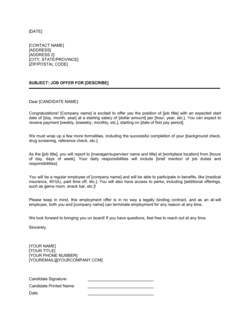
An offer letter confirms the role and compensation to secure candidate acceptance — it is not a comprehensive compliance or legal document. It lacks scope-of-practice definitions, HIPAA and 42 CFR Part 2 obligations, mandated reporting clauses, and license-lapse termination provisions. Healthcare employers relying solely on an offer letter face credentialing and accreditation gaps that a properly structured job description closes.

Industry-specific considerations

Behavioral Health and Addiction Treatment

42 CFR Part 2 compliance, MAT program staffing ratios, SAMHSA grant conditions, and CARF or Joint Commission accreditation requirements all mandate role-specific documentation for every licensed clinician.

Hospital and Inpatient Healthcare

Social workers in inpatient settings document discharge planning, crisis intervention, and interdisciplinary team coordination — each requiring scope-of-practice clarity and EHR timeliness standards tied to CMS Conditions of Participation.

Nonprofit Social Services

Federal and state funders require grant-compliant job descriptions that specify license tiers, supervision structures, and caseload expectations as a condition of continued funding.

Government and Public Health

County mental health departments and public health agencies must align job descriptions with civil service classifications and union agreements, while still meeting state licensing board scope-of-practice requirements.

Jurisdictional notes

United States

Social work licensing is entirely state-regulated — license designations (LCSW, LICSW, LCSW-C), supervision hour requirements, and scope-of-practice definitions vary by state. Substance use disorder records are subject to 42 CFR Part 2 in addition to HIPAA. Mandated reporting obligations, timeframes, and designated reporting agencies differ by state and by the population served. California, New York, and Texas each have specific licensure tiers and supervision requirements that must be reflected in the job description.

Canada

Social work is a regulated profession in most provinces, with registration required through provincial colleges (e.g., OCSWSSW in Ontario, BCCSW in British Columbia). Quebec distinguishes between 'travailleur social' and psychotherapy practice, requiring separate permits for certain therapeutic interventions. Employers must align scope-of-practice language with the applicable provincial college's standards of practice. Federal privacy obligations under PIPEDA apply alongside provincial health privacy statutes.

United Kingdom

Social workers in the UK must be registered with Social Work England (England), Social Care Wales, the Scottish Social Services Council, or the Northern Ireland Social Care Council. The role title 'social worker' is legally protected and may only be used by registered practitioners. NHS and local authority job descriptions must align with the Professional Capabilities Framework (PCF). Disclosure and Barring Service (DBS) checks are mandatory for roles involving vulnerable adults and children.

European Union

Social work qualifications and registration requirements vary significantly across EU member states, with no unified EU-wide licensing framework. GDPR applies to all patient and client data, imposing documentation and consent requirements that must be reflected in confidentiality clauses — particularly for sensitive mental health and substance use disorder data, which is classified as special category data under Article 9. Employers operating across member states should obtain country-specific legal advice on scope-of-practice and mandatory reporting obligations.

Template vs lawyer — what fits your deal?

PathBest forCostTime
Use the templateSingle-state behavioral health organizations hiring for straightforward LCSW or LSW rolesFree30–60 minutes
Template + legal reviewSAMHSA-funded programs, multi-state employers, or organizations undergoing CARF or Joint Commission accreditation$300–$800 (healthcare employment attorney review)3–5 business days
Custom draftedLarge hospital systems, public behavioral health agencies with civil service requirements, or multi-state programs with complex licensing and union considerations$1,000–$3,500+1–3 weeks

Glossary

LCSW (Licensed Clinical Social Worker)
A state-issued license authorizing a social worker to independently diagnose and treat mental health and substance use disorders without direct supervision.
LSW (Licensed Social Worker)
A foundational social work license that permits practice under the supervision of a licensed clinical supervisor, typically required before advancing to LCSW.
SAMHSA
The Substance Abuse and Mental Health Services Administration — the US federal agency that funds and regulates behavioral health treatment programs.
HIPAA
The Health Insurance Portability and Accountability Act, which sets federal standards for protecting identifiable patient health information from unauthorized disclosure.
Scope of Practice
The legally defined range of services, procedures, and activities a licensed professional is authorized to perform based on their specific license and jurisdiction.
Supervision (clinical)
Formal oversight of an associate or pre-licensed social worker by a qualified supervisor, typically required for a defined number of hours before licensure advancement.
DSM-5 / ICD-10
The Diagnostic and Statistical Manual of Mental Disorders (5th ed.) and International Classification of Diseases (10th revision) — the diagnostic coding systems used in clinical documentation.
MAT (Medication-Assisted Treatment)
A substance use disorder treatment approach combining FDA-approved medications with counseling and behavioral therapies.
EHR (Electronic Health Record)
A digital system used to document patient assessments, treatment plans, progress notes, and billing records in compliance with regulatory standards.
Mandated Reporter
A professional legally required to report suspected child or elder abuse to designated authorities, a status that applies to most licensed social workers by statute.
CEU (Continuing Education Unit)
Credit earned through professional development activities required by state licensing boards to maintain an active social work license.

Part of your Business Operating System

This document is one of 3,000+ business & legal templates included in Business in a Box.

  • Fill-in-the-blanks — ready in minutes
  • 100% customizable Word document
  • Compatible with all office suites
  • Export to PDF and share electronically

Create your document in 3 simple steps.

From template to signed document — all inside one Business Operating System.
1
Download or open template

Access over 3,000+ business and legal templates for any business task, project or initiative.

2
Edit and fill in the blanks with AI

Customize your ready-made business document template and save it in the cloud.

3
Save, Share, Send, Sign

Share your files and folders with your team. Create a space of seamless collaboration.

Save time, save money, and create top-quality documents.

★★★★★

"Fantastic value! I'm not sure how I'd do without it. It's worth its weight in gold and paid back for itself many times."

Managing Director · Mall Farm
Robert Whalley
Managing Director, Mall Farm Proprietary Limited
★★★★★

"I have been using Business in a Box for years. It has been the most useful source of templates I have encountered. I recommend it to anyone."

Business Owner · 4+ years
Dr Michael John Freestone
Business Owner
★★★★★

"It has been a life saver so many times I have lost count. Business in a Box has saved me so much time and as you know, time is money."

Owner · Upstate Web
David G. Moore Jr.
Owner, Upstate Web

Run your business with a system — not scattered tools

Stop downloading documents. Start operating with clarity. Business in a Box gives you the Business Operating System used by over 250,000 companies worldwide to structure, run, and grow their business.

Free Forever Plan · No credit card required