Voting Trust Agreement Template

Free Word download β€’ Edit online β€’ Save & share with Drive β€’ Export to PDF

7 pagesβ€’25–35 min to fillβ€’Difficulty: Complexβ€’Signature requiredβ€’Legal review recommended
Learn more ↓
FreeVoting Trust Agreement Template

At a glance

What it is
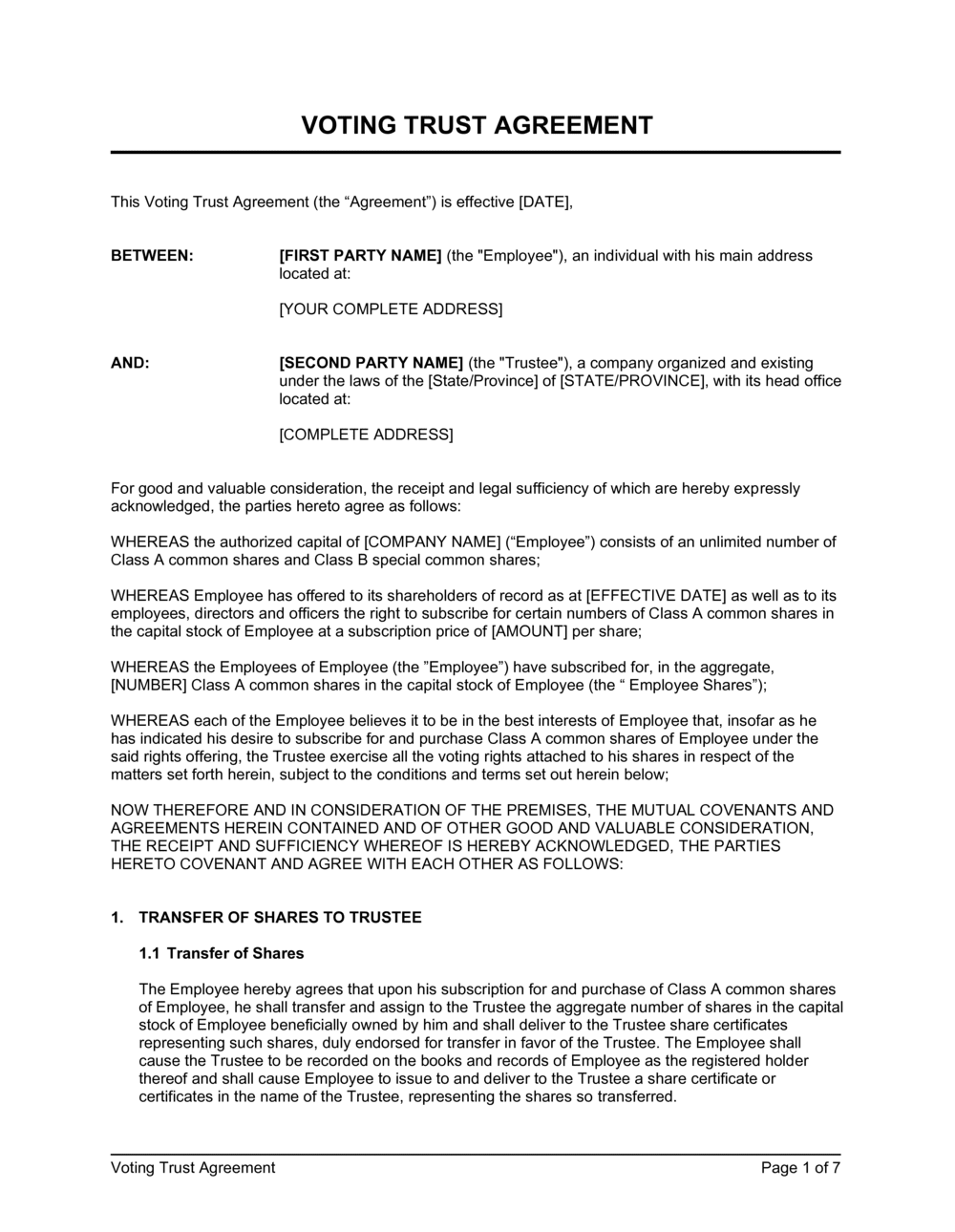
A Voting Trust Agreement is a legally binding contract under which one or more shareholders transfer the voting rights attached to their shares to a designated trustee for a defined period. The trustee exercises those voting rights on behalf of the beneficiaries, who retain economic ownership of the shares. This free Word download provides a structured, attorney-reviewed starting point you can edit online and export as PDF for execution.
When you need it
Use it when shareholders want to centralize voting control during a merger, succession event, or period of operational instability β€” or when a lender, investor, or regulatory body requires consolidated voting authority as a condition of financing or approval.
What's inside
Trustee appointment and powers, share deposit mechanics, voting trust certificate issuance, beneficiary rights and distributions, trustee duties and compensation, duration and termination conditions, amendment procedures, and governing law.

What is a Voting Trust Agreement?

A Voting Trust Agreement is a legally binding contract under which one or more shareholders transfer the voting rights attached to their shares to a designated trustee for a fixed term. The trustee becomes the legal holder of record for the deposited shares and exercises all voting rights β€” at annual meetings, special meetings, and by written consent β€” on behalf of the depositing shareholders, who retain full economic ownership of the shares including dividends, liquidation proceeds, and subscription rights. Voting trusts are creatures of statute in most jurisdictions, meaning they must comply with specific filing, duration, and formality requirements to be enforceable against the company and third parties.

Why You Need This Document

Without a voting trust, fragmented share ownership can paralyze a company at the worst possible moment β€” during a financing round, a merger vote, or a succession transition. A single dissenting minority shareholder can block a supermajority resolution; competing heirs can deadlock a board election; a lender may refuse to close a secured facility without proof that one party controls governance decisions for the loan term. A properly executed voting trust eliminates those risks by placing voting authority in a single trustee bound by fiduciary duties, while preserving every economic right for the depositing shareholders. This template gives you the structural framework β€” trustee powers, beneficiary pass-through mechanics, statutory duration controls, and termination procedures β€” that courts and regulators expect to see in an enforceable voting trust arrangement.

Which variant fits your situation?

If your situation is…Use this template
Centralizing voting control for a single class of shares during an IPO lock-upVoting Trust Agreement (Single Class)
Multiple shareholders pooling votes for a board election campaignShareholder Voting Agreement
Restricting share transfers while voting rights are held in trustShare Restriction Agreement
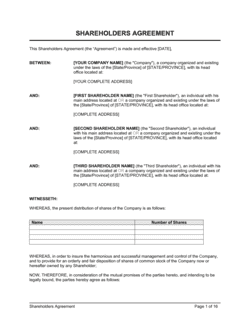
Governing all shareholder rights and obligations in a private companyShareholders Agreement
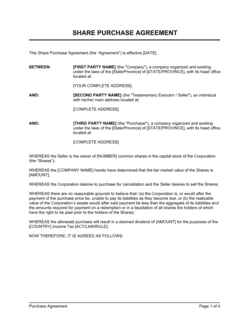
Transferring complete ownership and control of shares outrightShare Purchase Agreement
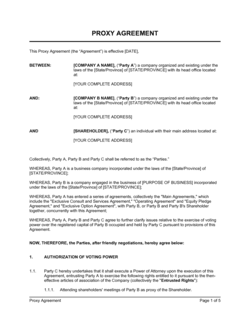
Delegating voting rights temporarily without creating a trust structureProxy Agreement
Setting terms for a management buyout where voting control shiftsManagement Buyout Agreement

Common mistakes to avoid

❌ Exceeding the statutory duration cap without a renewal clause

Why it matters: Most US states cap voting trust terms at 10 years. A 15-year term in a Delaware agreement is void from year 11 onward, leaving no one with authority to vote the deposited shares.

Fix: Check the governing jurisdiction's statutory maximum and include an automatic renewal clause β€” typically requiring notice from a majority of depositors at least 60 days before expiry.

❌ No successor trustee mechanism

Why it matters: If the sole trustee dies, resigns, or becomes legally incapacitated and the agreement is silent on succession, the trust is effectively frozen until a court appoints a replacement β€” a process that can take months and is expensive.

Fix: Name at least one successor trustee by name or role, and include a fallback appointment procedure triggered within 30 days of a vacancy.

❌ Failing to file the agreement with the company or secretary of state

Why it matters: Most voting trust statutes condition enforceability on filing a copy with the company's principal office and making it available to shareholders. An unfiled agreement can be challenged as unenforceable.

Fix: Include an explicit filing obligation in the agreement and calendar it for completion within 5 business days of execution.

❌ Omitting non-cash distributions from the pass-through clause

Why it matters: Stock dividends, rights offerings, and shares issued in a split may end up held by the trustee without a clear obligation to pass them through β€” creating an unintended economic benefit for the trustee.

Fix: Add a catch-all clause stating that all distributions on the deposited shares β€” cash or non-cash β€” are received by the trustee solely for the account of the depositors and must be distributed or held on their behalf.

❌ Describing deposited shares by percentage rather than exact count

Why it matters: A clause covering '40% of the Company's issued shares' becomes ambiguous after any stock issuance, split, or buyback β€” triggering disputes about whether new shares are in or out of the trust.

Fix: Identify deposited shares by exact share count, certificate number, and share class at the time of execution. Address future issuances with a separate drag-along provision if needed.

❌ Using a governing law different from the state of incorporation

Why it matters: Courts typically apply the law of the state of incorporation to internal governance matters regardless of the agreement's choice-of-law clause. A voting trust governed by New York law for a Delaware corporation may be measured against Delaware's voting trust statute.

Fix: Align the governing law with the company's state or country of incorporation, or obtain a legal opinion on conflict-of-laws exposure before execution.

The 9 key clauses, explained

Parties, recitals, and definitions

In plain language: Identifies the depositing shareholders, the trustee, and the company whose shares are subject to the trust, and defines key terms used throughout the agreement.

Sample language
This Voting Trust Agreement ('Agreement') is entered into as of [DATE] among [SHAREHOLDER NAME(S)] (each a 'Depositor'), [TRUSTEE NAME] ('Trustee'), and [COMPANY NAME], a [STATE/COUNTRY] [ENTITY TYPE] ('Company').

Common mistake: Omitting the company as a party or signatory. Courts in several jurisdictions require the issuing company to be a party for the trust to be enforceable against the company's transfer agent and share register.

Deposit and transfer of shares

In plain language: Specifies which shares are deposited into the trust, the mechanics of transferring legal title to the trustee, and the timeline for completing the transfer on the share register.

Sample language
Each Depositor hereby transfers and delivers to the Trustee [NUMBER] shares of [CLASS] stock of the Company (the 'Deposited Shares'), certificate numbers [XXXX], to be held by the Trustee pursuant to the terms of this Agreement.

Common mistake: Describing shares by approximate percentage rather than exact share count and certificate numbers. Ambiguity in the deposited share pool creates disputes when partial transfers or stock splits occur during the trust period.

Issuance of voting trust certificates

In plain language: Requires the trustee to issue a voting trust certificate to each depositor acknowledging their beneficial interest, and sets out the form, transferability, and legend requirements for those certificates.

Sample language
Upon receipt of the Deposited Shares, the Trustee shall issue to each Depositor a Voting Trust Certificate in the form attached as Exhibit A, evidencing the Depositor's beneficial interest in the shares held hereunder.

Common mistake: Failing to attach a form of certificate as an exhibit. Without a standard form, each certificate issued may differ β€” creating inconsistency that complicates later transfers or the trust's termination.

Trustee voting powers

In plain language: Grants the trustee exclusive authority to vote the deposited shares at all shareholder meetings and by written consent, and defines any limitations on how that vote may be cast.

Sample language
The Trustee shall have the exclusive right and power to vote the Deposited Shares at any annual or special meeting of shareholders, or by written consent in lieu of a meeting, in the Trustee's sole discretion [or as directed by a majority of Depositors by written instruction].

Common mistake: Granting unrestricted discretion without any direction mechanism. Beneficiaries who contributed material stakes often expect at least a consultation right; absent one, trustee voting decisions they oppose cannot be challenged except by showing a breach of fiduciary duty.

Beneficiary rights and distributions

In plain language: Confirms that depositors retain all economic rights to their shares β€” dividends, distributions, liquidation proceeds, and subscription rights β€” which the trustee must pass through promptly.

Sample language
All cash dividends and distributions received by the Trustee with respect to the Deposited Shares shall be promptly paid over to the respective Depositors in proportion to their beneficial interests. Non-cash distributions shall be held subject to this Agreement.

Common mistake: Not addressing non-cash distributions such as stock dividends, rights issues, or shares issued in a stock split. Leaving these unaddressed means additional shares may fall outside the trust or cause certificate totals to diverge from the actual deposited pool.

Trustee duties, standard of care, and compensation

In plain language: Sets the standard to which the trustee is held when exercising voting rights, limits trustee liability to gross negligence or willful misconduct, and specifies any compensation or expense reimbursement.

Sample language
The Trustee shall exercise the voting rights with respect to the Deposited Shares in a manner the Trustee reasonably believes to be in the best interests of the Depositors. The Trustee shall not be liable for any act or omission except as caused by gross negligence or willful misconduct. The Trustee shall be entitled to reimbursement of reasonable out-of-pocket expenses.

Common mistake: Using an individual trustee without a successor designation or resignation procedure. If the sole trustee dies, resigns, or becomes incapacitated with no succession mechanism, the agreement becomes unenforceable until a court appoints a replacement β€” which can take months.

Duration and termination

In plain language: States the trust's fixed term, which events trigger automatic early termination (e.g., company acquisition, IPO), and the process for winding up the trust and returning shares to depositors.

Sample language
This Agreement shall continue for a period of [X] years from the date hereof, unless earlier terminated upon (a) the written consent of all Depositors and the Trustee, (b) a Change of Control of the Company, or (c) the completion of an initial public offering. Upon termination, the Trustee shall cause the Deposited Shares to be retransferred to the respective Depositors within [30] days.

Common mistake: Setting a term that exceeds the statutory maximum in the governing jurisdiction without including a renewal clause. Delaware caps voting trusts at 10 years; if the agreement simply states 15 years, the excess period is void and the trust may terminate at the 10-year mark without warning.

Amendment and successor trustee

In plain language: Specifies how the agreement can be amended (typically requiring unanimous or supermajority Depositor consent), the process for removing or replacing the trustee, and the qualifications for any successor.

Sample language
This Agreement may be amended only by a written instrument signed by Depositors holding not less than [75]% of the beneficial interests and by the Trustee. The Trustee may resign upon [30] days' written notice to all Depositors, and a successor Trustee shall be appointed by [unanimous / majority] vote of Depositors within [30] days of such notice.

Common mistake: Requiring unanimous consent for amendments when there are many small depositors. A single holdout can block necessary adjustments; a supermajority threshold (e.g., 75–80%) preserves protection while allowing the agreement to evolve.

Governing law, dispute resolution, and filing

In plain language: Designates the jurisdiction whose corporate law governs the agreement, the dispute-resolution mechanism, and any statutory filing requirements β€” such as filing a copy with the company.

Sample language
This Agreement shall be governed by and construed in accordance with the laws of the State of [STATE / PROVINCE / COUNTRY]. Any dispute shall be resolved by binding arbitration in [CITY] under the rules of [AAA / JAMS]. A copy of this Agreement shall be filed with the Company's principal office and made available to shareholders as required by applicable law.

Common mistake: Choosing a governing jurisdiction that differs from the company's state of incorporation without analyzing whether that jurisdiction's voting trust statutes will be applied. Courts often apply the law of the state of incorporation to internal corporate matters regardless of the contract's choice-of-law clause.

How to fill it out

  1. 1

    Identify all depositing shareholders and confirm share details

    List each depositor by full legal name, their share count, certificate numbers, and share class. Confirm these details against the company's current share register before drafting to prevent discrepancies.

    πŸ’‘ Request a certified share register extract from the company's secretary or transfer agent before filling in share counts β€” stale cap table data is a common source of errors.

  2. 2

    Select and confirm the trustee

    Appoint an individual or corporate trustee who is legally capable of holding the shares and exercising fiduciary duties. Name at least one successor trustee or include a procedure for appointing one.

    πŸ’‘ A corporate trustee (e.g., a trust company or law firm) is preferable for multi-party or long-duration trusts β€” individuals can die, become incapacitated, or move jurisdictions.

  3. 3

    Define the trust duration and check statutory limits

    Set the term in years and verify that it does not exceed the statutory maximum in your governing jurisdiction. Include a renewal clause if the parties may need to extend beyond the initial term.

    πŸ’‘ Delaware caps voting trusts at 10 years per term but allows renewal by agreement of the depositors. Confirm the applicable cap before drafting.

  4. 4

    Draft the trustee voting powers and any direction mechanism

    Decide whether the trustee votes in sole discretion or must follow depositor instructions, and for what decisions (e.g., mergers, asset sales) a direction or consent threshold applies.

    πŸ’‘ Reserving trustee discretion on routine matters but requiring depositor direction on fundamental transactions (mergers, dissolution) balances efficiency with accountability.

  5. 5

    Specify beneficiary economic rights and distribution mechanics

    Confirm that dividends, distributions, and subscription rights pass through to depositors promptly. Address non-cash distributions β€” stock splits, rights offerings, in-kind dividends β€” explicitly.

    πŸ’‘ Include a catch-all provision covering any new shares issued with respect to the deposited shares, so that stock dividends and splits automatically become deposited shares without a separate amendment.

  6. 6

    Set amendment thresholds and trustee resignation procedures

    Choose a supermajority threshold (75–80%) for amendments rather than unanimity, and specify notice periods and appointment timelines for successor trustees.

    πŸ’‘ A 30-day resignation notice with a 30-day appointment window for a successor prevents the trust from lapsing if the trustee steps down unexpectedly.

  7. 7

    Confirm filing and notice requirements

    Determine whether applicable law requires the agreement to be filed with the company's registered office or secretary of state. Draft the filing clause accordingly and calendar the filing deadline.

    πŸ’‘ In Delaware and most US states, a copy of the voting trust agreement must be on file at the company's registered office and open to shareholder inspection β€” non-compliance can affect enforceability.

  8. 8

    Execute, file, and update the share register

    Obtain signatures from all depositors, the trustee, and the company. File with the company as required, issue voting trust certificates to each depositor, and instruct the transfer agent to update the share register to reflect the trustee as legal owner.

    πŸ’‘ Do not consider the trust operative until the share register actually shows the trustee as legal holder β€” a signed agreement without a register update gives the trustee no authority to vote.

Frequently asked questions

What is a voting trust agreement?

A voting trust agreement is a legal contract under which one or more shareholders transfer the voting rights attached to their shares to a designated trustee for a fixed period. The trustee exercises those voting rights on behalf of the depositing shareholders, who retain full economic ownership β€” dividends, liquidation proceeds, and subscription rights. Voting trusts are used to consolidate governance control during transactions, succession events, or financing arrangements.

When should a company use a voting trust agreement?

Common situations include consolidating control ahead of a merger or acquisition, preserving unified governance during an estate transfer when shares pass to multiple heirs, satisfying a lender's requirement for centralized voting authority as a loan condition, preventing shareholder deadlock in a closely-held company, and stabilizing governance during an IPO lock-up period. Any scenario where fragmented shareholder voting could disrupt a transaction or operation is a candidate for a voting trust.

How long can a voting trust last?

Duration limits are set by statute in the governing jurisdiction. In Delaware, voting trusts are capped at 10 years per term but may be extended by a new agreement executed before the term expires. Many other US states follow similar limits. In Canada and the UK, statutory caps are less common but the agreement must specify a fixed term to avoid arguments that it runs in perpetuity, which courts may refuse to enforce. Always confirm the applicable statutory maximum before setting the term.

What is the difference between a voting trust and a proxy?

A proxy is a revocable, short-term delegation of voting authority β€” typically for a single shareholder meeting or resolution β€” that the shareholder can revoke at any time before the vote. A voting trust transfers legal title to the shares to a trustee for a defined multi-year term and is generally irrevocable for that period. Voting trusts provide much stronger governance continuity but are more complex and expensive to establish than proxies.

Does a voting trust need to be filed with the company?

In most US states, yes. Delaware law (DGCL Β§218) and similar statutes in other states require a copy of the voting trust agreement to be on file at the company's registered office and open to inspection by shareholders and directors. Failure to file can affect the enforceability of the trust. Requirements vary by jurisdiction, so confirm the filing obligations under the applicable corporate statute before execution.

Can the depositing shareholders still receive dividends?

Yes. A well-drafted voting trust agreement requires the trustee to pass through all cash dividends and distributions to the depositing shareholders promptly in proportion to their beneficial interests. The depositors retain all economic rights β€” dividends, liquidation proceeds, subscription rights, and capital gains β€” only voting rights are transferred to the trustee. Non-cash distributions such as stock dividends should be addressed explicitly in the agreement.

Who can serve as trustee under a voting trust?

Any legally capable individual or corporate entity can serve as trustee β€” a major shareholder, a board member, an independent third party, a trust company, or a law firm. For multi-party or long-duration trusts, a corporate trustee is generally preferable because it eliminates the risk of the trust lapsing due to the trustee's death, incapacity, or departure. The trustee must be willing to accept and discharge fiduciary duties to the depositors.

Is a voting trust agreement enforceable without a lawyer?

A template provides a sound structural starting point, but voting trusts involve corporate law, trust law, and fiduciary duties that intersect differently in each jurisdiction. Legal review is strongly recommended for any voting trust involving significant share value, multiple depositors, cross-border shareholders, or a public or regulated company. At minimum, confirm the statutory duration limits, filing requirements, and non-compete rules in the governing jurisdiction before execution.

What happens when a voting trust expires?

When the trust term ends, the trustee is required to retransfer the deposited shares back to the respective depositors. The voting trust certificates are cancelled, the share register is updated to reflect the depositors as legal owners again, and each depositor resumes full voting rights. If the parties want to continue the arrangement, a new voting trust agreement must be executed before the expiry date β€” typically requiring the consent of depositors holding a specified percentage of the beneficial interests.

How this compares to alternatives

vs Shareholders Agreement

A shareholders agreement governs the full range of shareholder rights and obligations β€” share transfers, drag-along and tag-along rights, dividend policy, and board composition β€” without transferring voting rights to a third party. A voting trust specifically and exclusively transfers voting authority to a trustee for a fixed term. Parties often use both: a shareholders agreement for the ongoing relationship and a voting trust to consolidate control for a specific transaction or period.

vs Proxy Agreement

A proxy is a revocable delegation of voting rights for a single meeting or resolution. A voting trust is a multi-year, generally irrevocable transfer of legal title to shares and the voting rights attached to them. Proxies are simpler and faster to execute but provide no governance continuity; voting trusts are more complex but ensure stable, centralized control for the duration of the trust term.

vs Share Purchase Agreement

A share purchase agreement transfers both economic ownership and voting rights permanently from seller to buyer. A voting trust transfers only voting rights temporarily β€” the depositor retains economic ownership and gets the shares back when the trust expires. Use a voting trust when the goal is consolidated governance control, not a change of ownership.

vs Irrevocable Proxy

An irrevocable proxy also delegates voting rights without transferring share ownership, but it is typically tied to a specific financial interest β€” such as a lender holding the proxy as security β€” and may be enforceable only for as long as that interest exists. A voting trust provides a more structured, statutorily recognized framework with fiduciary obligations, beneficiary rights, and certificate mechanics that an irrevocable proxy does not.

Industry-specific considerations

Technology / SaaS

Founders consolidate voting control in a trustee before a Series A or IPO to prevent fragmented governance from delaying investor-required board decisions.

Family-owned businesses

Shares distributed to multiple heirs are deposited into a voting trust to ensure a single trustee can act decisively without requiring unanimous family consent.

Financial services

Lenders require a voting trust as a closing condition on leveraged buyouts or mezzanine financings to ensure a single counterparty controls governance during the loan term.

Manufacturing

Private equity sponsors use voting trusts during post-acquisition integration to consolidate decision-making authority across a fragmented shareholder base before a full restructuring.

Jurisdictional notes

United States

Most US states regulate voting trusts under their corporate statutes. Delaware (DGCL Β§218) caps terms at 10 years, requires filing with the company's registered office, and allows renewal by depositor agreement before expiry. California has historically been more restrictive β€” courts scrutinize whether a voting trust is being used to circumvent shareholder rights. Confirm both the duration cap and the filing requirement for the state of incorporation before execution.

Canada

Canadian corporate statutes β€” including the CBCA and provincial equivalents β€” do not uniformly cap voting trust duration, but courts may refuse to enforce perpetual arrangements. Voting trusts must be consistent with the company's articles and shareholders agreement. In Quebec, civil law principles apply alongside the corporate statute, and trust mechanics must align with the Civil Code. Securities law may impose additional disclosure obligations for trusts involving reporting issuers.

United Kingdom

UK company law does not specifically regulate voting trusts, but they are generally enforceable as ordinary contracts and trusts under equity principles. The Companies Act 2006 restricts the company itself from recognizing trusts on its share register (s.126), meaning the trustee appears as the registered shareholder and the company deals only with the trustee. Listed company voting trusts may trigger disclosure obligations under the Disclosure Guidance and Transparency Rules when they cross reporting thresholds.

European Union

EU member states vary significantly in their treatment of voting trusts. Germany, the Netherlands, and the Nordic countries have well-developed frameworks for pooling voting rights through trust-like structures. France and Italy recognize voting arrangements through shareholders' pacts but impose duration limits and transparency requirements. For listed companies, the EU's Transparency Directive requires disclosure when voting agreements cause a shareholder to cross major ownership thresholds. GDPR may apply when the agreement involves processing personal data of individual depositors.

Template vs lawyer β€” what fits your deal?

PathBest forCostTime
Use the templateSimple single-class voting trusts among a small number of shareholders in a domestic company with a clear statutory frameworkFree1–2 hours
Template + legal reviewMulti-shareholder trusts, trusts used as loan conditions, or situations involving equity compensation or cross-border depositors$600–$1,5003–5 business days
Custom draftedPublic companies, regulated financial institutions, IPO-related trusts, or complex estate-planning structures with significant share value$2,500–$8,000+2–4 weeks

Glossary

Voting Trust
A legal arrangement under which shareholders transfer their voting rights to a trustee for a set period, retaining only the economic benefits of share ownership.
Trustee
The individual or entity appointed to hold and exercise the voting rights deposited under the agreement on behalf of the beneficiary shareholders.
Beneficiary
A shareholder who has deposited shares into the trust and retains economic rights β€” dividends, liquidation proceeds β€” but not direct voting rights.
Voting Trust Certificate
A certificate issued to each depositing shareholder confirming their beneficial interest in the trust, typically transferable like the underlying shares.
Record Date
The date on which a company identifies which shareholders are entitled to vote or receive dividends; under a voting trust, the trustee appears as shareholder of record.
Deposited Shares
The shares physically or book-entry transferred to the trustee's name on the company's share register for the duration of the trust.
Trust Duration
The maximum period for which a voting trust may operate, typically capped by statute β€” 10 years in Delaware, renewable by agreement in many jurisdictions.
Revocability
Whether a beneficiary can reclaim voting rights before the trust term expires; most voting trusts are irrevocable for the agreed duration unless all parties consent.
Fiduciary Duty
The trustee's legal obligation to act in the best interests of the beneficiaries when exercising voting rights, not in the trustee's own interest.
Proxy
A narrower, typically revocable delegation of voting authority for a specific meeting or resolution β€” distinct from a voting trust, which transfers rights for a defined term.
Share Register
The company's official record of share ownership; when shares enter a voting trust, the trustee's name replaces the beneficiary's on the register.

Part of your Business Operating System

This document is one of 3,000+ business & legal templates included in Business in a Box.

  • Fill-in-the-blanks β€” ready in minutes
  • 100% customizable Word document
  • Compatible with all office suites
  • Export to PDF and share electronically

Create your document in 3 simple steps.

From template to signed document β€” all inside one Business Operating System.
1
Download or open template

Access over 3,000+ business and legal templates for any business task, project or initiative.

2
Edit and fill in the blanks with AI

Customize your ready-made business document template and save it in the cloud.

3
Save, Share, Send, Sign

Share your files and folders with your team. Create a space of seamless collaboration.

Save time, save money, and create top-quality documents.

β˜…β˜…β˜…β˜…β˜…

"Fantastic value! I'm not sure how I'd do without it. It's worth its weight in gold and paid back for itself many times."

Managing Director Β· Mall Farm
Robert Whalley
Managing Director, Mall Farm Proprietary Limited
β˜…β˜…β˜…β˜…β˜…

"I have been using Business in a Box for years. It has been the most useful source of templates I have encountered. I recommend it to anyone."

Business Owner Β· 4+ years
Dr Michael John Freestone
Business Owner
β˜…β˜…β˜…β˜…β˜…

"It has been a life saver so many times I have lost count. Business in a Box has saved me so much time and as you know, time is money."

Owner Β· Upstate Web
David G. Moore Jr.
Owner, Upstate Web

Run your business with a system β€” not scattered tools

Stop downloading documents. Start operating with clarity. Business in a Box gives you the Business Operating System used by over 250,000 companies worldwide to structure, run, and grow their business.

Start freeΒ Β·Β No credit card required