Drywall Contractor Business Plan Template

Free Word download β€’ Edit online β€’ Save & share with Drive β€’ Export to PDF

34 pagesβ€’2h 50m – 3h 50m to fillβ€’Difficulty: Expert
Learn more ↓
FreeDrywall Contractor Business Plan Template

At a glance

What it is
A Drywall Contractor Business Plan is a structured document that maps your drywall business's services, target market, pricing model, crew operations, equipment needs, and 3-year financial projections into a single reference file. This free Word download gives you a ready-to-edit starting point you can customize and export as PDF to share with lenders, bonding agents, or general contractors evaluating your company for subcontract work.
When you need it
Use it when applying for a small business loan or line of credit, pursuing surety bonding, bidding on commercial subcontracts that require a company profile, or launching a new drywall contracting company from scratch.
What's inside
Executive summary, company overview, services and specializations, market analysis, competitive positioning, marketing and sales strategy, operations and crew management plan, management team profiles, and 3-year financial projections including revenue, job costs, and cash flow.

What is a Drywall Contractor Business Plan?

A Drywall Contractor Business Plan is a structured document that defines your drywall company's services, crew capacity, target market, competitive positioning, sales strategy, and 3-year financial projections in a single reference file. It goes beyond a general construction business plan by addressing trade-specific factors: the finish levels you are qualified to perform, your board footage output per crew per day, your material procurement and supplier terms, and the subcontractor bid-and-award sales cycle that drives your pipeline. Lenders, surety bond underwriters, and commercial general contractors use the document to evaluate whether your company has the operational structure and financial foundation to perform on their projects.

Why You Need This Document

Without a written business plan, a drywall contractor faces a concrete set of closed doors: SBA lenders decline applications that lack one, surety bond underwriters cannot assess your capacity without it, and commercial general contractors skip companies that cannot submit a prequalification packet. Beyond external uses, the act of building the plan exposes gaps before they become expensive β€” a revenue projection that exceeds your crew's physical capacity, a cash flow model that ignores retainage timing, or a market assumption built on national statistics rather than local permit data. This template gives you the structure to produce a credible, lender-ready plan in days rather than weeks, without starting from a blank page.

Which variant fits your situation?

If your situation is…Use this template
Launching a new drywall business with no prior revenueDrywall Contractor Business Plan (Startup)
Applying for an SBA 7(a) or 504 loanConstruction Business Plan
Expanding an existing drywall company into commercial projectsBusiness Expansion Plan
Creating a one-page summary for a general contractor RFQOne-Page Business Plan
Planning a full residential renovation or remodeling businessHome Renovation Business Plan
Building a financial forecast to track job costs and marginsFinancial Projections (12 Months)
Bidding on a large commercial project requiring a company profileConstruction Proposal

Common mistakes to avoid

❌ Projecting revenue beyond crew capacity

Why it matters: A single drywall crew can install roughly 2,000–3,000 sq ft of board per day. Revenue projections that exceed what your stated crew count can physically complete will be caught immediately by any lender or GC familiar with the trade.

Fix: Build revenue from the bottom up: crew count Γ— daily capacity Γ— working days Γ— average revenue per square foot. Only increase projected revenue when you model a corresponding crew addition.

❌ Omitting license, bond, and insurance details

Why it matters: General contractors and lenders verify contractor licensing and insurance before reading anything else. A plan missing these details signals either incomplete licensing or that the owner didn't treat the document seriously.

Fix: Include your state contractor license number, bonding amount, general liability limit, and workers' compensation carrier in the company overview section before distributing the plan.

❌ Using national market data instead of local permit statistics

Why it matters: A drywall contractor serves a defined metro area β€” national construction growth rates say nothing about the specific pipeline of work available in your market.

Fix: Pull 12-month permit data from your city or county building department and cite it directly. Convert total permitted square footage to an estimated drywall subcontract value using your regional cost per square foot.

❌ Leaving out a safety program reference

Why it matters: Most commercial GCs require proof of a written safety program and OSHA-certified crew leads before issuing a subcontract invitation. A business plan that ignores safety signals the company is residential-only at best.

Fix: Include a paragraph in the operations section describing your safety program β€” OSHA 10/30 certifications, toolbox talk cadence, incident reporting process, and your current EMR (Experience Modification Rate) if available.

❌ Requesting an undifferentiated lump-sum loan

Why it matters: Lenders approve specific uses of funds, not generic working capital requests. An ask without a line-item breakdown suggests the owner hasn't thought through the actual cost of execution.

Fix: Break the funding request into at least four categories with dollar amounts: equipment and tools, vehicles and trailers, materials float and payroll buffer, and bonding collateral or administrative setup costs.

❌ Skipping the competitive analysis

Why it matters: Every metro market has established drywall subcontractors. Claiming no competition exists β€” or omitting the section entirely β€” tells a reviewer the owner either doesn't know their market or is hiding something unfavorable.

Fix: Name at least three active competitors, describe their approximate capacity and focus, and write one specific paragraph on why GCs will choose your company over them.

The 10 key sections, explained

Executive Summary

Company Overview

Services and Specializations

Market Analysis

Competitive Analysis

Marketing and Sales Strategy

Operations and Crew Management Plan

Management Team

Financial Projections

Funding Requirements and Use of Funds

How to fill it out

  1. 1

    Complete the company overview with license and insurance details

    Enter your legal entity name, state of formation, contractor license number, bonding amount, and insurance coverage limits. Include your primary trade area and years in operation.

    πŸ’‘ Pull your actual certificate of insurance and license number before you start β€” these are the first things a GC or lender will verify.

  2. 2

    Define your services and primary verticals

    List the specific drywall services you deliver and identify the one or two project types that generate most of your revenue. Note the finish levels you are qualified to perform.

    πŸ’‘ If you have portfolio photos or a list of completed projects by type, reference them here β€” even a short project list adds credibility to the services section.

  3. 3

    Research your local construction market

    Pull residential and commercial permit data from your city or county building department for the last 12 months. Estimate the drywall subcontract value of that pipeline by multiplying total square footage by your regional drywall cost per square foot.

    πŸ’‘ Your local AGC chapter or NAHB affiliate often publishes regional construction market reports β€” cite them as a source alongside permit data.

  4. 4

    Map your competitive landscape

    Identify at least three active drywall contractors in your market. Note their approximate crew size, the project types they focus on, and how your company differs in capacity, speed, finish quality, or pricing.

    πŸ’‘ Check BuildingConnected or iSqFt bid invitations to see which contractors are being invited to bid on the same projects you target β€” this reveals your real competitive set.

  5. 5

    Document your sales pipeline and GC relationships

    List the general contractors you currently work with or are actively pursuing. Note the bid platforms you use, your average bid-to-win ratio if known, and the typical lead time from bid invitation to project award.

    πŸ’‘ Even two or three named GC relationships significantly strengthen a lender's confidence in the plan β€” a pipeline of real names beats a description of your strategy.

  6. 6

    Detail your crew capacity and operations model

    Specify current crew count and composition, daily board footage capacity, equipment inventory, material supplier terms, and your safety program framework.

    πŸ’‘ State your OSHA compliance posture explicitly β€” whether crew leads hold OSHA 10 or 30 cards, and whether you have a written safety program. This is a minimum expectation on most commercial jobsites.

  7. 7

    Build the financial projections from job volume up

    Start with average contract value and jobs-per-month targets at current crew count. Calculate Year 1 revenue, then model Year 2 and Year 3 assuming planned crew additions. Apply your actual material and labor cost percentages to each year.

    πŸ’‘ Use your last 12 months of actual job costs as the baseline for material and labor percentages β€” estimated percentages without historical backing will be challenged by any experienced lender.

  8. 8

    Write the executive summary last

    Compress the plan into a one-page summary covering company identity, services, market, competitive advantage, team, and funding ask. Every number in the summary must match the corresponding section in the body.

    πŸ’‘ If your summary runs longer than one page, cut it β€” a lender reviewing 20 applications will read the summary and financials first and stop there if either is weak.

Frequently asked questions

What is a drywall contractor business plan?

A drywall contractor business plan is a structured document that defines your company's services, target market, competitive positioning, crew operations model, and financial projections. It functions as both an internal operating roadmap and an external document for securing bank loans, surety bonds, or commercial subcontract opportunities that require a company profile submission.

Do I need a business plan to start a drywall contracting company?

You are not legally required to have one, but you will need it in practice. SBA lenders require a business plan for loan applications. Surety bond underwriters request company financials and a business overview. Some general contractors require a company profile for prequalification. Writing the plan also forces you to test your revenue assumptions against your actual crew capacity before you spend money.

What financial information should a drywall business plan include?

At minimum: 3-year revenue projections built from job volume and average contract value, job cost breakdown (materials and labor as a percentage of revenue), gross margin per year, fixed overhead (insurance, equipment, admin), and net income. If you are seeking a loan, include a cash flow projection that shows how the capital will be deployed and when the business reaches debt service coverage. Use your last 12 months of actual job costs as the basis for your cost assumptions.

How long should a drywall contractor business plan be?

For a bank loan or bonding application, 15–25 pages plus a financial model is the accepted range. A one-page summary works for a GC prequalification packet but is insufficient for capital raises. The document should be thorough enough to answer every material question a lender would ask, but focused enough that a reviewer can assess the plan in 20 minutes.

What makes a drywall business plan different from a general construction business plan?

A drywall-specific plan addresses trade-specific factors: finish level capabilities, board footage capacity per crew, material procurement and supplier terms, OSHA compliance for interior trades, and the subcontractor relationship model with general contractors. A general construction plan covers broader topics like project management systems and bonding for prime contracts. If you are operating as a subcontractor, the plan should reflect the bid-and-award sales cycle specific to the trade.

How do I estimate revenue in a drywall business plan?

Build from the bottom up: multiply your crew count by daily board footage capacity, then by working days per month, then convert square footage to dollars using your average revenue per square foot for your primary project type. Cross-check by multiplying average contract value by the number of jobs you can realistically complete per month. If both methods produce similar numbers, your projection is defensible.

What is an EMR and should I include it in my business plan?

EMR stands for Experience Modification Rate β€” a workers' compensation industry metric that compares your claim history to the average for similar contractors. A rate below 1.0 means your safety record is better than average; above 1.0 means worse. Many commercial GCs require an EMR below 1.0 for prequalification. If your EMR is favorable, include it in your operations section β€” it differentiates you from less safety-conscious competitors and strengthens a bonding or loan application.

Can I use this template to apply for an SBA loan?

Yes. SBA lenders require a written business plan that covers company background, services, market analysis, management team, and 3-year financial projections. This template covers all of those sections. Before submitting, also prepare personal financial statements for all 20%+ owners, 3 years of business tax returns if available, and a detailed use-of-funds schedule β€” the SBA lender will request these alongside the plan.

How often should I update my drywall contractor business plan?

Update it before any capital raise, bonding renewal, or prequalification submission. For internal use, review it annually and update the financial projections against actual job cost and revenue data from the prior year. A plan more than 18 months old no longer reflects your crew capacity, market conditions, or pricing β€” and an outdated plan submitted to a lender signals you are not actively managing the business.

How this compares to alternatives

vs General Construction Business Plan

A general construction business plan covers prime contracting β€” full project delivery, GC bonds, and broad trade coordination. A drywall contractor business plan focuses on a single specialty trade operating as a subcontractor, with specific sections on finish-level capabilities, crew board footage capacity, and GC relationship sales strategy. Use the drywall-specific plan when you operate exclusively or primarily as a drywall sub.

vs One-Page Business Plan

A one-page plan is a rapid-alignment tool for internal planning or a GC prequalification summary. It lacks the financial depth, market evidence, and operational detail that banks and bonding agents require. Use the one-pager for quick outreach and build the full plan before any capital raise or formal prequalification submission.

vs Financial Projections (12 Months)

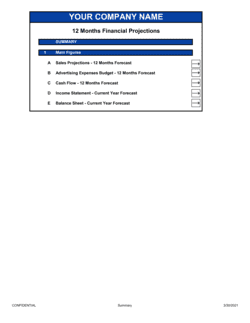
A standalone financial projection covers revenue, expenses, and cash flow for one year. A business plan contextualizes those numbers with market analysis, competitive positioning, operations structure, and team credentials. Lenders never evaluate a financial forecast in isolation from the business narrative that explains why the numbers are credible.

vs Construction Proposal

A construction proposal is a project-level document submitted to a GC or owner to bid on a specific scope of work. A business plan is a company-level document that describes the entire business β€” its strategy, capacity, and financials β€” not a single project. Both are needed: the business plan gets you prequalified; the proposal wins individual jobs.

Industry-specific considerations

Residential Construction

Single-family and multifamily homebuilders require drywall subs to commit to tract-home board schedules and per-unit pricing with volume-based margin expectations.

Commercial Construction

Commercial GCs require prequalification packets, certified payroll on public projects, and Level 4–5 finish specs for office and retail interiors β€” all of which the business plan must address.

Property Management and Renovation

Property managers and apartment owners use drywall contractors for unit-turn repairs and renovation projects, requiring fast mobilization, competitive per-unit pricing, and reliable scheduling.

Specialty and Institutional Construction

Healthcare and education projects require fire-rated and acoustic assemblies, OSHA compliance documentation, and often prevailing wage compliance β€” factors the operations and financials sections must explicitly address.

Template vs pro β€” what fits your needs?

PathBest forCostTime
Use the templateOwner-operators applying for SBA loans under $500K, seeking surety bonding, or submitting GC prequalification packetsFree1–2 weeks (15–30 hours)
Template + professional reviewContractors seeking financing above $500K or commercial bonding for projects over $1M, where a financial advisor review of the projections adds credibility$500–$1,500 for a CPA or business advisor review2–3 weeks
Custom draftedMulti-crew operations seeking institutional lending, minority or women-owned business certifications, or expansion into a new metro market with complex financial modeling$2,000–$6,000 for a professional business plan writer with construction industry experience3–6 weeks

Glossary

Subcontractor
A drywall or specialty trade company hired by a general contractor to perform a defined scope of work on a construction project.
Scope of Work
A written description of exactly what the drywall contractor will supply and install β€” boards, tape, mud, finish level β€” and what is excluded.
Finish Level
A standardized scale (Level 0–5) describing the degree of drywall finishing required, from bare boards to a smooth skim-coat ready for high-gloss paint.
Job Cost
The total direct cost of completing a specific project β€” materials, labor, equipment, and subcontracted services β€” used to calculate gross margin per job.
Gross Margin per Job
Revenue from a project minus its direct job costs, expressed as a percentage β€” the primary profitability metric for a drywall contractor.
Surety Bond
A three-party financial guarantee that protects the project owner if the contractor fails to complete the work or pay suppliers β€” often required for commercial bids.
Backlog
The total value of contracted work that has not yet been completed and billed β€” a forward-looking measure of revenue visibility.
Material Takeoff
A line-by-line calculation of every drywall sheet, screw, compound, tape, and accessory needed for a project, used to produce accurate material bids.
Change Order
A written amendment to an existing contract that adds, removes, or modifies scope and adjusts the contract price accordingly.
Retention (Retainage)
A percentage of each progress payment β€” typically 5–10% β€” withheld by the general contractor or owner until the project is substantially complete.
Lien Waiver
A document signed by the contractor acknowledging receipt of payment and relinquishing the right to file a mechanic's lien against the property for that amount.


Part of your Business Operating System

This document is one of 3,000+ business & legal templates included in Business in a Box.

  • Fill-in-the-blanks β€” ready in minutes
  • 100% customizable Word document
  • Compatible with all office suites
  • Export to PDF and share electronically

Create your document in 3 simple steps.

From template to signed document β€” all inside one Business Operating System.
1
Download or open template

Access over 3,000+ business and legal templates for any business task, project or initiative.

2
Edit and fill in the blanks with AI

Customize your ready-made business document template and save it in the cloud.

3
Save, Share, Send, Sign

Share your files and folders with your team. Create a space of seamless collaboration.

Save time, save money, and create top-quality documents.

β˜…β˜…β˜…β˜…β˜…

"Fantastic value! I'm not sure how I'd do without it. It's worth its weight in gold and paid back for itself many times."

Managing Director Β· Mall Farm
Robert Whalley
Managing Director, Mall Farm Proprietary Limited
β˜…β˜…β˜…β˜…β˜…

"I have been using Business in a Box for years. It has been the most useful source of templates I have encountered. I recommend it to anyone."

Business Owner Β· 4+ years
Dr Michael John Freestone
Business Owner
β˜…β˜…β˜…β˜…β˜…

"It has been a life saver so many times I have lost count. Business in a Box has saved me so much time and as you know, time is money."

Owner Β· Upstate Web
David G. Moore Jr.
Owner, Upstate Web

Run your business with a system β€” not scattered tools

Stop downloading documents. Start operating with clarity. Business in a Box gives you the Business Operating System used by over 250,000 companies worldwide to structure, run, and grow their business.

Free Forever PlanΒ Β·Β No credit card required