Excavation Contractor Business Plan Template

Free Word download β€’ Edit online β€’ Save & share with Drive β€’ Export to PDF

37 pagesβ€’3h – 4h 5m to fillβ€’Difficulty: Expert
Learn more ↓
FreeExcavation Contractor Business Plan Template

At a glance

What it is
An Excavation Contractor Business Plan is a structured operational document that outlines the strategy, services, equipment, market positioning, and financial projections for a new or growing excavation contracting business. This free Word download gives you a ready-to-edit framework covering everything from equipment acquisition and operator staffing to project pricing models and 3-year revenue forecasts β€” exportable as PDF for lenders, investors, or bonding agencies.
When you need it
Use it when launching a new excavation company, applying for a construction loan or equipment financing, bidding on bonded public contracts that require a business plan, or formalizing growth strategy for an existing operation.
What's inside
Executive summary, company overview, services and equipment inventory, market and competitive analysis, marketing and business development strategy, operations and safety management, management team, and 3-year financial projections including project revenue, equipment depreciation, and cash flow.

What is an Excavation Contractor Business Plan?

An Excavation Contractor Business Plan is a structured operational document that maps the complete business model of an excavation or earthmoving company β€” covering services, equipment fleet, target market, competitive positioning, safety and operations management, and multi-year financial projections. Unlike a generic construction business plan, it addresses the specific economics of equipment-intensive contracting: machine utilization rates, fuel and maintenance cost structures, OSHA trenching compliance obligations, bonding and insurance requirements, and the cash-flow impact of retainage on project-based revenue. It is used as both an internal operating guide and an external document for securing SBA loans, equipment financing, and surety bonds.

Why You Need This Document

Without a written business plan, SBA lenders decline equipment loan applications for insufficient documentation, surety companies cannot underwrite bonding capacity for new contractors, and growth decisions β€” adding a second excavator, pursuing municipal contracts, hiring a second crew β€” get made on gut instinct rather than financial analysis. The cost of skipping it is concrete: banks require a full plan for any SBA 7(a) or 504 loan, and surety underwriters use it to set your maximum bonding capacity on public contracts. Beyond capital, a completed plan forces you to stress-test your machine utilization assumptions, local market size, and break-even timeline before you commit to a $300,000 equipment purchase. This template provides the structure so you spend your time on the market research and financial modeling that actually requires original thinking about your specific operation and market.

Which variant fits your situation?

If your situation is…Use this template
Starting a residential-only excavation and grading operationExcavation Contractor Business Plan
Planning a full-service civil construction and sitework companyConstruction Company Business Plan
Opening a landscaping company with grading servicesLandscaping Business Plan
Launching a utility trenching and underground services firmGeneral Contractor Business Plan
Quick one-page internal planning before writing the full planOne-Page Business Plan
Preparing a project-level proposal for a municipal excavation contractConstruction Proposal
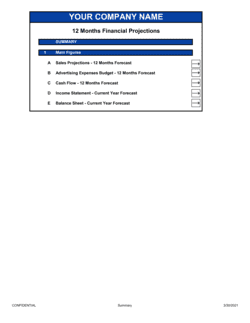
Applying for an SBA 7(a) equipment loan with financial projections onlyFinancial Projections (12 Months)

Common mistakes to avoid

❌ Projecting revenue without a machine-hour utilization model

Why it matters: A top-line revenue target with no connection to fleet size and billable hours gives lenders no way to verify the number is achievable, stalling loan approval.

Fix: Build revenue from the ground up: machines Γ— billable hours per week Γ— billing rate Γ— utilization percentage = monthly revenue. Show this calculation in a supporting schedule.

❌ Omitting OSHA compliance and safety program details

Why it matters: Surety companies and risk-conscious general contractors use documented safety programs and EMR scores to qualify subcontractors β€” a plan with no safety section signals an operator who hasn't worked bonded jobs.

Fix: Include a dedicated operations and safety section referencing OSHA 1926 Subpart P compliance, required certifications for crew leads, and your process for preparing site-specific excavation safety plans.

❌ Ignoring equipment depreciation in the cost structure

Why it matters: Excluding depreciation overstates gross margin and makes Year 2–3 cash flow look stronger than it is β€” a common error that lenders and accountants catch immediately.

Fix: Apply straight-line or MACRS depreciation to each piece of owned or financed equipment and include it as a direct cost line item in the monthly P&L.

❌ No use-of-funds breakdown in the funding request

Why it matters: SBA lenders and equipment financing companies require an itemized use-of-funds schedule to underwrite the loan β€” a single lump-sum request without line items will slow or kill the application.

Fix: Break the funding ask into at least four categories: equipment purchase, insurance and bonding deposits, working capital, and business development costs, with a dollar amount and percentage for each.

The 9 key sections, explained

Executive Summary

Company Overview

Services and Equipment Inventory

Market and Competitive Analysis

Marketing and Business Development Strategy

Operations and Safety Management

Management Team

Financial Projections

Funding Requirements and Use of Funds

How to fill it out

  1. 1

    Complete the company overview and licensing details

    Enter your legal entity name, state of formation, contractor license number, insurance coverage limits, and the geographic area you will serve. Confirm these details match your actual license and certificate of insurance before sharing the plan with any lender or bonding agent.

    πŸ’‘ If you are pre-launch, include your planned license type and the date you expect to have it in hand β€” lenders understand pre-licensing timelines for new contractors.

  2. 2

    Build your equipment and services list

    List every machine you own, are financing, or plan to acquire β€” include make, model, year, horsepower or bucket capacity, and whether it is owned outright, financed, or leased. Then map each service you offer to the specific machine that performs it.

    πŸ’‘ Pull equipment valuations from the most recent edition of the Equipment Watch or Ritchie Bros. auction results β€” lenders check these against your stated values.

  3. 3

    Research your local construction market

    Pull residential and commercial permit data from your county or city building department for the past 12–24 months. Cross-reference with state DOT project listings for public work. Use at least two sources to size your serviceable market.

    πŸ’‘ Call two or three local general contractors you plan to target and ask about their typical excavation subcontractor volumes β€” primary research outperforms any industry report for local market sizing.

  4. 4

    Profile your competitors and your differentiation

    Identify three to four excavation companies operating in your target area. Note their fleet size, years in operation, and the types of work they focus on. Write one specific paragraph explaining the gap your company fills.

    πŸ’‘ Slow mobilization and poor scheduling are the most common complaints GCs have about excavation subs β€” if you can guarantee 48-hour mobilization, state that explicitly as your differentiator.

  5. 5

    Define your first 90 days of business development

    List the specific general contractors, developers, or municipal bid boards you will contact in your first 12 weeks. Set a target number of bids submitted per month and a target win rate based on comparable market conditions.

    πŸ’‘ A 20–30% bid win rate is realistic for a new excavation company with no established GC relationships β€” build this assumption directly into your revenue projections.

  6. 6

    Build the financial model from machine hours up

    Estimate billable machine hours per week per excavator, multiply by your target billing rate, then subtract fuel, operator wages, maintenance, and depreciation to get gross margin per machine per month. Scale this to your fleet size and projected utilization for Year 1.

    πŸ’‘ Target a minimum 55–65% equipment utilization rate in Year 1 projections β€” higher rates look optimistic to lenders who know startup ramp-up timelines.

  7. 7

    Write the executive summary last

    Pull the single strongest data point from each section and compress them into one to two pages. The summary should state the opportunity, your differentiated position, the funding ask, and the key financial milestones the capital will enable.

    πŸ’‘ Lenders read the executive summary and the financial projections first β€” if those two sections are clear and internally consistent, they will read the rest.

Frequently asked questions

What is an excavation contractor business plan?

An excavation contractor business plan is a structured document that outlines the services, equipment fleet, target market, operational model, and financial projections for an excavation or earthmoving company. It functions both as an internal operating roadmap and as an external document for securing equipment loans, SBA financing, surety bonds, or large commercial contracts that require financial qualification.

Do I need a business plan to get an SBA loan for excavation equipment?

Yes. SBA lenders require a complete business plan for most loan applications, including 7(a) and 504 loans used for heavy equipment purchases. The plan must include a company overview, market analysis, management team qualifications, and 3-year financial projections with a use-of-funds schedule. Incomplete plans are the most common reason for delayed or declined contractor loan applications.

What financial projections should an excavation business plan include?

At minimum: a monthly P&L for Year 1 and annual projections for Years 2–3, a cash flow statement, and a funding requirements schedule. Revenue should be modeled by project count and average contract value, with direct costs broken down into operator wages, fuel, equipment maintenance, and depreciation. Lenders also expect a machine-utilization assumption and a breakeven analysis.

How do I price excavation services for my business plan?

Build your pricing from cost up: calculate your total cost per machine hour (operator wage, fuel, maintenance reserve, depreciation, overhead allocation), then add your target gross margin β€” typically 35–55% for excavation work depending on market competition and project type. Cross-check against local prevailing rates by requesting bids from competitors on public projects or speaking with GCs in your target market.

How long should an excavation contractor business plan be?

A complete plan for lender or bonding-agency use typically runs 15–25 pages plus a financial model appendix. Internal operating plans for owner-operators can be shorter β€” 10–15 pages β€” as long as the financial projections and equipment schedule are fully developed. A one-page summary is not sufficient for any capital application in this industry.

What makes excavation business plans different from other contractor plans?

Excavation business plans must address equipment-intensive capital structure, machine utilization rates as the primary revenue driver, OSHA trenching and excavation safety compliance, bonding and insurance requirements for public and commercial work, and the cash-flow implications of retainage β€” typically 5–10% of each progress payment withheld until project closeout.

Do excavation contractors need to be bonded to win contracts?

Most public construction projects and many commercial GCs require subcontractors to carry a performance and payment bond. Surety companies evaluate your business plan, financial statements, equipment values, and experience record to set your bonding capacity. A well-prepared business plan is often required as part of the surety underwriting package for new or growing contractors.

How do I show equipment capacity in my business plan?

Create a fleet schedule listing each machine by make, model, year, capacity, and ownership status (owned, financed, or leased). Then calculate available machine hours per week, apply your projected utilization rate (50–65% is realistic for a startup), and multiply by your billing rate to derive maximum monthly revenue capacity. This gives lenders a concrete basis for evaluating your revenue projections.

Can I write an excavation contractor business plan myself?

Yes β€” for most startup or growth-stage excavation companies, a high-quality template covers the full structure. Consider engaging a construction-industry accountant ($500–$1,500) to review or build the financial model if you are applying for an SBA loan above $250,000 or pursuing a surety bond over $1M. The template handles structure; accurate local market data and realistic equipment cost assumptions are what distinguish a credible plan from a generic one.

How this compares to alternatives

vs Construction Company Business Plan

A general construction company business plan covers the full spectrum of construction services including framing, mechanical, and finishing trades. An excavation contractor plan focuses specifically on earthmoving, grading, and site preparation β€” with an emphasis on equipment fleet economics, machine utilization, and OSHA trenching compliance. Use the excavation-specific plan when your primary revenue comes from earthmoving equipment rather than a full construction crew.

vs One-Page Business Plan

A one-page plan is a rapid internal alignment tool useful for early ideation or owner-operator strategy reviews. It lacks the financial depth, equipment schedule, safety program detail, and competitive analysis that SBA lenders, equipment financiers, and surety companies require. Use the one-page version to test your concept, then build the full excavation plan before any capital application.

vs Financial Projections (12 Months)

A standalone financial projection covers revenue, expenses, and cash flow but provides no market context, competitive positioning, or operational narrative. Lenders and bonding agents require the full business plan to evaluate management capability and market opportunity alongside the numbers. Use the financial projections template as the appendix to your completed business plan, not as a replacement.

vs Construction Proposal

A construction proposal is a project-level bid document addressed to a specific client for a defined scope of work, price, and schedule. A business plan is a company-level strategic document covering operations, market position, and multi-year financials. The two serve entirely different audiences and purposes β€” a GC or municipal client receives a proposal; a bank or surety receives a business plan.

Industry-specific considerations

Residential Construction

Foundation excavation, lot clearing, and rough grading for homebuilders β€” high volume, shorter project cycles, and strong repeat-business potential from tract builders.

Commercial and Industrial Development

Large-scale site preparation, mass grading, and utility trenching for commercial developers β€” higher average contract values with bonding and prequalification requirements.

Municipal and Civil Infrastructure

Road grading, stormwater retention, and public utility work bid through government portals β€” prevailing wage, certified payroll, and performance bonds required on most contracts.

Agriculture and Land Development

Pond construction, drainage tile installation, and land leveling for farms and rural properties β€” seasonal demand patterns require cash flow planning for winter slow periods.

Template vs pro β€” what fits your needs?

PathBest forCostTime
Use the templateOwner-operators launching or growing an excavation company and applying for equipment loans up to $250K or bonding up to $500KFree2–3 weeks (30–50 hours)
Template + professional reviewSBA 7(a) or 504 loan applications above $250K or surety bond applications requiring reviewed financial statements$500–$1,500 for a construction-industry accountant to review or build the financial model3–4 weeks
Custom draftedMulti-machine fleet expansions seeking institutional financing above $1M, or contractors prequalifying for large municipal or DOT contracts$2,500–$7,500 for a construction business advisor or CPA with contractor lending experience4–8 weeks

Glossary

Mobilization Cost
The expense of transporting equipment and crew to a job site, typically charged as a flat fee or line item in a project bid.
Cut and Fill
An earthmoving process where soil is removed from high areas (cut) and used to build up low areas (fill) to achieve a target grade.
Subgrade
The compacted native soil layer prepared beneath a foundation, pavement, or structure β€” the starting point of most excavation scopes.
Bonding
A surety bond that guarantees an excavation contractor will complete a contract as bid; required on most public and many private commercial projects.
Equipment Utilization Rate
The percentage of available machine hours that are billable to a client project, used to measure fleet efficiency and revenue capacity.
Prevailing Wage
The legally mandated minimum hourly rate for laborers and operators on publicly funded construction projects, set by federal or state authorities.
Change Order
A written amendment to an original contract authorizing additional scope, adjusting the price, or extending the schedule β€” common when subsurface conditions differ from the bid.
Retention (Retainage)
A percentage of each progress payment β€” typically 5–10% β€” withheld by the owner until project completion, affecting excavation contractor cash flow.
OSHA 1926 Subpart P
The federal standard governing excavation and trenching safety, including shoring requirements for trenches deeper than 5 feet.
Gross Margin per Machine Hour
Revenue earned per machine hour minus direct costs (operator wages, fuel, maintenance) β€” the primary unit economics metric for equipment-based businesses.

Part of your Business Operating System

This document is one of 3,000+ business & legal templates included in Business in a Box.

  • Fill-in-the-blanks β€” ready in minutes
  • 100% customizable Word document
  • Compatible with all office suites
  • Export to PDF and share electronically

Create your document in 3 simple steps.

From template to signed document β€” all inside one Business Operating System.
1
Download or open template

Access over 3,000+ business and legal templates for any business task, project or initiative.

2
Edit and fill in the blanks with AI

Customize your ready-made business document template and save it in the cloud.

3
Save, Share, Send, Sign

Share your files and folders with your team. Create a space of seamless collaboration.

Save time, save money, and create top-quality documents.

β˜…β˜…β˜…β˜…β˜…

"Fantastic value! I'm not sure how I'd do without it. It's worth its weight in gold and paid back for itself many times."

Managing Director Β· Mall Farm
Robert Whalley
Managing Director, Mall Farm Proprietary Limited
β˜…β˜…β˜…β˜…β˜…

"I have been using Business in a Box for years. It has been the most useful source of templates I have encountered. I recommend it to anyone."

Business Owner Β· 4+ years
Dr Michael John Freestone
Business Owner
β˜…β˜…β˜…β˜…β˜…

"It has been a life saver so many times I have lost count. Business in a Box has saved me so much time and as you know, time is money."

Owner Β· Upstate Web
David G. Moore Jr.
Owner, Upstate Web

Run your business with a system β€” not scattered tools

Stop downloading documents. Start operating with clarity. Business in a Box gives you the Business Operating System used by over 250,000 companies worldwide to structure, run, and grow their business.

Free Forever PlanΒ Β·Β No credit card required