Debenture Short Form Template

Free Word download β€’ Edit online β€’ Save & share with Drive β€’ Export to PDF

3 pagesβ€’15–25 min to fillβ€’Difficulty: Standard
Learn more ↓
FreeDebenture Short Form Template

At a glance

What it is
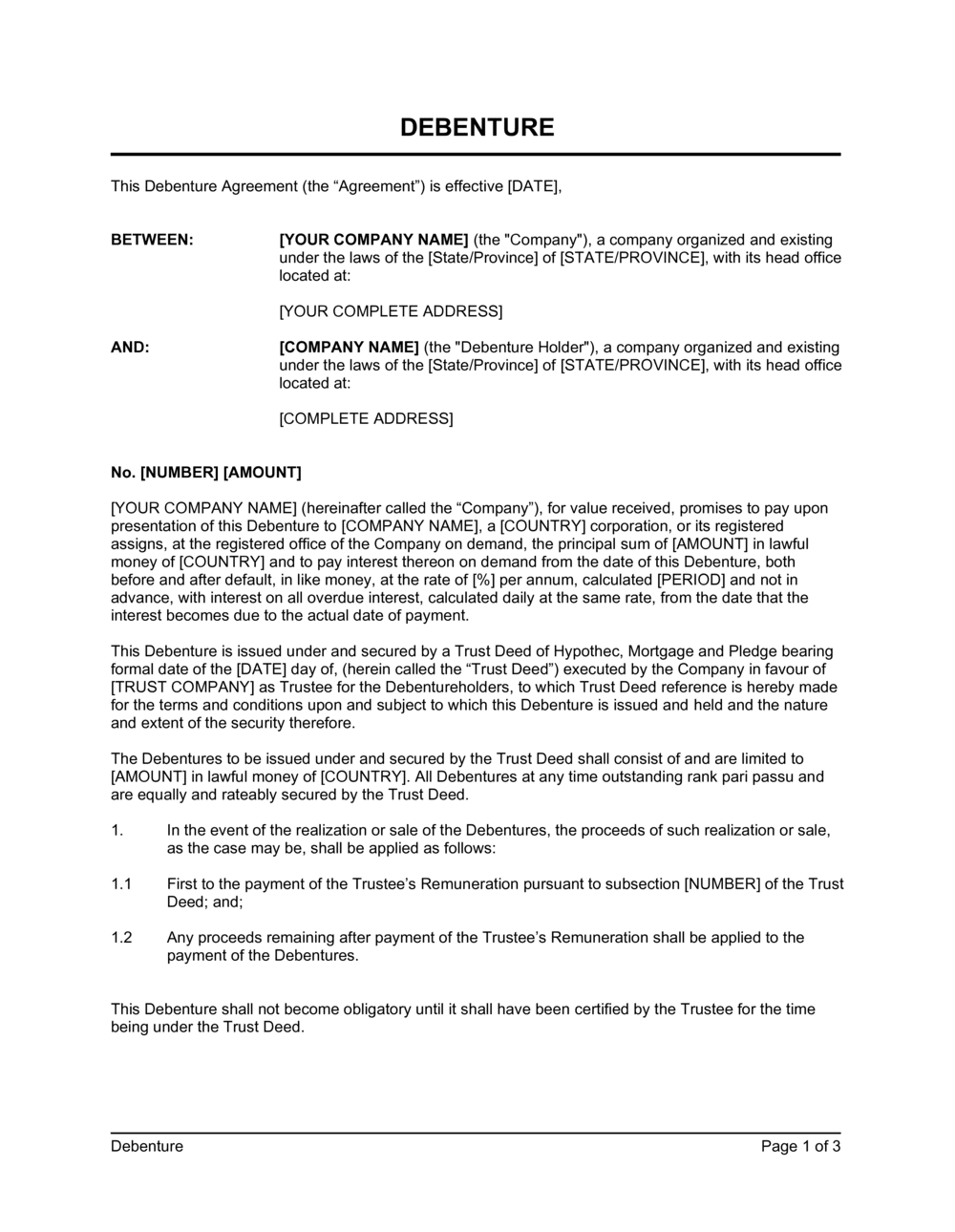
A Debenture Short Form is a condensed debt instrument recording form used to capture the essential details of a debenture arrangement between a borrower and a lender. This free Word download lets you document the principal amount, interest rate, repayment schedule, and security details in a single structured sheet β€” editable online and exportable as PDF.
When you need it
Use it when a lender issues debt financing to a company and needs a concise record of the obligation's core terms without drafting a full long-form debenture agreement. It is also used internally to log and track outstanding debenture positions across multiple creditors.
What's inside
Borrower and lender identification fields, principal amount, interest rate and compounding basis, repayment schedule, security or collateral description, covenants summary, default conditions, and execution details.

What is a Debenture Short Form?

A Debenture Short Form is a structured summary document used to record the essential terms of a debenture β€” a debt instrument issued by a company to acknowledge a borrowing obligation to a lender or creditor. It captures the principal amount, interest rate, repayment schedule, security description, key covenants, and default conditions in a single concise sheet. Unlike a full long-form debenture agreement, the short form is designed for speed and clarity: it gives both the borrower and the lender a shared, written record of the debt's core terms without the length and complexity of a fully drafted legal instrument.

Why You Need This Document

Without a written record of a debenture's terms, disputes over repayment amounts, interest calculations, and security rankings are resolved by memory and correspondence β€” a slow and expensive process. A completed debenture short form gives lenders a traceable record of each debt position in their portfolio and gives borrowers a clear reference for scheduled repayments and covenant obligations. It also provides the foundation from which a full debenture agreement or registered charge can be prepared, reducing the risk of terms being misremembered or inconsistently restated between parties. This template gives you a clean, fillable starting point that takes under 15 minutes to complete and keeps your debt records organized from day one.

Which variant fits your situation?

If your situation is…Use this template
Issuing a secured debenture backed by company assetsSecured Debenture Agreement
Issuing an unsecured debenture with no specific collateralUnsecured Debenture Agreement
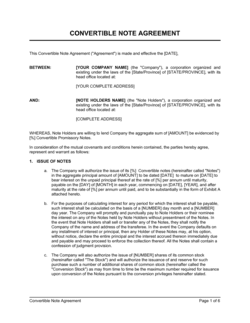
Recording a convertible debenture that can convert to equityConvertible Note Agreement
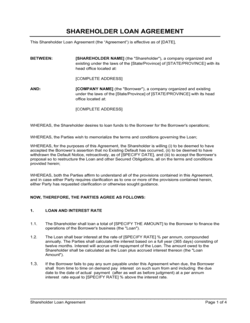
Documenting a director or shareholder loan to the companyShareholder Loan Agreement
Setting up a promissory note for a simpler debt obligationPromissory Note
Tracking multiple outstanding debt instruments in a registerDebt Register
Formalizing a loan repayment schedule with amortization detailLoan Amortization Schedule

Common mistakes to avoid

❌ Vague security description

Why it matters: A charge over 'all company assets' without fixed/floating distinction gives the lender an unclear priority ranking in insolvency proceedings.

Fix: Identify each fixed-charge asset by its specific legal description and confirm the floating charge scope covers all remaining assets and undertaking.
❌ No cure period for default events

Why it matters: Without a defined remedy window, a single missed payment β€” even due to a banking delay β€” immediately triggers full acceleration of the outstanding balance.

Fix: Include a cure period of 5–15 business days for payment defaults and 20–30 days for covenant breaches, with written notice required before acceleration.

❌ Missing accrual basis for interest

Why it matters: Stating only '8% per annum' without a day-count convention means the parties may calculate interest differently, leading to disputes at repayment.

Fix: Specify the day-count convention explicitly β€” actual/365 for most private debentures, or 30/360 if aligned with bond-market conventions.

❌ Omitting the governing jurisdiction

Why it matters: Without a stated governing law, a cross-border dispute requires a court to determine applicable law β€” adding cost and delay before any substantive hearing.

Fix: Always state the governing jurisdiction in the final field and ensure it matches where the borrower is incorporated or where the primary secured assets are located.

The 8 key fields, explained

Borrower and lender identification

Principal amount and currency

Coupon rate and interest calculation basis

Repayment schedule and maturity date

Security description

Covenants summary

Default events

Governing law and execution date

How to fill it out

  1. 1

    Enter legal entity details for both parties

    Use the full registered legal name and company registration number for the borrower. For the lender, include the full name and address as it appears on official identification.

    πŸ’‘ Cross-reference the company registry before completing this field β€” a single character error in the registration number can invalidate the security interest.

  2. 2

    State the principal amount in figures and words

    Enter the amount numerically in the designated field and spell it out in words in the adjacent field. Include the three-letter currency code.

    πŸ’‘ Where the figures and words conflict, most jurisdictions default to the written words β€” so write both carefully.

  3. 3

    Set the interest rate and accrual basis

    Enter the agreed annual rate and select fixed or variable. Specify the day-count convention β€” actual/365 is most common for private debentures in common-law jurisdictions.

    πŸ’‘ If the rate is variable, reference a specific benchmark (e.g., 'Bank of Canada prime rate + [X]%') rather than leaving it to future negotiation.

  4. 4

    Define the repayment schedule

    Choose lump sum at maturity, periodic installments, or on-demand repayment. Enter the specific dates and amounts, and state the final maturity date explicitly.

    πŸ’‘ Run the repayment schedule against the company's projected monthly cash flow before finalizing β€” installments that exceed average monthly free cash flow will cause default.

  5. 5

    Describe the security

    Identify each asset subject to a fixed charge by its specific description. Then state whether a floating charge covers remaining assets or whether the debenture is unsecured.

    πŸ’‘ For real property, include the full legal property description and cadastral number β€” a street address alone is insufficient to perfect a charge.

  6. 6

    List covenants and default events

    Enter the key financial maintenance covenants with measurable thresholds, then list the events that constitute default, including the cure period for each.

    πŸ’‘ Keep the covenant list to no more than four to six items β€” every additional covenant is another potential trigger point that requires monitoring by both parties.

Frequently asked questions

What is a debenture short form?

A debenture short form is a condensed document used to record the key terms of a debenture arrangement β€” principal, interest rate, repayment schedule, and security β€” in a single structured sheet. It serves as a quick-reference record of a debt obligation, suitable for internal tracking, lender portfolios, or as a precursor to drafting a full long-form debenture agreement.

What is the difference between a debenture and a loan agreement?

A loan agreement governs the terms of a borrowing relationship between two parties. A debenture is a debt instrument that acknowledges the obligation and, in many jurisdictions, creates a formal security interest over the borrower's assets. Debentures are particularly common in corporate finance where a lender wants a registered charge against the company's assets in addition to contractual repayment rights.

Is a debenture short form legally binding?

A completed debenture short form records agreed terms and can provide evidence of a debt obligation, but it is typically a summary record rather than a fully executed security instrument. For the security interest to be perfected and enforceable against third parties, a full debenture agreement is generally required and, in many jurisdictions, must be registered with the relevant companies or land registry authority.

When would a business use this form instead of a full debenture?

A short form is useful for internal debt registers, lender portfolio tracking, early-stage term sheets, or situations where both parties need a quick written summary before a full agreement is prepared. It is not a substitute for a full debenture when the transaction requires registered security or formal legal protection.

Does a debenture short form need to be signed?

As a summary record or internal tracking form, a signature is not always required. However, if the short form is used as a binding acknowledgment of debt between parties, both parties should sign and date the document to establish mutual agreement on the recorded terms.

What is the difference between a fixed charge and a floating charge?

A fixed charge attaches to a specific identified asset β€” such as land, machinery, or intellectual property β€” that the borrower cannot sell or encumber without the lender's consent. A floating charge covers a class of changing assets, such as inventory or receivables, and crystallizes into a fixed charge when a default event occurs. Most corporate debentures include both.

Can a debenture be unsecured?

Yes. An unsecured debenture acknowledges the debt obligation but grants the lender no priority claim over specific assets. Unsecured debentures are common for director loans, related-party advances, or transactions where the lender accepts a higher credit risk in exchange for a higher interest rate or equity conversion rights.

Do I need a lawyer to complete a debenture short form?

For internal record-keeping and portfolio tracking purposes, a template is typically sufficient. If the form is being used to establish a security interest that will be registered against company assets or real property, consider having a lawyer review the completed form and prepare the corresponding full debenture agreement to ensure the charge is correctly perfected under applicable law.

How this compares to alternatives

vs Promissory Note

A promissory note is a simple written promise to repay a specific amount by a specific date, with no security interest attached. A debenture short form records a debt that may be secured against company assets. Use a promissory note for straightforward unsecured personal or trade debt; use a debenture form when the lender requires a charge over business assets.

vs Loan Agreement

A loan agreement is a comprehensive contract governing all aspects of a borrowing relationship, including representations, conditions precedent, and detailed covenants. A debenture short form is a summary record of the debt's key terms β€” not a substitute for a full agreement. The short form is useful for tracking; the loan agreement governs enforcement.

vs Convertible Note Agreement

A convertible note is a debt instrument that converts into equity at a future funding event, typically used by early-stage startups. A debenture short form records a standard debt obligation repayable in cash. Use a convertible note when the lender expects an equity upside; use a debenture form when the obligation is a straightforward cash-repayable debt.

vs Shareholder Loan Agreement

A shareholder loan agreement documents a loan from an owner or investor to the company, often with subordinated repayment terms. A debenture short form may be used alongside or instead of a shareholder loan agreement when the lending party wants a recorded security interest rather than a purely contractual repayment right.

Industry-specific considerations

Financial Services

Private lenders and debt funds use the short form to maintain a concise register of debenture positions across a portfolio of borrowers.

Real Estate

Property developers issue debentures to mezzanine lenders secured by fixed charges over specific land parcels, with the short form tracking each tranche.

Manufacturing

Equipment-intensive manufacturers use debentures to secure asset-based lending, with the short form summarizing each fixed charge over machinery and plant.

Professional Services

Accounting and legal firms use the short form as a structured intake sheet when advising clients on debenture issuance or reviewing existing debt registers.

Template vs pro β€” what fits your needs?

PathBest forCostTime
Use the templateInternal debt register tracking, director loans, and summary records where no registered security is requiredFree10–15 minutes per record
Template + professional reviewSmall business debentures where the lender wants a summary record reviewed for completeness before a full agreement is prepared$150–$400 (accountant or solicitor check)1–2 days
Custom draftedDebentures requiring registered security interests, cross-border debt arrangements, or corporate bond issuances$1,000–$5,000+1–3 weeks

Glossary

Debenture
A debt instrument issued by a company acknowledging a borrowing obligation, which may be secured against assets or unsecured, and carries a fixed or floating interest rate.
Principal Amount
The original sum of money borrowed, before any interest is applied.
Fixed Charge
A security interest attached to a specific identified asset β€” such as land or equipment β€” that the borrower cannot dispose of without the lender's consent.
Floating Charge
A security interest over a class of assets that changes over time, such as inventory or receivables, which crystallizes into a fixed charge upon a default event.
Coupon Rate
The annual interest rate payable on a debenture, expressed as a percentage of the principal amount.
Maturity Date
The date on which the full principal amount of the debenture becomes due and repayable to the holder.
Covenant
A condition or restriction in a debt agreement that the borrower must comply with β€” such as maintaining a minimum current ratio or limiting additional borrowing.
Default Event
A specified occurrence β€” such as missed payment, insolvency, or covenant breach β€” that entitles the lender to demand immediate repayment of the outstanding balance.
Debenture Holder
The creditor or investor who holds the debenture and is entitled to receive interest payments and repayment of principal.
Redemption
The repayment by the issuing company of the debenture's principal to the holder, either at maturity or on an earlier agreed date.

Part of your Business Operating System

This document is one of 3,000+ business & legal templates included in Business in a Box.

  • Fill-in-the-blanks β€” ready in minutes
  • 100% customizable Word document
  • Compatible with all office suites
  • Export to PDF and share electronically

Create your document in 3 simple steps.

From template to signed document β€” all inside one Business Operating System.
1
Download or open template

Access over 3,000+ business and legal templates for any business task, project or initiative.

2
Edit and fill in the blanks with AI

Customize your ready-made business document template and save it in the cloud.

3
Save, Share, Send, Sign

Share your files and folders with your team. Create a space of seamless collaboration.

Save time, save money, and create top-quality documents.

β˜…β˜…β˜…β˜…β˜…

"Fantastic value! I'm not sure how I'd do without it. It's worth its weight in gold and paid back for itself many times."

Managing Director Β· Mall Farm
Robert Whalley
Managing Director, Mall Farm Proprietary Limited
β˜…β˜…β˜…β˜…β˜…

"I have been using Business in a Box for years. It has been the most useful source of templates I have encountered. I recommend it to anyone."

Business Owner Β· 4+ years
Dr Michael John Freestone
Business Owner
β˜…β˜…β˜…β˜…β˜…

"It has been a life saver so many times I have lost count. Business in a Box has saved me so much time and as you know, time is money."

Owner Β· Upstate Web
David G. Moore Jr.
Owner, Upstate Web

Run your business with a system β€” not scattered tools

Stop downloading documents. Start operating with clarity. Business in a Box gives you the Business Operating System used by over 250,000 companies worldwide to structure, run, and grow their business.

Start freeΒ Β·Β No credit card required