Pledge of Personal Property Template

Free Word download • Edit online • Save & share with Drive • Export to PDF

2 pages20–30 min to fillDifficulty: StandardSignature requiredLegal review recommended
Learn more ↓
FreePledge of Personal Property Template

At a glance

What it is
A Pledge of Personal Property is a legally binding security agreement in which a debtor (the pledgor) grants a creditor (the pledgee) a security interest in specified movable personal property — such as equipment, inventory, vehicles, or financial instruments — as collateral for a loan or other obligation. This free Word download gives you a structured, attorney-ready starting point you can edit online and export as PDF to execute alongside a promissory note or loan agreement.
When you need it
Use it whenever a lender requires collateral before extending credit and the security is movable personal property rather than real estate. Common triggers include business equipment financing, inventory-backed loans, pledging shares or securities, and intra-company or related-party lending arrangements that need a formal security structure.
What's inside
Identification of the pledgor and pledgee, a precise description of the pledged collateral, the secured obligation it supports, delivery and possession terms, the pledgor's representations and covenants, events of default, the pledgee's remedies upon default, release conditions, and governing law.

What is a Pledge of Personal Property?

A Pledge of Personal Property is a legally binding security agreement in which a debtor (the pledgor) grants a creditor (the pledgee) a security interest in specified movable assets — such as equipment, vehicles, inventory, or financial instruments — as collateral for a loan or other obligation. Unlike a mortgage, which encumbers real estate, a pledge covers tangible and intangible personal property governed by commercial statutes such as UCC Article 9 in the United States and equivalent Personal Property Security Acts in Canada. The agreement defines the collateral with precision, links the security interest to the underlying debt, and establishes what happens to the pledged assets if the debtor fails to perform. When properly executed and perfected through a UCC-1 financing statement or physical delivery, the pledge gives the creditor a priority claim against the collateral that survives the debtor's insolvency and holds up against competing creditors.

Why You Need This Document

Extending credit without a pledge agreement means your only recourse on default is an unsecured judgment — placing you at the back of the line behind secured creditors in any insolvency proceeding. A properly drafted and perfected pledge of personal property changes that position fundamentally: it gives the pledgee a first-priority claim against specific assets, the right to take possession on default, and the authority to sell the collateral and apply proceeds to the outstanding debt. Without it, even a signed promissory note leaves the lender exposed if the borrower files for bankruptcy, transfers assets to related parties, or allows the collateral to be seized by a tax authority. For borrowers, the pledge creates a clear framework that avoids creditor disputes by defining exactly which assets are encumbered and under what conditions they can be recovered. This template gives both parties a structured, attorney-ready starting point that covers every material provision — from collateral description and possession terms to default triggers and release obligations — so neither side is left guessing about their rights when it matters most.

Which variant fits your situation?

If your situation is…Use this template
Pledging shares or stock certificates as loan collateralStock Pledge Agreement
Securing a loan against business equipment or machineryEquipment Security Agreement
Creating a broad security interest over all business assetsGeneral Security Agreement
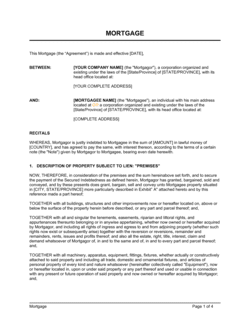
Pledging real estate or land as collateralMortgage Agreement
Documenting the underlying loan the pledge securesPromissory Note
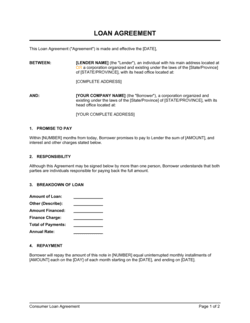
Structuring a full secured lending arrangement with multiple collateral typesLoan Agreement
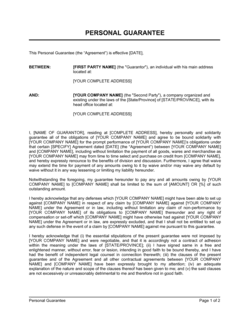
Pledging personal assets to guarantee a business obligationPersonal Guarantee

Common mistakes to avoid

❌ Failing to perfect the security interest with a UCC-1 filing

Why it matters: An unperfected security interest is enforceable between the parties but provides no priority against the pledgor's other creditors or a bankruptcy trustee — leaving the pledgee as an unsecured creditor if the pledgor becomes insolvent.

Fix: File a UCC-1 financing statement in the correct jurisdiction within 20 days of signing. For corporate pledgors, file in the state of organization; for individuals, file in the state of residence.

❌ Describing collateral too vaguely

Why it matters: A description like 'all machinery and equipment' without serial numbers or location may fail a UCC sufficiency test, invalidating the security interest against third-party creditors who challenge it.

Fix: Identify each pledged asset by its specific characteristics — serial number, VIN, model, or precise inventory description — and attach a numbered Schedule A for complex collateral lists.

❌ Not naming the pledgee as loss payee on the collateral's insurance policy

Why it matters: If the collateral is destroyed or stolen and the pledgee is not named as loss payee, the insurance proceeds go to the pledgor — leaving the pledgee with no security and no automatic claim against the payout.

Fix: Require the pledgor to add the pledgee as loss payee and additional insured within a specified number of days of signing, and obtain a certificate of insurance as a condition of funding.

❌ Omitting a cross-default clause when multiple obligations exist

Why it matters: Without cross-default language, a pledgor can default on a related facility while remaining technically current under the pledge — allowing them to strip or dissipate the collateral before the pledgee can act.

Fix: Include a cross-default provision stating that default under any other agreement between the parties constitutes an Event of Default under this pledge as well.

❌ No obligation on the pledgee to release the UCC filing after repayment

Why it matters: An uncancelled UCC-1 stays on the public record for five years and appears in lien searches, blocking the former pledgor from obtaining new financing even after the debt is fully repaid.

Fix: Include a clause requiring the pledgee to file a UCC-3 Termination Statement within 10–20 business days of full repayment, with a right for the pledgor to file one independently if the pledgee fails to act.

❌ Signing the pledge agreement after funds have already been advanced

Why it matters: In several jurisdictions, a security interest granted after the loan is funded may be treated as a preferential transfer and avoided by a bankruptcy trustee if the pledgor files within 90 days (US) or a comparable clawback period.

Fix: Execute the pledge agreement and file the UCC-1 before or simultaneously with the disbursement of funds so the security interest attaches on the funding date.

The 10 key clauses, explained

Parties and Recitals

In plain language: Identifies the pledgor and pledgee by full legal name and entity type, and briefly describes the purpose and context of the pledge.

Sample language
This Pledge of Personal Property Agreement ('Agreement') is entered into as of [DATE] between [PLEDGOR FULL LEGAL NAME], a [STATE] [ENTITY TYPE] ('Pledgor'), and [PLEDGEE FULL LEGAL NAME], a [STATE] [ENTITY TYPE] ('Pledgee'). Pledgor desires to pledge certain personal property to secure [DESCRIPTION OF OBLIGATION].

Common mistake: Using a trade name instead of the pledgor's registered legal entity name. If the pledgor is a corporation or LLC, the legal entity — not the DBA — must be named, or the security interest may be unperfectable against the correct debtor.

Description of Pledged Collateral

In plain language: Precisely identifies the specific personal property being pledged — by make, model, serial number, quantity, or other distinguishing characteristics — so the collateral is unambiguous.

Sample language
Pledgor hereby pledges and grants to Pledgee a security interest in the following personal property ('Collateral'): [DESCRIPTION OF PROPERTY, e.g., one (1) 2023 [MAKE/MODEL] forklift, serial number [XXXXXXXX]; [X] units of [INVENTORY DESCRIPTION] located at [ADDRESS]].

Common mistake: Describing collateral in vague categories like 'all equipment.' Courts and registries require enough specificity to identify the actual property; overly generic descriptions can invalidate the security interest against competing creditors.

Secured Obligation

In plain language: States the exact obligation — loan amount, promissory note reference, or other duty — that the pledge is intended to secure, so the scope of the security interest is clear.

Sample language
This Pledge secures Pledgor's obligations under that certain Promissory Note dated [DATE] in the original principal amount of $[AMOUNT] ('Note'), together with all interest, fees, and costs payable thereunder.

Common mistake: Failing to cross-reference the underlying loan or note document by date and amount. Without this link, disputes arise about which obligations the pledge actually covers, especially if the pledgor has multiple debts to the same creditor.

Delivery and Possession of Collateral

In plain language: Specifies whether the pledgee takes physical possession of the collateral immediately or whether the pledgor retains possession subject to the pledgee's perfected security interest.

Sample language
Pledgor shall [deliver physical possession of the Collateral to Pledgee on [DATE] / retain possession of the Collateral at [ADDRESS] subject to Pledgee's perfected security interest]. Pledgor shall not remove the Collateral from [LOCATION] without Pledgee's prior written consent.

Common mistake: Omitting the possession arrangement entirely. For tangible property, possession by the pledgee is one method of perfecting the security interest without a UCC filing — choosing the wrong method, or specifying neither, leaves the security interest unperfected.

Pledgor's Representations and Warranties

In plain language: The pledgor confirms that they own the collateral free and clear of other liens, have authority to pledge it, and that the collateral description is accurate and complete.

Sample language
Pledgor represents and warrants that: (a) Pledgor has good and marketable title to the Collateral, free and clear of all liens, encumbrances, and adverse claims except as disclosed in Schedule A; (b) Pledgor has full legal authority to enter into this Agreement; (c) the Collateral is in good operating condition.

Common mistake: Omitting a representation about prior liens. A pledgee who later discovers the collateral was already encumbered by a prior security interest may find their interest subordinate, with no contractual recourse for the misrepresentation.

Pledgor's Covenants

In plain language: Ongoing obligations the pledgor must maintain during the pledge period — such as insuring the collateral, keeping it in good repair, not selling or encumbering it further, and allowing pledgee inspections.

Sample language
During the term of this Agreement, Pledgor covenants that it shall: (a) maintain the Collateral in good repair; (b) keep the Collateral insured against loss or damage for not less than $[AMOUNT] naming Pledgee as loss payee; (c) not sell, transfer, or further encumber the Collateral without Pledgee's prior written consent; (d) permit Pledgee to inspect the Collateral upon [X] days' written notice.

Common mistake: Omitting an insurance covenant. If the collateral is destroyed and the pledgee is not named as loss payee, the pledgee has no claim against insurance proceeds and may be left with worthless security.

Events of Default

In plain language: Lists specific triggering events — including missed payments, insolvency, breach of covenants, and material misrepresentation — that entitle the pledgee to exercise remedies.

Sample language
Each of the following constitutes an Event of Default: (a) Pledgor's failure to pay any amount due under the Note within [X] days of the due date; (b) Pledgor becomes insolvent or commences bankruptcy proceedings; (c) Pledgor breaches any covenant in this Agreement and fails to cure within [X] days of written notice; (d) any representation made by Pledgor proves materially false.

Common mistake: Relying solely on payment default and omitting covenant or insolvency triggers. A pledgor who stops insuring the collateral, encumbers it with a new lien, or files for bankruptcy can destroy the value of the security before a missed payment ever occurs.

Remedies Upon Default

In plain language: Describes what the pledgee can do after a default — including taking possession, selling the collateral, and applying proceeds to the outstanding debt — and the notice requirements for doing so.

Sample language
Upon an Event of Default, Pledgee may, without further notice except as required by applicable law: (a) take immediate possession of the Collateral; (b) sell the Collateral at public or private sale; (c) apply the net proceeds of sale to the outstanding secured obligations, with any surplus remitted to Pledgor and any deficiency remaining Pledgor's personal obligation.

Common mistake: Waiving the commercially reasonable sale requirement. UCC Article 9 (and equivalent statutes) require the pledgee to conduct any collateral sale in a commercially reasonable manner — a clause purporting to waive this standard is likely unenforceable and can expose the pledgee to damages.

Release of Pledge and Termination

In plain language: States the conditions under which the pledge is discharged — typically full payment of the secured obligation — and requires the pledgee to file a UCC-3 termination statement or return possession.

Sample language
Upon payment in full of all secured obligations, Pledgee shall promptly execute and deliver a release of this Pledge and, if applicable, file a UCC-3 Termination Statement within [X] business days. This Agreement shall thereupon terminate and be of no further force or effect.

Common mistake: No obligation on the pledgee to terminate a UCC filing after repayment. An uncancelled UCC-1 financing statement remains on the public record and can block the pledgor's future financing, creating liability for the pledgee in many jurisdictions.

Governing Law and Dispute Resolution

In plain language: Specifies which jurisdiction's law governs the agreement and how disputes will be resolved — court litigation, arbitration, or mediation.

Sample language
This Agreement shall be governed by the laws of the State of [STATE], without regard to conflict-of-law principles. Any dispute arising hereunder shall be resolved by binding arbitration in [CITY, STATE] under the rules of [AAA / JAMS], except that Pledgee may seek injunctive or equitable relief in any court of competent jurisdiction.

Common mistake: Choosing a governing state that has no connection to either party or the collateral's location. Courts in the state where the collateral is located may apply local UCC rules regardless of a contractual choice-of-law clause.

How to fill it out

  1. 1

    Identify both parties with their full legal names

    Enter the pledgor's and pledgee's complete registered legal names and entity types. For individuals, use full legal name and address. For entities, use the name exactly as it appears on the state registration or corporate charter.

    💡 Search the relevant state's Secretary of State database to confirm the exact legal name before drafting — a single-word discrepancy can make a UCC filing defective.

  2. 2

    Describe the collateral with specific identifying details

    List every item of pledged property with enough detail to distinguish it from similar property — serial numbers for equipment, VINs for vehicles, CUSIP numbers for securities, or SKUs and quantities for inventory.

    💡 Attach a Schedule A for complex or lengthy collateral lists rather than embedding everything in the body clause — this makes updates or partial releases cleaner to document.

  3. 3

    Reference the secured obligation precisely

    Identify the underlying debt by instrument type (promissory note, loan agreement), execution date, and principal amount. Include a reference to accrued interest and fees to ensure the full obligation is secured.

    💡 If the pledge secures a revolving line of credit rather than a fixed-amount note, include language covering 'all present and future advances' up to a stated maximum to avoid gaps in coverage.

  4. 4

    Decide on possession and specify the collateral's location

    Determine whether the pledgee will take physical possession (required to perfect a pledge of negotiable instruments or certificated securities without a UCC filing) or whether the pledgor retains possession at a stated address. Document the chosen arrangement clearly.

    💡 For high-value equipment the pledgor needs to operate, pledgor-retained possession with a perfected UCC-1 filing is the standard commercial approach — confirm the filing jurisdiction based on the pledgor's state of organization.

  5. 5

    Complete the representations, warranties, and covenants

    Have the pledgor confirm clean title, absence of prior liens, and authority to pledge. Then tailor the ongoing covenants — insurance minimums, maintenance obligations, and transfer restrictions — to the specific collateral type and loan size.

    💡 Set the insurance coverage requirement at replacement value, not book value, for equipment collateral — outdated book values can leave the pledgee significantly underprotected.

  6. 6

    Define events of default and cure periods

    List every default trigger relevant to the transaction — payment default, covenant breach, insolvency, and material misrepresentation. Set cure periods (typically 5–15 days for payment, 30 days for cure of other breaches) that are realistic but protect the pledgee.

    💡 Include a cross-default clause if the pledgor has other obligations to the pledgee — a default under a separate facility should trigger this pledge as well.

  7. 7

    Sign, date, and file the UCC-1 financing statement

    Both parties sign the pledge agreement on or before the loan funding date. The pledgee then files a UCC-1 financing statement in the pledgor's state of organization (or the state where the collateral is located for fixture filings) to perfect the security interest against third parties.

    💡 File the UCC-1 within 20 days of the pledge to preserve priority from the date of the agreement rather than the date of filing in most US states.

  8. 8

    Calendar the release obligation and store executed originals

    Note the pledgee's obligation to file a UCC-3 termination statement within the agreed period after full repayment. Store the executed original pledge agreement and all filings in your document management system.

    💡 Set a calendar reminder for the UCC-1 lapse date (5 years from filing in most US states) so a continuation statement is filed before expiry if the loan is still outstanding.

Frequently asked questions

What is a pledge of personal property?

A pledge of personal property is a security agreement in which a debtor (the pledgor) grants a creditor (the pledgee) a legal interest in specified movable property — such as equipment, inventory, vehicles, or securities — as collateral for a loan or other obligation. If the debtor defaults, the creditor can take and sell the pledged property to recover the outstanding debt. Unlike a mortgage, which covers real estate, a personal property pledge covers movable assets governed by commercial law such as UCC Article 9 in the United States.

What is the difference between a pledge and a mortgage?

A mortgage creates a security interest in real property — land and buildings — and is governed by real estate law, requiring recording in a county deed registry. A pledge of personal property creates a security interest in movable assets and is typically governed by personal property security legislation (UCC Article 9 in the US, PPSA in Canada). The perfection mechanism also differs: mortgages are perfected by recording; personal property pledges are perfected by UCC filing or physical possession depending on the asset type.

How do I perfect a security interest created by a pledge agreement?

In the United States, perfection of a security interest in most personal property is achieved by filing a UCC-1 financing statement in the correct state — typically the pledgor's state of organization for entities, or state of residence for individuals. For certain asset types — certificated securities, negotiable instruments, and deposit accounts — perfection requires the pledgee to take possession or control rather than filing. Filing should occur within 20 days of the pledge to preserve priority from the agreement date.

Does a pledge of personal property need to be notarized?

Notarization is generally not required for a pledge of personal property to be enforceable between the parties in most US states and Canadian provinces. However, some states require notarization for the pledge to be recorded or to be effective against third parties in specific asset categories. Consider confirming local requirements with a licensed attorney before execution, particularly for high-value transactions or when the pledgor is an individual rather than a business entity.

What happens to the pledged property if the debtor defaults?

Upon an event of default, the pledgee is typically entitled to take possession of the collateral and sell it — either at a public auction or private sale — in a commercially reasonable manner as required by UCC Article 9. The net proceeds are applied first to the costs of sale, then to the outstanding debt. Any surplus must be returned to the pledgor. If the sale proceeds do not cover the full debt, the pledgee may have recourse against the pledgor personally for the deficiency, depending on the agreement and applicable law.

Can an individual pledge personal property, or is this only for businesses?

Both individuals and business entities can be pledgors under a personal property pledge agreement. Individuals often pledge vehicles, equipment, or financial instruments to secure personal or business loans. When an individual pledges property, the UCC-1 filing is typically made in the state of the individual's principal residence rather than a state of organization. Some lenders also require a personal guarantee alongside the pledge when the pledgor is a business entity.

What is the difference between a pledge agreement and a personal guarantee?

A pledge agreement secures a debt with specific collateral — the creditor's recourse is primarily against the pledged property. A personal guarantee is an unsecured personal promise by an individual to repay the debt if the primary borrower defaults, with recourse against the guarantor's general assets rather than specific property. Many lending transactions use both: a pledge agreement for asset-backed security and a personal guarantee as an additional layer of recourse. The two documents serve complementary rather than overlapping functions.

How long does a UCC-1 financing statement remain effective?

A UCC-1 financing statement is effective for five years from the date of filing in most US states. Before the five-year period expires, the secured party must file a UCC-3 Continuation Statement to extend effectiveness for another five years. If no continuation is filed, the financing statement lapses and the security interest loses its perfected status — meaning the pledgee loses priority against other creditors and a bankruptcy trustee. Calendar reminders should be set well before the lapse date for any long-term pledge arrangement.

Is a pledge of personal property the same as a security agreement under UCC Article 9?

A pledge of personal property is one form of security agreement governed by UCC Article 9. Article 9 covers all consensual security interests in personal property, including pledges, chattel mortgages, and floating liens. A traditional pledge historically required the pledgee to take possession of the collateral, but under modern UCC Article 9, filing a financing statement is the standard method of perfection for most personal property, allowing the pledgor to retain possession and use the asset while the security interest remains enforceable.

Should I use a pledge of personal property alongside a promissory note?

Yes — in most lending transactions, these two documents work together. The promissory note documents the loan terms, repayment schedule, and interest rate, creating the primary payment obligation. The pledge of personal property creates the security interest that backs up the note with specific collateral. Without the pledge, the promissory note is an unsecured obligation; without the note, the pledge has no defined secured obligation to reference. Both should be executed simultaneously on or before the loan funding date.

How this compares to alternatives

vs Personal Guarantee

A personal guarantee is an unsecured promise by an individual to repay a debt if the primary obligor defaults, giving the creditor recourse against the guarantor's general assets. A pledge of personal property creates a security interest in specific collateral, giving the creditor a priority claim against defined assets rather than general recourse. Most secured lending arrangements use both documents together for maximum protection.

vs Promissory Note

A promissory note is the primary debt instrument — it records the loan amount, interest rate, and repayment schedule and creates the payment obligation. A pledge of personal property is the ancillary security document that backs up the note with collateral. The note defines what is owed; the pledge determines what happens to specific assets if the note is not paid.

vs Loan Agreement

A loan agreement is a comprehensive contract governing all terms of a lending relationship — representations, covenants, conditions precedent, events of default, and remedies. A pledge of personal property is a standalone security document that can operate independently or as a schedule to a broader loan agreement. Simple transactions may use just a promissory note and a pledge; complex facilities use a full loan agreement with the pledge attached.

vs Mortgage Agreement

A mortgage creates a security interest in real property and is perfected by recording with the county deed registry under real estate law. A pledge of personal property covers movable assets and is perfected by UCC filing or possession under commercial law. The correct document depends entirely on whether the collateral is real estate or movable personal property — using the wrong form leaves the security interest unenforceable.

Industry-specific considerations

Manufacturing and Equipment

Equipment pledges are the most common form in this sector — lenders require serial-number-level collateral descriptions and insurance naming requirements covering replacement value, not depreciated book value.

Retail and Wholesale Distribution

Inventory-backed pledge agreements require after-acquired property clauses and periodic collateral audits, since inventory turns over continuously and the specific assets change from day to day.

Financial Services and Private Lending

Securities pledge agreements for stock or bond portfolios require control agreements with the custodian or broker-dealer in addition to a UCC filing to achieve perfection under UCC Article 8.

Construction and Contracting

Heavy equipment pledges are standard for construction financing; lenders must coordinate with any existing equipment finance liens and confirm priority through UCC searches before funding.

Professional Services

Smaller professional firms pledging office equipment or receivables often use simplified pledge structures; accounts receivable pledges require separate notice to account debtors and specific UCC filing language.

Agriculture

Agricultural equipment and livestock pledges may require state-specific filings beyond a standard UCC-1, and certain states have dedicated agricultural lien statutes that interact with Article 9 priority rules.

Jurisdictional notes

United States

Personal property security interests in the US are governed by UCC Article 9, enacted in all 50 states with minor variations. Perfection for most collateral requires filing a UCC-1 financing statement in the state where a corporate pledgor is organized or an individual pledgor resides. Certificated securities and deposit accounts require control agreements for perfection. California, New York, and Texas have notable procedural variations; California's deficiency rules after collateral sale are among the most debtor-favorable in the country.

Canada

Each Canadian province has its own Personal Property Security Act (PPSA), modeled loosely on UCC Article 9 but with significant provincial differences. Ontario, British Columbia, and Alberta are the most commercially active PPSA regimes. Registration is made in the province where the debtor is located or incorporated. Quebec operates under the Civil Code rather than the PPSA, and personal property security in Quebec requires a hypothec published in the Register of Personal and Movable Real Rights (RPMRR). Cross-provincial transactions require careful analysis of which jurisdiction's PPSA governs.

United Kingdom

In England and Wales, a pledge over personal property by a company typically requires registration at Companies House under the Companies Act 2006 within 21 days of creation to be effective against a liquidator or third parties. Fixed charges over specific assets and floating charges over a class of assets are the standard commercial structures. Scotland has a distinct legal system for security over moveables. Post-Brexit, the UK has diverged from EU financial collateral regulations, so cross-border EU-UK pledges require separate legal analysis.

European Union

The EU Financial Collateral Arrangements Directive (2002/47/EC) provides a harmonized framework for pledges over financial instruments and credit claims, but general personal property security law remains a matter of individual member state law with significant variation. France uses the nantissement for tangible movables; Germany uses the Pfandrecht and Sicherungsübereignung (security transfer of title). The GDPR may apply where the collateral description includes personal data. Cross-border EU transactions should specify governing law clearly, as Rome I Regulation choice-of-law rules apply.

Template vs lawyer — what fits your deal?

PathBest forCostTime
Use the templateStraightforward small business loans with clearly identified tangible personal property collateral in a single US state or Canadian provinceFree30–60 minutes
Template + legal reviewLoans over $50,000, multi-state collateral, securities or account pledges, or transactions where priority against other creditors is critical$400–$900 for an attorney review and UCC filing guidance2–4 days
Custom draftedComplex commercial lending, cross-border transactions, floating liens over all business assets, or any pledge that is part of a syndicated or institutional financing$2,000–$8,000+ depending on transaction complexity1–3 weeks

Glossary

Pledgor
The party who owns the personal property and grants a security interest in it to the pledgee as collateral for an obligation.
Pledgee
The party (typically a lender or creditor) who receives the security interest in the pledged property and holds rights to it upon default.
Security Interest
A legal right granted by a debtor to a creditor over property, allowing the creditor to take or sell the property if the debt is not repaid.
Collateral
The specific personal property pledged by the debtor to secure repayment of a loan or performance of an obligation.
Perfection
The legal process — typically filing a financing statement (UCC-1) or taking possession — by which a secured party's interest becomes enforceable against third parties and other creditors.
UCC-1 Financing Statement
A public filing made under the Uniform Commercial Code that notifies other creditors that a security interest exists in specified personal property.
Default
A triggering event — such as missed payment, insolvency, or breach of a covenant — that entitles the pledgee to exercise remedies against the collateral.
Foreclosure (on Personal Property)
The pledgee's process of taking and selling the pledged collateral after default to recover the outstanding debt, typically governed by UCC Article 9 in the US.
Secured Obligation
The underlying debt, loan, or performance obligation that the pledge agreement is designed to secure and enforce.
Release of Pledge
The pledgee's formal written discharge of the security interest upon full repayment or satisfaction of the secured obligation.
Recourse
The pledgee's right to pursue the pledgor personally for any remaining debt balance not recovered through sale of the collateral.
After-Acquired Property
Property acquired by the pledgor after the pledge agreement is executed that, if specified in the agreement, automatically becomes part of the collateral pool.

Part of your Business Operating System

This document is one of 3,000+ business & legal templates included in Business in a Box.

  • Fill-in-the-blanks — ready in minutes
  • 100% customizable Word document
  • Compatible with all office suites
  • Export to PDF and share electronically

Create your document in 3 simple steps.

From template to signed document — all inside one Business Operating System.
1
Download or open template

Access over 3,000+ business and legal templates for any business task, project or initiative.

2
Edit and fill in the blanks with AI

Customize your ready-made business document template and save it in the cloud.

3
Save, Share, Send, Sign

Share your files and folders with your team. Create a space of seamless collaboration.

Save time, save money, and create top-quality documents.

★★★★★

"Fantastic value! I'm not sure how I'd do without it. It's worth its weight in gold and paid back for itself many times."

Managing Director · Mall Farm
Robert Whalley
Managing Director, Mall Farm Proprietary Limited
★★★★★

"I have been using Business in a Box for years. It has been the most useful source of templates I have encountered. I recommend it to anyone."

Business Owner · 4+ years
Dr Michael John Freestone
Business Owner
★★★★★

"It has been a life saver so many times I have lost count. Business in a Box has saved me so much time and as you know, time is money."

Owner · Upstate Web
David G. Moore Jr.
Owner, Upstate Web

Run your business with a system — not scattered tools

Stop downloading documents. Start operating with clarity. Business in a Box gives you the Business Operating System used by over 250,000 companies worldwide to structure, run, and grow their business.

Free Forever Plan · No credit card required