Collection Letter Requesting Contact and Proposal Template

Free Word download β€’ Edit online β€’ Save & share with Drive β€’ Export to PDF

1 pageβ€’15–25 min to fillβ€’Difficulty: Standard
Learn more ↓
FreeCollection Letter Requesting Contact and Proposal Template

At a glance

What it is
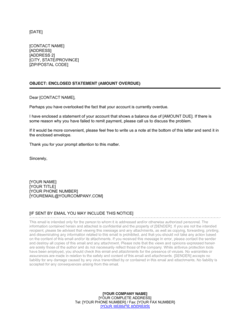
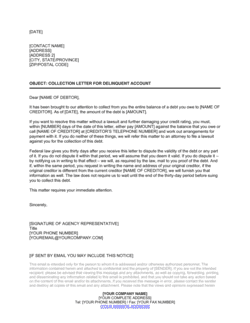
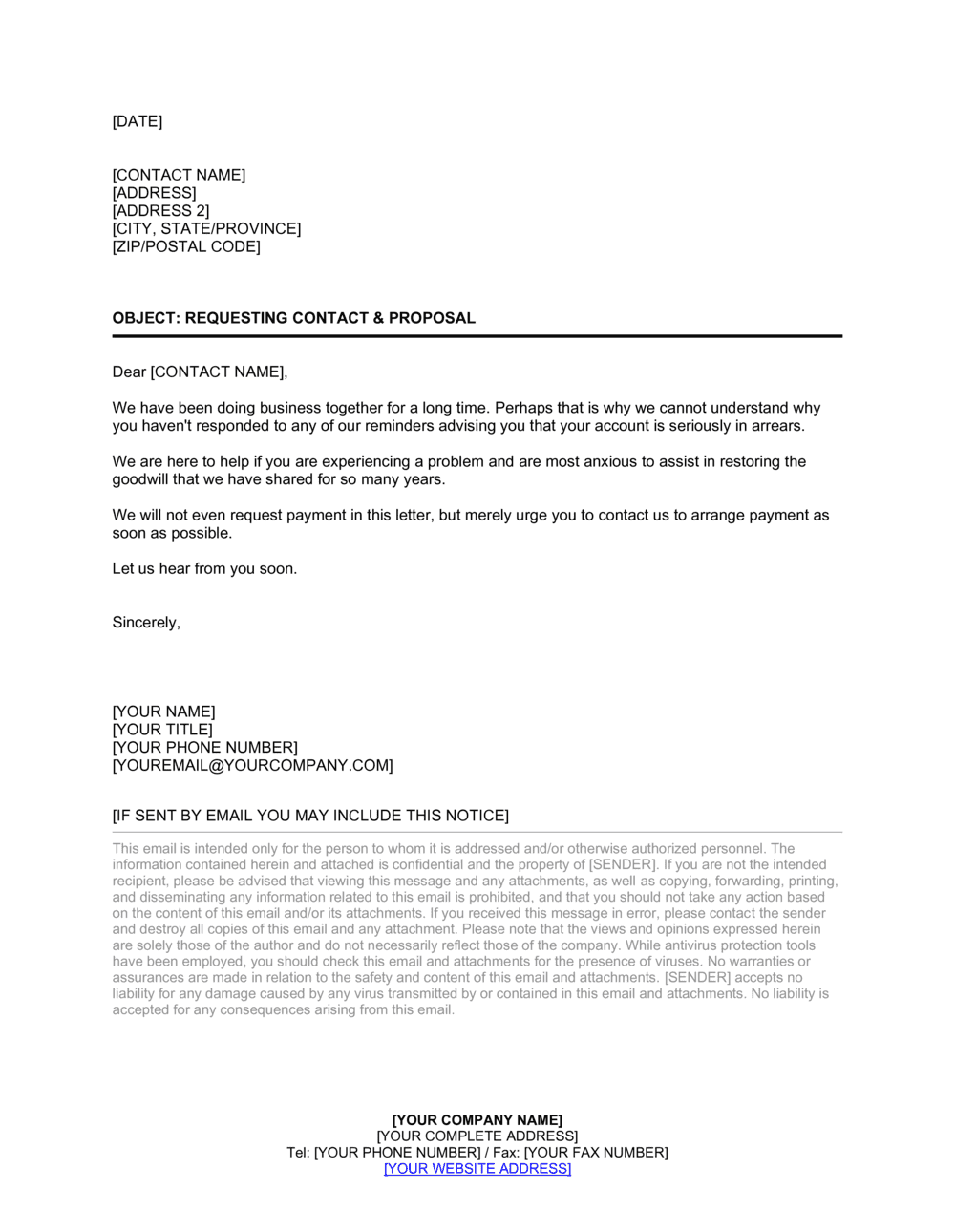
A Collection Letter Requesting Contact and Proposal is a formal written notice sent by a creditor to a debtor whose account is past due. It asks the debtor to get in touch and put forward a concrete repayment proposal β€” opening a channel for resolution before the debt is escalated to a collection agency or legal action. This free Word download is ready to edit online and export as PDF or send by email or post.
When you need it
Use it when an invoice or account balance is overdue and earlier payment reminders have gone unanswered. It is the appropriate next step after one or two friendly payment reminders but before a formal demand letter or third-party collection referral.
What's inside
A clearly identified outstanding balance with reference details, a professional but firm tone requesting the debtor make contact, an invitation to propose a mutually acceptable repayment arrangement, a stated response deadline, and your contact information for follow-up.

What is a Collection Letter Requesting Contact and Proposal?

A Collection Letter Requesting Contact and Proposal is a formal written notice sent by a creditor to a debtor whose account is past due, asking them to make contact and put forward a proposed repayment arrangement. It sits in the middle of the collection sequence β€” more formal than a payment reminder but less confrontational than a final demand letter. The letter states the outstanding balance and how long it has been overdue, references prior reminders that went unanswered, invites the debtor to propose a payment plan, and gives a firm deadline for response. Its purpose is to open a structured dialogue that resolves the debt without the cost and relationship damage of third-party collection or legal action.

Why You Need This Document

When payment reminders go unanswered, staying silent costs you money on two fronts: the outstanding balance continues to age, and you lose the leverage that comes from documented, timely escalation. A professionally worded collection letter requesting contact and proposal puts the debtor on notice that the matter is now a formal collection priority, not an overlooked invoice. It creates a paper trail showing you made good-faith efforts to resolve the debt β€” essential if the account eventually reaches a collection agency or small claims court. It also keeps the door open for repayment arrangements that a blunt demand letter closes off, which often means faster recovery at lower cost. This template gives you a ready-to-send letter in under 15 minutes, with the structure and tone that accounts receivable professionals use to maximize response rates and protect the business relationship at the same time.

Which variant fits your situation?

If your situation is…Use this template
First reminder for a recently overdue invoicePayment Reminder Letter
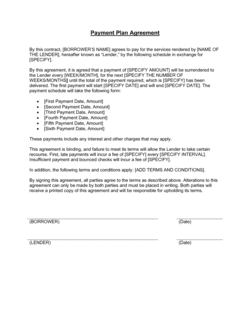
Debtor has responded but not yet paid β€” confirming a payment planPayment Plan Agreement
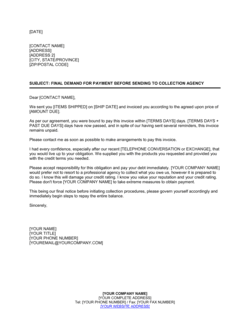
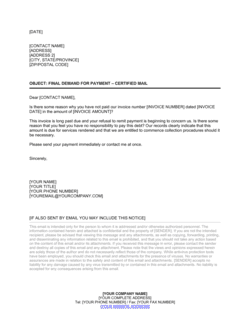
Final notice before legal action or collection referralFinal Demand for Payment Letter
Formally demanding a specific sum without inviting negotiationDemand for Payment Letter
Settling an overdue debt for less than the full amountDebt Settlement Agreement
Acknowledging receipt of a debtor's proposed repayment planCollection Letter Acknowledging Proposal
Following up after no response to this contact-and-proposal letterCollection Letter β€” No Response Follow-Up

Common mistakes to avoid

❌ No specific response deadline

Why it matters: Without a firm deadline, debtors treat the letter as low priority and delay indefinitely, extending your collection cycle by weeks or months.

Fix: Always state a specific calendar date β€” such as 'please respond no later than [DATE]' β€” and keep it to 7–14 days from the send date.
❌ Omitting the invoice reference number

Why it matters: Debtors with multiple outstanding invoices use missing reference numbers as a reason to request clarification rather than paying, adding unnecessary delay.

Fix: Include the invoice number, original due date, and outstanding amount in the opening paragraph so the debtor can match the letter to their records immediately.

❌ Threatening legal action the sender will not actually take

Why it matters: Empty legal threats destroy credibility; if the debtor calls the bluff and you do not act, your leverage disappears and future letters carry less weight.

Fix: Only reference escalation steps you are genuinely prepared to execute β€” collection agency referral, demand letter, or small claims filing β€” within the stated timeframe.

❌ Sending the letter to the wrong contact

Why it matters: A collection letter routed to a project manager instead of accounts payable may sit unopened while your deadline passes and the account ages further.

Fix: Confirm the accounts payable or billing contact name and email before sending, and copy the primary business contact as a secondary recipient.

The 8 key clauses, explained

Sender and recipient identification

In plain language: States the full name and contact details of the sending organization and the debtor, including account or invoice reference numbers.

Sample language
[COMPANY NAME] | [ADDRESS] | [PHONE] | [EMAIL] β€” To: [DEBTOR NAME / COMPANY] | [DEBTOR ADDRESS] | Account Ref: [ACCOUNT NUMBER]

Common mistake: Using a contact name rather than the debtor's legal entity name. Misidentifying the liable party weakens any subsequent escalation and can cause confusion if the matter proceeds to court.

Date and subject line

In plain language: Records the letter date and summarizes the purpose in a subject line β€” making the overdue nature and account reference immediately clear.

Sample language
Date: [DATE] | Re: Overdue Account β€” Invoice #[INVOICE NUMBER] | Outstanding Balance: $[AMOUNT]

Common mistake: Omitting the invoice number or account reference. Without it, the debtor cannot easily identify which obligation is being addressed, creating a reason to delay response.

Statement of the outstanding balance

In plain language: Clearly states the amount owed, the original due date, and how many days past due the account is β€” leaving no ambiguity about what is owed.

Sample language
Our records show that Invoice #[INVOICE NUMBER] for $[AMOUNT], originally due on [DUE DATE], remains unpaid as of [DATE] β€” now [X] days past due.

Common mistake: Stating only the invoice total without noting how far past due it is. The number of overdue days communicates urgency and establishes the timeline if the matter escalates.

Reference to prior reminders

In plain language: Briefly notes that earlier reminders were sent, establishing that this letter is not the first notice and that the creditor has made good-faith efforts to collect.

Sample language
We have previously sent payment reminders on [DATE 1] and [DATE 2] without receiving a response or payment.

Common mistake: Skipping this clause entirely. Without it, the debtor can claim this is the first they have heard of the matter, undermining the letter's position in the collection sequence.

Request to make contact

In plain language: Politely but clearly asks the debtor to contact the sender by the stated deadline to discuss the account.

Sample language
We ask that you contact us no later than [RESPONSE DEADLINE DATE] at [PHONE / EMAIL] to discuss this matter.

Common mistake: Phrasing the request as optional or indefinitely open-ended. Language like 'if you have any questions, feel free to call' signals no urgency and invites further delay.

Invitation to submit a repayment proposal

In plain language: Opens the door for the debtor to propose a payment plan, signaling the creditor's willingness to negotiate rather than escalate immediately.

Sample language
If you are unable to pay the full balance immediately, we invite you to contact us to discuss a repayment arrangement that addresses your current circumstances.

Common mistake: Framing the invitation as an unconditional offer to accept any arrangement. Specify that any plan is subject to the creditor's written approval to preserve negotiating flexibility.

Stated consequences of non-response

In plain language: Informs the debtor what will happen if they do not respond by the deadline β€” typically escalation to a collection agency, attorney referral, or formal demand letter.

Sample language
Should we not hear from you by [RESPONSE DEADLINE DATE], we may be required to refer this matter to a collection agency or pursue further action without additional notice.

Common mistake: Threatening specific legal action the sender is not actually prepared to take. Empty threats undermine credibility and, in some jurisdictions, may breach consumer protection regulations.

Closing and contact details

In plain language: Ends the letter professionally, reiterates the preferred contact method, and signs off with the sender's name, title, and department.

Sample language
We hope to resolve this matter promptly and appreciate your attention. Please contact [NAME] at [PHONE] or [EMAIL]. Sincerely, [SENDER NAME] | [TITLE] | [COMPANY NAME]

Common mistake: Closing with an aggressive or confrontational tone. A professional sign-off leaves the debtor more likely to respond constructively and preserves the relationship for future business.

How to fill it out

  1. 1

    Enter your company details and the debtor's information

    Fill in your full legal business name, mailing address, phone number, and email in the sender block. Enter the debtor's legal name, billing address, and account or invoice reference number.

    πŸ’‘ Use the debtor's registered legal name, not a trading name, in case the matter escalates to formal proceedings.

  2. 2

    State the outstanding balance and due date

    Insert the exact invoice amount, the original due date, and today's date. Calculate how many days past due the account is and include that figure β€” it reinforces urgency.

    πŸ’‘ Cross-reference your accounts receivable aging report to confirm the balance is accurate before sending. A disputed amount gives the debtor an easy reason to delay.

  3. 3

    Reference your prior reminders

    List the dates on which you previously sent payment reminders. Even a single prior reminder is worth noting to show this is not a first contact.

    πŸ’‘ Keep a record of all prior outreach in your accounts receivable system so you can cite specific dates accurately.

  4. 4

    Set a clear response deadline

    Enter a specific calendar date β€” typically 7 to 14 days from the letter date β€” by which the debtor must respond. Avoid open-ended language like 'at your earliest convenience.'

    πŸ’‘ Seven days is appropriate for accounts more than 60 days past due; 14 days is reasonable for accounts in the 31-to-60-day range.

  5. 5

    Tailor the repayment proposal invitation

    If you are willing to consider installments, state that clearly and note that any plan requires your written approval. If you require full payment only, remove or soften the invitation clause.

    πŸ’‘ Offering a plan option often produces faster resolution than demanding lump-sum payment from a debtor who genuinely cannot pay in full.

  6. 6

    Review the consequences clause and confirm you will act on it

    Ensure the escalation language matches what you will actually do if there is no response. If you plan to refer to a collection agency, say so. If you plan to issue a formal demand letter, state that instead.

    πŸ’‘ Only threaten steps you are prepared to take. Hollow threats damage your negotiating position and may create compliance issues under consumer protection laws.

  7. 7

    Proof, sign, and send via a traceable method

    Proofread the final letter for accuracy β€” especially the balance, due date, and response deadline. Send by email with read-receipt, certified mail, or both to create a delivery record.

    πŸ’‘ A delivery record is critical if the account ultimately goes to a collection agency or court β€” it proves the debtor received formal notice.

Frequently asked questions

What is a collection letter requesting contact and proposal?

It is a formal written notice a creditor sends to a debtor whose account is past due, asking them to make contact and submit a proposed repayment arrangement. Unlike a final demand letter, it is designed to open a dialogue rather than issue an ultimatum β€” making it appropriate for accounts that are overdue but where the creditor still wants to preserve the business relationship or avoid the cost of third-party collection.

When should I send this letter instead of a final demand?

Send this letter when you have already sent one or two payment reminders and received no response, but you are not yet ready to escalate to a collection agency or attorney. It sits in the middle of the collection sequence β€” firm enough to signal seriousness, but open enough to invite resolution. If this letter also goes unanswered, a final demand or collection referral is the appropriate next step.

How many days past due should an account be before sending this letter?

Most businesses send this type of letter when an account is 45 to 60 days past due, after at least one earlier reminder at the 15-to-30-day mark has gone unanswered. For high-value accounts or clients with a history of late payment, some businesses accelerate to this stage at 30 days past due.

Should I offer a payment plan in this letter?

Including an invitation to propose a repayment arrangement generally produces faster resolution, particularly for debtors who are genuinely cash-constrained. However, make clear that any plan is subject to your written approval β€” do not commit to accepting installments without reviewing the proposal. If you require full payment only, remove the installment invitation and focus the letter purely on requesting contact and confirming the balance.

Does this letter need to be signed to be effective?

No signature is required for a collection letter to be taken seriously or to serve as evidence of notice. However, including the name and title of the sender β€” an accounts receivable manager, controller, or business owner β€” adds authority and gives the debtor a specific person to contact. A scanned signature or electronic signature adds a professional finish but is not legally necessary.

What should I do if the debtor does not respond by the deadline?

If there is no response by the stated deadline, escalate to the next stage you indicated in the letter β€” typically a final demand letter, referral to a collection agency, or filing in small claims court for smaller balances. Document the send date and any delivery confirmation before escalating so you have a clear record of the full collection sequence.

Can I use this letter for consumer debts as well as business debts?

This template is designed primarily for B2B collection. For consumer debts β€” amounts owed by individual customers rather than businesses β€” the Fair Debt Collection Practices Act (FDCPA) in the US and equivalent consumer protection laws in other jurisdictions impose specific requirements on language, disclosures, and timing. If you are collecting from individual consumers, review applicable regulations or consult a collections attorney before adapting this template.

How is this letter different from a payment reminder?

A payment reminder is a brief, low-key nudge typically sent within the first 30 days past due β€” often just a few lines restating the balance and due date. This collection letter is longer, more formal in tone, explicitly references prior reminders, states consequences for non-response, and invites a structured repayment proposal. The escalation in formality signals to the debtor that the matter is now a collection priority, not an administrative oversight.

How this compares to alternatives

vs Payment Reminder Letter

A payment reminder is a brief, informal notice sent shortly after an invoice becomes overdue β€” typically within the first 15 to 30 days. This collection letter is more formal, references prior reminders, and explicitly invites a repayment proposal. Use a reminder first; send this letter when reminders go unanswered.

vs Final Demand for Payment Letter

A final demand letter issues a firm ultimatum β€” pay in full by a specific date or face immediate escalation to legal action or a collection agency. This contact-and-proposal letter is less confrontational and opens a dialogue. Send this letter first; escalate to a final demand only if it is ignored.

vs Demand for Payment Letter

A demand for payment letter formally requires the debtor to pay a specific amount by a set date with no offer to negotiate. This collection letter invites the debtor to propose an arrangement, making it better suited to situations where preserving the relationship or avoiding costly escalation is a priority.

vs Debt Settlement Agreement

A debt settlement agreement is a binding contract that records the agreed reduced amount and payment schedule after both parties have negotiated a resolution. This letter is the earlier step that opens that negotiation β€” once the debtor responds with a proposal and both parties agree, a settlement agreement formalizes the terms.

Industry-specific considerations

Professional Services

Law firms, accounting practices, and consultancies use this letter to recover fees from clients who have stopped responding to invoices without dispute or explanation.

Construction and Trades

Contractors and subcontractors use it to open repayment dialogue with project owners or general contractors on progress-billing invoices that have aged past 60 days.

Healthcare and Medical Billing

Medical practices and billing administrators use a modified version to invite patients with balances not covered by insurance to propose manageable payment plans before referring to a collections agency.

Wholesale and Distribution

Wholesalers and distributors use it to re-engage trade customers whose accounts have gone silent, often offering installment options to preserve the supplier relationship while recovering the balance.

Template vs pro β€” what fits your needs?

PathBest forCostTime
Use the templateSmall businesses, freelancers, and accounts receivable teams sending standard B2B collection lettersFree10–15 minutes per letter
Template + professional reviewBusinesses collecting consumer debts subject to FDCPA or equivalent regulations, or high-value accounts above $10,000$100–$300 for a one-time attorney review of your adapted template1–2 days
Custom draftedComplex or disputed debts, regulated industries, or matters where litigation is already being considered$300–$800 for attorney-drafted correspondence2–5 days

Glossary

Past Due Balance
An amount owed that has not been paid by the agreed invoice or contract due date.
Repayment Proposal
An offer from the debtor outlining how and when they intend to settle an outstanding balance β€” for example, monthly installments over six months.
Collection Sequence
The ordered series of increasingly formal communications a creditor sends before escalating to legal action or a third-party collection agency.
Accounts Receivable Aging
A report categorizing outstanding invoices by how long they have been unpaid β€” typically 30, 60, 90, and 90-plus days β€” used to prioritize collection activity.
Demand Letter
A formal legal notice requiring payment of a specific amount by a stated deadline, typically sent after earlier collection efforts have failed.
Payment Plan
A written arrangement allowing a debtor to pay an outstanding balance in scheduled installments rather than a single lump sum.
Response Deadline
The specific date by which the debtor is asked to make contact or submit a proposal, after which the creditor may escalate the matter.
Escalation
The process of referring an unresolved overdue account to a collection agency, attorney, or court when direct collection efforts have failed.
Creditor
The party owed money β€” the business or individual that issued the invoice or extended credit.
Debtor
The party that owes money β€” the customer, client, or counterparty whose payment is overdue.

Part of your Business Operating System

This document is one of 3,000+ business & legal templates included in Business in a Box.

  • Fill-in-the-blanks β€” ready in minutes
  • 100% customizable Word document
  • Compatible with all office suites
  • Export to PDF and share electronically

Create your document in 3 simple steps.

From template to signed document β€” all inside one Business Operating System.
1
Download or open template

Access over 3,000+ business and legal templates for any business task, project or initiative.

2
Edit and fill in the blanks with AI

Customize your ready-made business document template and save it in the cloud.

3
Save, Share, Send, Sign

Share your files and folders with your team. Create a space of seamless collaboration.

Save time, save money, and create top-quality documents.

β˜…β˜…β˜…β˜…β˜…

"Fantastic value! I'm not sure how I'd do without it. It's worth its weight in gold and paid back for itself many times."

Managing Director Β· Mall Farm
Robert Whalley
Managing Director, Mall Farm Proprietary Limited
β˜…β˜…β˜…β˜…β˜…

"I have been using Business in a Box for years. It has been the most useful source of templates I have encountered. I recommend it to anyone."

Business Owner Β· 4+ years
Dr Michael John Freestone
Business Owner
β˜…β˜…β˜…β˜…β˜…

"It has been a life saver so many times I have lost count. Business in a Box has saved me so much time and as you know, time is money."

Owner Β· Upstate Web
David G. Moore Jr.
Owner, Upstate Web

Run your business with a system β€” not scattered tools

Stop downloading documents. Start operating with clarity. Business in a Box gives you the Business Operating System used by over 250,000 companies worldwide to structure, run, and grow their business.

Start freeΒ Β·Β No credit card required