Dentistry Code Of Ethics Template

Free Word download β€’ Edit online β€’ Save & share with Drive β€’ Export to PDF

3 pagesβ€’25–30 min to fillβ€’Difficulty: Complexβ€’Signature requiredβ€’Legal review recommended
Learn more ↓
FreeDentistry Code Of Ethics Template

At a glance

What it is
A Dentistry Code of Ethics is a formal written policy that defines the professional and ethical standards binding dentists, hygienists, and dental staff within a practice. This free Word download gives dental practices a structured, editable starting point covering patient rights, informed consent, confidentiality, professional integrity, and disciplinary procedures β€” ready to export as PDF and distribute to all team members.
When you need it
Use it when onboarding new clinical staff, establishing a new dental practice, responding to a licensing board inquiry, or formalizing compliance standards across a multi-location group practice. It is also required by many dental professional associations as a condition of membership or accreditation.
What's inside
Patient rights and dignity obligations, informed consent standards, confidentiality and records management, professional competence requirements, advertising and fee transparency rules, conflict-of-interest prohibitions, reporting obligations for impaired practitioners, and disciplinary and grievance procedures.

What is a Dentistry Code of Ethics?

A Dentistry Code of Ethics is a formal written policy that establishes the professional and ethical obligations binding every member of a dental practice β€” from licensed dentists and hygienists to dental assistants and administrative staff. It defines how the practice approaches patient rights and dignity, informed consent, clinical competence, records confidentiality, advertising integrity, conflict-of-interest situations, and the duty to report impaired colleagues. Unlike a general employee code of conduct, a dentistry code of ethics is calibrated to the specific regulatory and clinical environment of dental practice, aligning internal standards with the requirements of state and provincial dental licensing boards, the ADA's Principles of Ethics, and applicable privacy law. When signed by all personnel, it creates enforceable obligations and establishes a documented compliance framework that protects both patients and the practice.

Why You Need This Document

A dental practice that operates without a written, signed code of ethics is relying on informal expectations to govern some of the highest-stakes professional conduct in healthcare β€” informed consent, patient confidentiality, scope-of-practice limits, and the reporting of a colleague who poses a risk to patient safety. When a licensing board receives a complaint against a practitioner, one of the first questions is whether the practice had documented standards in place and whether staff understood them. Without a written code, the answer is no β€” and the board's scrutiny shifts from the individual practitioner to the practice itself. Beyond regulatory exposure, a gap in ethics documentation leaves practices vulnerable in malpractice defense, accreditation reviews, and DSO affiliation due diligence. This template gives any dental practice β€” from a solo operator to a multi-location group β€” a structured, jurisdiction-adaptable starting point for building a defensible ethics framework in under two hours.

Which variant fits your situation?

If your situation is…Use this template
Establishing ethics standards for a solo dental practiceDentistry Code of Ethics
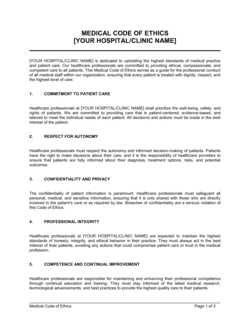
Creating a broader conduct policy covering all healthcare staffMedical Code of Ethics
Documenting patient rights at the point of carePatient Rights and Responsibilities Policy
Defining staff behavior and professional standards for a dental officeEmployee Code of Conduct
Protecting patient information in accordance with HIPAAHIPAA Privacy Policy
Onboarding a new associate dentist with formal obligationsAssociate Dentist Employment Agreement
Establishing ethical standards for a general medical or healthcare practiceHealthcare Code of Ethics

Common mistakes to avoid

❌ Using a blanket intake consent form to cover all future procedures

Why it matters: Licensing boards and courts consistently hold that informed consent must be specific to each material procedure. A single form signed at registration does not satisfy this standard and leaves the practice exposed to disciplinary action and negligence claims.

Fix: Implement a procedure-specific consent process that requires a separate signed form for each clinically significant treatment, documenting the specific risks, benefits, and alternatives discussed.

❌ Making impairment reporting discretionary

Why it matters: Most dental practice acts impose a mandatory duty to report an impaired colleague β€” using 'may report' language when the law says 'shall report' means the code itself creates a compliance gap.

Fix: Verify your jurisdiction's reporting requirements and use mandatory language ('shall immediately notify') that mirrors the statutory obligation exactly.

❌ Omitting administrative and billing staff from the code's scope

Why it matters: Front-desk and billing staff access sensitive patient records, handle financial information, and communicate directly with patients β€” excluding them from ethics obligations leaves material confidentiality and conduct risks uncovered.

Fix: Define the code's scope to explicitly include all practice personnel regardless of whether they hold a clinical license, and tailor the acknowledgment process accordingly.

❌ No records retention schedule in the confidentiality clause

Why it matters: Without defined retention periods, practices may destroy records prematurely β€” losing evidence needed for a malpractice defense β€” or retain records past legally required deletion deadlines, creating HIPAA or GDPR exposure.

Fix: Enter the longer of the applicable jurisdiction-specific and federal or supranational retention period, and cross-reference the specific regulation or dental practice act provision.

❌ Failing to address social media and online review conduct

Why it matters: Dental advertising rules in the US, Canada, the UK, and the EU extend to patient testimonials and online content β€” a code that is silent on social media leaves practitioners unaware they may be violating advertising standards with every patient review response.

Fix: Add a social media and online communications clause that references the applicable advertising guidelines and prohibits responding to patient reviews in a way that discloses protected health information.

❌ No appeal right in the disciplinary procedure

Why it matters: A disciplinary process without an appeal mechanism is inconsistent with natural justice principles and, in employment contexts, can expose the practice to wrongful-termination or unfair-dismissal claims.

Fix: Include a clearly defined appeal step β€” internal (to a senior partner or governing board) or external (to an arbitrator) β€” with a specific timeframe for filing and resolution.

The 10 key clauses, explained

Purpose and Scope

In plain language: States the document's intent, identifies which personnel are bound by it, and explains its relationship to applicable licensing board standards and professional association codes.

Sample language
This Code of Ethics applies to all dentists, dental hygienists, dental assistants, and administrative staff employed by or affiliated with [PRACTICE NAME] ('the Practice'). It supplements β€” and does not replace β€” the standards of [STATE/PROVINCIAL DENTAL LICENSING BOARD] and the [APPLICABLE PROFESSIONAL ASSOCIATION].

Common mistake: Defining scope to include only licensed clinicians and excluding administrative staff β€” front-desk and billing personnel handle sensitive patient data and are equally bound by confidentiality and conduct standards.

Patient Rights and Dignity

In plain language: Affirms the practice's commitment to treating every patient with respect, free from discrimination, and outlines patients' rights to information, privacy, and dignified care.

Sample language
All patients shall be treated with respect and dignity regardless of age, race, ethnicity, gender, disability, or ability to pay. Patients have the right to receive a clear explanation of their diagnosis, treatment options, and associated costs before any procedure begins.

Common mistake: Listing protected classes without referencing the applicable anti-discrimination law (e.g., ADA, Section 1557 of the ACA in the US) β€” the legal citation strengthens enforceability and signals awareness of statutory obligations.

Informed Consent

In plain language: Sets the standard for obtaining patient consent before treatment, specifying what information must be disclosed, how it must be documented, and how consent is handled for minors or incapacitated patients.

Sample language
Prior to any treatment, [PRACTICE NAME] staff shall explain the proposed procedure, material risks, realistic benefits, and available alternatives in plain language. Consent shall be documented on Form [CONSENT FORM NUMBER], signed by the patient or authorized guardian, and retained in the patient's file for no fewer than [X] years.

Common mistake: Using a blanket consent form signed at intake to cover all future treatments β€” courts and licensing boards routinely hold that informed consent must be specific to each material procedure.

Confidentiality and Patient Records

In plain language: Defines how patient information β€” clinical, financial, and personal β€” is collected, stored, shared, and destroyed, and cross-references applicable privacy law.

Sample language
Patient records, radiographs, treatment notes, and financial information are confidential and shall not be disclosed to third parties without written patient authorization, except as required by law or as necessary for treatment coordination. Records shall be stored in accordance with [HIPAA / PIPEDA / GDPR] and retained for a minimum of [X] years from the date of last treatment.

Common mistake: Omitting a records retention schedule β€” without a defined retention period, practices cannot demonstrate compliance during audits and may destroy records prematurely or hold them longer than legally required.

Professional Competence and Continuing Education

In plain language: Requires practitioners to practice only within their demonstrated competence, maintain mandatory continuing education hours, and disclose any license restrictions or disciplinary history.

Sample language
No dentist or hygienist affiliated with [PRACTICE NAME] shall perform a procedure for which they have not received adequate training. Each licensed practitioner shall complete a minimum of [X] continuing education hours per [licensing period], as required by [STATE/PROVINCIAL BOARD]. Any license suspension, restriction, or disciplinary action must be disclosed to the Practice Director within [5] business days.

Common mistake: Setting internal CE hour requirements lower than the licensing board minimum without noting which standard controls β€” if the board raises its minimum, the lower internal figure creates a misleading compliance record.

Advertising and Fee Representation

In plain language: Prohibits false, misleading, or deceptive advertising; requires that fee estimates provided to patients be accurate; and governs discount offers and promotional pricing.

Sample language
All advertising and patient communications by [PRACTICE NAME] shall be truthful, verifiable, and not misleading. Fee estimates provided before treatment shall reflect actual anticipated charges. Promotional pricing shall clearly state eligibility conditions, expiration dates, and any limitations on services covered.

Common mistake: Failing to address online reviews and social media testimonials β€” dental advertising rules in most jurisdictions extend to patient testimonials posted with the practice's knowledge or encouragement.

Conflict of Interest and Referral Integrity

In plain language: Prohibits self-referral arrangements and undisclosed financial relationships that could influence clinical recommendations, and requires disclosure of any material interest in a referred vendor or specialist.

Sample language
Referrals to specialists, laboratories, or product vendors shall be made solely on the basis of clinical need and the patient's best interest. Any financial relationship between [PRACTICE NAME] or its practitioners and a referred party shall be disclosed in writing to the patient prior to the referral.

Common mistake: Treating in-house specialist services as exempt from conflict-of-interest disclosure β€” patients have the same right to know about financial incentives regardless of whether the referral is internal or external.

Impairment and Fitness to Practice

In plain language: Defines the practice's obligations when a practitioner is impaired by substance use, mental health conditions, or physical illness, and requires reporting to the licensing board where mandated by law.

Sample language
Any practitioner who has reason to believe a colleague is impaired in a manner that poses a risk to patient safety shall report their concern to the Practice Director immediately. The Practice Director shall notify [STATE/PROVINCIAL LICENSING BOARD] as required by law and shall suspend the practitioner's patient contact responsibilities pending investigation.

Common mistake: Making the reporting obligation discretionary ('may report') rather than mandatory β€” in most jurisdictions, failure to report known impairment is itself a disciplinary violation.

Disciplinary Procedure and Grievance Process

In plain language: Sets out the steps for investigating ethics complaints, the rights of the accused practitioner, available sanctions, and the right to appeal.

Sample language
Ethics complaints shall be submitted in writing to the Practice Director within [30] days of the alleged incident. The accused practitioner shall receive written notice and an opportunity to respond within [10] business days. Sanctions range from written warning to suspension or termination of affiliation. The practitioner may appeal any sanction to [GOVERNING BODY / EXTERNAL ARBITRATOR] within [15] days of notice.

Common mistake: No appeal mechanism β€” a disciplinary clause with no appeal right is vulnerable to challenge as a breach of natural justice and is inconsistent with most licensing board procedural standards.

Acknowledgment and Agreement

In plain language: Records the practitioner's or staff member's agreement to abide by the code, with signature, date, and a statement that they have read and understood the document.

Sample language
I, [FULL NAME], acknowledge that I have read, understood, and agree to comply with the [PRACTICE NAME] Dentistry Code of Ethics. I understand that a violation of this Code may result in disciplinary action up to and including termination of my employment or affiliation. Signed: _____________ Date: _____________

Common mistake: Obtaining a signature without confirming the person actually received and reviewed the full document β€” signature pages separated from the body of the code create ambiguity about what was agreed to.

How to fill it out

  1. 1

    Insert the practice's legal name and governing board references

    Replace all [PRACTICE NAME] placeholders with your registered practice or organization name. Cross-reference your specific state, provincial, or national dental licensing board and any applicable professional association (e.g., ADA, CDA, GDC) throughout the document.

    πŸ’‘ Confirm the exact registered name of your practice entity β€” the name on your license and the name in this document should match precisely.

  2. 2

    Set records retention periods

    Research and enter the records retention minimum required by your jurisdiction's dental practice act and applicable privacy law. In the US, HIPAA requires retention for 6 years from creation or last effective date; individual states may require longer periods for adult or minor patient records.

    πŸ’‘ Use the longer of the applicable periods if your jurisdiction and HIPAA/provincial law conflict β€” this protects you against the stricter standard.

  3. 3

    Specify continuing education hour requirements

    Enter the mandatory CE hours for each license type (dentist, hygienist, assistant) as required by your licensing board. If your practice sets a higher internal standard, note both figures and state which controls.

    πŸ’‘ Check your state or provincial board website annually β€” CE minimums change, and your code should reflect current requirements.

  4. 4

    Review and adapt the conflict-of-interest and referral clause

    List any in-house specialist services, affiliated laboratories, or preferred vendor relationships that could create a perceived conflict, and confirm the disclosure language in the clause covers all of them.

    πŸ’‘ If your practice has a DSO affiliation, add a clause addressing any referral fee or revenue-sharing arrangements required by the DSO agreement.

  5. 5

    Confirm impairment reporting obligations for your jurisdiction

    Verify whether your state or provincial licensing board mandates reporting of impaired colleagues and under what circumstances. Adjust the mandatory/permissive language in the impairment clause accordingly.

    πŸ’‘ Most dental practice acts impose a mandatory reporting duty on practice owners β€” use 'shall report' not 'may report' if your jurisdiction requires it.

  6. 6

    Customize the disciplinary timeline and sanctions

    Set realistic timeframes for complaint submission, response, and appeal that your practice can actually administer. Define the sanction ladder clearly β€” written warning, suspension, termination β€” and ensure it aligns with your employment agreements.

    πŸ’‘ Cross-check disciplinary timelines against any collective agreement or employment contract in place to avoid procedural conflicts.

  7. 7

    Distribute, obtain signatures, and file

    Provide every staff member and affiliated practitioner with the full code before their first day of patient contact. Collect signed acknowledgment pages and store them in each individual's personnel file alongside a copy of the full document they signed.

    πŸ’‘ Conduct an annual re-acknowledgment process β€” distributing an updated code and collecting fresh signatures β€” to demonstrate ongoing compliance and capture any policy changes.

  8. 8

    Schedule an annual review

    Set a calendar reminder to review the code against any updates to your licensing board's standards, applicable privacy law, and professional association guidelines at least once per year.

    πŸ’‘ Assign a named individual β€” practice director or compliance lead β€” as the code owner responsible for triggering and completing the annual review.

Frequently asked questions

What is a dentistry code of ethics?

A dentistry code of ethics is a formal written policy that defines the professional and ethical standards all members of a dental practice are required to uphold. It covers patient rights, informed consent, confidentiality, professional competence, advertising integrity, conflict-of-interest rules, impairment reporting, and disciplinary procedures. It creates binding obligations when signed by practitioners and staff and supplements the standards set by dental licensing boards and professional associations.

Is a written code of ethics legally required for dental practices?

In most jurisdictions, dental licensing boards and professional associations publish their own codes of ethics that legally bind registered practitioners β€” but do not require practices to maintain a separate internal written code. However, many dental service organizations, accreditation bodies, and insurers require a formal written policy as a condition of participation. Beyond compliance, a written and signed code is strong evidence of a culture of professional conduct in the event of a licensing board complaint or negligence claim.

Who should sign a dentistry code of ethics?

Every person who works in the practice should sign β€” not just licensed clinicians. Dentists, dental hygienists, dental assistants, and administrative, billing, and reception staff all have access to patient information and interact with patients in ways that implicate professional conduct standards. Limiting signatures to licensed staff leaves material gaps in confidentiality and conduct coverage.

How does a dentistry code of ethics differ from an employee code of conduct?

An employee code of conduct addresses general workplace behavior β€” attendance, harassment, use of company resources, and social media. A dentistry code of ethics addresses profession-specific obligations: patient autonomy, informed consent, clinical competence, scope of practice, and the duty to report an impaired colleague. Both documents are needed in a dental practice; they are complementary rather than interchangeable.

Can a dental practice be disciplined for a practitioner's ethics violation?

Yes. In most jurisdictions, a dental practice owner can face regulatory action for failing to maintain adequate supervision, policies, or systems that would have prevented a practitioner's ethics violation. A documented, distributed, and signed code of ethics is one of the clearest ways to demonstrate that the practice exercised reasonable oversight β€” and distinguishes isolated practitioner misconduct from a systemic failure.

How often should a dentistry code of ethics be updated?

The code should be reviewed at least annually and updated whenever the applicable licensing board standards, privacy law, or advertising regulations change. In the US, the ADA publishes updates to its Principles of Ethics and Code of Professional Conduct periodically; in Canada, the Royal College of Dental Surgeons of Ontario and other provincial bodies do the same. Every material update should trigger a re-acknowledgment process with fresh signatures from all staff.

What happens if a staff member refuses to sign the code of ethics?

Refusal to sign a code of ethics can be treated as a refusal to meet a lawful condition of employment or affiliation, depending on jurisdiction and how the obligation is framed in employment contracts. For existing staff, introducing a new code typically requires notice and, in some jurisdictions, may constitute a change in working conditions requiring fresh consideration. Consult an employment lawyer before making signature a condition of continued employment for existing staff.

Does a dentistry code of ethics need to be specific to dentistry, or can we use a generic healthcare ethics policy?

A dentistry-specific code is strongly preferable. Dental practice involves distinct ethical considerations β€” radiograph exposure decisions, cosmetic treatment recommendations, sedation risk, and scope-of-practice boundaries between dentists and hygienists β€” that a generic healthcare policy will not adequately address. Licensing boards assessing a complaint will compare the practice's internal standards against the dental profession's specific ethical framework, not a generic one.

Does a dentistry code of ethics protect against malpractice claims?

A code of ethics does not create a defense to a specific malpractice claim, but it is relevant evidence that the practice maintained a culture of professional standards. Plaintiffs in malpractice cases often argue that substandard care reflects a systemic failure of supervision and oversight β€” a signed, current code of ethics directly rebuts that argument. It is most valuable as part of a broader risk-management framework that includes signed consent forms, documented CE records, and a functioning disciplinary process.

How this compares to alternatives

vs Employee Code of Conduct

An employee code of conduct governs general workplace behavior β€” attendance, harassment, confidentiality of business information, and use of company assets. A dentistry code of ethics addresses profession-specific obligations: patient rights, clinical competence, informed consent, scope-of-practice limits, and impairment reporting. Dental practices need both β€” they are not substitutes for each other.

vs HIPAA Privacy Policy

A HIPAA privacy policy is a compliance document that defines how protected health information is collected, used, and disclosed under the HIPAA Privacy Rule. A dentistry code of ethics is broader β€” it addresses clinical conduct, professional integrity, and patient dignity, with confidentiality as one clause among many. A dental practice in the US needs both documents.

vs Medical Code of Ethics

A medical code of ethics covers the same foundational principles β€” beneficence, non-maleficence, autonomy, justice β€” but is calibrated for physicians and does not address dentistry-specific considerations such as radiograph decision-making, dental sedation protocols, or the hygienist-dentist scope-of-practice boundary. Use the dentistry-specific version for any dental practice.

vs Patient Consent Form

A patient consent form documents a specific patient's agreement to a specific procedure after being informed of material risks, benefits, and alternatives. A dentistry code of ethics sets the practice-wide standard for how informed consent must be obtained and documented for every patient. The code governs the process; the consent form executes it for each individual encounter.

Industry-specific considerations

General Dental Practices

Covers the full range of clinical staff roles β€” dentist, hygienist, assistant, and front desk β€” and maps directly to state dental practice act requirements and ADA ethical principles.

Dental Service Organizations (DSOs)

Multi-location DSOs require a standardized code that satisfies each state's licensing board standards while maintaining consistent group-wide conduct expectations across dozens of affiliated practices.

Dental Education and Training

Dental schools and residency programs use an ethics code to set professional expectations for students and residents performing supervised patient care, often as a condition of clinical enrollment.

Dental Professional Associations

National and provincial dental associations publish a code of ethics as the binding membership conduct standard, with the disciplinary procedure serving as the mechanism for handling member complaints and censure.

Jurisdictional notes

United States

Dental ethics in the US are governed at the state level through dental practice acts administered by each state's dental board, supplemented by the ADA's Principles of Ethics and Code of Professional Conduct. HIPAA governs patient data confidentiality and records retention (6-year minimum). Non-compete clauses in dentist employment agreements interact closely with ethics codes in states like California and Massachusetts where such restrictions are limited or void. FTC advertising rules and state-specific dental advertising regulations apply to fee representation and testimonials.

Canada

Each province regulates dentistry through its own self-governing regulatory college β€” for example, the Royal College of Dental Surgeons of Ontario or the College of Dental Surgeons of British Columbia β€” each publishing its own code of ethics that binds registrants. PIPEDA (and Quebec's Law 25) governs patient data privacy. Practices in Quebec must ensure all patient-facing documents, including this code, are available in French. Provincial practice standards on informed consent vary and should be incorporated by reference.

United Kingdom

The General Dental Council (GDC) publishes Standards for the Dental Team, which sets binding ethical and professional obligations for all registered dental professionals in the UK. Practices should ensure internal ethics codes align with GDC standards rather than duplicate or contradict them. The UK GDPR and Data Protection Act 2018 govern patient records and confidentiality. CQC registration requirements for dental practices in England include evidence of a governance framework covering professional conduct.

European Union

Dental professional ethics in the EU are regulated at the member-state level through national dental councils and health ministry regulations, with no single EU-wide dental ethics code. However, GDPR applies uniformly across member states to patient data β€” records retention, consent for data processing, and breach notification obligations must be reflected in the confidentiality clause. The Council of European Dentists publishes guidance on professional standards that can inform a cross-border practice's internal code.

Template vs lawyer β€” what fits your deal?

PathBest forCostTime
Use the templateSolo or small group dental practices establishing a written ethics policy for the first timeFree1–2 hours
Template + legal reviewPractices in heavily regulated states, those responding to a licensing board inquiry, or DSO-affiliated practices$400–$9003–5 business days
Custom draftedMulti-state DSOs, dental schools, or professional associations requiring a code that functions as an enforceable membership or employment document$2,000–$6,000+2–4 weeks

Glossary

Informed Consent
The process by which a patient is provided with sufficient information about a proposed treatment β€” including risks, benefits, and alternatives β€” to make a voluntary, knowledgeable decision.
Patient Autonomy
The right of a patient to make decisions about their own dental care, including the right to refuse treatment, without coercion.
Beneficence
The ethical obligation to act in the best interest of the patient, prioritizing their health and wellbeing in all clinical decisions.
Non-Maleficence
The duty to avoid causing unnecessary harm to patients, whether through action, inaction, or treatment recommendations.
Professional Competence
The ongoing obligation of a dental professional to maintain the knowledge, skills, and clinical judgment necessary to deliver care safely within their scope of practice.
Conflict of Interest
A situation in which a dentist's personal, financial, or professional interests could compromise β€” or appear to compromise β€” their duty to act in the patient's best interest.
Scope of Practice
The procedures, treatments, and clinical activities a dental professional is legally and professionally authorized to perform under their license and training.
Whistleblower Obligation
The ethical and, in many jurisdictions, legal duty to report a colleague's impairment, misconduct, or substandard care to the appropriate regulatory or licensing authority.
Fee Transparency
The obligation to provide patients with honest, complete information about treatment costs and payment expectations before care is delivered.
Disciplinary Procedure
A formal documented process for investigating, adjudicating, and sanctioning violations of professional ethics standards within a practice or association.
Dental Service Organization (DSO)
A business entity that provides administrative and business support services to affiliated dental practices, often subject to additional compliance and ethics requirements.

Part of your Business Operating System

This document is one of 3,000+ business & legal templates included in Business in a Box.

  • Fill-in-the-blanks β€” ready in minutes
  • 100% customizable Word document
  • Compatible with all office suites
  • Export to PDF and share electronically

Create your document in 3 simple steps.

From template to signed document β€” all inside one Business Operating System.
1
Download or open template

Access over 3,000+ business and legal templates for any business task, project or initiative.

2
Edit and fill in the blanks with AI

Customize your ready-made business document template and save it in the cloud.

3
Save, Share, Send, Sign

Share your files and folders with your team. Create a space of seamless collaboration.

Save time, save money, and create top-quality documents.

β˜…β˜…β˜…β˜…β˜…

"Fantastic value! I'm not sure how I'd do without it. It's worth its weight in gold and paid back for itself many times."

Managing Director Β· Mall Farm
Robert Whalley
Managing Director, Mall Farm Proprietary Limited
β˜…β˜…β˜…β˜…β˜…

"I have been using Business in a Box for years. It has been the most useful source of templates I have encountered. I recommend it to anyone."

Business Owner Β· 4+ years
Dr Michael John Freestone
Business Owner
β˜…β˜…β˜…β˜…β˜…

"It has been a life saver so many times I have lost count. Business in a Box has saved me so much time and as you know, time is money."

Owner Β· Upstate Web
David G. Moore Jr.
Owner, Upstate Web

Run your business with a system β€” not scattered tools

Stop downloading documents. Start operating with clarity. Business in a Box gives you the Business Operating System used by over 250,000 companies worldwide to structure, run, and grow their business.

Start freeΒ Β·Β No credit card required