- Cohabitation
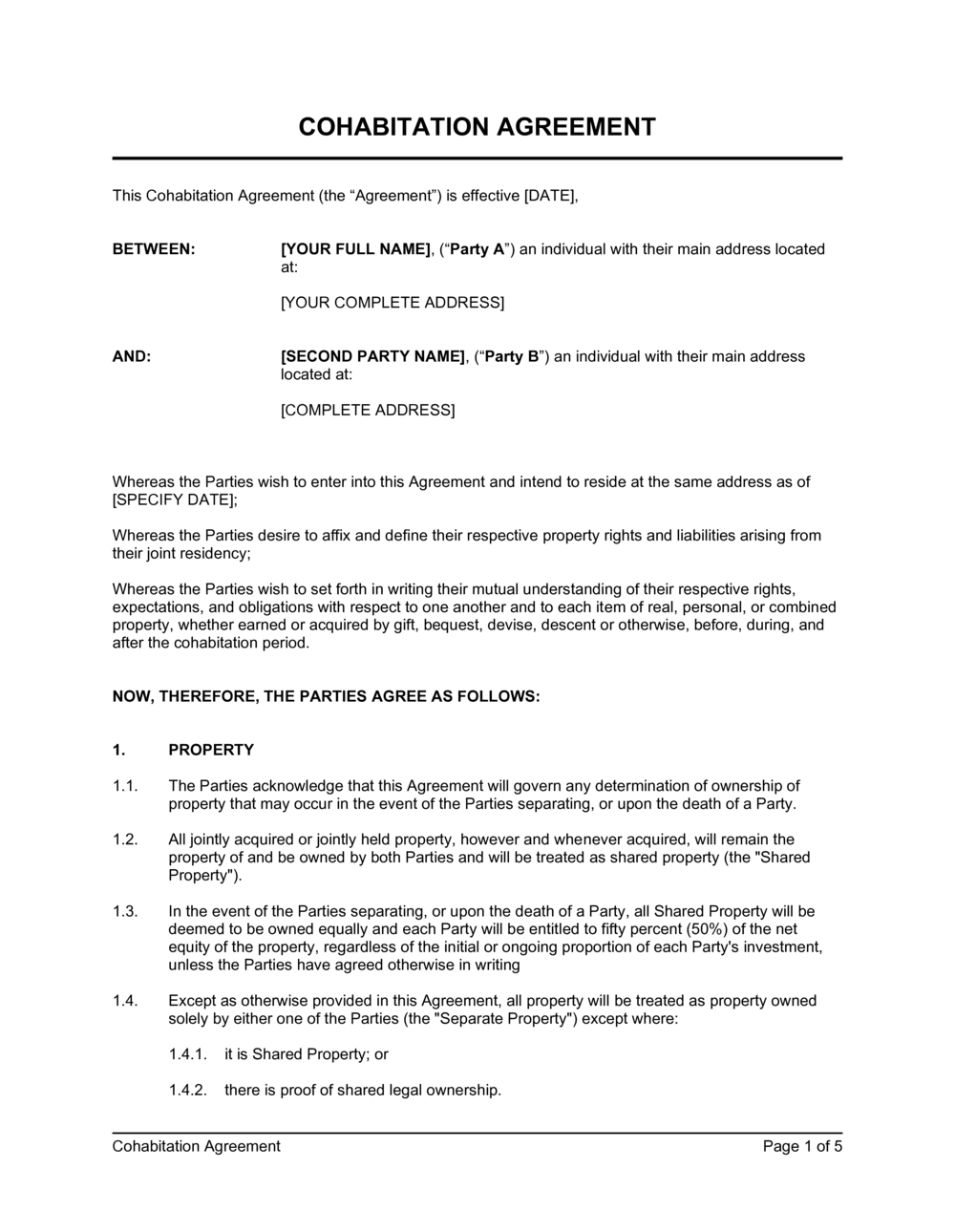
- Two people living together in a shared residence in a domestic relationship without being legally married.
- Separate Property
- Assets owned exclusively by one partner — typically brought into the relationship before cohabitation or received as a gift or inheritance during it.
- Joint Property
- Assets purchased or held together by both partners, where both have an ownership interest.
- Tenancy in Common
- A form of joint property ownership where each partner holds a defined share that can be independently transferred or inherited — shares need not be equal.
- Joint Tenancy
- A form of co-ownership where both partners hold equal shares with a right of survivorship — on one partner's death, the other automatically inherits the full property.
- Common-Law Relationship
- A relationship in which two people live together as a couple for a defined period without formal marriage — recognized for certain legal purposes in many Canadian provinces and some other jurisdictions.
- Unjust Enrichment
- A legal doctrine allowing one party to claim compensation when the other has benefited financially at their expense without a contractual obligation to repay — commonly raised in cohabitation disputes.
- Domestic Partnership
- A legally recognized relationship status available in some jurisdictions to unmarried couples, conferring limited rights similar to marriage.
- Resulting Trust
- A legal mechanism courts use to recognize a beneficial ownership interest when one person contributes to property held in another's name — relevant when a non-titled partner has paid toward a home.
- Financial Disclosure
- The formal exchange of each party's asset, liability, and income information before executing the agreement — required in most jurisdictions for the contract to be enforceable.
- Severability Clause
- A provision stating that if one clause of the agreement is found unenforceable, the remaining clauses continue in full force.