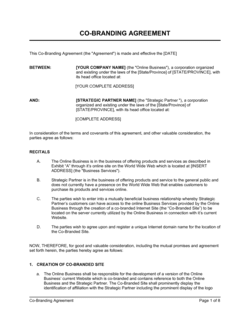
Checklist Co-Branding Agreement

Free download β€’ Use as a template β€’ Print or share

5 pagesβ€’20–30 min to useβ€’Difficulty: Standard
Learn more ↓
FreeChecklist Co-Branding Agreement Template

At a glance

What it is
A Checklist Co-Branding Agreement is a structured reference form that guides both parties through every key item to confirm, negotiate, and document before finalizing a co-branding or brand partnership arrangement. This free Word download gives brand managers, marketing leads, and business owners a line-by-line checklist they can complete online and export as PDF to verify nothing is overlooked.
When you need it
Use it at the start of any co-branding negotiation β€” before a joint product launch, co-sponsored campaign, or co-marketed event β€” to confirm that both parties have addressed brand guidelines, IP usage, revenue splits, and exit terms.
What's inside
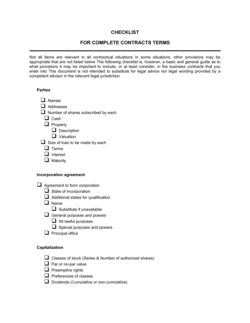
Party identification fields, brand usage rights and restrictions, approval workflows, revenue and cost allocation, IP ownership, campaign scope, term and termination checkboxes, and a final sign-off confirmation row.

What is a Checklist Co-Branding Agreement?

A Checklist Co-Branding Agreement is a structured reference form that guides both parties through every key item to confirm, negotiate, and document before entering a formal co-branding arrangement. It covers brand asset usage rights, IP ownership of jointly created materials, approval workflows, revenue and cost allocation, exclusivity terms, and wind-down conditions β€” row by row, so nothing is overlooked before the binding agreement is signed. This free Word download is designed for brand managers, marketing leads, and business owners who need a fast, organized way to align on partnership terms without starting from a blank page.

Why You Need This Document

Co-branding partnerships regularly run into disputes over items that were never explicitly agreed: one party uses the other's logo at the wrong size, revenue reconciliation stalls because "net" was never defined, or a campaign can't launch because there's no agreed approval turnaround. A completed checklist closes those gaps before they become problems. It creates a shared record of every term both parties have reviewed, flags outstanding items before the contract is signed, and gives both brand teams a single document to reference when a question arises mid-campaign. Skipping it means negotiating the same points under pressure after work has already started β€” when leverage and goodwill are both in shorter supply.

Which variant fits your situation?

If your situation is…Use this template
Need a fully binding agreement, not just a checklistCo-Branding Agreement
Scoping a joint marketing campaign with shared ad spendCo-Marketing Agreement
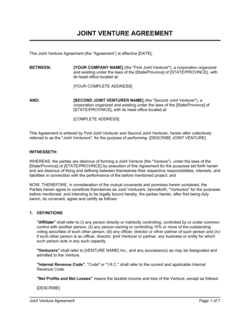
Launching a co-branded physical product with a manufacturing partnerJoint Venture Agreement
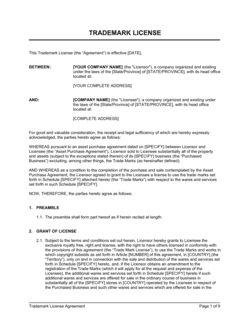
Licensing your brand to another party without a joint campaignTrademark License Agreement
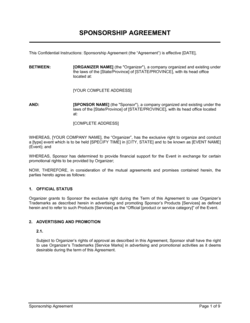
Sponsoring an event with brand placement rightsSponsorship Agreement
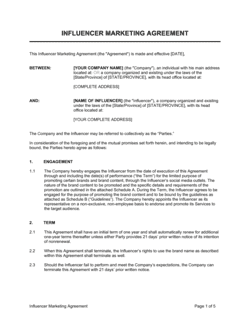
Documenting an influencer's use of your brand in contentInfluencer Marketing Agreement

Common mistakes to avoid

❌ Recording brand names instead of legal entity names

Why it matters: A checklist referencing only a trade name creates ambiguity about which legal entity is bound, making enforcement difficult if the partnership sours.

Fix: Verify the registered corporate name of each partner and enter it in the party identification fields alongside the brand name.

❌ Skipping the IP ownership field for jointly created assets

Why it matters: Leaving ownership undefined means both parties may claim exclusive rights to campaign creative β€” a common trigger for post-campaign disputes and costly rework.

Fix: Tick an ownership option for every asset type produced for the initiative, and restrict sublicensing by either joint owner without written consent.

❌ No wind-down period for co-branded materials

Why it matters: Immediate removal on termination is operationally impossible for printed collateral, product packaging, and scheduled digital campaigns β€” forcing a breach.

Fix: Set a realistic wind-down window (typically 30–90 days) and specify which categories of material may remain in use until that date.

❌ Omitting a deemed-approval clause in the workflow field

Why it matters: Without a deadline for approval, one partner can hold creative indefinitely, blocking campaign launches and creating budget waste.

Fix: Add a deemed-approval trigger: if no written objection is received within the agreed window, the material is considered approved.

The 10 key fields, explained

Party identification

Campaign or initiative scope

Brand asset usage rights

Approval workflow and turnaround

IP ownership of jointly created assets

Revenue and cost allocation

Exclusivity and non-compete checkboxes

Term, renewal, and termination

Wind-down and asset removal

Sign-off confirmation row

How to fill it out

  1. 1

    Enter both parties' legal entity details

    Record the registered legal name, brand name, and primary contact for each partner in the party identification fields at the top of the checklist.

    πŸ’‘ Confirm the exact registered entity name against a corporate registry before filling in β€” brand names and legal names often differ.

  2. 2

    Define the campaign or initiative scope

    Write a single-sentence description of what the co-branding covers, the channels involved, and the geographic territory. Keep it narrow enough to prevent scope creep.

    πŸ’‘ If the scope is likely to expand, add a short note in the checklist's comments column listing the process for agreeing extensions in writing.

  3. 3

    Complete the brand asset usage rows

    For each party, list the exact logo files approved for use, the hex color codes, minimum sizing, and acceptable placement positions. Attach brand guidelines as an appendix.

    πŸ’‘ Request each partner's current brand guidelines PDF before filling this section β€” logo files and color codes change more often than people expect.

  4. 4

    Confirm the approval workflow and turnaround times

    Name the specific approver at each organization, the submission format, and the number of business days for review. Include a deemed-approval clause for items not rejected within the window.

    πŸ’‘ A 3-business-day turnaround with deemed approval is the most common standard β€” longer windows stall campaign timelines.

  5. 5

    Clarify IP ownership and licensing

    For each type of jointly created asset, tick whether ownership rests with Partner A, Partner B, or both jointly, and confirm the scope of any license back to the non-owning party.

    πŸ’‘ If joint ownership is selected, add a note restricting sublicensing without the other party's written consent.

  6. 6

    Record the revenue split and cost allocation

    Enter each party's percentage of net revenues and designate responsibility for each cost category β€” production, media, fulfillment, and platform fees.

    πŸ’‘ Define 'net revenue' explicitly in the comments column (e.g., gross revenue minus platform fees and returns) to prevent disputes at the reconciliation stage.

  7. 7

    Set term dates and termination conditions

    Enter the start and end dates, tick whether the agreement auto-renews, and confirm the notice periods for both convenience and cause termination.

    πŸ’‘ Set a calendar reminder for 60 days before the end date so both parties have time to negotiate renewal or exit cleanly.

  8. 8

    Obtain initials on the sign-off row

    Have an authorized representative from each party initial the confirmation row and flag any outstanding items before the binding agreement is sent for signature.

    πŸ’‘ A completed checklist with initials is a useful paper trail during disputes β€” keep the signed copy alongside the executed co-branding agreement.

Frequently asked questions

What is a co-branding agreement checklist?

A co-branding agreement checklist is a structured form that both parties complete before finalizing a brand partnership to confirm every key term has been addressed β€” brand usage rights, IP ownership, revenue splits, approval workflows, and exit conditions. It is not itself a binding contract but serves as a negotiation and due-diligence tool that feeds directly into the executed agreement.

What is the difference between this checklist and a co-branding agreement?

The checklist is a pre-execution reference tool used to confirm that all material terms have been discussed and agreed before the binding agreement is drafted. The co-branding agreement is the legally binding document both parties sign. Use the checklist during negotiation, then transfer confirmed terms into the formal agreement.

Do I need a lawyer to complete this checklist?

For most straightforward brand partnerships β€” co-sponsored campaigns, joint content series, or limited product collaborations β€” completing the checklist without a lawyer is reasonable. Engage legal counsel when the partnership involves significant revenue sharing, jointly owned IP of material value, or exclusivity restrictions that could limit future business opportunities.

What brand assets should be listed in the checklist?

List every asset both parties will use: primary and secondary logos with file format and minimum size, approved color codes, approved typefaces, slogans or taglines, and any brand photography. Attach each party's current brand guidelines as an appendix so the approved assets are formally documented alongside the checklist.

What should the revenue split field cover?

The revenue split field should specify the percentage each party receives, whether it applies to gross or net revenue, how net is defined (e.g., after platform fees, returns, and taxes), the reconciliation frequency, and the payment method and timeline. Ambiguity on gross versus net is the most common source of post-campaign financial disputes between co-branding partners.

How long should a co-branding arrangement typically last?

Most campaign-level co-branding arrangements run 3–12 months. Product-level co-branding tied to a SKU or packaging design may run 1–3 years. The checklist term field should match the scope β€” short campaigns warrant short terms with a clear end date, while longer arrangements benefit from an auto-renewal clause paired with a 60-day notice period for either party to exit.

What happens to co-branded assets after the partnership ends?

Both parties should complete the wind-down field in the checklist to agree on a specific date by which all co-branded materials β€” digital, print, and product packaging β€” must be removed or retired. A typical wind-down window is 30–90 days. Without a defined period, one party may claim the other is continuing to use their brand without authorization.

Can this checklist be used for influencer co-branding deals?

Yes, with minor adjustments. For influencer arrangements, the brand asset and approval workflow fields are particularly important β€” specify which brand elements the influencer may use, the format and timeline for content approval, and the attribution wording required in posts. Consider pairing the checklist with a dedicated Influencer Marketing Agreement for any paid arrangement.

How this compares to alternatives

vs Co-Branding Agreement

A co-branding agreement is the binding legal contract both parties sign to govern the partnership. This checklist is the pre-execution tool used to confirm all terms are agreed before that contract is drafted. Complete the checklist first, then transfer confirmed terms into the binding agreement.

vs Joint Venture Agreement

A joint venture agreement creates a shared business entity or formal profit-sharing structure between two companies. A co-branding arrangement is narrower β€” it governs brand usage and joint marketing without necessarily creating a new legal entity or long-term financial partnership.

vs Trademark License Agreement

A trademark license agreement grants one party the right to use another's registered mark under defined conditions, typically with a royalty. Co-branding is a mutual arrangement where both parties use each other's brands together β€” neither party is simply licensing to the other.

vs Sponsorship Agreement

A sponsorship agreement governs a financial sponsor's brand placement rights at an event or in content in exchange for a fee. Co-branding is a reciprocal partnership where both brands benefit from joint association β€” rather than one party paying for exposure on another's platform.

Industry-specific considerations

Consumer Goods

Co-branded product packaging requires precise logo placement specs, territory restrictions, and a clear wind-down period tied to existing inventory sell-through.

SaaS / Technology

Technology co-branding often involves integration badges, co-sell agreements, and joint landing pages β€” approval workflows and digital asset removal timelines are critical.

Food and Beverage

Co-branded food products must track regulatory labeling requirements alongside brand usage rights, with revenue splits tied to per-unit wholesale pricing.

Professional Services

Firms co-branding thought-leadership content or events need tight approval workflows to protect reputation, with IP ownership of jointly produced reports clearly assigned.

Template vs pro β€” what fits your needs?

PathBest forCostTime
Use the templateBrand managers, marketing leads, and small business owners preparing for a standard co-branded campaign or product collaborationFree20–30 minutes
Template + professional reviewPartnerships involving exclusivity restrictions, significant jointly owned IP, or revenue shares above $50K$200–$500 for a legal or brand strategy review1–2 days
Custom draftedEnterprise co-branding with complex multi-territory rights, joint product development, or material equity-linked arrangements$1,000–$3,000+1–2 weeks

Glossary

Co-Branding
A marketing arrangement in which two or more brands collaborate to produce a jointly marketed product, service, or campaign.
Brand Guidelines
A documented set of rules governing how a brand's logo, colors, fonts, and tone may be used by any party.
IP Ownership
The identification of which party owns intellectual property β€” logos, creative assets, or product designs β€” created during or for the partnership.
Approval Workflow
The defined process by which each party reviews and signs off on creative materials before they are published or distributed.
Revenue Split
The agreed percentage or formula by which net revenues generated by the co-branded initiative are divided between partners.
Term
The defined start and end dates of the co-branding arrangement, including any automatic renewal provisions.
Termination for Cause
A provision allowing either party to end the agreement immediately if the other materially breaches its obligations β€” such as misusing a logo or missing a payment.
Exclusivity
A restriction preventing one or both parties from entering a similar co-branding arrangement with a competitor during the agreement term.
Attribution
The requirement that each party's brand is credited in a specified and consistent manner in all co-branded materials.
Wind-Down Period
A defined timeframe after termination during which existing co-branded materials may continue to be used before all references must be removed.

Part of your Business Operating System

This document is one of 3,000+ business & legal templates included in Business in a Box.

  • Fill-in-the-blanks β€” ready in minutes
  • 100% customizable Word document
  • Compatible with all office suites
  • Export to PDF and share electronically

Create your document in 3 simple steps.

From template to signed document β€” all inside one Business Operating System.
1
Download or open template

Access over 3,000+ business and legal templates for any business task, project or initiative.

2
Edit and fill in the blanks with AI

Customize your ready-made business document template and save it in the cloud.

3
Save, Share, Send, Sign

Share your files and folders with your team. Create a space of seamless collaboration.

Save time, save money, and create top-quality documents.

β˜…β˜…β˜…β˜…β˜…

"Fantastic value! I'm not sure how I'd do without it. It's worth its weight in gold and paid back for itself many times."

Managing Director Β· Mall Farm
Robert Whalley
Managing Director, Mall Farm Proprietary Limited
β˜…β˜…β˜…β˜…β˜…

"I have been using Business in a Box for years. It has been the most useful source of templates I have encountered. I recommend it to anyone."

Business Owner Β· 4+ years
Dr Michael John Freestone
Business Owner
β˜…β˜…β˜…β˜…β˜…

"It has been a life saver so many times I have lost count. Business in a Box has saved me so much time and as you know, time is money."

Owner Β· Upstate Web
David G. Moore Jr.
Owner, Upstate Web

Run your business with a system β€” not scattered tools

Stop downloading documents. Start operating with clarity. Business in a Box gives you the Business Operating System used by over 250,000 companies worldwide to structure, run, and grow their business.

Start freeΒ Β·Β No credit card required