Christmas Bonus Letter Template

Free Word download β€’ Edit online β€’ Save & share with Drive β€’ Export to PDF

1 pageβ€’15–25 min to fillβ€’Difficulty: Standard
Learn more ↓
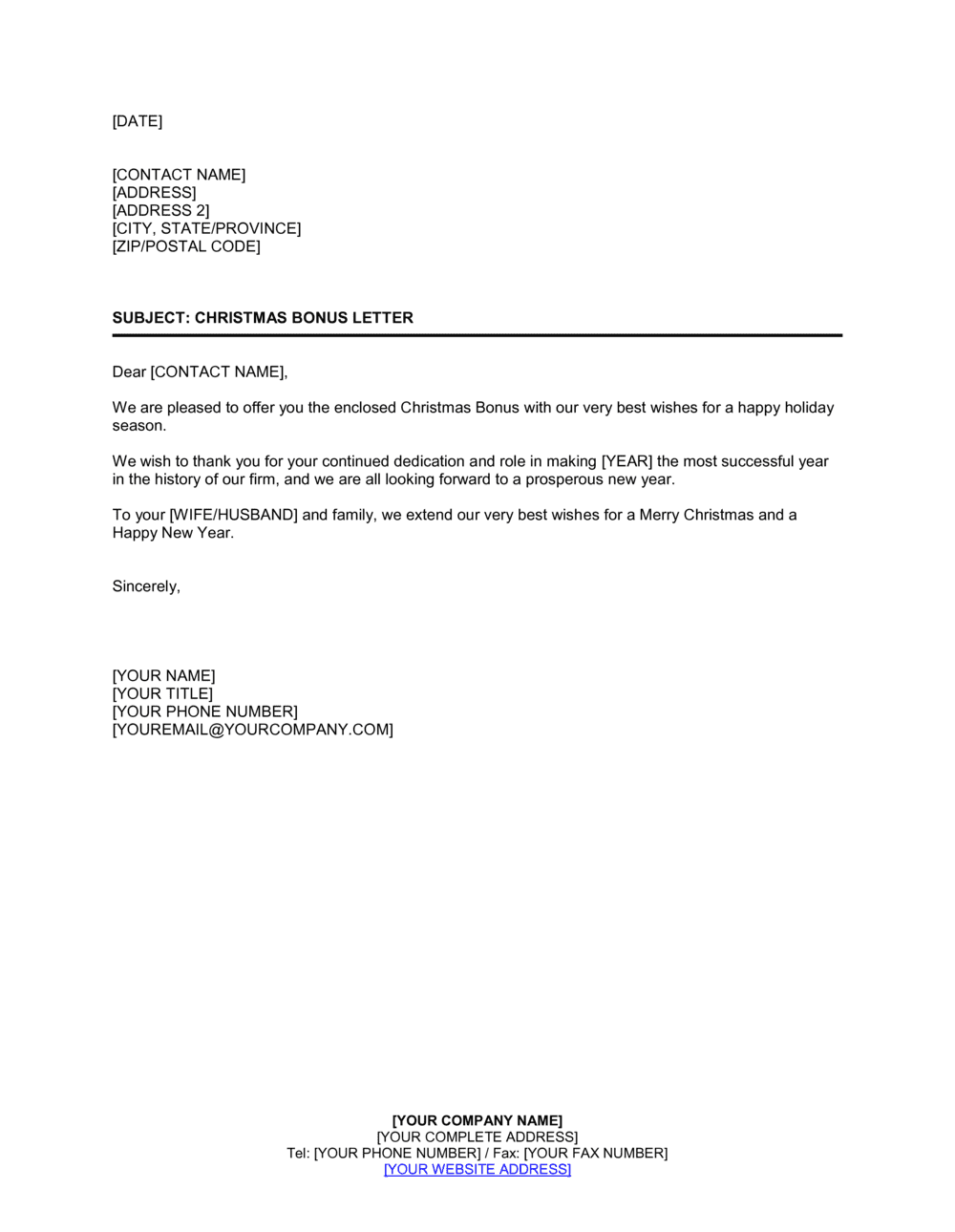
FreeChristmas Bonus Letter Template

At a glance

What it is
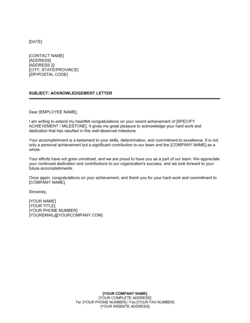
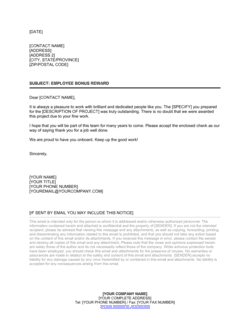
A Christmas Bonus Letter is a formal written notice from an employer to an employee announcing a one-time holiday bonus payment. This free Word download gives you a ready-to-edit letter you can personalize with the employee's name, bonus amount, payment date, and a brief message of appreciation, then print or email in minutes.
When you need it
Use it when distributing end-of-year or holiday bonuses to staff and you want a documented, professional record of the award alongside the payroll transaction. It is appropriate whether you are issuing a flat amount, a percentage of salary, or a discretionary gift.
What's inside
Employer and employee details, a formal greeting, the bonus amount and payment date, a brief recognition of the employee's contribution, any applicable tax or payroll notes, and a closing from the authorized signatory.

What is a Christmas Bonus Letter?

A Christmas Bonus Letter is a formal written notice an employer sends to an employee to announce a one-time holiday bonus payment. It identifies the recipient, states the bonus amount and the date it will be paid, and includes a brief acknowledgment of the employee's contributions during the year. Unlike a generic email or verbal announcement, the letter creates a documented record of the award that can be filed alongside payroll records, referenced in compensation reviews, and used to resolve any questions about the payment after the fact.

Why You Need This Document

Without a written notice, employees who see an unexpected deposit may assume a payroll error and contact HR or their bank β€” creating unnecessary administrative work at one of the busiest times of the year. A letter sent two business days before the bonus pay date sets clear expectations: the amount, the timing, and the reason. It also protects the employer by documenting that a discretionary payment was communicated as exactly that β€” a one-time award, not a guaranteed annual entitlement. For teams with even a handful of employees, a consistent, professional bonus letter reinforces company culture, reduces payroll inquiries, and turns a financial transaction into a genuine moment of recognition. This template gives you a ready-to-edit Word document you can personalize and distribute in under ten minutes.

Which variant fits your situation?

If your situation is…Use this template
Awarding a fixed dollar amount the same for all staffChristmas Bonus Letter (Flat Amount)
Awarding a bonus tied to individual salary percentageYear-End Performance Bonus Letter
Recognizing outstanding individual performance with a special awardEmployee Recognition Letter
Communicating a profit-sharing distribution to eligible employeesProfit Sharing Letter
Announcing a raise effective the new year alongside the bonusSalary Increase Letter
Issuing a non-cash gift or voucher in lieu of a cash bonusHoliday Gift Acknowledgment Letter

Common mistakes to avoid

❌ Not specifying gross versus net amount

Why it matters: Employees who expect a $2,000 bonus and receive $1,450 in their account will contact HR confused or frustrated, even though the net figure is correct after withholding.

Fix: Add the word 'gross' immediately after the dollar amount and include the one-sentence tax withholding notice so expectations are calibrated before pay day.
❌ Omitting the payment date

Why it matters: Vague language like 'before the holidays' generates a wave of payroll inquiries and undermines the goodwill the letter is meant to create.

Fix: Confirm the exact pay date with your payroll team before issuing letters and print the specific calendar date in the payment clause.

❌ Using the same generic letter for every employee without any personalization

Why it matters: A form letter that mentions no specific contribution signals the bonus is automatic rather than earned, reducing its motivational impact.

Fix: Add one specific sentence per employee β€” a project name, a metric hit, or a personal quality observed β€” even via a mail-merge field.

❌ Issuing the letter after the bonus has already been deposited

Why it matters: Employees who see an unexplained deposit before receiving any communication may assume a payroll error and call the bank or HR to reverse it.

Fix: Issue the letter at least two business days before the bonus pay date so employees know to expect the payment.

The 9 key clauses, explained

Letterhead and date

In plain language: The employer's company name, address, and the letter's issue date β€” establishes the document as official correspondence.

Sample language
[COMPANY NAME] | [ADDRESS LINE 1], [CITY, STATE ZIP] | [DATE]

Common mistake: Using a personal email header instead of official letterhead. Without company branding, the letter carries less perceived weight and is harder to file for payroll recordkeeping.

Employee name and address block

In plain language: The recipient's full name, job title, and mailing or work address, confirming exactly who the notice is for.

Sample language
[EMPLOYEE FULL NAME] | [JOB TITLE] | [DEPARTMENT] | [WORK ADDRESS OR 'On File']

Common mistake: Omitting the job title. When HR files the letter alongside payroll records, missing role information makes audit matching slower.

Subject line

In plain language: A one-line reference that immediately identifies the letter's purpose for both the recipient and any filing system.

Sample language
Subject: Christmas Bonus β€” [YEAR]

Common mistake: Leaving the subject line blank or writing a generic 'Re: Year-End' without specifying the bonus. Recipients and payroll staff need to identify the document instantly.

Opening salutation and seasonal acknowledgment

In plain language: A professional greeting that opens warmly and sets the tone for a positive recognition message.

Sample language
Dear [EMPLOYEE FIRST NAME], As the holiday season approaches and we reflect on another year, we are pleased to share some exciting news with you.

Common mistake: Opening directly with the dollar amount before any contextual acknowledgment. Leading with numbers without context can feel transactional rather than appreciative.

Bonus announcement and amount

In plain language: The core notice β€” states the bonus amount, confirms it is a Christmas or year-end bonus, and specifies whether it is a gross or net figure.

Sample language
We are delighted to inform you that you will receive a Christmas bonus of $[AMOUNT] (gross) as a token of our appreciation for your contributions throughout [YEAR].

Common mistake: Failing to specify whether the amount is gross or net. Employees who receive less than the stated figure on their payslip will have questions or concerns that a single clarifying word prevents.

Payment date and method

In plain language: States exactly when and how the bonus will be paid β€” payroll run date, direct deposit, or separate check.

Sample language
This bonus will be included in your paycheck on [PAY DATE] via [direct deposit / company check].

Common mistake: Omitting the payment date entirely. Employees plan around expected payment timing; a vague 'in the coming weeks' creates unnecessary follow-up inquiries to payroll.

Recognition of contribution

In plain language: A brief, sincere acknowledgment of the employee's specific effort or the team's collective performance during the year.

Sample language
Your dedication, hard work, and commitment to [COMPANY NAME]'s success this year have been invaluable. We are grateful for the energy and care you bring to your role every day.

Common mistake: Using identical boilerplate for every employee without any personalization. A single specific reference β€” a project name, a milestone hit, or a team win β€” meaningfully increases the letter's impact.

Tax and withholding notice (optional but recommended)

In plain language: A brief note advising the employee that the bonus is subject to standard payroll withholding, reducing surprise at a lower net amount.

Sample language
Please note that this bonus is subject to standard federal and state income tax withholding and applicable payroll deductions. If you have questions about the net amount, please contact [HR/PAYROLL CONTACT].

Common mistake: Skipping this clause entirely. Employees who expect the gross amount and see the net figure on their pay stub often contact HR unnecessarily β€” one sentence eliminates the confusion.

Closing appreciation and signature block

In plain language: A warm closing that reaffirms the employer's appreciation and the holiday season goodwill, followed by the authorized signatory's name and title.

Sample language
On behalf of the entire leadership team at [COMPANY NAME], we wish you and your loved ones a joyful holiday season and a prosperous New Year. Warm regards, [SIGNATORY NAME] | [TITLE] | [COMPANY NAME]

Common mistake: Signing with a department name instead of an individual's name and title. A named signatory conveys personal accountability and makes the letter feel more genuine.

How to fill it out

  1. 1

    Add your company letterhead

    Insert your company name, logo, address, and the letter date at the top of the document. Use your official letterhead if you have one saved.

    πŸ’‘ Save a letterhead version of the template as a master file so future letters only require updating the body content.

  2. 2

    Enter the employee's details

    Fill in the recipient's full legal name, job title, department, and work address. Double-check spelling β€” the employee will keep this letter.

    πŸ’‘ Pull names directly from your payroll system to avoid spelling discrepancies between the letter and official records.

  3. 3

    Set the subject line and year

    Update the subject line to reflect the current year β€” e.g., 'Christmas Bonus β€” 2026.' This makes the letter identifiable when filed.

    πŸ’‘ If you issue bonuses annually, a consistent subject line format makes year-over-year comparisons easy during audits.

  4. 4

    State the bonus amount and confirm gross vs. net

    Enter the dollar amount and explicitly state whether it is the gross figure (before tax) or the net figure the employee will receive. Gross is the more common convention.

    πŸ’‘ Always state gross. Quoting a net amount is harder to reconcile if payroll deductions change between letter issuance and pay date.

  5. 5

    Specify the payment date and method

    Enter the exact calendar date the bonus will appear in the employee's account or check, and confirm whether it is via direct deposit or paper check.

    πŸ’‘ Coordinate with payroll before issuing letters β€” confirm the pay date is locked before it is printed in writing.

  6. 6

    Personalize the recognition paragraph

    Replace the generic contribution acknowledgment with at least one specific reference to the employee's work β€” a project, a goal achieved, or a behavior observed.

    πŸ’‘ For large teams, a mail-merge field for a single custom sentence is faster than rewriting each letter individually.

  7. 7

    Add the tax notice and signatory block

    Keep the withholding notice intact and fill in the signatory's full name and title. The signatory should be the employee's direct manager or a senior leader, not HR.

    πŸ’‘ A letter signed by the CEO carries more motivational weight than one signed by the payroll department β€” consider routing for a senior signature on larger bonuses.

Frequently asked questions

What is a Christmas bonus letter?

A Christmas bonus letter is a formal written notice from an employer to an employee announcing a one-time holiday bonus payment. It states the bonus amount, the payment date, and a brief acknowledgment of the employee's contributions. It serves as both a professional communication and a payroll record that documents the award in writing.

Is a Christmas bonus letter legally required?

In most jurisdictions, no written notice is legally required for a discretionary bonus payment β€” the payslip alone is sufficient documentation. However, issuing a letter is considered best practice because it sets clear expectations about the amount and timing, reduces payroll inquiries, and creates a paper trail that benefits both employer and employee. If the bonus is contractual rather than discretionary, written notice is particularly important to document fulfillment of the obligation.

Should the letter state the gross or net bonus amount?

State the gross amount β€” the figure before tax withholding and payroll deductions. Gross is the number the employer controls and the amount that will appear on the employee's pay stub as the bonus line. Include a brief note that the payment is subject to standard withholding so the employee understands why the net deposit is lower than the stated figure.

When should I send the Christmas bonus letter?

Send it at least two business days before the bonus pay date so employees know to expect the payment. Distributing it the same day as or after the deposit creates confusion β€” employees may treat an unexplained deposit as a payroll error. For paper letters, allow additional time for physical delivery.

Can I use the same letter template for all employees?

Yes β€” a single template with mail-merge fields for name, amount, and pay date handles most teams efficiently. Adding one personalized sentence per employee referencing a specific contribution takes only seconds per letter and significantly increases the letter's motivational value. Keep the structure consistent; vary only the personalized recognition paragraph.

Does a Christmas bonus letter need to be signed?

A formal signature is not legally required for the letter to be valid, but including a named signatory β€” ideally the employee's manager or a senior leader β€” makes the communication feel personal and authoritative. An unsigned or department-signed letter is less impactful and harder to attribute if questions arise later.

Is a Christmas bonus taxable?

Yes. In the United States, Christmas bonuses are classified as supplemental wages and are subject to federal income tax withholding β€” typically at a flat 22% for amounts under $1 million β€” plus applicable state taxes and FICA contributions. The same applies in Canada, the UK, and most other jurisdictions. Including a withholding notice in the letter prevents employee confusion about the net deposit amount.

What is the difference between a discretionary and a contractual Christmas bonus?

A discretionary bonus is paid at the employer's sole choice, with no contractual obligation to pay it in any given year. A contractual bonus is promised in the employment contract or a collective agreement and must be paid when the conditions are met. The Christmas bonus letter should reflect this distinction β€” for discretionary bonuses, include language noting the payment is a one-time award, not a guaranteed annual entitlement.

How this compares to alternatives

vs Salary Increase Letter

A salary increase letter announces a permanent change to the employee's base pay going forward. A Christmas bonus letter documents a one-time, non-recurring payment. The two are sometimes issued together at year-end but serve entirely different purposes β€” bonuses do not alter the ongoing compensation structure.

vs Employee Recognition Letter

An employee recognition letter acknowledges outstanding performance or a specific achievement without necessarily including a monetary payment. A Christmas bonus letter is primarily a financial notice that incorporates a recognition element. Use a recognition letter when the reward is non-monetary or when you want a formal performance commendation on file.

vs Profit Sharing Letter

A profit sharing letter distributes a portion of company profits to eligible employees based on a formula defined in the profit-sharing plan β€” usually tied to tenure, salary, or a collective pool. A Christmas bonus letter is typically a flat or discretionary goodwill payment not governed by a formal plan. Profit sharing carries more regulatory and plan-document requirements.

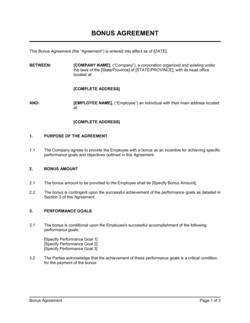
vs Bonus Agreement

A bonus agreement is a bilateral contract that commits the employer to pay a bonus when defined performance targets are met. A Christmas bonus letter is a unilateral notice of a payment already decided β€” it does not create a future obligation. Use a bonus agreement when the award is conditional; use the letter when the award has been approved and simply needs to be communicated.

Industry-specific considerations

Retail and hospitality

High staff volumes mean batch-generated letters via mail merge are standard; bonuses are often tied to a flat per-employee amount rather than salary percentage.

Professional services

Bonuses frequently reflect individual billable performance; letters are personalized with utilization or client feedback references and signed by practice leads.

Construction and trades

Seasonal work patterns make year-end bonuses a key retention tool; letters often accompany a project-completion acknowledgment alongside the holiday message.

Technology and SaaS

Bonus letters for distributed remote teams are delivered digitally; companies often include a note about equity vesting milestones or upcoming stock refreshes alongside the cash bonus.

Template vs pro β€” what fits your needs?

PathBest forCostTime
Use the templateAny employer distributing standard holiday bonuses to staff at any team sizeFree5–10 minutes per letter
Template + professional reviewCompanies with contractual bonus obligations or collective agreements where wording must align with existing plan documents$100–$300 (HR advisor or employment counsel review)1–2 business days
Custom draftedLarge enterprises with complex multi-tier bonus structures, cross-border payroll, or regulated industries requiring specific disclosure language$300–$8003–5 business days

Glossary

Discretionary Bonus
A bonus the employer chooses to pay based on business performance or goodwill, with no contractual obligation to repeat it.
Contractual Bonus
A bonus the employer is legally required to pay under the terms of an employment contract or collective agreement.
Gross Bonus Amount
The bonus value before income tax withholding, social security, and any other payroll deductions are applied.
Supplemental Wage
Any payment to an employee beyond regular wages, including bonuses β€” subject to a flat federal withholding rate of 22% in the US for amounts under $1 million.
Pay Date
The specific calendar date on which the bonus will appear in the employee's bank account or paycheck.
Withholding
The portion of a bonus payment withheld by the employer and remitted to tax authorities on the employee's behalf.
Year-End Bonus
A one-time payment made at the close of the fiscal or calendar year, often tied to company performance, individual contribution, or seasonal tradition.
Non-Cash Benefit
A bonus delivered as a gift card, product, or experience rather than money β€” taxable in most jurisdictions at fair market value.
Good Standing Requirement
A common bonus condition specifying that the employee must be actively employed and in good standing on the payment date to receive the award.

Part of your Business Operating System

This document is one of 3,000+ business & legal templates included in Business in a Box.

  • Fill-in-the-blanks β€” ready in minutes
  • 100% customizable Word document
  • Compatible with all office suites
  • Export to PDF and share electronically

Create your document in 3 simple steps.

From template to signed document β€” all inside one Business Operating System.
1
Download or open template

Access over 3,000+ business and legal templates for any business task, project or initiative.

2
Edit and fill in the blanks with AI

Customize your ready-made business document template and save it in the cloud.

3
Save, Share, Send, Sign

Share your files and folders with your team. Create a space of seamless collaboration.

Save time, save money, and create top-quality documents.

β˜…β˜…β˜…β˜…β˜…

"Fantastic value! I'm not sure how I'd do without it. It's worth its weight in gold and paid back for itself many times."

Managing Director Β· Mall Farm
Robert Whalley
Managing Director, Mall Farm Proprietary Limited
β˜…β˜…β˜…β˜…β˜…

"I have been using Business in a Box for years. It has been the most useful source of templates I have encountered. I recommend it to anyone."

Business Owner Β· 4+ years
Dr Michael John Freestone
Business Owner
β˜…β˜…β˜…β˜…β˜…

"It has been a life saver so many times I have lost count. Business in a Box has saved me so much time and as you know, time is money."

Owner Β· Upstate Web
David G. Moore Jr.
Owner, Upstate Web

Run your business with a system β€” not scattered tools

Stop downloading documents. Start operating with clarity. Business in a Box gives you the Business Operating System used by over 250,000 companies worldwide to structure, run, and grow their business.

Start freeΒ Β·Β No credit card required