Checklist Questionnaire For Hiring a Lawyer

Free Word download β€’ Edit online β€’ Save & share with Drive β€’ Export to PDF

2 pagesβ€’20–25 min to fillβ€’Difficulty: Standard
Learn more ↓
FreeChecklist Questionnaire For Hiring a Lawyer Template

At a glance

What it is
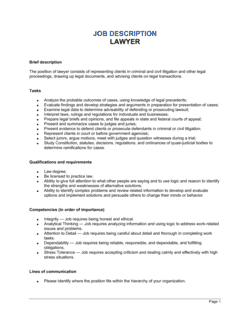
A Checklist Questionnaire for Hiring a Lawyer is a structured evaluation form used to assess and compare attorney candidates before engaging legal counsel. This free Word download gives you a consistent set of questions covering credentials, fees, experience, communication style, and conflict checks β€” so every candidate is evaluated on the same criteria.
When you need it
Use it before retaining any attorney β€” for business formation, contract disputes, employment matters, intellectual property, or litigation β€” whenever you are interviewing more than one candidate or need to document your selection process.
What's inside
Sections covering attorney background and bar status, relevant practice area experience, fee structures and billing practices, communication expectations, conflict-of-interest checks, and references. Each section uses a mix of yes/no fields, rating scales, and open-text notes to support side-by-side comparison.

What is a Checklist Questionnaire for Hiring a Lawyer?

A Checklist Questionnaire for Hiring a Lawyer is a structured evaluation form that guides business owners, founders, and managers through the essential questions to ask and information to verify before retaining legal counsel. It covers attorney credentials, bar admission status, relevant practice area experience, fee structures, billing practices, conflict-of-interest checks, communication expectations, and references β€” all in a single document. Rather than relying on impressions from a single conversation, the checklist gives you a consistent framework for comparing two or more candidates side by side and documenting your selection decision.

Why You Need This Document

Hiring the wrong attorney β€” or hiring one without verifying basic credentials β€” can cost far more than the retainer. An attorney with an undisclosed conflict of interest may be disqualified mid-matter after you have already shared confidential information. A fee structure you did not fully understand can turn a $2,000 estimate into a $7,500 invoice. And a senior partner who hands your matter to a junior associate without warning leaves you without the expertise you paid to access. This checklist eliminates those surprises by ensuring every candidate is evaluated on the same criteria before you sign an engagement letter. For companies that hire outside counsel regularly, it also creates an auditable selection record that satisfies vendor due diligence and compliance requirements. This template gives you the structure to make a well-documented, defensible hiring decision in 15 to 30 minutes per candidate.

Which variant fits your situation?

If your situation is…Use this template
Hiring a lawyer for a one-time contract reviewChecklist Questionnaire for Hiring a Lawyer
Engaging outside counsel on a retainer basisLegal Retainer Agreement
Selecting a litigation attorney for an active disputeChecklist Questionnaire for Hiring a Lawyer
Evaluating multiple vendors including law firmsVendor Evaluation Scorecard
Onboarding a new outside counsel with scope and billing termsOutside Counsel Guidelines
Documenting attorney selection for board or compliance purposesProfessional Services Proposal
Comparing legal fees across multiple firmsRequest for Proposal (Legal Services)

Common mistakes to avoid

❌ Not verifying bar admission independently

Why it matters: An attorney who is suspended or has pending disciplinary action cannot represent you effectively β€” and may expose you to malpractice risk without recourse.

Fix: Check each candidate's standing on the relevant state or provincial bar website before any consultation, not after you have already decided to hire.

❌ Hiring on hourly rate alone without asking about billing increment

Why it matters: A $200/hr attorney billing in 15-minute increments costs more per short task than a $250/hr attorney billing in 6-minute increments. Rate comparisons without increment information are meaningless.

Fix: Record both the hourly rate and the minimum billing increment in the fee field, and calculate an effective cost per short task before comparing candidates.

❌ Skipping the conflict-of-interest check

Why it matters: If a conflict is discovered after you have shared confidential information, you may need to find new counsel mid-matter β€” losing time, money, and the confidentiality of your disclosures.

Fix: Require a written conflict check before sharing any confidential details about your matter, even in an initial consultation.

❌ Evaluating only the lead attorney without asking who will do the day-to-day work

Why it matters: Senior partners often hand matters to junior associates after the initial meeting. If you hired based on the partner's 20 years of experience, discovering a first-year associate is handling your file is a significant surprise.

Fix: Ask directly during the consultation: 'Who will be my primary contact and who will perform most of the work on this matter?' Record the answer in the communication field.

The 9 key fields, explained

Attorney and firm identification

Bar admission and standing

Relevant experience and case history

Fee structure and billing practices

Scope of representation

Conflict-of-interest check

Communication and availability

References and peer reviews

Overall evaluation and hire/no-hire decision

How to fill it out

  1. 1

    Identify your legal need and practice area

    Before contacting any attorney, write down the specific legal matter β€” contract dispute, IP registration, employment issue, etc. This determines which practice area you need and prevents you from interviewing generalists for a specialist matter.

    πŸ’‘ One sentence describing your matter is enough: 'I need an attorney experienced in California employment law to advise on a wrongful termination claim.'

  2. 2

    Shortlist two to four candidates

    Use bar association referral services, peer recommendations, or directories like Martindale-Hubbell to identify candidates. Aim for two to four β€” enough to compare without overwhelming your process.

    πŸ’‘ State bar association referral programs vet basic licensure before listing an attorney β€” a faster starting point than a general internet search.

  3. 3

    Complete the identification and bar status fields before the first call

    Look up each candidate's bar number and current standing on the state bar website before your initial consultation. Enter this into the form so you enter the call already verified.

    πŸ’‘ Bar status checks take under two minutes per attorney and cost nothing β€” there is no reason to skip this step.

  4. 4

    Conduct the consultation using the checklist as your script

    Work through the experience, fee, scope, and conflict fields in order during your consultation call or meeting. Take brief notes in the form's open-text fields immediately after β€” not from memory the next day.

    πŸ’‘ Ask for the fee structure in writing before ending the consultation β€” verbal quotes frequently differ from the engagement letter.

  5. 5

    Request and complete the conflict-of-interest check

    Ask the attorney to run a formal conflict check against the names of all parties involved in your matter. Record the date and outcome in the conflict field.

    πŸ’‘ If the attorney hesitates to provide a written conflict clearance, treat that as a yellow flag worth exploring before proceeding.

  6. 6

    Call at least one reference per candidate

    Contact one reference for each shortlisted attorney and note the key takeaways in the references field. Ask specifically: 'How did the attorney handle unexpected complications?'

    πŸ’‘ A reference who hesitates or gives only vague answers is telling you something β€” note it in the form.

  7. 7

    Score each candidate and record your decision

    Complete the evaluation rating fields for every candidate and write a one- to two-sentence rationale for your hire or no-hire decision. File the completed forms together as your selection record.

    πŸ’‘ Keep completed questionnaires on file for at least three years β€” if the engagement is later disputed, documented due diligence protects your position.

Frequently asked questions

What is a checklist questionnaire for hiring a lawyer?

A checklist questionnaire for hiring a lawyer is a structured evaluation form that guides you through the key questions to ask and information to verify before retaining legal counsel. It covers bar status, relevant experience, fee structures, conflict of interest, communication expectations, and references β€” giving you a consistent basis for comparing multiple candidates.

What questions should I ask a lawyer before hiring them?

The most important questions cover five areas: experience (how many matters similar to yours have they handled?), fees (what is the rate, billing increment, and retainer?), scope (what exactly will they handle and what is excluded?), conflicts (have they run a formal conflict check against all parties?), and communication (who is my day-to-day contact and what is the response time commitment?). This checklist structures all five areas into a single form.

How do I verify a lawyer's credentials before hiring?

Search the attorney's name or bar number on the official website of the state or provincial bar association where your matter will be handled. Most bar websites show current admission status, any disciplinary history, and the year of admission β€” all for free. Do this before sharing any confidential information about your matter.

What is a conflict of interest and why does it matter when hiring a lawyer?

A conflict of interest exists when the attorney or their firm represents another party whose interests are adverse to yours, or has a prior relationship that could compromise their loyalty. An attorney with an undisclosed conflict may be disqualified from your matter after you have already shared sensitive information β€” costing you time and confidentiality. Always require a written conflict check before the first substantive discussion.

Should I interview more than one lawyer before hiring?

Interviewing two to four candidates is standard practice. Comparing candidates using a consistent checklist β€” rather than relying on impressions from separate conversations β€” surfaces meaningful differences in experience, fees, and communication style that a single interview would not. Most attorneys offer a free or low-cost initial consultation specifically for this purpose.

What fee structures do lawyers typically use?

The three most common structures are hourly (you pay for time spent), flat fee (a fixed price for a defined matter such as a contract review or entity formation), and contingency (the attorney takes a percentage of the recovery, with no upfront cost). For business matters, hourly and flat-fee arrangements are most common. Record the fee type, rate, and billing increment in the checklist so you can compare candidates accurately.

How long should I keep a completed lawyer hiring checklist?

Keep completed questionnaires for at least three years after the engagement ends. If the attorney's work is later questioned β€” in a malpractice claim, a business dispute, or a regulatory inquiry β€” documented due diligence showing you verified credentials, checked for conflicts, and compared candidates supports your position. For matters involving litigation or significant business transactions, retain the records for the full statute of limitations period.

How this compares to alternatives

vs Legal Retainer Agreement

A legal retainer agreement is the formal contract signed after you have decided to hire an attorney β€” it defines scope, fees, and mutual obligations. The checklist questionnaire is used before that decision to evaluate and compare candidates. Complete the checklist first; execute the retainer once you have selected your attorney.

vs Request for Proposal (Professional Services)

A request for proposal is a formal document sent to multiple firms asking them to submit structured bids. It is suited to large engagements where you want written proposals before any conversation. The checklist questionnaire is lighter β€” used during or after a consultation call to capture and score what you learned. Use an RFP for significant retainers; use the checklist for most standard hiring decisions.

vs Vendor Evaluation Scorecard

A vendor evaluation scorecard is a general-purpose supplier comparison tool covering price, capability, reliability, and support. The lawyer hiring checklist is purpose-built for legal counsel selection β€” it adds bar status verification, conflict-of-interest checks, and practice area depth that a generic scorecard does not include. Use the legal-specific checklist when the candidate is an attorney.

vs Employee Interview Questionnaire

An employee interview questionnaire evaluates a candidate for an internal hire β€” it covers culture fit, employment history, and role-specific skills. The lawyer hiring checklist evaluates an outside professional service provider β€” it focuses on credentials, conflicts, fees, and scope rather than employment terms. The two documents serve fundamentally different selection contexts.

Industry-specific considerations

Technology / SaaS

IP assignment, software licensing agreements, and data privacy compliance make specialist credentials the primary evaluation criterion over fee rate.

Construction and Trades

Lien law, subcontractor disputes, and project contract litigation require attorneys with jurisdiction-specific construction law experience β€” not general commercial litigators.

Healthcare

HIPAA compliance, licensing disputes, and payer contract negotiations require attorneys credentialed in healthcare regulatory law, a highly specialized practice area.

Professional Services

Partnership disputes, client non-solicitation enforcement, and professional liability claims call for attorneys experienced with service-firm partnership agreements and state-specific professional conduct rules.

Template vs pro β€” what fits your needs?

PathBest forCostTime
Use the templateAny business owner or individual evaluating one to four attorney candidates for a standard legal matterFree15–30 minutes per candidate
Template + professional reviewCompanies standardizing outside counsel selection across departments or documenting selection for compliance purposes$0–$200 (light review by an operations or compliance advisor)1–2 hours to adapt and finalize
Custom draftedLarge organizations running formal RFP processes for significant legal panel appointments or regulated procurement requirements$500–$2,000 (procurement consultant or legal ops specialist)1–2 weeks

Glossary

Retainer
An upfront payment made to a lawyer to secure their availability, drawn down as billable hours accumulate.
Billable Hour
A unit of attorney time β€” typically billed in 6-minute increments β€” charged to the client at the agreed hourly rate.
Contingency Fee
A fee arrangement where the attorney is paid a percentage of the recovery only if the case is won, with no upfront cost to the client.
Flat Fee
A fixed total price agreed in advance for a defined legal matter, regardless of time spent.
Conflict of Interest
A situation where the attorney's other clients, personal interests, or prior representations could compromise their ability to represent you impartially.
Bar Admission
Official authorization from a state or provincial bar association to practice law in that jurisdiction.
Practice Area
The specific field of law an attorney focuses on β€” such as corporate, employment, intellectual property, or litigation.
Engagement Letter
A written agreement between a client and attorney that defines the scope of work, fee structure, and mutual expectations before representation begins.
Lead Attorney
The primary attorney responsible for your matter, as distinguished from associates or paralegals who may perform work under their supervision.
Scope of Representation
The specific legal tasks and issues the attorney is retained to handle, which determines what falls inside and outside their responsibility.

Part of your Business Operating System

This document is one of 3,000+ business & legal templates included in Business in a Box.

  • Fill-in-the-blanks β€” ready in minutes
  • 100% customizable Word document
  • Compatible with all office suites
  • Export to PDF and share electronically

Create your document in 3 simple steps.

From template to signed document β€” all inside one Business Operating System.
1
Download or open template

Access over 3,000+ business and legal templates for any business task, project or initiative.

2
Edit and fill in the blanks with AI

Customize your ready-made business document template and save it in the cloud.

3
Save, Share, Send, Sign

Share your files and folders with your team. Create a space of seamless collaboration.

Save time, save money, and create top-quality documents.

β˜…β˜…β˜…β˜…β˜…

"Fantastic value! I'm not sure how I'd do without it. It's worth its weight in gold and paid back for itself many times."

Managing Director Β· Mall Farm
Robert Whalley
Managing Director, Mall Farm Proprietary Limited
β˜…β˜…β˜…β˜…β˜…

"I have been using Business in a Box for years. It has been the most useful source of templates I have encountered. I recommend it to anyone."

Business Owner Β· 4+ years
Dr Michael John Freestone
Business Owner
β˜…β˜…β˜…β˜…β˜…

"It has been a life saver so many times I have lost count. Business in a Box has saved me so much time and as you know, time is money."

Owner Β· Upstate Web
David G. Moore Jr.
Owner, Upstate Web

Run your business with a system β€” not scattered tools

Stop downloading documents. Start operating with clarity. Business in a Box gives you the Business Operating System used by over 250,000 companies worldwide to structure, run, and grow their business.

Free Forever PlanΒ Β·Β No credit card required